
1 December
 The Mark Of Zorro (Dir. Fred Niblo, US, 1920) (Screening format – not known, 85mins) Don Diego Vega (Douglas Fairbanks) masquerades as an ineffectual fop to bamboozle his enemies and conceal his secret persona: ‘Zorro’: avenger of the oppressed. The first King of
  Hollywood – dashing, athletic Fairbanks, pretty much defined the swashbuckling genre with this rip-roaring adventure flick. Featuring horseback stunts, witty chase sequences and sword fighting, this entertaining romp achieves a satisfying blend of humour and heroics that remains the benchmark for action films today. Find out more at silentfilm.org Presented as part of the Wareham Silent Film Weekender. With live musical accompaniment by Meg Morley. The Rex, Wareham Link
2 December
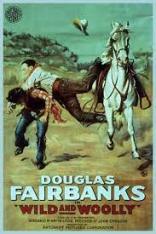 Wild And Woolly (Dir. John Emerson, US, 1917) (Screening format – not known, 72 mins) Douglas Fairbanks stars as Jeff Hillington, the son of a New York based railroad magnate who only dreams of the plains and adventures of the American wild west. Dispatched by his father to Bitter Spurs, Arizona, to check out the prospects for a new rail line, Jeff finally thinks he will be visiting the real wild west. However,
  the town’s ‘wild’ days are long gone and it is now an orderly and civilized place. But the townsfolk, not wanting to risk loosing the new rail line, contrive to convince Jeff that he is indeed living the ‘wild west’ dream. They dress as cowboys, disguise Bitter Spurs as a frontier town, stage a fake shootout and plan a fake train robbery. But when the corrupt local Indian agent hears about the planned fake train robbery he seeks to take advantage of it for his own ends. Can Jeff save the day…and the girl? In this great comedy, written by the fantastic Anita Loos, Wild and Woolly showcases the many talents of Fairbanks as an action star as well as a comedy actor. Find out more at moviessilently.com Presented as part of the Wareham Silent Film Weekender. With live musical accompaniment by Meg Morley. The Rex, Wareham Link
 Pickford Biograph Shorts – By signing a contract with the American Mutoscope and Biograph Company in April 1909, Mary Pickford started her rise to stardom on the cinema screen. The selection starts with one film from 1909 and then the rest from 1912 and highlights key characteristic elements of Pickford’s on-screen persona from the very beginning. All shorts found in this selection are directed by Biograph regular D.W.Griffith. Titles to be confirmed. Presented as part of the Wareham Silent Film Weekender. With recorded score. The Rex, Wareham Link
 Fanchon the Cricket (Dir. James Kirkwood, US, 1915) (Screening format – not known, 75mins) Thought lost for decades, Fanchon the Cricket, based on the 1849 novel La Petite Fadette by George Sand , stars Mary Pickford as the title character, a strong-willed waif ostracized by ‘acceptable society’ until she shows them the power of love and understanding. A natural, sensual and uninhibited
  Pickford breaks through today’s stereotype of her as ‘the girl with the curls’. Chewing leaves. Pummeling bullies. Wrestling with her witch grandmother. “A lonely soul,” the intertitle tells us. Lonely, maybe, a troublemaker, definitely. As silent film historian Kevin Brownlow notes, Pickford plays Fanchon less as a “woodland nymph” and “more as a rural hooligan.” Fanchon the Cricket is the only surviving film in which both Jack and Lottie Pickford appear with their sister and is directed by one of Mary Pickford’s favourite directors. Find out more at catalog.afi.com Presented as part of the Wareham Silent Film Weekender. With recorded score. The Rex, Wareham Link
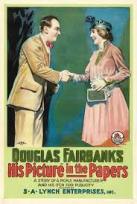 His Picture in the Papers (Dir. John Emerson, US, 1916) + Joanna Enlists (Dir. William Desmond Taylor, US, 1918): (Screening format – not known, 62/72 mins) Made the year after Fairbanks left Broadway for the cinema, His Picture in the Papers is his third ever film and a perfect example of Fairbank’s early onscreen comedy persona which was also infused with breakneck action. The story is set around Fairbanks’ Pete Prindle who, if anything, needs to get his ‘Picture in the Papers’ to win the hand of his love (Loretta Blake). The first film scenario written for Douglas Fairbanks by Anita Loos, His Picture in
  the Papers also includes a rare early screen appearance of later star and director Erich von Stroheim. Find out more at wikip edia.org Joanna Enlists was adapted for the screen by Pickford regular Frances Marion. This 1918 five-reel First World War melodrama sees Mary Pickford play Johanna Renssaller who dreams of a different life away from her father’s farm. However, all things change when a training regiment of American soldiers arrive to camp next door to the farm. With the title card “Oh, Lordy — when I prayed for a man — WHY did you send me a thousand?” trouble not only on the farm, but also in the training camp as well. Find out more at catalog.afi.com Presented as part of the Wareham Silent Film Weekender. With live musical accompaniment by Meg Morley for His Picture in the Papers and recorded score for Joanna Enlists. The Rex, Wareham Link
 Stella Maris (Dir. Marshall Neilan, US, 1918) (Screening format – not known, 80mins) Mary Pickford plays dual roles in this major advancement in filmmaking and a major change from anything the star had done before. Stella Maris, based on William John Locke’s 1913 novel, tells the story of two, very different young women, both played by Pickford. Stella Maris is a beautiful, crippled girl who is cared for by her rich family, who shield her from the harsh realities of the world. Unity Blake, in
  contrast, is a poor, uneducated orphan whose mistreatment as a child has left her afraid of everyone. Both young women fall in love with John, a well-known journalist and a friend of the Maris family. But John does not let on that he is already (unhappily) married. Melodrama upon melodrama can only follow! .Director Neilan and cinematographer Walter Stradling created some trick photography for Mary to play both roles, using double exposure photography and complex editing which made it possible to present both characters on screen simultaneously. A true masterclass on acting, directing and cinematography. Find out more at Moviessilently.com Presented as part of the Wareham Silent Film Weekender. With recorded score. The Rex, Wareham Link
3 December
 Napoleon (Dir. Abel Gance, 1927) (Screening format – DCP, 332 mins) Gance’s astounding biopic of Napoleon traces his career from his schooldays (where a snowball fight is staged like a military campaign), his flight from Corsica, through the French Revolution (where a real storm is intercut with a political storm) and the Terror, culminating in his triumphant invasion of Italy in 1797. The film ends here because it was
 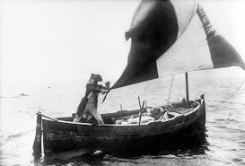 intended to be part one of six, but Gance was unable to raise the money to make further episodes. The film’s legendary reputation is due to the astonishing range of techniques that Gance uses to tell his story (including fast cutting, extensive close-ups, hand-held camera shots, location shooting, point of view shots, multiple camera set-ups, multiple exposure, superimposition and under water
  shots) culminating in the final twenty-minute triptych sequence, which alternates widescreen panoramas with complex multiple- image montages. This is the most complete version of the film available, compiled by Academy Award-winning film-maker, archivist and historian Kevin Brownlow who spent over 50 years tracking down surviving prints from archives around the world since he first saw a 9.5mm version as a schoolboy in 1954. Find out more at BFI and Wikipedia Introduced by leading Napoleon biographer Adam Zamoyski. With a newly recorded score composed by Carl Davis. BFI IMAX, Waterloo Link
 Little Annie Rooney (Dir. William Beaudine, US, 1925) (Screening format- not known, 95mins) Thirty-three year old Mary Pickford returned to form as America’s Sweetheart starring as Little Annie Rooney, a tough teenager from the streets who gets into mischief with her little gang of ruffians. She has a boyfriend, Joe Kelly (William Haines), whom she is sweet on. But when her father (Walter James) is killed, her brother Tim (Gordon Griffith) thinks that Joe is the murderer
 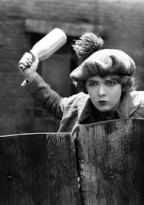 and sets off after him with a gun. But Annie isn’t so sure. Filmed over ten weeks, Little Annie Rooney was shot entirely on a set created by art director John D. Schulze at the Pickford Fairbanks Studio. Co-starring William Haines and a wide-ranging, multi-ethnic cast, Little Annie Rooney met with huge critical and commercial success upon its original release. So much so in fact that star and director would join forces again within a year to make another huge hit, Sparrows . If anything, Little Annie Rooney proved fans and critics alike wanted the then-33-year-old Mary to stay a child forever. Find out more at moviessilently.com Presented as part of the Wareham Silent Film Weekender. With recorded score. The Rex, Wareham Link
 When The Clouds Roll By (Dir. Victor Fleming/Theodore Reed (uncredited), US, 1919) (Screening format – not known, 75mins) Fairbanks plays Daniel Boone Brown, a superstitious but ambitious young New Yorker, who is a pleasure seeking playboy carousing around the city without a care in the world. All this
  changes when Brown becomes the guinea pig for a series of experiments at the hands of a sadistic psychiatrist. Through various means of control, the mad scientist drives Brown to think he’s losing his mind. Directed by Victor Fleming (The Wizard of Oz) this only recently found feature could well be the best of Fairbanks’ contemporary comedies. Laced with spectacular enthusiasm thanks to Fairbanks wit and energy, When the Clouds Role By is ripe to be rediscovered by new audiences. Find out more at silentfilm.org Presented as part of the Wareham Silent Film Weekender. With live musical accompaniment by Meg Morley. The Rex, Wareham Link
 The Half-Breed (Dir. Allan Dwan, US, 1916) + The Good Bad Man (Dir. Allan Dwan, US, 1916) (Screening format – not known, 73/50 mins) In an attempt to brand himself as a serious actor, the smiling swashbuckler Douglas Fairbanks starred in The Half-Breed (1916), a Western melodrama written by Anita Loos and directed with flair by Allan Dwan. Fairbanks stars as Lo Dorman, who has been ostracized from society because of this mixed ethnicity – his Native American mother was abandoned by his white father. When Lo catches the eye of the rich white debutante Nellie (Jewel Carmen), he becomes a target for the racist Sheriff Dunn (Sam De Grasse), who wants to break them up and take Nelli for his own. This love triangle becomes a quadrangle with the arrival of Teresa (Alma
 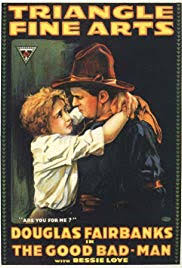 Rubens), who is on the run from the law. Through fire and fury Lo must decide who and what he truly loves. Find out more at obscurehollywood.net The Good Bad Man finds Douglas Fairbanks plays a cowboy drifter who calls himself “Passin’ Through.” Orphaned at birth, he becomes a Robin-Hood-like bandit, robbing the rich so that he can finance a home for unwanted children. Passin’ Through has a run-in with the leader of a gang of outlaws called The Wolf, played by Triangle’s regular heavy Sam de Grasse, who it turns out was responsible for his father’s death. He also meets and falls in love with the daughter of one of the outlaws (Bessie Love). The film is is among Fairbanks’s earliest pictures to explore themes and ideas that recurred throughout his work — including issues of identity and a passion for the history of the American West. Find out more atsilentfilm.org. Presented as part of the Wareham Silent Film Weekender. With live musical accompaniment by Dominic Irving. The Rex, Wareham Link
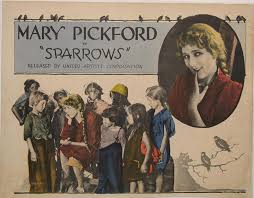 Sparrows (Dir. William Beaudine, US, 1926) (Screening format – not known, 84mins) Mary Pickford, “America’s sweetheart” and the unrivaled Queen of Hollywood, plays ‘mamma Molly’ the eldest of a loveable clutch of raggedy orphans, starved and brutalised by the evil Mr Grimes who exploits the luckless children, forcing them to work on his dismal swamp. This Dickensian scenario is further emphasized by sinister lighting and a dark Gothic production design – rendering a genuinely suspenseful and affecting drama in which Molly strives first to protect the children and then lead them on a daring escape across quicksand and alligator-infested swamps. Find out more at moviessilently.com Presented as part of the Wareham Silent Film Weekender. With recorded score. The Rex, Wareham Link
 Don Q, Son of Zorro (Dir. Donald Crisp, US, 1925) (Screening format – not known, 111 mins) In this sequel to his 1920 swashbuckling box office hit The Mark of Zorro, Douglas Fairbanks not only reprises his role of Zorro but also takes on the role of Zorro’s son Don Cesar de Vega.
  Don Cesar (Fairbanks) crosses swords with a vicious officer of the Queen’s Guard and steals the affection of a young heiress. When the officer frames the young upstart for murder, Don Cesar must sacrifice everything he holds dear to survive. If anything, Don Q, Son of Zorro surpasses the excitement and action of The Mark of Zorro and confirmed Douglas Fairbanks as one of the true greats of the first classic era of Hollywood. Find out more at decentfilms.com Presented as part of the Wareham Silent Film Weekender. With live musical accompaniment by Meg Morley. The Rex, Wareham Link
 Peter Pan (Dir. Herbert Brenon, US, 1924) (Screening format – not known, 105mins) J M Barrie’s famous story of Peter Pan, a magical boy who refuses to grow up, brings the Darling children (Wendy, John, and Michael) from London to Neverland where they have adventures that include a confrontation with the pirate Captain Hook and his crew. Betty Bronson was personally selected by Barrie to play Peter Pan in a film that is an awful lot darker than the Disney version. Find out more at imdb.com . With live organ accompaniment by Donald Mackenzie. Musical Museum, Brentford. Link
6 December
NB ***** Rescheduled from 25 October ****
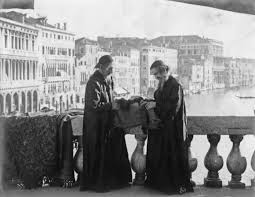 The Jew Of Mestri (Dir. Peter Paul Felmer, Ger, 1923) + White Gold (Dir. William K. Howard, USA, 1927, ). (Screening format – 35mm/16mm, c100/73mins) Made in Germany in 1923 and originally titled The Merchant of Venice (Der Kaufmann von Venedig), an adaption of the Shakespere play, the film was eventually released in the US as The Jew of Mestri but in a severely
  edited version. Unfortunately this is now the only copy of the film to survive. Find out more at silentfilmcalendar.org. White Gold was based on the 1925 Broadway play of the same name by J. Palmer Parsons. The film was produced by Cecil B. DeMille and stars Jetta Goudal, Kenneth Thomson, George Bancroft and George Nichols. A beautiful young Mexican girl marries an Arizona sheep rancher and returns with him to his ranch, where he lives with his elderly father. The father, not used to sharing his son’s attentions with anyone, takes an instant dislike to the new wife. The Ottawa Citizen said that, because of a new scripting technique employed by director William K. Howard, `the film more closely approaches realism than anything ever before attempted in motion pictures.’ Philip K. Scheuer of the Los Angeles Times called it a `distinguished film’ that employed the suggestion of sound by showing `creaking rockers, ticking clocks, the click of poker chips’. Find out more at www.imdb.com Presented by the Kennington Bioscope. With live musical accompaniment. Cinema Museum, Lambeth Link
10 December
 Nanook of the North (Dir. Robert J Flaherty, US, 1922) (Screening format – not known, 79 mins) Robert Flaherty’s classic film tells the story of Inuit hunter Nanook and his family as they struggle to survive in the harsh conditions of Canada’s Hudson Bay region. Enormously popular when released in 1922, Nanook of the North is a cinematic milestone that continues to
  enchant audiences. Filmed from 1920-1921 in Port Harrison, Northern Quebec, Flaherty brought an entirely unknown culture to the western world. It describes the trading, hunting, fishing and migrations of a group barely touched by industrial technology. Nanook of the North was widely shown and praised as the first full-length, anthropological documentary in cinematographic history, but it is a film around which controversy still rages, particularly over Flaherty’s inclusion of staged sequences. In a sad footnote, the hunter at the centre of the film Allakariallak (dubbed Nanook by Flaherty) died of starvation not long after the film’s release. Find out more at www.rogerebert.com. With live musical accompaniment by Edinburgh trio S!nk. Summerhall, Edinburgh Link
17 December
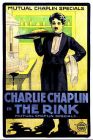 Silent Comedy Triple Treat Charlie Chaplin’s classic The Rink features the Tramp working as a waiter in a high-class restaurant and bunking off to the roller-skating rink in his spare time. Buster
  Keaton’s The High Sign involves Buster looking for work on the beach boardwalk and unwittingly ending up as a paid assassin for a bunch of crooks. Harold Lloyd’s Never Weaken sees our bespectacled hero clinging to a high building after attempting suicide on mistakenly believing his girlfriend loves another. With live piano accompaniment by Neil Brand. Watershed Cinema, Bristol Link
 A Woman Of Paris (Dir. Charlie Chaplin, US, 1923) (Screening format – digital 4k, 89mins) Charles Chaplin made his debut as a director/producer at United Artists with A Woman of Paris (1923) which, as a serious drama, was a major departure from his previous output. With this film, Chaplin proved that he was just as adept here as he was with comedy. Directing with keen-eyed finesse and
  appearing in only a bit role, Chaplin jabs at French high society while telling a tale of tragic love. Marie St. Clair (Edna Purviance) plans to leave for Paris with her fiancé Jean Millet (Carl Miller) so they can be married. But events conspire against them. Marie finds herself alone in Paris where she quickly settles down to life as the mistress of successful businessman Pierre Revel (Adolphe Menjou), enjoying all the luxuries his wealth can offer. But events conspire again and Marie finds herself in a number of troubling situations…Find out more at garenewing.co.uk Introduced by South West Silents’ Mark Fuller. With a recorded score conducted by Timothy Brock and performed by Orchestra Città Aperta. BFI Southbank, London Link
28 December
A Woman Of Paris (Dir. Charlie Chaplin, US, 1923) (Screening format – digital 4k, 89mins) Charles Chaplin made his debut as a director/producer at United Artists with A Woman of Paris (1923) which, as a serious drama, was a major departure from his previous output. With this film, Chaplin proved that he was just as adept here as he was with comedy. Directing with keen-eyed finesse and appearing in only a bit role, Chaplin jabs at French high society while telling a tale of tragic love. Marie St. Clair (Edna Purviance) plans to leave for Paris with her fiancé Jean Millet (Carl Miller) so they can be married. But events conspire against them. Marie finds herself alone in Paris where she quickly settles down to life as the mistress of successful businessman Pierre Revel (Adolphe Menjou), enjoying all the luxuries his wealth can offer. But events conspire again and Marie finds herself in a number of troubling situations…Find out more at garenewing.co.uk With a recorded score conducted by Timothy Brock and performed by Orchestra Città Aperta. BFI Southbank, London Link
 Silentfilmcalendar.org