



6 April
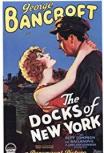 Docks of New York (Dir. Josef von Sternberg, US, 1928) (Screening format – not known, 76mins) Josef Von Sternberg’s silent masterpiece is a vivid and sensual melodrama set in the New York docklands in the years before prohibition. George Bancroft plays roughneck coal stoker
 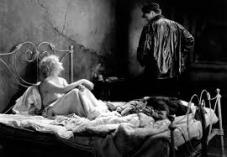 Bill Roberts who gets into trouble during a brief shore leave when he falls for a wise and weary dance-hall girl, Mae, played by Betty Compson. Despite the conventions of melodrama, the intense love story is brought to life with naturalistic flair that puts it well ahead of its time and the expressionist cinematography prefigures the film noir of the 40s. Find out more at sensesofcinema.com. Presented by Bristol Ideas and South West Silents. Introduced by South West Silents’ James Harrison. With live musical accompaniment by Meg Morley. Watershed, Bristol Link
 Nosferatu (Dir. F W Murnau, 1922) (Screening format – Digital, 96mins) A German Expressionist horror masterpiece starring Max Shreck as the vampire Count Orlok. The film was an unauthorised adaption of Bram Stoker’s ‘Dracula’ with names and other details changed because the studio could not obtain the rights to the novel. Stoker’s heirs sued over the adaption and a court ruling ordered that all copies of the film be destroyed. However, a few prints survived and the film came to be regarded as an inspirational master work of the cinema. In the film, Count Orlok travels across Europe leaving a trail of death in his wake. Brilliantly eerie, with imaginative touches which later adaptions never achieved. Find out more at wikipedia.org With recorded Hans Erdmann score. BFI Southbank, London Link
 The General (Dir. Buster Keaton/Clyde Bruckman, 1926) + The Great Train Robbery (Dir. Edwin S Porter, 1903) (Screening format – not known, 75/12 mins) Widely considered one of the greatest films ever made and one of the most revered comedies of the silent era, Buster Keaton’s effortless masterpiece sees hapless Southern railroad engineer Johnny Gray (Keaton) facing off against Union soldiers during the American Civil War. When Johnny’s fiancée, Annabelle Lee (Marion Mack), is accidentally taken away while on a train stolen by Northern forces, Gray pursues the soldiers, using various modes of transportation in comic action scenes that highlight Keaton’s boundless, innovative wit and joyful, lighthearted dexterity, to reclaim the train and thereby save the South. Find out more at busterkeaton.com . The Great Train
  Robbery is considered to be one of the first significant early US narrative films (although some would claim greatly influenced by the British film Daring Daylight Robbery (1903) ). It introduced many new cinematic techniques (cross cutting, double exposure, camera movement and location shooting) to American audiences. It stars Justus D. Barnes as the head bandit, G. M. Anderson as a slain passenger and a robber, Walter Cameron as the sheriff. Find out more at wikipedia.org Presented by Northern Silents. With live musical accompaniment by Jonny Best. Brewery Arts, Kendal Link
9 April
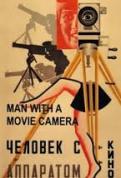 Man With a Movie Camera (Dir. Dziga Vertov, USSR, 1929) (Screening format – not known, 68mins) Part documentary and part cinematic art, this film follows a city in the 1920s Soviet Union throughout the day, from morning to night. Directed by Vertov, with a variety of complex and innovative camera shots (filmed by Vertov’s equally talented and innovative brother Mikhail Kaufman), the film depicts scenes of ordinary daily life in Russia. Vertov celebrates the modernity of the city, with its vast buildings, dense population and bustling industries. While there are no titles or narration, director and cameraman still naturally convey the marvels of the modern city. Find out more at rogerebert.com . With recorded score. Sands Film Cinema Club, Rotherhithe Link
10 April
 The Last Edition (Dir. Emory Johnson ,US, 1925) (Screening format – not known, 70 mins) The assistant foreman of the San Francisco Chronicle press-room, Tom MacDonald is passed over for the post of foreman in favor of a younger man. He gains satisfaction, though, when his son, Ray, obtains a good job in the district attorney’s office.
 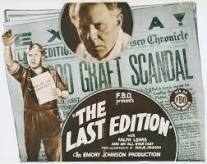 Reporter Clarence Walker, in love with MacDonald’s daughter, Polly, is sent to obtain evidence against notorious bootlegger Sam Blotz, who is protected by Assistant District Attorney Gerald Fuller. Blotz and Fuller frame Ray to put Walker off their track. But this is just the start of criminal efforts to prevent publication of the truth in ‘the last edition’. Much of the film was shot on location in and around the “Old Chronicle Building” located at 690 Market Street in downtown San Francisco. It
  was long thought that The Last Edition was a ‘lost film’ when in 2011 Bay Area film preservationist Rob Byrne discovered that there was a surviving original nitrate print, the last one, in the collection of the EYE Film Instituut Dutch National Archive. Find out more at reelsf.com Presented by the Kennington Bioscope. With live musical accompaniment. Cinema Museum, Lambeth. Link
12 April
Nosferatu (Dir. F W Murnau, 1922) (Screening format – Digital, 96mins) A German Expressionist horror masterpiece starring Max Shreck as the vampire Count Orlok. The film was an unauthorised adaption of Bram Stoker’s ‘Dracula’ with names and other details changed because the studio could not obtain the rights to the novel. Stoker’s heirs sued over the adaption and a court ruling ordered that all copies of the film be destroyed. However, a few prints survived and the film came to be regarded as an inspirational master work of the cinema. In the film, Count Orlok travels across Europe leaving a trail of death in his wake. Brilliantly eerie, with imaginative touches which later adaptions never achieved. Find out more at wikipedia.org With recorded Hans Erdmann score. BFI Southbank, London Link
13 April
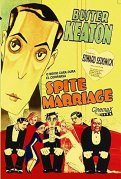 Spite Marriage (Dir. Edward Sedgwick/Buster Keaton, USA, 1929) (Screening format – not known, 76 mins) Spite Marriage is Buster Keaton’s last silent film and one of his most underrated. Keaton plays a love-struck fan of an actress who agrees to marry him. What he does not know is that the actress is only using Keaton to make her old flame jealous. A famous scene from this film depicts Keaton trying to put his drunk wife to bed and was recreated by Keaton later in his career. Keaton intended for this film to be a talkie, but MGM made the ultimate decision to keep it as a silent. Find out more at whatwouldbusterkeatondo.com . Presented by The Blinking Buzzards, the UK Buster Keaton Appreciation Society at its quarterly meeting. With recorded score. Cinema Museum, London Link
The General (Dir. Buster Keaton/Clyde Bruckman, 1926) + The Great Train Robbery (Dir. Edwin S Porter, 1903) (Screening format – not known, 75/12 mins) Widely considered one of the greatest films ever made and one of the most revered comedies of the silent era, Buster Keaton’s effortless masterpiece sees hapless Southern railroad engineer Johnny Gray (Keaton) facing off against Union soldiers during the American Civil War. When Johnny’s fiancée, Annabelle Lee (Marion Mack), is accidentally taken away while on a train stolen by Northern forces, Gray pursues the soldiers, using various modes of transportation in comic action scenes that highlight Keaton’s boundless, innovative wit and joyful, lighthearted dexterity, to reclaim the train and thereby save the South. Find out more at busterkeaton.com . The Great Train Robbery is considered to be one of the first significant early US narrative films (although some would claim greatly influenced by the British film Daring Daylight Robbery (1903) ). It introduced many new cinematic techniques (cross cutting, double exposure, camera movement and location shooting) to American audiences. It stars Justus D. Barnes as the head bandit, G. M. Anderson as a slain passenger and a robber, Walter Cameron as the sheriff. Find out more at wikipedia.org Presented by Northern Silents. With live musical accompaniment by Jonny Best (piano) and Trevor Bartlett (percussion) Link
14 April
 Sunrise; A Song of Two Humans (Dir. F W Murnau, US, 1927) (Screening format – 35mm, 94mins) F W Murnau’s debut American film, made at the technical zenith of the silent era but already heralding the arrival of the talkies being one of the first silents made with synchronized musical score and sound effects soundtrack. The simple story of a husband’s betrayal of his wife with a treacherous city girl, Sunrise moves
  from a fairytale-like depiction of rural life to a dynamic portrait of the bustling modern American city. Explored in elaborate tracking shots by Charles Rocher and Karl Struss’s pioneering camerawork, the city set was one of the most costly yet produced. The result was a commercial flop, though the achievement did not go unheralded: Sunrise was awarded a special Oscar for unique and artistic production at the first ever Academy Awards and Janet Gaynor won the first Academy Award for Best Actress for her performance. The film’s legacy has endured, and it is now widely considered a masterpiece with many calling it the greatest film of the silent era. Find out more at theguardian.com. With recorded score. Ultimate Picture Palace, Oxford Link
15 April
 Sunrise; A Song of Two Humans (Dir. F W Murnau, US, 1927) (Screening format – 35mm, 94mins) F W Murnau’s debut American film, made at the technical zenith of the silent era but already heralding the arrival of the talkies being one of the first silents made with synchronized musical score and sound effects soundtrack. The simple story of a husband’s
 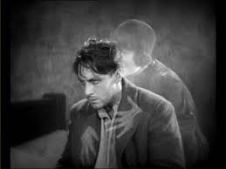 betrayal of his wife with a treacherous city girl, Sunrise moves from a fairytale-like depiction of rural life to a dynamic portrait of the bustling modern American city. Explored in elaborate tracking shots by Charles Rocher and Karl Struss’s pioneering camerawork, the city set was one of the most costly yet produced. The result was a commercial flop, though the achievement did not go unheralded: Sunrise was awarded a special Oscar for unique and artistic production at the first ever Academy Awards and Janet Gaynor won the first Academy Award for Best Actress for her performance. The film’s legacy has endured, and it is now widely considered a masterpiece with many calling it the greatest film of the silent era. Find out more at theguardian.com. With recorded score. Ultimate Picture Palace, Oxford Link
16 April
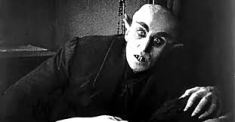 Nosferatu: A Symphony of Horror (Dir. F W Murnau, 1922) (Screening format – not known, 96mins) One of the most iconic films of the German expressionist era, let alone cinema itself. In this first-ever screen adaptation of Bram Stoker’s novel Dracula, a simple real-estate transaction leads an intrepid businessman deep into the superstitious heart of Transylvania. There he encounters the otherworldly Count Orlok (portrayed by the legendary Max Schreck, in a performance the very backstory of which has spawned its own mythology) who soon after embarks upon a cross-continental voyage to take up residence in a distant
  new land… and establish his ambiguous dominion. The film was an unauthorised adaption of Stoker’s ‘novel with names and other details changed because the studio could not obtain the rights to the story. Stoker’s heirs sued over the adaption and a court ruling ordered that all copies of the film be destroyed. However, a few prints survived and the film came to be regarded as an inspirational master work of the cinema. Brilliantly eerie, with imaginative touches which later adaptions never achieved and featuring some of the most iconic images in cinema history, Nosferatu continues to haunt modern audiences with its unshakable power of gothic imagery and blood curdling suspense.. Find out more at www.rogerebert.com With live musical accompaniment by Sabastian Heindl. Barbican, London Link
17 April
 Chicago (Dir. Frank Urson & Cecil B.DeMille (uncredited), 1927) (Screening format – not known, 118mins ) Seventy-five years before Bob Fosse’s Oscar-winning musical version of Maurine Watkins’ successful stage play, Cecil B. DeMille’s production company made this saucy silent film version. Phyllis Haver is hugely entertaining as the brazen Roxie Hart “Chicago’s most beautiful
 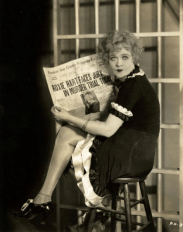 murderess” – a woman so pathologically shallow she sees notoriety for a murder rap as an opportunity to secure her fortune. Egged on by her crooked lawyer (“they’ll be naming babies after you”) Roxie neglects her long-suffering loyal husband and sets about milking her celebrity status for all she’s worth. The sequence in the prison is an absolute delight – particularly the rivalry between Roxie and fellow-murderess Velma (played by Julia Faye, DeMille’s mistress), as are the climactic courtroom scenes. A cracking, satire on fame and the media, this fun-filled tale of adultery, murder and sin (so sinful that DeMille – known for his Biblical epics – was at pains to keep his name off the credits) is as fresh and relevant as ever. Find out more at wikipedia.org . Presented by Northern Silents. With live musical accompaniment by a three-piece band playing a specially created 1920s-style musical score. Link
18 April
 Metropolis (Dir. Fritz Lang, 1927) (Screening format –not known , 149 mins ) Made in Germany during the Weimar period, Metropolis is set in a futuristic urban dystopia and follows the attempts of Freder (Gustav Frohlich), the wealthy son of the city’s ruler, and Maria (Brigitte Helm), a poor worker, to overcome the vast gulf separating the classes of their
  city. Filming took place in 1925 at a cost of approximately five million Reichmarks, making it the most expensive film ever released up to that point. It is regarded as a pioneering work of science fiction and is among the most influential films of all time. Following its world premiere in 1927, half an hour was cut from Fritz Lang’s masterpiece and lost to the world. Eighty years later a spectacular discovery was made when the footage was found in a small, dusty museum in Buenos Aires. The film was then painstakingly reconstructed and digitally restored so that at last audiences could see the iconic futuristic fairy tale as Lang had envisioned it. Find out more at silentfilm.org Presented by Northern Silents. With live musical accompaniment by Frame Ensemble. Link
20 April
 Not For Sale (Dir. W P Kellino, UK, 1924) (Screening format – 35mm, 86mins) Ace screenwriter Lydia Hayward’s adorable romcom concerns a spoiled young aristocrat cut off by his exasperated father and reduced to living in a Bloomsbury boarding house. Handsome Hollywood leading-man Ian Hunter made his film debut here as Martin Bering – the feckless, disinherited toff. French born Mary Odette plays the impoverished boarding house proprietor Annie, who’s hindered by her dysfunctional house full of tenants, with their gossiping and finickity ways who constantly try her patience. She also has her brother Mickey Brantford to deal with, a sprightly 12-year-old, whose take on Lon Chaney’s Hunchback of Notre Dame has to be seen to be believed and who enlists Bering in his ‘Anti-Boarders League’. This well-plotted and entertaining film features a splendid cast of ensemble characters – not least the dubious Jim who is taken on as a rather unpolished butler, as well as film and theatrical stalwart Mary Brough who plays the easily offended Mrs Keane. There’s even a small role for long-term Will Hay collaborator Moore Marriot, he of ‘Old Harbottle’ fame. . Find out more at wikipedia.org Presented as part of the Kennington Bioscope‘s Silent Film Weekend. With live musical accompaniment. Cinema Museum, London Link
 Forgotten Film Pioneer – James Searle Dawley A presentation looking at the career of James Searle Dawley, who has been called `The First Professional Motion Picture Director’. Dawley was an American film director, producer, screenwriter, stage actor, and playwright. Between 1907 and the mid-1920s, while working for Edison, Rex Motion Picture Company, Famous Players, Fox, and other studios, he directed more than 300 short films and 56 features. He worked with such emerging stars as Mary Pickford, Marguerite Clark, and John Barrymore. As part of this presentation there will be screenings of 1908’s Rescued from An Eagle’s Nest starring D.W. Griffith, as well as a 35mm print of the spectacular 1912 The Relief of Lucknow. Find out more at ultrawolvesunderthefullmoon.blog Presented as part of the Kennington Bioscope‘s Silent Film Weekend. Presented by Dave Peabody. With live musical accompaniment. Cinema Museum, London Link
 The Last Days of Pompeii (Dir. Giovanni Enrico Vidali, It, 1913)(Screening format – 35mm, –) Directed by Giovanni Enrico Vidali and, uncredited, Ubalda Maria Del Colle. Photography by Raimondo Scotti and set design by Domenico Gaido. Produced by Pasquali in Italy, this was one of two competing versions of the story made in Italy during 1913 (the other was produced by Ambrosio and directed by Eleuterio Rodolfi). This production was based on a British novel by Edward Bulwer-Lytton published in 1834, itself inspired by the painting The Last Day of Pompeii by the Russian painter Karl Briullov, which Bulwer-Lytton had seen in Milan. It culminates in the cataclysmic destruction of the city of Pompeii by the eruption of Mount Vesuvius in AD 79. Find out more at wikipedia.org Presented as part of the Kennington Bioscope‘s Silent Film Weekend. With live musical accompaniment. Cinema Museum, London Link
 Restored Laughter – The programme features recent restorations (scans of 35mm nitrate, digital & 16mm prints) sourced from private and other collections and also from the Cinema Museum’s own archives. In the first of an intended series spotlighting specific production companies, these include a rare Lubin comedy starring Karno comedian Billie Reeves and, from the same studio, a long-standing Oliver Hardy mystery! Presented as part of the Kennington Bioscope‘s Silent Film Weekend. Presented by Glenn Mitchell and Dave Glass. With live musical accompaniment. Cinema Museum, London Link
 East Lynne (Dir. Bert Haldane, UK, 1913) (Screening format – 35mm nitrate scan, 70mins) The first British feature-length film was an adaption of this sensational novel of 1861 written by Ellen Wood. It was directed by Bert Haldane at the Barker Studios in Ealing, with Blanche Forsythe, Fred Paul and Fred Morgan in the leading roles. The film has been restored from the only original tinted and toned print known to exist, now in the collections of Chris Bird and Bob Geoghegan. The much-quoted (and frequently lampooned) line `Gone! And never called me mother!’ (variant: `Dead! Dead! And never called me mother!’) does not appear in the book; both variants come from the numerous stage and film adaptations, East Lynne having long become a staple of repertory and melodrama companies. A Victorian best-seller, it is remembered chiefly for its elaborate and implausible plot, centring on infidelity and double identities. In the story, Lady Isabel Vane (Blanche Forsythe) is distraught when her beloved father dies suddenly and the earldom and all the property go to a distant relation, leaving her homeless and penniless. She is a beautiful and refined young woman, who (for lack of other options) marries the lawyer Archibald Carlyle (Fred Paul) who buys her former home, East Lynne. There were subsequent silent film adaptions of the book, in 1916 starring Theda Bara, an Australian version in 1922, an American version in 1925 with Alma Rubens and another American version, titled Ex Flame, starring Marian Nixon made in 1930 as well as two talkie versions, in 1931 and 1952. A prolific director, Bert Haldane went on to direct the historical melodrama Jane Shore in 1915, the film for which he is probably best known. Find out more at imdb.com Presented as part of the Kennington Bioscope‘s Silent Film Weekend. With live musical accompaniment. Cinema Museum, London Link
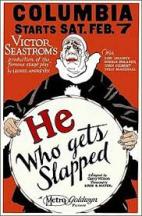 He Who Gets Slapped (Dir. Victor Sjostrom, US, 1924) Lon Chaney stars as ‘He’ in this compelling and exceptionally well-executed drama, a scientist who looses both his wife and his career to a scheming rival who slaps him into humiliation. Retreating from his former life he joins a circus as a clown, becoming a popular success with an act in which he is slapped whenever he attempts to speak, thus repeatedly reliving his past
  humiliation. But making the acquaintance of another performer, the attractive daredevil horse-back rider Consuelo (Norma Shearer), brings with it the chance for redemption and happiness. Based on a highly-regarded Russian play and directed by noted Swedish film-maker Victor Sjostrom, the film was both a popular and critical success on its first release, further elevating Chaney to super-stardom and providing important steps in the rising careers of Norma Shearer and John Gilbert. The film was also the first to feature the snarling lion motif for MGM. Find out more at silentfilm.org. Presented as part of the Kennington Bioscope‘s Silent Film Weekend. With live musical accompaniment. Cinema Museum, London Link
21 April
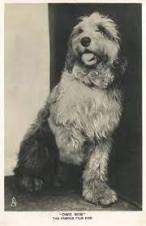 Owd Bob (Dir. Henry Edwards, UK, 1924) (Screening format – 35mm, ??mins) Henry Edward’s 1924 British silent film, featured Buttons the Old English sheepdog in his finest, and only, screen performance as the titular Owd Bob – a sheepdog whose gentle skills as a herder come under fire when he is suspected of being the rogue, sheep-killer dog terrorising the lambs of the Cumbrian countryside. The film is an adaptation of Alfred Ollivant’s classic children’s novel written in the Cumbrian dialect. Owd Bob is a mid-career entry in the directorial oeuvre of Henry Edwards, a hugely popular British actor, producer, director and scenarist, whose career began in 1916 and, working initially as director and latterly as actor, lasted until the 1950s. Find out more at wikipedia.org Presented as part of the Kennington Bioscope‘s Silent Film Weekend. With live musical accompaniment. Cinema Museum, London Link
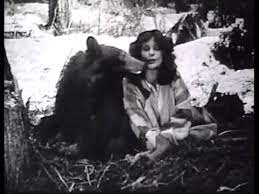 Restorations and Discoveries – (Screening format – scans of 35mm nitrate prints) Joshua Cattermole, who previously brought us The Gold Diggers from 1923, will present his latest finds, which include a collection of Robert Paul films (1896-1901) and The Dogger Bank Incident (1904), together with an Oliver Hardy fragment from 1916. He will be including a fragment from the only surviving footage from Her Triumph with famous French singer and actress Gaby Deslys along with the surviving footage from the 1913 L’ultimo atout (Lying Lips) with Francesca Bertini. Michelle Facey will present a beautifully tinted and toned restoration of Nell Shipman’s, The Light on Lookout Mountain (1923) with Shipman, Dorothy Winslow, Ralph Cochner and Brownie the bear, a Northwoods snow-covered drama filmed at Priest Lake, Idaho. Presented as part of the Kennington Bioscope‘s Silent Film Weekend. Presented by Joshua Cattermole and Michelle Facey. With live musical accompaniment. Cinema Museum, London Link
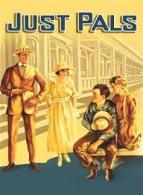 Just Pals (Dr. John Ford, US, 1920) (Screening format – 35mm, 58mins) Bim (Buck Jones) seems to be his town’s biggest loser, but when he takes a needy 13-year-old boy named Bill (George Stone) under his wing, it seems there may be some hope for Bim. After learning about Bill, a young teacher, Mary (Helen
  Ferguson), whom Bim secretly adores, helps get the young boy into school. And when Bim then helps Mary repay a loan, defaulted on by shifty boyfriend (William Buckley), it becomes evident that Bim can reform. As the plot in this captivating film twist and turns, the stakes get higher, the action gets more intense and hope for Bim bounds upward. This was director John Ford’s first picture with Fox, having been loaned to William Fox’s
  company by Universal. The director was attracted by the prospect of higher production budgets, by the somewhat wider range of material Fox offered him, and, not the least of his concerns, by a higher salary (six hundred dollars a week). The cowboy actor Buck Jones, a likably unpretentious performer, tragically died in Boston’s disastrous Cocoanut Grove nightclub fire in 1942. Find out more at catalog.afi.com. Presented as part of the Kennington Bioscope‘s Silent Film Weekend. With live musical accompaniment. Cinema Museum, London Link
 Comedies of 1924 – (Screening format – 35mm nitrate scans and digital prints) 1924 was a vintage year for silent comedy and this programme commemorates its centenary with a cross-section of styles, from the urbane absurdity of Charley Chase to the grotesque parody performances of Ben Turpin, via familiar names such as Stan Laurel and some less-recalled comics, among them Cliff Bowes of the Educational comedies (there was a good reason for the name!). Presented as part of the Kennington Bioscope‘s Silent Film Weekend. Presented by Glenn Mitchell and Matthew Ross. With live musical accompaniment. Cinema Museum, London Link
 Taras Bulba (Dir. Vladimir Strizhevsky and Joseph N. Ermolieff, Ger, 1924) (Screening format – 35mm, 120mins ) Forget the awful talkie version with Yul Brynner, this one starred J.N. Douvan-Tarzow, Oscar Marion and Clementine Plessner. Based on Nikolai Gogol’s short story, it was made at the Emelka Studios in Munich and was one of several Russian-themed films that exiled producer Ermolieff made there during the 1920s. Art direction was by Kurt Dürnhöfer and Willy Reiber. The print screened here was edited down from the film’s original three-hour version, in two parts, to a single two-hour version (with added English titles) by an influential cinema group, The Film Society, in London later in the 1920s. Taras Bulba is set in the 16th century, when the Cossack communities of the Ukraine maintained a barbarous armed camp, the Setch, south of the Dieper, and fought battles against the Tartars, Turks and the Poles. The two sons of Cossack Taras Bulba, Ostap and Andrei, are sent to the city to learn and train. Whilst in Dubno, Andrei encounters Pannotchka, the daughter of the Voivode of Dubno, and the two fall in love. The two brothers return to their Cossack community, and whilst celebrating, news comes that the Poles are attacking the Cossacks. Find out more at wikipedia.org Presented as part of the Kennington Bioscope‘s Silent Film Weekend. With live musical accompaniment. Cinema Museum, London Link
 Pathescope Presents – (Screening format – 9.5mm prints) An ‘Only On Nine-Point-Five’ show, presented by Chris Bird. Original, 90-year old film prints will be screened on a vintage 1950s projector. The prints date from the golden age of this domestic format, beginning with a rare publicity reel advertising the range of what was on offer for film enthusiasts of the day to screen in their own homes, released when Pathescope had just secured the rights to distribute the finest films from German studio UFA on their gauge. For our main feature we have what we believe to be the only tinted copy of Metropolis in this country (the digital restoration being black and white throughout). We will also be screening a two-reel western, stylishly directed by a young William Wyler. The films will show off the range and quality of the films once available on the iconic home movie gauge, and, in this form, cannot be seen any other way. Presented as part of the Kennington Bioscope‘s Silent Film Weekend. Presented by Chris Bird. With live musical accompaniment. Cinema Museum, London Link
25 April
 The Lodger: A Story of the London Fog (Dir. Alfred Hitchcock, UK, 1927) (Screening format – not known, 91 mins ) In The Lodger, a serial killer known as “The Avenger” is on the loose in London, murdering blonde women. A mysterious man (Ivor Novello) arrives at the house of Mr. and Mrs. Bunting looking for a room to rent. The Bunting’s daughter (June Tripp) is a blonde model and is seeing one of the detectives (Malcolm Keen) assigned to the case. The detective becomes jealous of the lodger and begins to suspect he may be the avenger. Based on a best-selling novel by Marie Belloc Lowndes, first published in 1913, loosely based on the Jack the Ripper murders, The Lodger was Hitchcock’s first thriller, and his first critical and commercial success. Made shortly after his return from Germany, the film betrays the influence of the German expressionist tradition established in such films as The Cabinet of Dr. Caligari (1919) and Nosferatu (1922). Find out more at silentfilm.org With live musical accompaniment by Hugo Max. Prince Charles Cinema, London Link
28 April
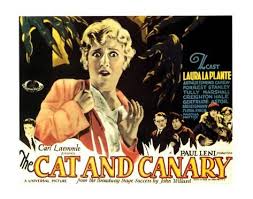 The Cat And The Canary (Dir. Paul Leni, US, 1927) (Screening format – not known, 82mins) The Cat and the Canary, originally a stage play, weaves a tale now very familiar to lovers of the horror genre. Cyrus West, a millionaire, died a presumed madman. His will is only to be read 20 years following his death. The heir? A 20-something girl by the name of Annabelle West. However, the will has an odd condition – since the greed of West’s family drove him to madness (like cats surrounding a canary), Annabelle must be deemed psychologically sound, or the money turns over to a secret
  heir named in an envelope held by Mr. Crosby, the lawyer overseeing the will reading. Mr. Crosby soon goes missing, with Annabelle the only witness to his disappearance. Is Annabelle spiraling into insanity? Or is the mystery heir pushing her there? The film takes us on a twisty whodunit, one of the very first of the genre, and indubitably one of the few that withstands the test of time. Directed by German expressionist film-maker Paul Leni, his first Hollywood film after having been recruited by producer Carl Laemmle for Universal, and remade three times in the sound era, this silent version is considered the definitive rendering. Find out more at silentfilm.org. With live piano accompaniment by Lillian Henley. Palace Cinema, Broadstairs Link
 Pavement Butterfly (Dir. Richard Eichberg, Ger/UK, 1929) (Screening format – digital 4k, 96mins) Anna May Wong is luminescent in this, her last silent film, starring as Mah, the Butterfly Princess, a Parisian fan dancer whose circus act goes tragically wrong. Blamed for a man’s death, she flees to the
  Riviera, taking up with a struggling artist, who she comes to love just as a malevolent character from her past reappears. One of Anna May Wong’s five collaborations with Eichberg, which greatly enhanced her reputation in Europe, this is the German version beautifully restored by Oliver Hanley at Deutsches Film Institute. Find out more at imdb.com Introduced by Bryony Dixon, BFI Silent Film Curator. With live musical accompaniment. BFI Southbank, London Link
 Silentfilmcalendar.org