


2 April
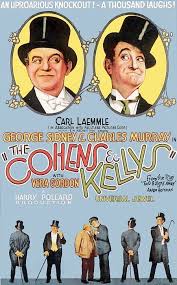 The Cohens And The Kellys (Dir. Harry Pollard,US, 1926) (Screening format – digital, 108mins) A spirited comedy about two families at loggerheads in New York’s Lower East-Side. replete with stock ethnic characters – the feisty Irish cop, hard-working Jewish storekeeper, cheerful and buxom Irish wife, and anxious Jewish mother. Jacob Cohen, who owns the dry goods store, and Patrick Kelly, an Irish cop, are constantly at loggerheads, feuding over
  anything and everything. Kelly’s son, Tim, and Cohen’s daughter, Nannie, fall in love despite the bickering of their parents; when they cannot get parental consent for their marriage, they secretly wed. But that’s just the start of the fun…. Effortlessly living up to its promotional tagline – ‘An Uproarious Knockout! A Thousand Laughs!’ – The Cohens And The Kellys is a warm and timelessly entertaining film. Find ut more at ithankyouarthur.blogspot.com. With live musical accompaniment by multi-award-winning Irish accordionist Dermot Dunne and saxophonist Nick Roth, Artistic Director of the Yurodny Ensemble. Introduced by Ross Keane, Director of the Irish Film Institute. BFI Southbank, London Link
5 April
 Boy Woodburn (Dir. Guy newall, UK, 1922) (Screening format – 35mm, 70mins) Director Guy Newall also stars alongside his wife Ivy Duke in this screen adaption of Alfred Olivant’s 1917 novel of the same title (it was released in the USA as Wings of the Turf). The story is set amid the world of English horse racing, where a trainer’s daughter agrees to marry a penniless banker if her foals win the Grand National. Also in the leading cast are A. Bromley Davenport, Mary Rorke, Cameron Carr and John Alexander. Guy Newall was already an established actor by the time he met photographer George Clark when both were serving in the First World War. On leaving the Army, they set up a production company that led in time to the construction of Beaconsfield studios. While awaiting completion of the new facility, Newall went on location to the New Forest and Salisbury Plain to film Boy Woodburn and an adaptation of Warwick Deeping’s 1911 novel Fox Farm. Find out more at wikipedia.org Presented as part of the Kennington Bioscope Silent Film Weekend. Introduced by Lawrence Napper. With live musical accompaniment. Cinema Museum, Lambeth Link
 Five Actresses from the Teens Profiling a quintet of the most influential women in early cinema: these include writer, director, and actress Gene Gauntier (pictured right) of the Kalem company, with whom she worked variously in the USA, Ireland and the Far East before leaving to establish her own `Gene Gauntier Feature Players’; Ethel Grandin, an early star of Carl Laemmle’s IMP company who, with cinematographer (and her future husband) Ray Smallwood, was taken to
  California by director Thomas H. Ince before returning to New York to star in George Loane Tucker’s sensational 1913 drama Traffic in Souls; another Kalem star, the Swedish-born actress Anna Q. Nilsson (pictured left) , a former model named in 1907 as `the most beautiful woman in America’, whose later freelance career sustained throughout the silent era to the point where, in 1928, she set a record for receiving fan mail (in the region of 30,000 letters per month); Laura Sawyer, a former Shakespearian actress who joined Edison in 1908 under the direction of J. Searle Dawley (the subject of a previous talk by Dave Peabody) before moving on, five years later, to Famous Players; and Jane Wolfe, again of Kalem, whose films for the studio include The Mexican Joan of Arc (1911), directed by George Melford. Presented as part of the Kennington Bioscope Silent Film Weekend. Introduced by Dave Peabody. With live musical accompaniment. Cinema Museum, Lambeth Link
 Revolutionshochzeit ( aka The Last Night) (Dir. A. W. Sandberg, Ger, 1928) (Screening format – digital, 100mins) Rarely seen and, for many, a neglected masterpiece, the costume drama Revolutionshochzeit was adapted from the 1909 novel by Danish writer Sophus Michaëlis and directed by fellow-Dane A. W. Sandberg. Produced and
 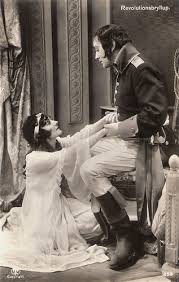 distributed by the German company Terra Film, it was shot at their Marienfelde Studios in Berlin with sets designed by the noted art director Hans Jacoby. A clue to the story lies in the German-language title, which translates to `revolution wedding’; in 1792, a French aristocrat finds herself confronted with the choice of either standing with her peers or becoming a revolutionary. Starring in this truly international production are Italian actress Diomira Jacobini, legendary Swedish stage actor Gösta Ekman and one of director Sandberg’s regular players, Karina Bell, who was again from Denmark. Also in the cast are Austrian-born Fritz Kortner and the German actors Walter Rilla, Paul Henckels and Ernst Behmer. Find out more at filmstarpostcards.blogspot.com. Presented as part of the Kennington Bioscope Silent Film Weekend. With live musical accompaniment. Cinema Museum, Lambeth Link
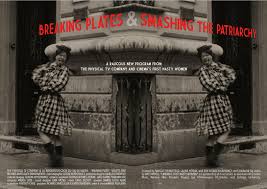 Breaking Plates and Smashing The Patriarchy The World Premiere of a raucous new programme from the Physical TV Company, who gave us Cinema’s First Nasty Women (as seen in an online KenBio presentation during 2022). Breaking Plates and Smashing the Patriarchy is the second in the Nasty Women series, a programme of rollicking shorts that takes inspiration from the freedom of the first years of cinema to bring a boundary-smashing brawl and a creative revolution for women to the screen. This programme will include a 25-minute documentary with film sequences. Presented as part of the Kennington Bioscope Silent Film Weekend. Introduced by Michelle Facey. With live musical accompaniment. Cinema Museum, Lambeth Link
 The Yellow Lily (Dir. Alexander Korda, US, 1928) (Screening format – 35mm, 83 mins) Although known primarily as a maker of British films, Hungarian-born Alexander Korda spent four years working at First National in Hollywood (following a stint in Berlin) before relocating to London. His first American film, The Stolen Bride (1927) was the first of four Korda films starring Billie Dove. In this and other respects it was something of
  a template for The Yellow Lily, in which she is co-starred with British actor Clive Brook, who plays an amorous Archduke. Dove plays the sister of a village doctor (Nicholas Soussanin), to whom the Archduke’s spurned lover (Jane Winton) is taken after a feigned suicide attempt; the Archduke’s attention is drawn instead to the attractive newcomer. Also in the cast are German actor Gustav von Seyffertitz, as the Archduke’s head of household; Edison veteran Marc McDermott as the Archduke’s father; French-American actress Eugenie Besserer as his mother; and Korda’s fellow-Hungarian Charles Puffy (real name Huszár Pufi), who aside from feature roles of this type also starred in a long run of `Bluebird Comedies’ for Universal. Findout more at catalog.afi.com Presented as part of the Kennington Bioscope Silent Film Weekend. Introduced by Liz Cleary. With live musical accompaniment. Cinema Museum, Lambeth Link
 The Ring (Dir. Alfred Hitchcock, UK, 1927) (Screening format – digital, 108 mins) One of Alfred Hitchcock’s most highly regarded silents, The Ring, made at Elstree, was the first film made by British International Pictures (BIP), which the director joined after previously having worked at Gainsborough. Although frequently described as Hitchcock’s only original screenplay, there was some degree of input from Eliot Stannard, who wrote all of Hitchcock’s other silent films; the idea, though, was Hitchcock’s own, inspired by
  boxing matches he had attended where he noticed how well-to-do many of the spectators had seemed and that the fighters themselves were sprinkled with champagne after each round. Carl Brisson, Lillian Hall-Davis and Ian Hunter star in a love-triangle tale about Jack, a former fairground boxer, Bob, the heavyweight champion whose sparring partner he becomes and Jack’s wife Mabel, for whose affections Bob becomes a rival. British character actor Gordon Harker, years before his tenure as `Inspector Hornleigh’, plays Jack’s trainer. Real-life boxer Bombardier Billy Wells – at one time the man who struck the gong at Rank! – makes an uncredited appearance. Find out more at screenonline.org Presented as part of the Kennington Bioscope Silent Film Weekend. Introduced by Neil Alcock, author of Hitchology. With live musical accompaniment. Cinema Museum, Lambeth Link
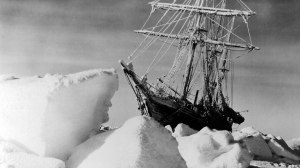 South (Dir. Frank Hurley, UK/Aus, 1919) (Screening format – not known, 88mins). Australian filmmaker Frank Hurley’s record of Shackleton’s 1914-17 Antarctic expedition is also a document of life – human and otherwise – striving to survive in the most adverse climatic conditions imaginable. More than a mere chronicle of an epic undertaking, the film is visually magnificent, its images of the vast frozen wilderness composed with a meticulous attention to framing and light. Restored with its original tinting and toning by the BFI National Archive and EYE Filmmuseum, this incredible film of true-life heroism and survival in the most formidable conditions is over a century old. It lives on as an enthralling testimony to the delicate balance between humanity and the natural world.Find out more at moviessilently.com Presented by Northern Silents. With live musical accompaniment by Jonny Best and other Northern Silents musicians. Harrogate Theatre, Harrogate Link
6 April
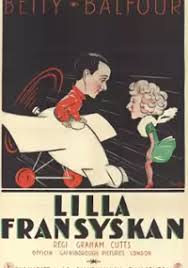 The Sea Urchin (Dir. Graham Cutts, UK, 1926) (Screening format – 35mm, 86mins) Also known as The Cabaret Kid, The Sea Urchin was produced at Gainsborough Studios by Michael Balcon and directed by Graham Cutts. The star is Betty Balfour, one of Britain’s top screen attractions of the 1920s . This is a romantic comedy with echoes of Romeo and Juliet, about two
  aristocratic English families whose mutual enmity finally comes to an end when the daughter from one side (Balfour) meets the other family’s son, a pilot (George Hackathorne) in a Paris nightclub. Each is unaware of the other’s lineage and the daughter must be rescued from the nightclub’s owner. As well as a poignant depiction of the struggles and sacrifices made by
  women during that era The Sea Urchin offers a striking portrayal of the cabaret scene, which was a hub for artistic expression and liberation during the 1920s. The cinematography is remarkable, capturing the vibrant atmosphere of the cabarets and the performers who brought them to life. Find out more at wikipedia.org Presented as part of the Kennington Bioscope Silent Film Weekend. Introduced by Lawrence Napper. With live musical accompaniment. Cinema Museum, Lambeth Link
 Restorations and Discoveries Little Mickey Grogan (Dir. James Leo Meehan, US 1927) (screening format – digital) Eric Grayson, on video, will present the UK premiere of his restoration of the 1927 comedy-drama Little Mickey Grogan, based on the stories written by Arthur Guy Emprey. It was directed by James Leo Meehan and stars Frankie Darro, Lassie Lou Ahern and Jobyna Ralston (remembered today chiefly as leading lady to Harold Lloyd). The film was long unavailable until an appeal was made in 2015 by former child actress Lassie Lou Ahern (by then 95 years old) for the recovery of this, her final silent film. A French-language 35mm nitrate print was located in the archives of Lobster Films in Paris. The English text was reconstructed with the aid of a script Ahern had kept ever since the film’s production. Little Mickey Groganwill be followed by the latest 35mm nitrate finds by Joshua Cattermole and new restorations from the Tony Saffrey collection, including: Circumnavigation of Graf Zeppelin(Germany 1930); Wait and See(UK 1910), a Gaumont comedy directed by Alf Collins; and a previously missing film by early pioneer R. W. Paul, His Mother’s Portrait, Or, The Soldier’s Vision(UK 1900). Presented as part of the Kennington Bioscope Silent Film Weekend. Introduced by Eric Grayson. With live musical accompaniment. Cinema Museum, Lambeth Link
 The Street (aka Die Strasse) (Dir. Karl Grune, Ger, 1923) (Screening format – digital, 90mins) This was the first of the famous Weimar ‘street films’ with their ambivalent take on the modern metropolis. The chaotic depravity of the urban environment is dangerous enough to bring a bourgeois man to the brink of disaster in Karl Grune’s The Street, when he flees the boredom of his comfortable home and wife for the lure of the city lights. The street, both ominous and tempting, is seen encroaching on his private space when its blinking and tantalizing lights flicker on his ceiling, luring him away from the safety of the home. Director Grune uses light, darkness and moving shadows to create a sense of heightened reality in depicting street life, while the man’s own menacing hallucinations lend a sense of foreboding to the action.. This urban jungle was co-designed by Expressionist painter Ludwig Meidner: its enticements are a mirage – its dangers all too real…Find out more at acinemahistory.com. Presented as part of the Kennington Bioscope Silent Film Weekend. With live musical accompaniment. Cinema Museum, Lambeth Link
 Focus on Biograph (film and digital) A timely look at the output of the famous Biograph studios, associated more usually with the dramas of D.W. Griffith than with Griffith’s own lighter output and the early comedy efforts of the pre-Keystone Mack Sennett. This will also be the premiere of a number of Biograph comedies
  recently restored by the Film Preservation Society, by kind courtesy of Tracey Goessel. Featuring stars like Mabel Normand, Fred Mace, Mary Pickford and Sennett himself, it’s sure to please lovers of both vintage film comedy and early cinema rarities. Presented as part of the Kennington Bioscope Silent Film Weekend. Introduced by Glenn Mitchell and Dave Glass. With live musical accompaniment. Cinema Museum, Lambeth Link
 If I Were Single (Dir. Roy Del Ruth, US, 1927) (Screening format – 35mm, 70mins) If I Were Single is a romantic comedy directed by Roy Del Ruth, who was initially a writer then director for Mack Sennett (as was his elder brother, Hampton Del Ruth). By the 1930s he was the second highest paid director in Hollywood, his credits including the 1931 version of The Maltese Falcon, comedies and dramas with James Cagney and musicals such as Broadway Melody of 1936. Based on the story Two-Time Marriage by Jack Townley, If I Were Single was originally released with
  synchronised music and sound effects, but the discs are not known to have survived. It was remade as a talkie in 1930 under the title Divorce Among Friends. This earlier version of the tale, about a rich girl trying to break up a couple’s marriage while the wife enjoys a flirtation of her own, stars May McAvoy (remembered now for the 1925 version of Ben-Hur and pioneering part-talkie The Jazz Singer), Conrad Nagel and Myrna Loy, some years before her association with William Powell in the Thin Man series. Find out more at catalog.afi.com Presented as part of the Kennington Bioscope Silent Film Weekend. Introduced by Michelle Facey. With live musical accompaniment. Cinema Museum, Lambeth Link
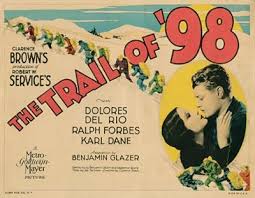 The Trail of ’98 (Dir. Clarence Brown, US, 1928) (Screening format – digital, 87mins) Starring Dolores del Río, Ralph Forbes, Karl Dane and Harry Carey, The Trail of ’98 was based on the 1910 novel by Robert W. Service, an adopted Canadian born in Lancashire. He had travelled extensively in the western parts of Canada and the US and his poems earned him the reputation variously of `the Poet of the Yukon’ and `the Canadian Kipling’. Adapted for the screen by Joseph Farnham, Benjamin Glazer and Waldemar Young, The Trail of ’98 became, in the hands of director Clarence Brown, one of the truly epic western films, about fortune hunters from all over the country
 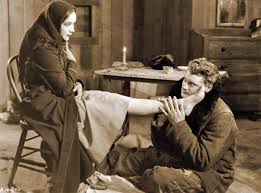 rushing to the Klondike after the discovery of gold there in 1897. Shooting brought hardships in many ways comparable to those genuinely experienced in the gold rush it depicts; it cost the lives of four stuntmen. Location filming took place in Denver and the Great Divide in Colorado, Truckee in California, Dawson City in the Yukon (from where, ironically, a great many missing silent films were later recovered), and various Alaskan regions including Skagway and the Copper River. Recalling the experience for Kevin Brownlow’s book ‘The Parade’s Gone By’, Brown considered it to have been his toughest assignment, taking a year to make and causing his weight to drop twenty pounds in the process. `We worked at eleven thousand six hundred feet for five weeks’, he remembered. `I had to send a number of people down; they just couldn’t take it. We couldn’t walk fast, we couldn’t run – we could hardly do anything at that altitude.’ Find out more at moviessilently.com Presented as part of the Kennington Bioscope Silent Film Weekend. With live musical accompaniment. Cinema Museum, Lambeth Link
11 April
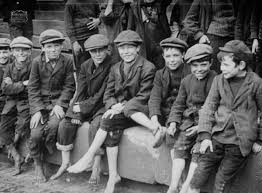 Echoes of the North: Four Chapters in Time This silent film compilation captures the North as it’s rarely seen today. Drawn from over 100 fragments of archive film, this evocative silent movie takes audiences down the highways and byways of Northern life in the early 20th century – our communities and industries, our villages and cities, and the landmark moments that defined our lives. The music was composed by award-winning composer and BBC presenter Neil Brand as the first ever all-brass soundtrack to a silent movie. Find out more at silentlondon.co.uk Presented by Northern Silents. With live brass band accompaniment by Bradford’s very own BD1 Brass. , Link
13 April
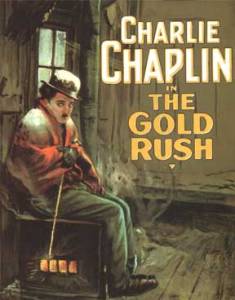 Goldrush (Dir. Charles Chaplin, US, 1925) (Screening format – not known, 95mins) In this classic silent comedy, the Little Tramp (Charles Chaplin) heads north to join in the Klondike gold rush. Trapped in a small cabin by a blizzard, the Tramp is forced to share close quarters with a successful prospector (Mack Swain) and a fugitive (Tom Murray). Eventually able to leave the cabin, he falls for a lovely barmaid (Georgia Hale), trying valiantly to win her affections. When the prospector needs help locating his claim, it appears the Tramp’s fortunes may change. It is today one of Chaplin’s most celebrated works, and he himself declared several times that it was the film for which he most wanted to be remembered. The film contains some of Chaplin’s most iconic sequences, such as the eating of a boot and the dance of the bread rolls. Find out more at moviessilently.com . With live organ accompaniment by Donald Mackenie. Musical Museum, Brentford Link
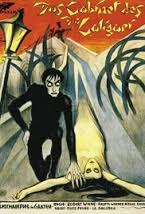 Cabinet of Dr Caligari (Dir. Robert Wiene, 1920) (Screening format – not known, 77 mins) In the village of Holstenwall, fairground hypnotist Dr Caligari (Werner Krauss) puts on show a somnambulist called Cesare (Conrad Veidt) who has been asleep for twenty three years. At night, Cesare walks the streets murdering people on the doctor’s orders. A student (Friedrich Feher) suspects Caligari after a friend is found dead and it transpires that the doctor is the director of a lunatic asylum. Fueled by the pessimism and gloom of post-war Germany, the sets by Hermann Warm stand unequaled as a shining example of Expressionist design. Find out more at wikipedia.org. Presented as part of the Bath Archaeo-Heritage Film Festival. With live musical accompaniment by Hugo Max. Bath Link
15 April
 Modern Times (Dir, Charlie Chaplin, US, 1936) (Screening format – digital, 87mins) Regarded as the last great silent film and made almost a decade into the sound era, Modern Times is Charlie Chaplin’s last outing as the Little Tramp.and finds our hero struggling to make ends meet in the Depression of the 1930s Enlivened by bits of inventive sound design the film is an imaginative and hilarious send-up of the modern industrialized world. His classic Little Tramp character is a factory worker tightening bolts on an assembly line, until a mishap with an automatic feeding machine sends him off course. Mixing the joyfulness of Chaplin’s comedy gags with a satire of modern bureaucracy, Modern Times remains the funniest of the comedian’s social critiques. Chaplin had not been seen on a theatre screen for five years when Modern Times premiered to great acclaim in 1936. Still stubbornly resisting work in “talkies,” he stood alone in his insistence upon preserving the silent film although his voice is heard on the soundtrack he himself composed. Find out more at www.charliechaplin.com With recorded Chaplin score. BFI Southbank, London Link
18 April
 Phantom Of The Opera (Dir. Rupert Julian, 1925) (Screening format – not known, 103mins) A title that needs no introduction, The Phantom of the Opera has spawned many remakes, remasters and sequels. This original film version, produced with moments of early Technicolour, sees Lon Chaney, the ‘Man of a Thousand Faces’ perform one of his most iconic roles. His ghastly make-up and outrageous performance made this title a benchmark in the American silent film era. The film was a critical and commercial success upon release, and still stands as an important film in cinematic history to this day, with press quotes from the time labeling the film an ‘ultra-fantastic melodrama’ (New York Times), ‘produced on a stupendous scale’ (Moving Picture World) and ‘probably the greatest inducement to nightmare that has yet been screened’ (Variety). The mysterious phantom (Lon Chaney) is a vengeful composer living in the catacombs under the Paris Opera House, determined to promote the career of the singer he loves (Mary Philbin). Famed for the phantom’s shock unmasking, incredible set designs and the masked ball sequence, it still packs a punch. Find out more at wikipedia.org Presented by Northern Silents. With live musical accompaniment by Jonny Best. . Link
20 April
Modern Times (Dir, Charlie Chaplin, US, 1936) (Screening format – digital, 87mins) Regarded as the last great silent film and made almost a decade into the sound era, Modern Times is Charlie Chaplin’s last outing as the Little Tramp.and finds our hero struggling to make ends meet in the Depression of the 1930s Enlivened by bits of inventive sound design the film is an imaginative and hilarious send-up of the modern industrialized world. His classic Little Tramp character is a factory worker tightening bolts on an assembly line, until a mishap with an automatic feeding machine sends him off course. Mixing the joyfulness of Chaplin’s comedy gags with a satire of modern bureaucracy, Modern Times remains the funniest of the comedian’s social critiques. Chaplin had not been seen on a theatre screen for five years when Modern Times premiered to great acclaim in 1936. Still stubbornly resisting work in “talkies,” he stood alone in his insistence upon preserving the silent film although his voice is heard on the soundtrack he himself composed. Find out more at www.charliechaplin.com With recorded Chaplin score. BFI Southbank, London Link
23 April
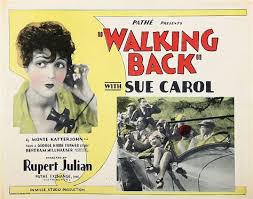 Walking Back (Dir. Robert Julian and Cecil B DeMille, US, 1928) + The California Mail (Dir. Albert S. Rogell, US, 1929)(Screening format – 16mm, 62/60mins) `1928 – and how!’ This early intertitle sums up Walking Back as an archetypal `jazz age’ movie of impetuous youth, adapted by Monte M. Katterjohn from George Kibbe Turner’s story A Ride in the Country, which had been serialised in Liberty magazine the previous year. Produced by Bertram Millhauser for Cecil B. DeMille and directed by Rupert Julian (with DeMille as uncredited co-director), Walking Back stars Richard Walling, Sue Carol, Robert Edeson and Jane Keckley. The film mixes drama, comedy and automotive mayhem, notably a bumping-car duel between `Smoke’ (Walling) and his rival, plus a climactic chase through city streets with the viewer getting a harrowing driver’s-eye view of the action. Variety believed the film captured the era’s `jazz mad world’ and saw it as an attempt to promote rising star Sue Carol as a new `It Girl’ to rival Clara Bow. Find out more at wikipedia.org. The
 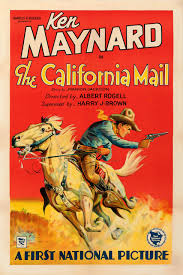 California Mail premieres a rediscovered lost film. Written by Marion Jackson and Leslie Mason, this little-seen western is set during the darkest hour of the American Civil War. The Union, desperately in need of gold, sends an agent to clean out the bandit gangs that have been stopping the vital California gold shipments. The agent is played by Ken Maynard, formerly a trick rider with Buffalo Bill’s Wild West Show and, later, with the Ringling Brothers’ circus. A champion rodeo rider famous for performing his own stunts, Maynard (not forgetting his horse, Tarzan) made his film debut in The Man Who Won (1923). He went on to become one of the superstars of westerns and, after the coming of sound, Hollywood’s first singing cowboy. Also in the cast of The California Mail are Dorothy Dwan, Lafe McKee, Paul Hurst, C.E. Anderson and Fred Burns. Find out more at imdb.com Presented by the Kennington Bioscope. With live musical accompaniment. Cinema Museum, Lambeth Link
25 April
 It (Dir. Clarence Badger, US, 1927) (Screening format – not known, 72 mins) Starring Clara Bow and Antonio Moreno, It is based on stories from the sensationalist novelist Elinor Glyn, of Three Weeks fame. She had coined the term `it’ to describe what makes a personality attractive in her 1914 novel The Man and the Moment; the novella It and its screen version – to which Glyn contributes a cameo, as herself – both appeared in 1927. Glyn’s onscreen explanation of what defines `it’ makes this an early example of the `concept film’
 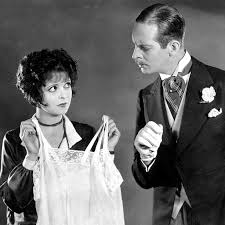 as well as of product placement, given that her story is seen being read in Cosmopolitan, the magazine in which it had been serialised the previous year. Stage actress Dorothy Tree had her first film role in a small, uncredited part. Similarly, a young Gary Cooper was cast in a minor role as a newspaper reporter. The film was a box office hit, consolidating Clara Bow’s burgeoning status as one of the most popular actresses of the era and acquiring for her the soubriquet `the IT Girl’. A year later she starred in a film version of Glyn’s 1905 novel Red Hair, of which only some brief Technicolor footage of Bow is known to survive. Find out more at moviessilently.com. Presented as part of the Dunoon Film Festival. With live musical accompaniment by Neil Brand. Burgh Hall, Dunoon Link
26 April
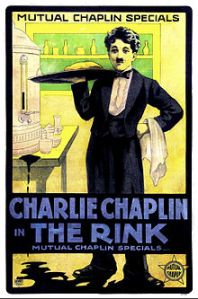 Silent Comedy Triple Bill The three greatest silent comedians come together for one awesome show. Charlie Chaplin’s classic The Rink features the Tramp working as a waiter in a high-class restaurant and bunking off to the roller-skating rink in his spare time, Buster Keaton’s
  The High Sign involves Buster looking for work on the beach boardwalk and unwittingly ending up as a paid assassin for a bunch of crooks and Harold Lloyd’s Never Weaken sees our bespectacled hero clinging to a high building after attempting suicide on mistakenly believing his girlfriend loves another. Presented as part of the Dunoon Film Festival. With live musical accompaniment by Neil Brand. Burgh Hall, Dunoon Link
 The Blinking Buzzards The UK Buster Keaton Society. Quarterly meeting of the society dedicated to the appreciation of the silent comedian, featuring classic examples of Buster’s work. With recorded score. Cinema Museum, Lambeth Link
27 April
 It (Dir. Clarence Badger, US, 1927) (Screening format – not known, 72 mins) Starring Clara Bow and Antonio Moreno, It is based on stories from the sensationalist novelist Elinor Glyn, of Three Weeks fame. She had coined the term `it’ to describe what makes a personality attractive in her 1914 novel The Man and the Moment; the novella It and its screen version – to which Glyn contributes a cameo, as herself – both appeared in 1927. Glyn’s onscreen explanation of what defines `it’ makes this an early example of the `concept film’ as well as of product placement,
  given that her story is seen being read in Cosmopolitan, the magazine in which it had been serialised the previous year. Stage actress Dorothy Tree had her first film role in a small, uncredited part. Similarly, a young Gary Cooper was cast in a minor role as a newspaper reporter. The film was a box office hit, consolidating Clara Bow’s burgeoning status as one of the most popular actresses of the era and acquiring for her the soubriquet `the IT Girl’. A year later she starred in a film version of Glyn’s 1905 novel Red Hair, of which only some brief Technicolor footage of Bow is known to survive. Find out more at moviessilently.com. With live piano accompaniment by Lillian Henley. Palace Cinema, Broadstairs Link
 Neil Brand Presents Laurel And Hardy After the national success of his long-running show ‘Neil Brand Presents Buster Keaton’, the composer/writer/broadcaster/musician returns with an all-new show about the immortal comedy duo recently portrayed in the hit film ‘Stan and Ollie’. Fully illustrated with stills, clips (both silent and sound) and Neil’s superlative piano accompaniment and culminating in two of the Boys’ best silent short films, Big Business and Liberty, this is a show that promises gales of laughter throughout, as well as getting under the skin of two warm, funny men who continue to make the world laugh when it needs it most. Presented as part of the Dunoon Film Festival. With live musical accompaniment by Neil Brand. Burgh Hall, Dunoon Link
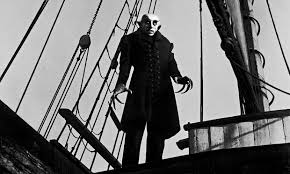 Nosferatu (Dir. F W Murnau, 1922) (Screening format – not known, 96mins) A German Expressionist horror masterpiece starring Max Shreck as the vampire Count Orlok. The film was an unauthorised adaption of Bram Stoker’s ‘Dracula’ with names and other details changed because the studio could not obtain the rights to the novel. Stoker’s heirs sued over the adaption and a court ruling ordered that all copies of the film be destroyed. However, a few prints survived and the film came to be regarded as an inspirational master work of the cinema. In the film, Count Orlok travels across Europe leaving a trail of death in his wake. Brilliantly eerie, with imaginative touches which later adaptions never achieved. Find out more at wikipedia.org With live musical accompaniment by Hugo Max. Prince Charles Cinema, London Link
 Silentfilmcalendar.org