

1 August
 Safety Last (Dir. Fred C Newmeyer/Sam Taylor, US, 1923) (Screening format – not known, 73mins) A boy (Harold Lloyd) moves to New York City to make enough money to support his loving girlfriend (Mildred Davis), but soon discovers that making it in the big city is harder than it looks. When he hears that a store
  manager will pay $1,000 to anyone who can draw people to his store, he convinces his friend, the “human fly,” (Bill Strother) to climb the building and split the profit with him. But when his pal gets in trouble with the law, he must complete the crazy stunt on his own. The image of Harold Lloyd hanging desperately from the hands of a skyscraper clock during Safety Last! is one of the great icons of film history (although it was achieved with a certain amount of film trickery) and this remains one of the best and best loved comedies of the silent era. Find out more at rogerebert.com. With live musical accompaniment by The Lucky Dog Picturehouse. Wilton’s Music Hall, London Link
2 August
 The Navigator (Dir. Donald Crisp/Buster Keaton, US, 1924) (Screening format – not known, 59mins) When the wealthy and impulsive Rollo Treadway (Buster Keaton) decides to propose to his beautiful socialite neighbour, Betsy O’Brien (Kathryn
 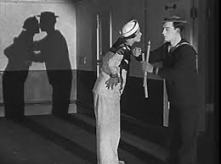 McGuire), things don’t go as planned. Although Betsy turns Rollo down, he still opts go on the cruise that he intended as their honeymoon. When circumstances find both Rollo and Betsy on the wrong ship, with no one else on board, they end up with some hilarious high adventures on the high seas, which allows Keaton plenty of opportunities to display his trademark agility. Find out more at busterkeaton.com With live musical accompaniment by The Lucky Dog Picturehouse. Wilton’s Music Hall, London Link
3 August
 Seven Chances (Dir. Buster Keaton, US, 1925) (Screening format – not known, 56mins) One of Buster Keaton’s funniest comedies, the film features Keaton as Jimmy Shannon, a junior partner in the brokerage firm of Meekin and Shannon, which is on the brink of financial ruin. A lawyer (whom they dodged, mistakenly believing he was trying to add to their woes) finally
  manages to inform Jimmy of the terms of his grandfather’s will. He will inherit seven million dollars if he is married by 7:00 p.m. on his 27th birthday, which happens to be that same day. Shannon immediately seeks out his sweetheart, Mary Jones, who readily accepts his proposal. However, when he clumsily explains why they have to get married that day, she breaks up with him. The race is then on to find Jimmy a bride, any bride, but he hardly expects hundreds to turn up!! From this leisurely start, the film takes off into a fantastically elaborate, gloriously inventive chase sequence, in which Buster escapes the mob of pursuing harridans only to find an escalating avalanche of rocks taking over at his heels as he hurtles downhill. Added only after an initial preview, the rocks make for one of the great Keaton action gags. Find out more at film.avclub.com With live musical accompaniment by The Lucky Dog Picturehouse. Wilton’s Music Hall, London Link
4 August
 Battling Butler (Dir. Buster Keaton, US, 1926) (Screening format – not known, 74mins) Buster Keaton found rich possibilities for physical comedy in this tale of a wealthy milquetoast who is forced, through a series of outlandish coincidences and misunderstandings, to train as a boxer. Based on a popular Broadway musical comedy, the story revolves around two Alfred Butlers – one (Keaton) a timid, mild-
 mannered millionaire, the other a boxing world champion. When Butler-the-fop finds love with a mountain girl (Sally O’Neil), he assumes the identity and arouses the wrath of Butler-the-Brute, leading to a dramatic showdown in which the brawl is very much on. Keaton always selected Battling Butler as one of his favourite features and the picture proved Keaton’s biggest success, outgrossing Douglas Fairbanks’s Black Pirate in its first week on Broadway, encouraging Joe Schenck to give the go-ahead for Keaton’s most ambitious production, The General, with a budget set at half a million dollars. Find out more at silentfilm.org. With live musical accompaniment by The Lucky Dog Picturehouse. Wilton’s Music Hall, London Link
5 August
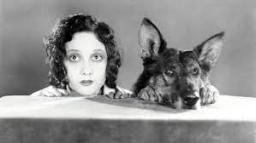 Animal Magic Dogs and cats, penguins and seals, bear cubs and more – experience the wonderful world of animals in silent film, brought to life with live music and sound. Animal Magic! is a relaxed, participatory live-music film show for children aged 5-12 and their adults – but all ages are welcome, including babes-in-arms. The audience is invited to join in with making sound effects and music to bring these wonderful animals to life! As well as its animal stars, the show features appearances from comedy favourites Laurel & Hardy, Mabel Normand, and Buster Keaton. Presented by the Yorkshire Silent Film Festival. With live piano accompaniment by Adam Fairhall and Jonny Best. Picture House, Hebdon Bridge Link
6 August
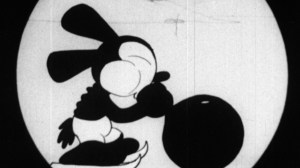 Disney’s Silent Shorts A rare chance to see this programme of early Disney black and white shorts. Travel back to the very earliest days of Walt Disney’s career, with this screening of surviving silent shorts from the Disney archive. The shorts include selections from the popular Alice comedies, featuring live action footage of a young actor playing Alice with an animated cat named Julius, some fairy tales from Disney’s Laugh-O-Gram Studio and his first breakout star, Oswald the Lucky Rabbit – a precursor to Mickey Mouse. This is a rare opportunity to these pioneering, black-and-white films. The programme will show Alice’s Fishy Story (USA 1924), Alice‘s Spooky Adventure (USA 1924), Alice Loses Out (USA 1925), Hungry Hobos (USA 1928) and Sleigh Bells (USA 1928), discovered in the BFI National Archive in 2015. With live piano accompaniment. BFI Southbank, London Link
13 August
 Nosferatu: A Symphony of Horror (Dir. F W Murnau, 1922) (Screening format – not known, 96mins) Nosferatu (1922) is one of the most iconic films of the German expressionist era, let alone cinema itself. In this first-ever screen adaptation of Bram Stoker’s novel Dracula, a simple real-estate transaction leads an intrepid businessman deep into the superstitious heart of Transylvania. There he encounters the otherworldly Count Orlok (portrayed by the legendary Max Schreck, in a performance the very backstory of which has spawned its own mythology) who soon after embarks upon a cross-continental voyage to take up residence in a distant new land… and establish his
  ambiguous dominion. The film was an unauthorised adaption of Stoker’s ‘novel with names and other details changed because the studio could not obtain the rights to the story. Stoker’s heirs sued over the adaption and a court ruling ordered that all copies of the film be destroyed. However, a few prints survived and the film came to be regarded as an inspirational master work of the cinema. Brilliantly eerie, with imaginative touches which later adaptions never achieved and featuring some of the most iconic images in cinema history, Nosferatu continues to haunt modern audiences with its unshakable power of gothic imagery and blood curdling suspense.. Find out more at www.rogerebert.com Presented as part of the Edinburgh Film Festival. With live musical accompaniment by Graeme Stephen and Aidan O’Rourke. Rose Theatre, Edinburgh Link
 Safety Last (Dir. Fred C Newmeyer/Sam Taylor, US, 1923) (Screening format – not known, 73mins) A boy (Harold Lloyd) moves to New York City to make enough money to support his loving girlfriend (Mildred Davis), but soon discovers that making it in the big city is harder than it looks. When he hears that a store manager will pay $1,000 to anyone who can draw people to his store, he convinces his friend, the “human fly,” (Bill Strother) to climb the building and split the profit with him. But when his pal gets in trouble with the law, he must complete the crazy stunt on his own. The image of Harold Lloyd hanging desperately from the hands of a skyscraper clock during Safety Last! is one of the great icons of film history (although it was achieved with a certain amount of film trickery) and this remains one of the best and best loved comedies of the silent era. Find out more at rogerebert.com. Presented as part of the Chichester International Film Festival. Recorded score. Chichester Cinema, Chichester Link
15 August
 Around India With A Movie Camera Drawn exclusively from the BFI National Archive, Sandhya Suri’s remarkable film features some of the earliest surviving film from India as well as gorgeous travelogues, intimate home movies and newsreels from British, French and Indian filmmakers. Taking in Maharajas and Viceroys, fakirs and farmhands and personalities such as Sabu and
  Gandhi, Sandhya Suri’s film explores not only the people and places of over 70 years ago, but asks us to engage with broader themes of a shared history, shifting perspectives in the lead up to Indian independence and the ghosts of the past. Introduced by eminent author and Diplomat, Amish Tripathi, Minister (Culture & Education), High Commission of India & Director, The Nehru Centre. With a superb new score that fuses western and Indian music from composer and sarod player Soumik Datta. Garden Cinema, London Link
 Italian Straw Hat (Dir. Rene Clair, 1928) (Screening format – not known, 105mins) A man is on his way to his wedding when his horse eats the hat of a married woman who is having a secret tryst
 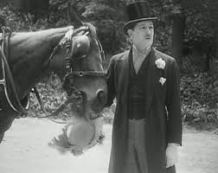 with a soldier, and the hapless groom must replace the chapeau or face the wrath of the lady’s lover. René Clair’s sublime, kinetic farce is set in 1895, at the dawn of the film era, and fondly recalls the techniques of the earliest silents. Pauline Kael called it “one of the funniest films ever made, and one of the most elegant as well.” Find out more at silentfilm.org. Presented as part of the Chichester International Film Festival. With live piano accompaniment by John Sweeney. Guildhall, Chichester Link
17 August
 Tansy (Dir. Cecil Hepworth, UK, 1921) (Screening format – not known, 62 mins) Very much a rarity, Tansy is one of the few surviving feature length films from director Cecil Hepworth, most of whose film work was tragically lost when creditors melted it down to recover the silver nitrate content. Tansy tells the
 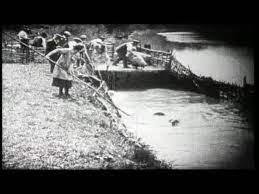 story of an orphaned shepherdess (Alma Taylor) and the two brothers competing for her affections. The film is a classic example of Hepworth’s dictum of making “English pictures with all the English countryside for background and with English idiom throughout.” Although supposedly set in Devon, the film was shot largely in the village of Burpham near Arundel, on the Sussex Downs, and is based upon a book of the same title, written in 1914 by the Rev Edward Tickner Edwards, the vicar of Burpham. Find out more at screenonline.org With recorded specially commissioned score by concert pianist Colin Peters. Arundel Museum, Arundel Link
 Steamboat Bill Jr (Dir. Buster Keaton/Charles Reisner, US, 1928) (Screening format – not known, 71 mins) In Steamboat Bill Jr a crusty river boat captain hopes that his long departed son’s return will help him compete with a business rival. Unfortunately, William Canfield Jnr (Buster Keaton) is an effete college boy. Worse still, he has fallen for the business rival’s daughter (Marion Byron). Featuring some of Buster’s finest and most dangerous stunts, it’s a health and safety nightmare maybe but it’s entertainment that will live forever. The final storm sequence is still as breathtaking today as it was on first release. Not a commercial success at the time, this is now rightly regarded as a Keaton classic. Find out more at Wikipedia.com Presented as part of the Chichester International Film Festival. With live jazz accompaniment featuring: Jo Fooks – saxophone; Neil Casey – piano; Pete Ringrose – bass; Buster Birch – drums. Guildhall, Chichester Link
20 August
Safety Last (Dir. Fred C Newmeyer/Sam Taylor, US, 1923) (Screening format – not known, 73mins) A boy (Harold Lloyd) moves to New York City to make enough money to support his loving girlfriend (Mildred Davis), but soon discovers that making it in the big city is harder than it looks. When he hears that a store manager will pay $1,000 to anyone who can draw people to his store, he convinces his friend, the “human fly,” (Bill Strother) to climb the building and split the profit with him. But when his pal gets in trouble with the law, he must complete the crazy stunt on his own. The image of Harold Lloyd hanging desperately from the hands of a skyscraper clock during Safety Last! is one of the great icons of film history (although it was achieved with a certain amount of film trickery) and this remains one of the best and best loved comedies of the silent era. Find out more at rogerebert.com. Presented as part of the Edinburgh International Film Festival. With live piano accompaniment by Mike Nolan. Old College Quad, Edinburgh Link
22 August
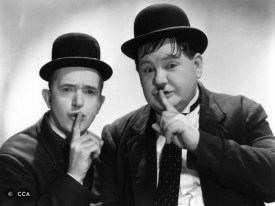 Neil Brand Presents Laurel And Hardy After the national success of his long-running show ‘Neil Brand Presents Buster Keaton’, the composer/writer/broadcaster/musician returns with an all-new show about the immortal comedy duo recently portrayed in the hit film ‘Stan and Ollie’. Fully illustrated with stills, clips (both silent and sound) and Neil’s superlative piano accompaniment and culminating in two of the Boys’ best silent short films, ‘Big Business’ and ‘Liberty,’ this is a show that promises gales of laughter throughout, as well as getting under the skin of two warm, funny men who continue to make the world laugh when it needs it most. Presented as part of the Chichester International Film Festival. With live piano accompaniment by Neil Brand. Chichester Cinema, Chichester Link
25 August
 Phantom Of The Opera (Dir. Rupert Julian, 1925) (Screening format – not known, 103mins) A title that needs no introduction, The Phantom of the Opera has spawned many remakes, remasters and sequels. This original film version, produced with moments of early Technicolour, sees Lon Chaney, the ‘Man of a Thousand Faces’ perform one of his most iconic roles. His ghastly make-up and outrageous performance made this title a benchmark in the American silent film era. The film was a critical and commercial success upon release, and still stands as an important film in cinematic history to this day, with press quotes from the time labelling the film an ‘ultra-fantastic melodrama’ (New York Times), ‘produced on a stupendous scale’ (Moving Picture World) and ‘probably the greatest inducement to nightmare that has yet been screened’ (Variety). The mysterious phantom (Lon Chaney) is a vengeful composer living in the catacombs under the Paris Opera House, determined to promote the career of the singer he loves (Mary Philbin). Famed for the phantom’s shock unmasking, incredible set designs and the masked ball sequence, it still packs a punch. Find out more at wikipedia.org Presented as part of the Chichester International Film Festival. Recorded score. Chichester Cinema, Chichester Link
26 August
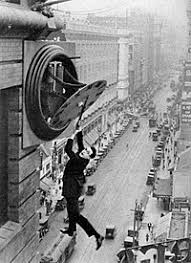 Safety Last (Dir. Fred C Newmeyer/Sam Taylor, US, 1923) (Screening format – not known, 73mins) A boy (Harold Lloyd) moves to New York City to make enough money to support his loving girlfriend (Mildred Davis), but soon discovers that making it in the big city is harder than it looks. When he hears that a store manager will pay $1,000 to anyone who can draw people to his store, he convinces his friend, the “human fly,” (Bill Strother) to climb the building and split the profit with him. But when his pal gets in trouble with the law, he must complete the crazy stunt on his own. The image of Harold Lloyd hanging desperately from the hands of a skyscraper clock during Safety Last! is one of the great icons of film history (although it was achieved with a certain amount of film trickery) and this remains one of the best and best loved comedies of the silent era. Find out more at rogerebert.com. Presented as part of the Chichester International Film Festival. Recorded score. Chichester Cinema, Chichester Link
 Silentfilmcalendar.org