


2 December
 People on Sunday (Dir. Robert Siodmak/Edgar G Ulmer, Ger, 1929) (Screening format – digital, 74mins) Famously, Billy Wilder and Fred Zinnemann worked with Siodmak on this landmark of realist film making, a magical blend of documentary and fiction which takes us back to a glorious summer Sunday in late-1920s Berlin where five young
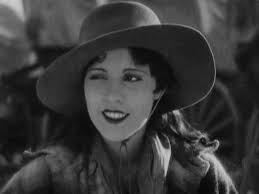
  workers take a day off to spend a flirtatious afternoon together at a lake on the edge of the city.. While they enjoy freedoms undreamt of by their parents, sexual rivalry soon lends an edge to their flirtations. The people portraying the characters were all amateurs belonging to a Berlin collective who, the opening credits inform us, had returned to their normal jobs by the time of the film’s release. They included a taxi driver, a record seller and a wine merchant. But together, the cast and crew produced a classic of silent film and one which still feels remarkably modern. Find out more at archive.org. With recorded score. BFI Southbank, London Link
5 December
 College (Dir. James W Horne/Buster Keaton, US, 1927) (Screening format – not known, 67mins) Keaton followed up his smash hit The General with a higher
  education comedy that seemed to take a cue from Harold Lloyd’s The Freshman (1925). Keaton stars as bookworm Ronald, whose high school girl Mary ditches him for someone with the athletic prowess that Ronald lacks. Determined to win her back, Ronald enters college with an eye on sports, but unfortunately with two left feet. Although James Thorne was given co-directing credit, Buster Keaton later
  claimed he was totally worthless as a director and that the majority of the directing work was done by Keaton himself. While College may not be as well known or as celebrated as other Keaton classics it certainly delivers impressive physical comedy and solid entertainment as only a brilliant Buster Keaton film can. Find out more at aurorasginjoint.com Presented as part of the Highgate International Chamber Music Festival. With musical accompaniment composed by Stephen Prutsman and performed live by piano quintet. St Anne’s Church, Highgate London Link And if you use promo code SILENTFILM30 you can get 30% off when booking a ticket.
6 December
 Man With a Movie Camera (Dir. Dziga Vertov, USSR, 1929) (Screening format – digital, 68mins) Part documentary and part cinematic art, this film follows a city in the 1920s Soviet Union throughout the day, from morning to night. Directed by Vertov, with a variety of complex and innovative camera shots (filmed by Vertov’s equally talented and innovative brother Mikhail Kaufman), the film depicts scenes of ordinary daily life in Russia. Vertov celebrates the modernity of the city, with its vast buildings, dense population and bustling industries. While there are no titles or narration, director and cameraman still naturally convey the marvels of the modern city. Find out more at rogerebert.com . With recorded score. BFI Southbank, London Link
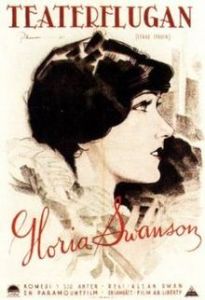 Stage Struck (Dir. Allan Dwan, US, 1925) (Screening format – not known, 87mins) One of the last lighthearted collaborations between Gloria Swanson and Allan Dwan, Stage Struck (1925) is a sweetly funny account of a small-town girl with dreams of fame. Swanson plays Jenny Hagen, a diner waitress who fantasizes about a life on stage. Her heart belongs to Orme Wilson (Lawrence Gray), an expert pancake flipper, who only has eyes for the women in movie magazines. So when a river showboat comes to town, he only has eyes for the star, Lillian Lyons (Gertrude Astor). Inflamed with jealousy, Jenny is determined to get on stage herself, by any means necessary.! One of Paramount’s first features to use Technicolor. Find out more at wikipedia.org Presented by South West Silents. With live musical accompaniment . Megascreen, Bristol Link
7 December
 Way Down East (Dir. D W Griffith, US, 1920) (Screening format – 35mm, 149mins) Subtitled: “A Simple Story of Plain People,” director Griffith intended Way Down East to be a sweeping, lyrical, but epic story, conveying an image of a vanished, unspoiled, pastoral America. Originally a hugely successful stage play, written by Lottie Blair Parker in 1897, Way Down East was an old-fashioned story that espoused nineteenth-century American and Victorian ideals. It had already been filmed twice but by the time Griffith brought the rights in 1920 it was considered outdated and overly melodramatic. As Lillian
 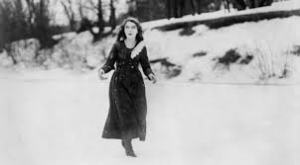 Gish would later recall, “Way Down East was a horse-and-buggy melodrama, familiar on the rural circuit for more than twenty years. As I read the play, I could hardly keep from laughing.” However, while it was Griffith’s most expensive film to date (costing him $175,000, more than the entire cost of his 1915 epic Birth Of A Nation), it was also one of his most commercially successful. The story follows impoverished New England country girl Anna Moore (Lillian Gish) to Boston in search of family aid. Instead she’s duped into a fake marriage by playboy Lennox Sanderson (Lowell Sherman). Pregnancy results in Sanderson abandoning her to care for
 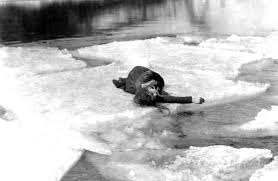 the child alone, which dies soon after birth. The disgrace sends her back into the countryside to work for Squire Bartlett, whose son David (Richard Barthelmess) begins to fall for her.
 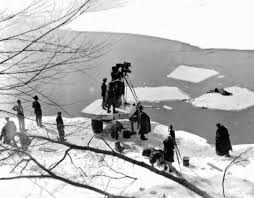 However, her dreadful secret threatens to be revealed. Way Down East is best known for the exciting climax featuring Gish trapped in the ice during a snowstorm. With no computer-generated effects, and no stunt woman taking Gish’s place, the actress recalls, in her autobiography, actually going out into this dangerous situation in subfreezing temperatures, “this kind of dedication probably seems foolish today, but it wasn’t unusual then. Those of us who worked with Mr. Griffith were completely committed to the picture we were making. No sacrifice was too great to get the film right….” Find out more at silentlondon.co.uk With recorded soundtrack. BFI Southbank, London Link
9 December
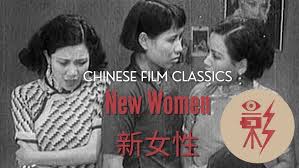 New Women (Dir. Cai Chusheng, Chi, 1935) (Screening format – digital, 106mins) New Women was iconic actress Ruan Lingyu’s swan song, released mere months before her suicide; its story, thinly adapted from the memoir of Ai Xia, an actresses hounded to death by the press several years earlier, eerily parallels Ruan’s own tragically short life. “Often seen [by critics] as a metaphor for China itself, suffering under semi-colonialism, semi-feudalism and Japanese invasion” (Chris Berry and
 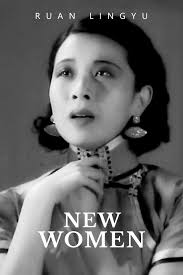 Mary Farquhar, “China On Screen”), Ruan here plays the very model of a “new woman,” an independent-minded music teacher who dreams of becoming a celebrated writer. Her struggles, intensified by lecherous and vengeful men out to manipulate her and the need to provide for her sick daughter in the countryside, are contrasted with those of her best friend, a patriotic female factory worker who is presented as a model figure for post-revolutionary women. Arrestingly modern in its indictment of patriarchy and radical class politics, silent icon Ruan Lingyu’s final film caused waves when the actress’ highly publicised life mirrored her on-screen tragedy. Find out more at silentsplease.wordpress.com Introduced by Cynthia Gu of Milk Tea Films. With live piano accompaniment. BFI Southbank, London Link
10 December
 Melies Presents Melies An evening of restored hand-coloured Georges Méliès films with live narration based on original texts. Méliès’ story films were originally presented using an onstage narrator to explain the action (this has rarely been done since their initial screenings) and in this capacity we are pleased to welcome as guest the Cinema Museum’s resident French film expert, Jon Davies, in the role of George Méliès himself. In addition, the programme will include the world premiere of a recently discovered `lost’ Méliès film dating from 1896, the year in which he first began to experiment with the infant medium of cinema. Presented by the Kennington Bioscope. With live musical accompaniment. Cinema Museum, Lambeth Link
12 December
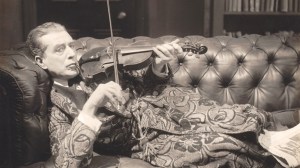 Silent Sherlock: Three Classic Cases. The Adventures of Sherlock Holmes series, which was so popular it ran for 45 episodes, was sanctioned by Arthur Conan Doyle, who thoroughly approved of Eille Norwood as Holmes. This programme features a selection of three episodes: ‘A Scandal in Bohemia’, wherein Holmes falls for ‘the woman’; ‘The Golden Pince-Nez’, which features Holmes’ deductive powers at work, and ‘The Final Problem’, featuring the sinister Professor Moriarty. With recorded scores composed by Joanna MacGregor, Neil Brand and Joseph Havlat. Cine Lumiere, London Link
13 December
Silent Sherlock: Three Classic Cases. The Adventures of Sherlock Holmes series, which was so popular it ran for 45 episodes, was sanctioned by Arthur Conan Doyle, who thoroughly approved of Eille Norwood as Holmes. This programme features a selection of three episodes: ‘A Scandal in Bohemia’, wherein Holmes falls for ‘the woman’; ‘The Golden Pince-Nez’, which features Holmes’ deductive powers at work, and ‘The Final Problem’, featuring the sinister Professor Moriarty. With recorded scores composed by Joanna MacGregor, Neil Brand and Joseph Havlat. Queen’s Film Theatre, Belfast Link
14 December
Silent Sherlock: Three Classic Cases. The Adventures of Sherlock Holmes series, which was so popular it ran for 45 episodes, was sanctioned by Arthur Conan Doyle, who thoroughly approved of Eille Norwood as Holmes. This programme features a selection of three episodes: ‘A Scandal in Bohemia’, wherein Holmes falls for ‘the woman’; ‘The Golden Pince-Nez’, which features Holmes’ deductive powers at work, and ‘The Final Problem’, featuring the sinister Professor Moriarty. With recorded scores composed by Joanna MacGregor, Neil Brand and Joseph Havlat. Cine Lumiere, London Link
 Silent Sherlock: Three Classic Cases. The Adventures of Sherlock Holmes series, which was so popular it ran for 45 episodes, was sanctioned by Arthur Conan Doyle, who thoroughly approved of Eille Norwood as Holmes. This programme features a selection of three episodes: ‘A Scandal in Bohemia’, wherein Holmes falls for ‘the woman’; ‘The Golden Pince-Nez’, which features Holmes’ deductive powers at work, and ‘The Final Problem’, featuring the sinister Professor Moriarty. With recorded scores composed by Joanna MacGregor, Neil Brand and Joseph Havlat. Lighthouse, Dublin Link
Silent Sherlock: Three Classic Cases. The Adventures of Sherlock Holmes series, which was so popular it ran for 45 episodes, was sanctioned by Arthur Conan Doyle, who thoroughly approved of Eille Norwood as Holmes. This programme features a selection of three episodes: ‘A Scandal in Bohemia’, wherein Holmes falls for ‘the woman’; ‘The Golden Pince-Nez’, which features Holmes’ deductive powers at work, and ‘The Final Problem’, featuring the sinister Professor Moriarty. With recorded score. BFI Southbank, London Link
15 December
Silent Sherlock: Three Classic Cases. The Adventures of Sherlock Holmes series, which was so popular it ran for 45 episodes, was sanctioned by Arthur Conan Doyle, who thoroughly approved of Eille Norwood as Holmes. This programme features a selection of three episodes: ‘A Scandal in Bohemia’, wherein Holmes falls for ‘the woman’; ‘The Golden Pince-Nez’, which features Holmes’ deductive powers at work, and ‘The Final Problem’, featuring the sinister Professor Moriarty. With recorded scores composed by Joanna MacGregor, Neil Brand and Joseph Havlat. Cine Lumiere, London Link
Man With a Movie Camera (Dir. Dziga Vertov, USSR, 1929) (Screening format – digital, 68mins) Part documentary and part cinematic art, this film follows a city in the 1920s Soviet Union throughout the day, from morning to night. Directed by Vertov, with a variety of complex and innovative camera shots (filmed by Vertov’s equally talented and innovative brother Mikhail Kaufman), the film depicts scenes of ordinary daily life in Russia. Vertov celebrates the modernity of the city, with its vast buildings, dense population and bustling industries. While there are no titles or narration, director and cameraman still naturally convey the marvels of the modern city. Find out more at rogerebert.com . With recorded score. BFI Southbank, London Link
16 December
 It (Dir. Clarence Badger, US, 1927) (Screening format – digital, 72 mins) Starring Clara Bow and Antonio Moreno, It is based on stories from the sensationalist novelist Elinor Glyn, of Three Weeks fame. She had coined the term `it’ to describe what makes a personality attractive in her 1914 novel The Man and the Moment; the novella It and its screen version – to which Glyn contributes a cameo, as herself – both appeared in 1927. Glyn’s onscreen explanation of what defines `it’ makes this an early example of the `concept film’ as well as of product placement, given that her story is seen being read in Cosmopolitan, the magazine in which it had been serialised the previous year. Stage actress Dorothy Tree had her first film role in a small, uncredited part. Similarly, a young Gary Cooper was cast in a minor role as a newspaper reporter. The film was a box office hit, consolidating Clara Bow’s burgeoning status as one of the most popular actresses of the era and acquiring for her the soubriquet `the IT Girl’. A year later she starred in a film version of Glyn’s 1905 novel Red Hair, of which only some brief Technicolor footage of Bow is known to survive. Find out more at moviessilently.com. With score and sound effects by Ben Burtt. BFI Southbank, London Link
Way Down East (Dir. D W Griffith, US, 1920) (Screening format – 35mm, 149mins) Subtitled: “A Simple Story of Plain People,” director Griffith intended Way Down East to be a sweeping, lyrical, but epic story, conveying an image of a vanished, unspoiled, pastoral America. Originally a hugely successful stage play, written by Lottie Blair Parker in 1897, Way Down East was an old-fashioned story that espoused nineteenth-century American and Victorian ideals. It had already been filmed twice but by the time Griffith brought the rights in 1920 it was considered outdated and overly melodramatic. As Lillian Gish would later recall, “Way Down East was a horse-and-buggy melodrama, familiar on the rural circuit for more than twenty years. As I read the play, I could hardly keep from laughing.” However, while it was Griffith’s most expensive film to date (costing him $175,000, more than the entire cost of his 1915 epic Birth Of A Nation), it was also one of his most commercially successful. The story follows impoverished New England country girl Anna Moore (Lillian Gish) to Boston in search of family aid. Instead she’s duped into a fake marriage by playboy Lennox Sanderson (Lowell Sherman). Pregnancy results in Sanderson abandoning her to care for the child alone, which dies soon after birth. The disgrace sends her back into the countryside to work for Squire Bartlett, whose son David (Richard Barthelmess) begins to fall for her. However, her dreadful secret threatens to be revealed. Way Down East is best known for the exciting climax featuring Gish trapped in the ice during a snowstorm. With no computer-generated effects, and no stunt woman taking Gish’s place, the actress recalls, in her autobiography, actually going out into this dangerous situation in subfreezing temperatures, “this kind of dedication probably seems foolish today, but it wasn’t unusual then. Those of us who worked with Mr. Griffith were completely committed to the picture we were making. No sacrifice was too great to get the film right….” Find out more at silentlondon.co.uk Introduced by film critic and historian Pamela Hutchinson. With recorded soundtrack. BFI Southbank, London Link
20 December
New Women (Dir. Cai Chusheng, Chi, 1935) (Screening format – digital, 106mins) New Women was iconic actress Ruan Lingyu’s swan song, released mere months before her suicide; its story, thinly adapted from the memoir of Ai Xia, an actresses hounded to death by the press several years earlier, eerily parallels Ruan’s own tragically short life. “Often seen [by critics] as a metaphor for China itself, suffering under semi-colonialism, semi-feudalism and Japanese invasion” (Chris Berry and Mary Farquhar, “China On Screen”), Ruan here plays the very model of a “new woman,” an independent-minded music teacher who dreams of becoming a celebrated writer. Her struggles, intensified by lecherous and vengeful men out to manipulate her and the need to provide for her sick daughter in the countryside, are contrasted with those of her best friend, a patriotic female factory worker who is presented as a model figure for post-revolutionary women. Arrestingly modern in its indictment of patriarchy and radical class politics, silent icon Ruan Lingyu’s final film caused waves when the actress’ highly publicised life mirrored her on-screen tragedy. Find out more at silentsplease.wordpress.com With live piano accompaniment. BFI Southbank, London Link
21 December
Silent Sherlock: Three Classic Cases. The Adventures of Sherlock Holmes series, which was so popular it ran for 45 episodes, was sanctioned by Arthur Conan Doyle, who thoroughly approved of Eille Norwood as Holmes. This programme features a selection of three episodes: ‘A Scandal in Bohemia’, wherein Holmes falls for ‘the woman’; ‘The Golden Pince-Nez’, which features Holmes’ deductive powers at work, and ‘The Final Problem’, featuring the sinister Professor Moriarty. With recorded scores composed by Joanna MacGregor, Neil Brand and Joseph Havlat. Electric Palace, Hastings Link
People on Sunday (Dir. Robert Siodmak/Edgar G Ulmer, Ger, 1929) (Screening format – digital, 74mins) Famously, Billy Wilder and Fred Zinnemann worked with Siodmak on this landmark of realist film making, a magical blend of documentary and fiction which takes us back to a glorious summer Sunday in late-1920s Berlin where five young workers take a day off to spend a flirtatious afternoon together at a lake on the edge of the city.. While they enjoy freedoms undreamt of by their parents, sexual rivalry soon lends an edge to their flirtations. The people portraying the characters were all amateurs belonging to a Berlin collective who, the opening credits inform us, had returned to their normal jobs by the time of the film’s release. They included a taxi driver, a record seller and a wine merchant. But together, the cast and crew produced a classic of silent film and one which still feels remarkably modern. Find out more at archive.org. With recorded score. BFI Southbank, London Link
28 December
It (Dir. Clarence Badger, US, 1927) (Screening format – digital, 72 mins) Starring Clara Bow and Antonio Moreno, It is based on stories from the sensationalist novelist Elinor Glyn, of Three Weeks fame. She had coined the term `it’ to describe what makes a personality attractive in her 1914 novel The Man and the Moment; the novella It and its screen version – to which Glyn contributes a cameo, as herself – both appeared in 1927. Glyn’s onscreen explanation of what defines `it’ makes this an early example of the `concept film’ as well as of product placement, given that her story is seen being read in Cosmopolitan, the magazine in which it had been serialised the previous year. Stage actress Dorothy Tree had her first film role in a small, uncredited part. Similarly, a young Gary Cooper was cast in a minor role as a newspaper reporter. The film was a box office hit, consolidating Clara Bow’s burgeoning status as one of the most popular actresses of the era and acquiring for her the soubriquet `the IT Girl’. A year later she starred in a film version of Glyn’s 1905 novel Red Hair, of which only some brief Technicolor footage of Bow is known to survive. Find out more at moviessilently.com. With score and sound effects by Ben Burtt. BFI Southbank, London Link
 Silentfilmcalendar.org