


1 February
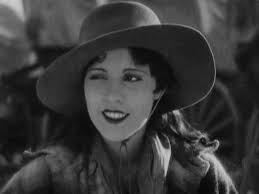
 Ben Hur (Dir. Fred Niblo, 1925) (Screening format – not known, 155mins) Betrayed by his boyhood friend, Massala, Ben Hur is imprisoned as a galley slave on a Roman ship and left to die. Saved by a sympathetic general, he sets out to find his lost family. And one day, many years later, Ben Hur and Massala meet once more for a final, violent reckoning as competing Roman charioteers in the Circus Maximus……The most epic silent film of them all, Ben Hur is a gripping tale of love and revenge. At its premiere in 1925 nothing like it had ever been seen before. The dazzling special effects, thrilling action, glorious technicolour sequences and a cast of thousands helped Ben Hur make MGM’s reputation as the blockbuster studio. The famous chariot race is jaw-dropping even today – captured by forty two cameras, with hundreds of horses and thousands of extras, the sequence was recreated almost shot-by-shot for the 1959 remake with Charlton Heston. Find out more at moviessilently.com With live organ accompaniment by Donald MacKenzie. St Mary’s Parish Church, Hitchin Link
 Bed And Sofa (Dir. Abram Room, USSR, 1927) (Screening format – digital, 76mins) Volodya, a printer, lands a job in Moscow and is looking for a place to stay. Unable to find a room in a hotel, he meets up with construction worker Kolya, his Civil War comrade from years before. Even though Kolya lives in a small one-room apartment, he offers Volodya the sofa, the bed being occupied by Kolya himself and his wife Liudmila. But put-upon Liudmila is soon attracted to the handsome Volodya and when Kolya returns from a work trip he now finds himself on the sofa and Volodya in the bed with Liudmila. But rather than simply a romantic farce Bed And Sofa is far more, a commentary on the continued enforced domesticity of women in Soviet society, on overcrowded living conditions and, ultimately, on a woman’s right to choose. Needless to say, the film went down badly with the Soviet authorities while its somewhat racy subject matter ran into similar problems with censors in the West. However, Bed And Sofa is now regarded as a classic of silent Soviet cinema. Find out more at www.brentonfilm.com. With recorded score. BFI Southbank, London Link
5 February
Bed And Sofa (Dir. Abram Room, USSR, 1927) (Screening format – digital, 76mins) Volodya, a printer, lands a job in Moscow and is looking for a place to stay. Unable to find a room in a hotel, he meets up with construction worker Kolya, his Civil War comrade from years before. Even though Kolya lives in a small one-room apartment, he offers Volodya the sofa, the bed being occupied by Kolya himself and his wife Liudmila. But put-upon Liudmila is soon attracted to the handsome Volodya and when Kolya returns from a work trip he now finds himself on the sofa and Volodya in the bed with Liudmila. But rather than simply a romantic farce Bed And Sofa is far more, a commentary on the continued enforced domesticity of women in Soviet society, on overcrowded living conditions and, ultimately, on a woman’s right to choose. Needless to say, the film went down badly with the Soviet authorities while its somewhat racy subject matter ran into similar problems with censors in the West. However, Bed And Sofa is now regarded as a classic of silent Soviet cinema. Find out more at www.brentonfilm.com. With recorded score. BFI Southbank, London Link
12 February
 The Norrtull Gang (Dir Per Lindberg, Swe, 1923 ) (Screening format – not known, 86mins ) Adapted by Hjalmar Bergman, renowned director Victor Sjöström’s frequent writer, from Elin Wägner’s 1908 novel about the lives of four working women who room together in Stockholm and confront often harsh economic and social conditions. Balancing life and work in turn-of-the-
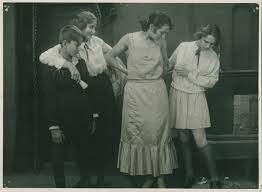 century Stockholm, the women are searching for respect, opportunity and romance. Pegg, Baby, Eva and Emmy are four young women holding down office jobs and sharing a rented flat in Norrtull Street. With grace and gentle humour, Pegg narrates the story of how the firm friends try to navigate their careers in the male-dominated office culture… The world may be modernising fast, but at their workplace the patriarchy is alive and kicking. Find out more at silentfilm.org. Presented as part of the Bristol Slapstick Festival. Introduced by Peter Walsh. With live piano accompaniment by Daan van den Hurk. Watershed, Bristol Link
 Running Wild (Dir. Gregory La Cava, US, 1927) (Screening format – not known, 65mins) One of W.C.Fields’ few surviving silent features, and the most successful, with Fields as his usual downtrodden, henpecked anti-hero – Elmer Finch is a very timid man who is bossed around by his harridan of a second wife, and her fat, lazy son. Even his stepson’s dog attacks him. The only love he gets is from his young
  daughter from his first marriage. He is also a put-upon, poorly paid clerk in an office. But stumbling into a vaudeville house where a hypnosis act is going on, Elmer is hypnotized into being fearlessly confrontational. And then the fun starts. Find out more at wikipedia.org Presented as part of the Bristol Slapstick Festival. Introduced by Andrew Kelly talking live via Zoom to Dr.Harriet Fields, granddaughter of W.C Fields.With live piano accompaniment by Daan van den Hurk. Watershed, Bristol Link
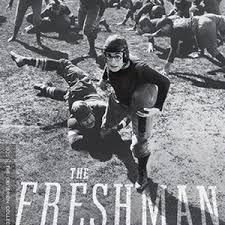 The Freshman (Dir. Fred C Newmeyer, US, 1925) (Screening format – not known, 76mins) One of Harold Lloyd’s best feature-length comedies and his biggest hit, The Freshman features the bespectacled regular guy as Harold Lamb, a naïve young man who heads off to college believing campus life will be just as it is in the movies; he even learns a little dance he saw one of his favorite actors do in a film. However, Harold soon discovers that real life isn’t all that much like the pictures, and he quickly becomes the laughing stock of the university. Determined to prove himself, Harold tries out for the football team, but he serves as water boy and rides the pine until he finally gets a chance to redeem himself at the big game. Along the way, Harold also tries to woo a lovely co-ed, Peggy (Jobyna Ralston). Find out more at threemoviebuffs.com. Presented as part of the Bristol Slapstick Festival. Introduced by Paul McGann. With recorded musical accompaniment featuring Carl Davis’ critically acclaimed orchestral soundtrack. Bristol IMAX Link
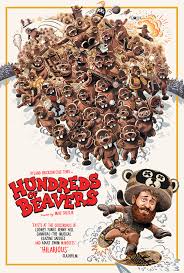 Hundreds of Beavers (Dir. Mike Cheslik, US, 2022) (Screening format – not known, 108 mins) A cinematic rarity, a modern silent film….sort of. There is no dialogue but plenty of sound effects. Made
 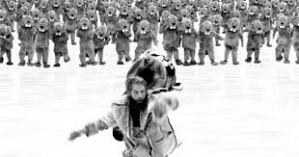 on a lowly $100,000 budget, this surprise independent hit about a trapper (Ryland Brickson Cole Tews) battling malevolent beavers is already heading towards cult classic status, having picked up scores of awards from festivals worldwide, earning glowing reviews from top critics & audiences and getting a 97% score on the Rotten Tomatoes’ tomatometer. Find out more at wikipedia.org. Presented as part of the Bristol Slapstick Festival. Introduction and Q&A between host Robin Ince and co-writer / lead actor Ryland Brickson Cole Tews. Recorded score. Bristol IMAX. Link
13 February
 Silent Movie (Dir. Mel Brooks, US, 1976) (Screening format – not known, 87 mins) Laugh-out-loud sight gags, sharp satirical digs at the business side of Hollywood and some of cinema’s best known stars
  feature throughout this fine satire – charting the attempts by Mel Brooks and the lost-too-young Marty Feldman to make a silent film. True to its title, the movie is completely silent—save for one unforgettable word delivered by the unlikeliest guest star. Find out more at imdb.com. Presented as part of the Bristol Slapstick Festival. Introductory conversation between festival director Chris Daniels & comedian and writer Robin Ince. Watershed, Bristol Link
 Oh! What a Nurse! (Dir. Charles Reisner, US, 1926) + short (Screening format – not known, 70mins) Syd Chaplin will forever be in his brother Charlie’s shadow, but he was a popular and very capable comic in his own right. In the 1920s he made a series of features at Warner Brothers, including this, in which he plays a reporter who goes undercover in drag to prevent a young heiress (Patsy Ruth Miller) from marrying her uncle’s dubious choice of suitor, with madcap results. Includes a bit part for future double Oscar winner Janet Gaynor. Recently rediscovered and restored, this film was one of the big hits at last year’s Pordenone. Find out more at catalog.afi.com. Presented as part of the Bristol Slapstick Festival. Introduced by Lucy Porter. With live piano accompaniment by Daan van den Hurk. Watershed, Bristol Link
 The Saphead (Dir.Herbert Blaché/Winchell Smith, US, 1920) (Screening format – not known, 77mins) Buster Keaton makes his feature film debut in The Saphead, directed by the husband of groundbreaking filmmaker Alice Guy. Keaton plays Bertie, the pampered son of a silver mine owner and brother-in-law to a shady
  investor who ruins Bertie’s wedding plans with lies and puts the family’s wealth in jeopardy. Keaton expert Polly Rose (University of Bristol) says “this could be described as a dramedy; there are dark moments but also a grand slapstick action sequence at the height of the story”. Watch out also for a rare smile from Buster; there isn’t another by him on screen until 1934. Find out more at wikipedia.org Presented as part of the Bristol Slapstick Festival. Introduced by Polly Rose. With live piano accompaniment by Daan van den Hurk. Watershed, Bristol Link
 The Railrodder (Dir: Gerald Potterton, Can, 1965) (Screening format – not known, 24 mins) Made for the National Film Board of Canada, this short travelogue was Buster Keaton’s last film appearance. Made to promote tourism in Canada, the film opens in London with Buster so inspired by a ‘ See Canada’ newspaper
  advert that he jumps into the Thames, swims all the way to Canada. From there, he hops on a railway speeder and effortlessly rides across the country. The speeder never runs out of fuel, and the storage compartment might be a portal to another dimension. But the film is more than a simple travelogue, serving to remind audiences of Keaton’s comic genius at a time when his almost forgotten silent films were beginning to be re-evaluated and his reputation restored. Accompanying the film is a documentary on its making, Buster Keaton Rides Again. Find out more at wikipedia.org. Presented as part of the Bristol Slapstick Festival. Introduced by Polly Rose. With recorded score. Watershed, Bristol Link
 Alasdair Beckett-King’s Laurel & Hardy Mayham. Alasdair will bring his unique blend of clever, absurdist humour and a whimsical style to Stan & Ollie’s comedic magic on the big screen, showcasing their finest comedy shorts and iconic moments. Plus, a post show Q&A with the audience. Presented as part of the Bristol Slapstick Festival. Introduced by Alasdair Beckett-King in conversation with stand-up comedian and writer Robin Ince. Bristol Imax Link
14 February
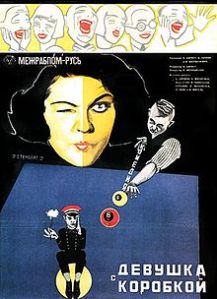 Girl With A Hat Box (Dir. Boris Barnet, USSR, 1927) A film that proves that not all Russian silent films come with heavy doses of propaganda, this is one of the most delightful silent comedies ever made and Anna Sten is a knockout as Natasha who lives with her grandfather in a cottage near Moscow, making hats
  for Madame Irène, who has told the housing committee that Natasha rents a room from them. This deception gives Madame’s lazy husband a room for lounging. But then Natasha marries Ilya, a student who sleeps in the local train station, and takes him to Madame’s to live in the room the house committee thinks is hers. Meanwhile, Madame’s husband pays Natasha with a lottery ticket, which turns out to be a winner, which makes life very complicated for everyone!!. Find out more at silentfilm.org Presented as part of the Bristol Slapstick Festival. Introduced by Lucy Porter. With live piano accompaniment from Daan van denHurk. Watershed, Bristol Link
 Soviet Comedies of the 1920s + Chess Fever (aka Shakhmatnaya Goryachka) (Dir. Vsevolod Pudovkin and Nikolai Shpikovsky, USSR,1925) Writer, film historian and Silent London blogger Pamela Hutchinson offers a context for the Slapstick Festival’s day of Soviet comedies with a brief presentation highlighting the influence of 1920s Soviet silent comedies. Followed by a screening of Chess Fever which sees Soviet citizens transfixed in 1925 by the International Chess Tournament
  being held at Moscow’s Hotel Metropol in November 1925. Hundreds of spectators followed the games in the Metropol, whilst tens of thousands watched demonstration boards across the city, and the then up-and-coming director Pudovkin was asked to make a topical comedy about the ‘chess fever’ sweeping the nation. Chess competitor at the tournament Capablanca plays himself in this fast-paced comedy about a young couple whose love affair reaches stalemate because of the hero’s obsession with the game. Find out more at moviessilently.com Presented as part of the Bristol Slapstick Festival. Introduced by Pamela Hutchinson. With live piano accompaniment from John Sweeney Watershed, Bristol Link
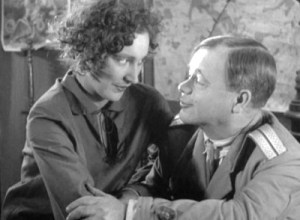 The Opportunist (aka The Self Seeker, aka Shkurnik)(Dir. Mykola Shpykovskyi, Ussr/Ukr, 1929) (Screening format – not known, 75mins) This is a little known avant-garde film of the period. It is a comic tale of survival in the kaleidoscopic change of circumstances during the civil war in Ukraine and a biting satire on
  the Soviet propaganda. In the film, the peaceful bourgeois life of an opportunistic Kiev resident is interrupted by the civil war. Seeking first the protection of the white Russian forces he then falls into the hands of the Red Army. Will he survive in the
 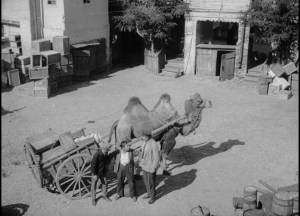 hands of the (female) Bolshevik commissar or will his ingrained thirst for a profit once again put his life in danger. The film, produced by VUFKU, the the All-Ukrainian Photo-Cinema Directorate in 1929, was quickly banned by the Soviet authorities and is virtually unknown to western audiences. But recently rediscovered and restored this is a rare chance to catch this gem. Find out more at silentfilmcalendar.org Presented as part of the Bristol Slapstick Festival. Introduced by Paul McGann. With live piano accompaniment from John Sweeney Watershed, Bristol Link
 The House on Trubnaya Square (Dir. Boris Barnett, 1928) (Screening format – not known, 64mins) The House on Trubnaya Square is a masterpiece of Soviet silent cinema. It is a delightful comedy of manners that satirises contemporary life in Moscow during the height of the New Economic Policy (NEP, 1921-28). The film celebrates the changing
  character of Moscow while offering a sharp social commentary on the contradictions of the shifting Soviet state. . This is a story of the trials and tribulations of a young peasant girl, Parasha (Vera Maretskaya), who comes to Moscow with her pet duck in search of her uncle but discovers the
 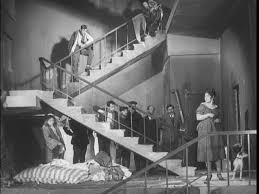 injustices of the petite-bourgeoisie . When Mr. Golikov (Vladimir Fogel), owner of a hairdressing salon, looks for a housekeeper who is modest, hard-working and non-union, Parasha looks to be a suitable candidate but occupants of the house on Trubnaya are shocked when Parasha demonstrates her genuine revolutionary spirit and affirms her proletarian rights by joining the domestic workers union! Another classic Russian comedy from Boris Barnett, a real delight. Find out more at silentfilm.org Presented as part of the Bristol Slapstick Festival. Introduced by Pamela Hutchinson. With live piano accompaniment from John Sweeney Watershed, Bristol Link
 Silent Comedy Gala Celebrate Valentine’s Day in a unique and unforgettable way by joining Bristol’s Slapstick Festival for its 20th-anniversary Silent Comedy Gala. Enjoy the magic of three classic silent comedies on the big screen—exactly how they were meant to be seen—with live accompaniment from world-class musicians. The highlight of the evening is Buster Keaton’s
  iconic Steamboat Bill Jr. (1928), filled with breathtaking stunts and timeless sight gags that cement Buster’s place amongst the all time comedy greats. The film is accompanied by the renowned five -piece European Silent Screen Virtuosi, led by Günter A. Buchwald. Rick Wakeman provides live, improvised accompaniment to Laurel & Hardy’s final silent short, Angora Love (1929), where the comedy duo’s antics with a runaway goat cause chaos for their landlord. Completing the bill will be Charlie Chaplin’s classic and still-relevant masterpiece The Immigrant (1917) also with live accompaniment. Presented as part of the Bristol Slapstick Festival. With live musical accompaniment. Bristol Beacon Link
15 February
 I Was Born, But…… (Dir. Yasujiro Ozu, Jap, 1932) (Screening format, not known, 90mins) This early comedy from Yasujirô Ozu focuses on the Yoshii family – dad Kennosuke, his homemaker wife, and two sons Keiji and Ryoichi – who have just moved from Tokyo’s crowded city centre to a suburban development. Straight away the two boys start slugging it out to find a place in the pecking order among the neighbourhood kids. One of those deposed by their wily antics is Taro, son of Mr Iwasaki, the owner of the company where Kennosuke works as a humble salaryman. Then one night the Yoshii
 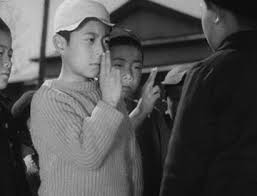 family are invited round to the Iwasaki’s, where the boys are mortified to see their dad dutifully kowtowing to his boss: “You tell us to become somebody, but you’re nobody. Why do you have to bow so much to Taro’s father?” Kennosuke’s attempts to explain the realities of the adult world to his sons leads to some soul-searching of his own. Like many of Ozu’s later films this one focuses on the internal dynamics of a single family unit as a way of drawing out broader generalisations about contemporary Japanese society, and uses the low-angle camera shots of domestic interiors that would become his stylistic trademark. Find out more at silentfilm.org . Presented as part of the Bristol Slapstick Festival. Introduced by Pamela Hutchinson. With live piano accompaniment from John Sweeney Watershed, Bristol Link
16 February
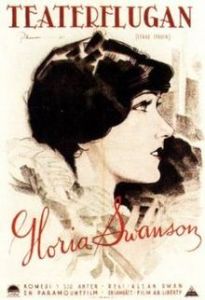 Stage Struck (Dir. Allan Dwan, US, 1925) (Screening format – not known, 87mins) One of the last lighthearted collaborations between Gloria Swanson and Allan Dwan, Stage Struck (1925) is a sweetly funny account of a small-town girl with dreams of fame. Swanson plays Jenny Hagen, a diner waitress who fantasizes about a life on stage. Her heart belongs to Orme Wilson (Lawrence Gray), an expert pancake flipper, who only has eyes for the women in movie magazines. So when a river showboat comes to town, he only has eyes for the star, Lillian Lyons (Gertrude Astor). Inflamed with jealousy, Jenny is determined to get on stage herself, by any means necessary.! One of Paramount’s first features to use Technicolor. Find out more at wikipedia.org With live organ accompaniment by Donald MacKenzie. Brentford Musical Museum, London Link
 Go West (Dir. Buster Keaton, US, 1925) (68 mins) In an unusual twist on the romantic comedy formula, Buster Keaton stars opposite an affectionate cow in this Western Comedy. Friendless Homer Holiday drifts west eventually finding employment on the Thompson ranch. He soon befriends
  Brown Eyes, a cow that he bonds with after she saves his life. When Brown Eyes is included in a shipment of cattle bound for the slaughterhouse, Homer goes along in hopes of rescuing her. But when the herd escapes from the cattle cars, causing chaos through downtown L.A.; it is then up to Friendless to round them up and save the day. Look closely during the hilarious stampede scene to see Roscoe “Fatty” Arbuckle playing a part in drag. Find out more at silentfilm.org Presented as part of the Bristol Slapstick Festival. With live accompaniment from members of the European Silent Screen Virtuosi led by Günter A. Buchwald. Watershed, Bristol Link
19 February
 A Pair Of Silk Stockings (Dir. Walter Edwards, US, 1918) (Screening format – 35mm, 60 mins) The Thornhill’s marriage is in a rough spot with poor Sam feeling he is a neglected husband. So he schemes to make his wife Molly jealous, only Sam’s plans seldom work out as he intends and instead his plot ends in divorce. Then a chance meeting at a mutual friend’s home might just give Sam the chance he needs to
  explain himself, if only his latest plan happens to work out. A Pair of Silk Stockings is based on a 1914 hit Broadway play play by Cyril Harcourt. Star Constance Talmadge started her career in motion pictures that same year with the comedy short In Bridal Attire, but rose to prominence with her role as the Mountain Girl in D.W. Griffith’s Intolerance in 1916. While her more famous sister Norma was known for her work in melodramas, Constance specialized in light comedy. Leading man Harrison Ford came from the Broadway stage and quickly found success in Hollywood, appearing in nearly 100 films between 1915 and 1932. Talmadge and Ford were a popular screen couple of the silent era, often paired together in light comedy features such as this one. Find out more at moviessilently.com Presented by the Kennington Bioscope. With live musical accompaniment. Cinema Museum, London Link
23 February
 Diary Of A Lost Girl (Dir. G W Pabst, Ger, 1929) (Screening format – not known, 106mins) A masterpiece of the German silent era, Diary of a Lost Girl was the second and final collaboration of actress Louise Brooks and director G.W. Pabst, just months after their first collaboration in the now-legendary Pandora’s Box (1929). Brooks plays Thymian Henning, a beautiful young
 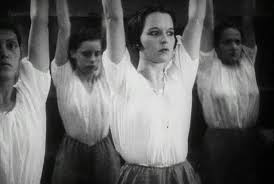 woman raped by an unscrupulous character employed at her father’s pharmacy (played with gusto by Fritz Rasp, the villain of such Fritz Lang classics as Metropolis, Spione, and Frau im Mond). After Thymian gives birth to his child and rejects her family’s expectations of marriage, the baby is torn from her care, and Thymian enters a purgatorial reform school that seems less an institute of learning than a conduit for fulfilling the headmistress’s sadistic sexual fantasies. Find out more at rogerebert.com With live piano accompaniment by Lillian Henley. Palace Cinema, Broadstairs Link
28 February
 Neil Brand Presents Laurel And Hardy After the national success of his long-running show ‘Neil Brand Presents Buster Keaton’, the composer/writer/broadcaster/musician returns with an all-new show about the immortal comedy duo recently portrayed in the hit film ‘Stan and Ollie’. Fully illustrated with stills, clips (both silent and sound) and Neil’s superlative piano accompaniment and culminating in two of the Boys’ best silent short films, Big Business and Liberty, this is a show that promises gales of laughter throughout, as well as getting under the skin of two warm, funny men who continue to make the world laugh when it needs it most. With live piano accompaniment by Neil Brand. Assembly Rooms, Tamworth Link
 Silentfilmcalendar.org