



1 February
 Sherlock Jnr (Dir. Buster Keaton, 1924) + Chaplin shorts (Screening format – not known, 45/45 mins) In Sherlock Jr, a kindly movie projectionist (Buster Keaton) longs to be a detective. When his fiancée (Kathryn McGuire) is robbed by a local thief (Ward Crane), the poor projectionist is framed for the crime. Using his amateur detective skills, the projectionist follows the thief to the train station – only to find himself locked in a train car. Disheartened, he returns to his movie theatre, where he falls asleep and dreams that he is the great Sherlock Holmes. Although not a popular success on its initial release, the film has come to be recognised as a Keaton classic with its special effects and elaborate stunts making it a landmark in motion picture history. Find out more atsilentfilm.org.With live organ accompaniment by Darius Battiwalla. Howard Assembly Room, Leeds Link
4 February
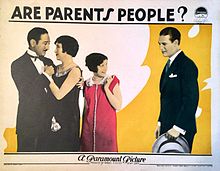 Are Parents People? (Dir. Malcolm St. Clair, US 1925) (Screening format – not known, 70mins). The teenage daughter (Betty Bronson) of a wealthy couple (Florence Vidor and Adolphe Menjou) is horrified to find out that her parents, who spend most of their time fighting with each other, are planning to divorce. She schemes to get them back together by pretending to fall for a dimwitted actor, hoping that her parents will unite to prevent the “romance”. Find out more at wikipedia.org Presented as part of Bristol’s Slapstick Festival. Introduced by film historian and writer Andrew Kelly. With live piano accompaniment by Daan van den Hurk. Watershed, Bristol Link
 Laurel & Hardy Rediscovered in 4K A joyful triple bill celebrating 1928, the second year of Laurel & Hardy’s partnership and the moment when their distinctive comic rhythm, friendship and finely tuned partnership truly took shape. In Two Tars (1928), a simple drive with their sweethearts descends into glorious vehicular anarchy, one of cinema’s greatest slapstick finales. In We Faw Down (1928), the boys tell their wives they’re off to the theatre, only to end up in a comic tangle of lies, misunderstandings and moral mayhem. And in From Soup to Nuts (1928), hired as waiters for a high-society dinner, their attempts at refinement go fabulously off the rails. Presented as part of Bristol’s Slapstick Festival. Introduced by Chris Daniels (festival director) and Robin Ince (comedian, writer and broadcaster), With live piano accompaniment by Daan van den Hurk. Watershed, Bristol Link
 For Heaven’s Sake (Dir. Sam Taylor, US, 1926) + The Pilgrim (Dir. Charlie Chaplin, US, 1923) (Screening format – not known, 48/46mins) In For Heaven’s Sake, Harold Lloyd plays a wealthy young spendthrift who is upset that his name is being used to bring parishioners into a storefront mission in the poorer part of town. He heads to the mission to have it out with the minister, only to fall in love with minister’s daughter (Jobyna Ralston). But when they start to talk of marriage, Harold’s wealthy friends are dismayed that he is marrying beneath himself and so take desperate action. The climactic chase is as hilarious and exciting a piece of celluloid as has ever been produced, but it is merely the capper to an uninterrupted stream of brilliant sight gags. Long underrated,this is one of the cleverest and most consistently entertaining of all of Harold Lloyd’s silent vehicles. Find out more at silentfilm.org In The Pilgrim (1923), Charlie Chaplin’s Tramp dons the robes of a minister in a story that turns mistaken identity into a meditation on grace, guilt and forgiveness. Presented as part of Bristol’s Slapstick Festival. Introduced by Robin Ince (comedian, writer and broadcaster). With recorded score. Megascreen, Bristol Link
5 February
 The Rugged Island: a Shetland Lyric (Dir. Jenny Gilbertson, UK, 1933) (Screening format – not known, 56mins) A dramatised documentary story about a young couple torn between the choice of emigration to Australia or remaining to work their croft in Shetland. Documentary film maker Gilbertson ( who also did all her own scriptwriting, filming, sound and
 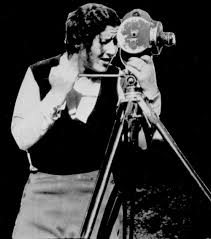 lighting as well as direction) was initially encouraged in her work by John Grierson, who had purchased some of her earlier documentary films for the GPO Film Library. While making The Rugged Island, she met and married John Gilbertson who was the star of the film. Hailed by John Grierson – father of the British documentary movement – as “one of the best descriptions of life in the country anybody has yet made”, this tender and beautiful dramatisation of Shetland life surpasses the bounds of both fiction and non-fiction filmmaking.Find out more at movingimage.nls.uk . Accompanied with new live score by Inge Thomson and Catriona Macdonald. An Lanntair, Stornoway Link
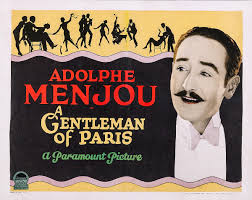 A Gentleman Of Paris (Dir: Harry d’Abbadie d’Arrast, US, 1927) (Screening format – not known, 65mins) In A Gentleman of Paris (1927), Adolphe Menjou stars as a suave boulevardier whose philandering ways finally catch up with him in this stylish and witty romantic farce. He plays Le Marquis de Marignan, a French aristocrat and seducer who
 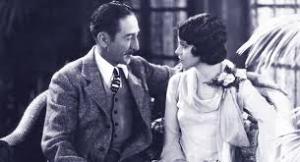 flirts with every Parisian girl he meets. If dallying with youngster fräuleins isn’t enough to keep him busy, the Marquis also has to cope with an unexpected visit from his fiancée and her father. Filled with sharp visual humour, exquisite Parisian detail and Menjou’s trademark charm, it’s an example of late silent-era sophistication. Find out more at wikipedia.org Presented as part of Bristol’s Slapstick Festival. Introduced by film historian and writer Andrew Kelly. With live piano accompaniment by John Sweeney. Watershed, Bristol Link
 Louise Fazenda: Queen Of Slapstick One of the unsung heroines of silent comedy is the much-overlooked but utterly brilliant Louise Fazenda. A huge star on Mack Sennett’s studio lot, Fazenda’s zany energy, expressive face and fearless slapstick made her a standout in dozens of two-reelers and features throughout the 1910s and 20s. Her ability to balance broad farce with finely tuned character comedy paved the way for later greats like Thelma Todd and Lucille Ball. This specially curated programme of short comedies showcases Fazenda at her riotous best, including: Her Torpedoed Love (1917) and Heart and Flowers(1919). Presented as part of Bristol’s Slapstick Festival. Introduced by comedian Lucy Porter. With live piano accompaniment by Daan van den Hurk. Watershed, Bristol Link
6 February
 The Flapper (Dir. Alan Crosland, US, 1920) (Screening format – not known, 88mins) Long before Clara Bow or Louise Brooks made the flapper a global icon, screen star Olive Thomas defined the look, attitude and energy of the modern young woman on screen. The Flapper (1920) – the first film ever to use the term in its title — captures a
 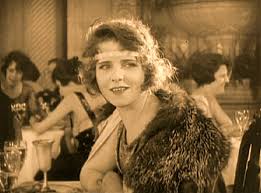 pivotal cultural moment: the dawn of the Roaring Twenties, when women’s lives, fashion and freedoms were rapidly changing. A witty and stylish comedy, Thomas plays a small-town schoolgirl who ventures to an elite finishing school and discovers the excitement and complications of independence, flirtation and fun offering the audience a chance to see one of the earliest cinematic celebrations of freedom, fashion and female self-expression. Find out more at wikipedia.org Presented as part of Bristol’s Slapstick Festival. Introduced by silent film writer Pamela Hutchinson. With live piano accompaniment by John Sweeney. Watershed, Bristol Link
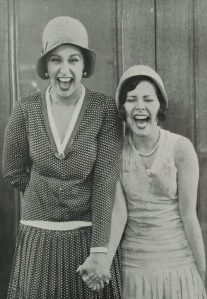 Before And Beyond Laurel And Hardy The influence of Laurel & Hardy stretched far beyond Hollywood, inspiring countless comedy duos and imitators including a remarkable lineage of female partnerships who borrowed, reinterpreted, and sometimes subverted the boys’ brand of beautifully timed onscreen chaos. This screening and discussion celebrates some of these overlooked acts: from US contemporaries Marion Byron & Anita Garvin to a trailblazing Scandinavian duo Ole & Axel/Pat & Patchon and Britain’s very own Tilly Girls. Featuring a selection of rare short films that illuminate this lesser-known chapter of screen comedy. Presented as part of Bristol’s Slapstick Festival. Introduced by silent film writer Pamela Hutchinson and comedian and actor Lucy Porter. With live piano accompaniment by Daan van den Hurk. Watershed, Bristol Link
 Our Hospitality (Dir. Buster Keaton/John G Blystone, US, 1923) (Screening format – not known, 73mins) Our Hospitality is a riotous satire of family feuds and Southern codes of honor. In 1831, Keaton leaves his home in New York to take charge of his family mansion down South. En route, Keaton befriends pretty Natalie Talmadge (Keaton’s real-life wife at the time), who invites him to dine at her family home. Upon meeting Talmadge’s father and brothers, Keaton learns that he is the last surviving member of a family with whom Talmadge’s kin have been feuding for over 20 years. The brothers are all for killing Keaton on the spot, but Talmadge’s father insists that the rules of hospitality be observed: so long as Keaton is a guest in the house, he will not be harmed. Thus, Keaton spends the next few reels
 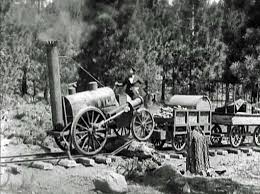 alternately planning to sneak out of the mansion without being noticed or contriving to remain within its walls as long as possible. But once he is out of the house the chase is on, with the father and brothers in hot pursuit. In the climactic waterfall stunt a dummy stood in for Talmadge but Keaton used no doubles, and nearly lost his life as a result. This 7-reel silent film represents the only joint appearance of Buster Keaton and Natalie Talmadge; Keaton hoped that by spending several weeks on location with his wife, he could patch up their shaky marriage (it didn’t work). Also appearing are two other members of the Keaton family: Keaton’s ex-vaudevillian father Joe (who performs an eye-popping “high kick”) and his son Joseph Keaton IV, playing Buster as a baby. Find out more at wikipedia.org Presented as part of Bristol’s Slapstick Festival. Introduction by Polly Rose (University of Bristol). With live piano accompaniment by John Sweeney. Watershed, Bristol Link
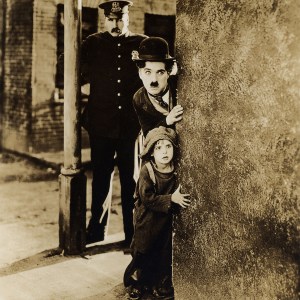 The Kid (Dir. Charles Chaplin, US, 1921) + The Boat (1921) + Leave ’Em Laughing (1928), (Screening format – not known, 68/20/20mins) Chaplin’s first full-length feature, The Kid, is a silent masterpiece about a little tramp who discovers a little orphan and brings him up but is left desolate when the orphanage reclaims him. Beneath the comedy, there are definitely some more serious thematic elements at work and and the film is noted for its pathos. In that regard, the opening inter-title proves to be true: “A picture with a smile — and perhaps, a tear.”Chaplin directed, produced and starred in the film, as well as composed the score. Find out more at wikipedia.org. Presented as part of Bristol’s Slapstick Festival. The film’s original score, composed by Chaplin himself, will be performed live by the Bristol Ensemble in a specially arranged 16-player version, conducted by maestro Guenter A. Buchwald. Beacon, Bristol Link
7 February
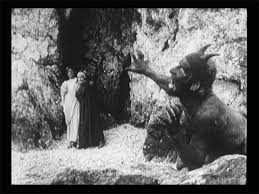 L’Inferno (Dir. Francesco Bertolini, Adolfo Padovan and Giuseppe De Liguoro, It, 1911) (Screening format – not known, 73mins) L’Inferno is the first feature length Italian film and the world’s first feature length horror film. The film took over three years to make and its original print ran to over three hours. Sadly only a 70 minute truncated version survives. Based on the first part of Dante Alighieri’s mammoth epic
 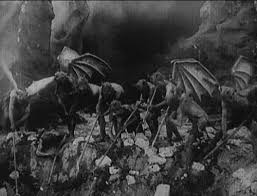 poem The Divine Comedy, L’Inferno faithfully follows the source poem in its representation of the journey of the author Dante through the realm of Hell as guided by the master poet Virgil. The production design is highly-influenced by and faithful to the illustrations of Gustave Dore, and is a visual treat for the viewer and despite its age the film remains an early masterpiece of silent film employing elaborate costumes, special effects, and set design to create an awe-inspiring and ethereal world. Find out more at silentfilm.org With live musical accompaniment by multi instrumentalists Ignacio Salvadores and Al Robinson and Canadian vocalist and flautist Nyssa. Theatreship, Canary Wharf, London Link
The Rugged Island: a Shetland Lyric (Dir. Jenny Gilbertson, UK, 1933) (Screening format – not known, 56mins) A dramatised documentary story about a young couple torn between the choice of emigration to Australia or remaining to work their croft in Shetland. Documentary film maker Gilbertson ( who also did all her own scriptwriting, filming, sound and lighting as well as direction) was initially encouraged in her work by John Grierson, who had purchased some of her earlier documentary films for the GPO Film Library. While making The Rugged Island, she met and married John Gilbertson who was the star of the film. Hailed by John Grierson – father of the British documentary movement – as “one of the best descriptions of life in the country anybody has yet made”, this tender and beautiful dramatisation of Shetland life surpasses the bounds of both fiction and non-fiction filmmaking.Find out more at movingimage.nls.uk . Accompanied with new live score by Inge Thomson and Catriona Macdonald. Lemon Tree, Aberdeen Link
 Where Now Are The Dreams Of Youth (Dir. Yasujirō Ozu, Jap, 1932) (Screening format – not known, 91mins) A rare opportunity to experience one of Yasujirō Ozu’s most captivating early silent comedies on the big screen.
Made just before his transition to the family dramas that would make him world-renowned, Where Now Are the Dreams of Youth? (1932) follows a carefree student who inherits his father’s business and must confront the social and emotional costs of growing up. Humour blended with Ozu’s emerging humanist touch, the film offers a moving reflection on friendship, privilege, and the passage from youth to responsibility. The screening offers a rare glimpse of the wit and warmth that defined Ozu’s silent-era artistry. Find out more at frenchfilms.org resented as part of Bristol’s Slapstick Festival. Introduced by silent film writer Pamela Hutchinson . With live piano accompaniment by John Sweeney. Watershed, Bristol Link
13 February
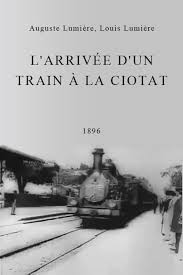 From Lumière to Lloyd: Silent Cinema with Live Organ and Paul Merton To mark the 130th anniversary of the Regent Street cinema hosting the first moving pictures ever screened to a UK paying audience this unique event looks back to that extraordinary moment with an evening of silent film. Beginning with a selection of early shorts, including Sprinkler Sprinkled (Dir. Louis Lumière, Fr, 1895), Arrival of a Train at La Ciotat (Dir. Auguste and
 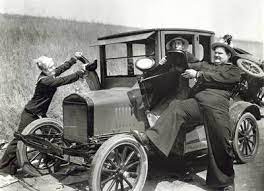 Louis Lumière, Fr, 1896) and Cameo the Dog (Dir. unknown, UK, 1907). These are followed by a Laurel & Hardy classic, Two Tars (Dir. James Parrott, US, 1928) in which Stan and Ollie play two sailors on leave, who pick up two girls and spend the afternoon driving in the country. Amidst a huge traffic jam tempers boil over and chaos soon ensues. Find out more at wikipedia.org. The evening concludes with Speedy (Dir. Ted Wilde, US, 1928) Harold Lloyd’s final silent film sees him reprise his
 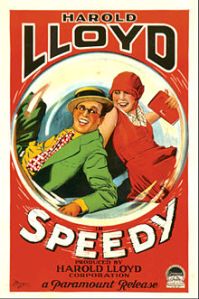 ‘glasses character’ as a baseball-obsessed New Yorker (the film features a cameo from the legendary Babe Ruth) who becomes determined to save the city’s last horse-drawn streetcar, motivated in no small part by its owner being the grandfather of his love interest. Filled with Lloyd’s trademark rapid-fire visual humour and elaborate set-ups, it’s a fine example of his innovative approach to comedy. Find out more atallmovie.com. Curated and presented live by comedian and silent film fan Paul Merton. With live organ accompaniment by Donald MacKenzie (Speedy will be shown with composer Carl Davis’ recorded score). Regent Street Cinema, London Link
14 February
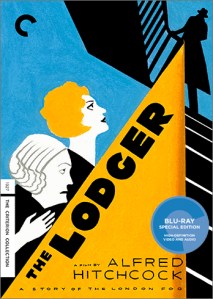 The Lodger: A Story of the London Fog (Dir. Alfred Hitchcock, UK, 1927) (Screening format – not known, 91 mins ) In The Lodger, a serial killer known as “The Avenger” is on the loose in London, murdering blonde women. A mysterious man (Ivor Novello) arrives at the house of Mr. and Mrs.
 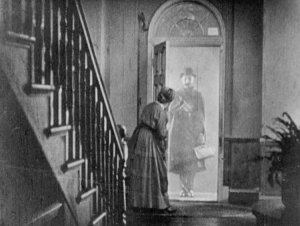 Bunting looking for a room to rent. The Bunting’s daughter (June Tripp) is a blonde model and is seeing one of the detectives (Malcolm Keen) assigned to the case. The detective becomes jealous of the lodger and begins to suspect he may be the avenger. Based on a best-selling novel by Marie Belloc Lowndes, first published in 1913, loosely based on the Jack the Ripper murders, The Lodger was Hitchcock’s first thriller, and his first critical and commercial success. Made shortly after his return from Germany, the film betrays the influence of the German expressionist tradition established in such films as The Cabinet of Dr. Caligari (1919) and Nosferatu (1922). Find out more at silentfilm.org With live musical accompaniment by Minima. The Nutshell, Winchester Link
15 February
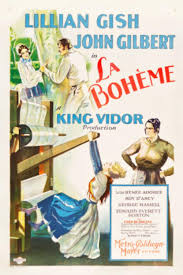 La Boheme (Dir. King Vidor, US, 1926) (Screening format – not known, 95mins) After leaving her mentor, D.W. Griffith, Lillian Gish made a triumphant debut (and a contract for $800,000) on the MGM lot in 1926 with La Boheme, a romantic adaptation of the classic opera, but despite strong box office, critical approval and the favor of studio head Louis B. Mayer, who hailed her as his favorite actress, her clashes with the studio anticipated the problems that would make her stay
 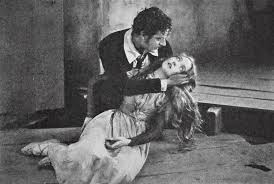 there surprisingly short, if far from undistinguished. The story is of struggling Bohemians who find love in the Paris slums, with Gish starring as Mimi, the seamstress whose romance with a young playwright (John Gilbert) is destroyed by poverty. The film earned profits of almost $400,000, and was particularly popular in Europe. However, Gish’s own popularity was already beginning to wane and she only completed five of the six MGM films she had been contracted to make before giving up film work to concentrate on the stage. Find out more at silentfilm.org With live organ accompaniment by Donald Mackenzie. Musical Museum, Brentford Link
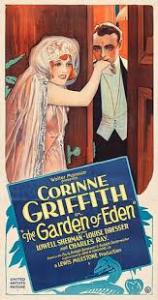 The Garden Of Eden (Dir. Lewis Milestone, US, 1928) (Screening format – digital, 80 mins) Minus only the gatling-gun dialogue, this is effectively a silent screwball. Scripted by Hans Kraly, Lubitsch’s regular writer, the film follows the fortunes of Corinne Griffith’s radiant young singer as she flees
 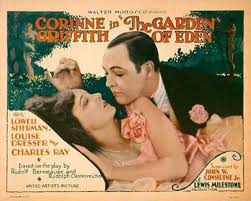 a pretzel bakery for the bright lights of Budapest, only to find herself on offer to wealthy men in a disreputable music hall. The action then traces her journey to Monte Carlo and the notorious Hotel Eden, where Viennese comedy joyfully turns to French farce. Find out more at moviessilently.com Introduced by Bryony Dixon, Curator, BFI National Archive. With live musical accompaniment by Stephen Horne. BFI Southbank, London Link
20 February
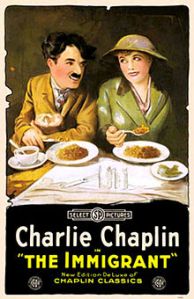 The Immigrant (Dir, Charles Chaplin, US, 1917) + Big Business (Dir. James W Horne/Leo McCarey, US, 1928) (Screening format not known , 22/19 mins) In The Immigrant, A penniless Chaplin falls in love with a girl on a boat bound for America, only to be separated on their arrival in the Land of Liberty. Will they overcome the harsh realities of their new home and be reunited…? There are belly laughs aplenty in this poignant tale featuring Chaplin’s mischievous “Tramp” character whose ingenuity always sees him through. This is Chaplin’s best loved silent short and the film
  that he himself cherished most – both for its craft and its rags-to-riches theme, which was always close to his heart. Big Business sees Stan and Ollie at their anarchic best as a pair of door-to-door Christmas tree salesmen whose attempts to secure the custom of James Finlayson turns into an epic duel of mutual destruction. Larbert born Finlayson, with his incredulous glare and bristling moustache, gives a superbly combustible performance as the indignant homeowner, and provides the perfect foil for the boys’ delirious brand of slapstick, escalating every gag to delightful extremes. . Find out more at wikipedia.org Introduced by HippFest Director Alison Strauss. With live musical accompaniment by Jane Gardner. Dobbie Hall, Larbert. Link
21 February
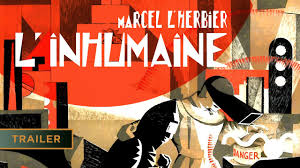 L’Inhumaine (Dir. Marcel L’Herbier, 1924) (Screening format – not known, 135mins) Famous singer Claire Lescot (Georgette Leblanc), who lives on the outskirts of Paris, is courted by many men, including a maharajah, Djorah de Nopur (Philippe Heriat) , and a young Swedish scientist, Einar Norsen (Jaque Catelain). At her lavish parties she enjoys their amorous attentions but she remains emotionally
 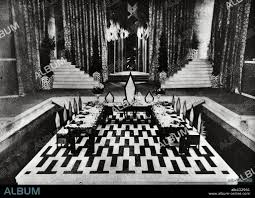 aloof and heartlessly taunts them. When she is told that Norsen has killed himself because of her, she shows no feelings. At her next concert she is booed by an audience outraged at her coldness. She visits the vault in which Norsen’s body lies, and as she admits her feelings for him, but all is not what it seems and further tragedy looms. While the plot of the film was something of a creaky melodrama with strong elements of fantasy, from the outset L’Herbier’s principal interest lay in the style of filming: he wanted to present “a miscellany of modern art” in which many contributors would bring different creative styles into a “single aesthetic goal”, in effect a manifesto of the modern decorative arts. Find out more at sensesofcinema.com With live piano accompaniment by Meg Morley. Droichead Arts Centre, Drogheda, Ireland Link
22 February
 Battleship Potemkin (Dir. Sergei Eisenstein, 1925) (Screening format – not known, 75mins) Considered one of the most important films in the history of silent pictures, as well as possibly Eisenstein’s greatest work, Battleship Potemkin brought Eisenstein’s theories of cinema art to the world in a powerful showcase; his emphasis on montage, his stress of intellectual contact, and his treatment of the mass instead of the individual as the protagonist. The film tells the story of the mutiny on the Russian ship Prince Potemkin during the 1905 uprising.Their mutiny was short-lived, however, as during their attempts to get the population of Odessa to join the uprising, soldiers arrived and laid waste to the insurgents. Battleship Potemkin is a work of extraordinary pictorial beauty and great elegance of form. It is symmetrically broken into five movements or acts. In the first of these, “Men and Maggots,” the flagrant
 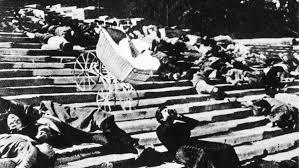 mistreatment of the sailors at the hands of their officers is demonstrated, while the second, “Drama on the Quarterdeck,” presents the actual mutiny and the ship’s arrival in Odessa. “Appeal from the Dead” establishes the solidarity of the citizens of Odessa with the mutineers. It is the fourth sequence, “The Odessa Steps,” which depicts the massacre of the citizens, that thrust Eisenstein and his film into the historical eminence that both occupy today. It is unquestionably the most famous sequence of its kind in film history, and Eisenstein displays his legendary ability to convey large-scale action scenes. The shot of the baby carriage tumbling down the long staircase has been re-created in many films. The sequence’s power is such that the film’s conclusion, “Meeting the Squadron,” in which the Potemkin in a show of brotherhood is allowed to pass through the squadron unharmed, is anticlimactic. Find out more at classicartfilms.com With live musical accompaniment by Hugo Max. Prince Charles Cinema, London Link
 Metropolis (Dir. Fritz Lang, 1927)(Screening format –not known, 60mins) Made in Germany during the Weimar period, Metropolis is set in a futuristic urban dystopia and follows the attempts of Freder (Gustav Frohlich), the wealthy son of the city’s ruler, and Maria (Brigitte Helm), a poor worker, to overcome the vast gulf separating the classes of their city. Filming took place in 1925 at a cost of approximately five million Reichmarks, making it the most expensive film ever released up to that point. It is regarded as a pioneering work of science fiction and is among the most influential films of all time. Find out more at silentfilm.org With live musical accompaniment by multidisciplinary artist Joe Harvey-Whyte. Theatreship, Canary Wharf, London Link (matinee) Link (evening) NB This is a severly truncated version of the full film and a print of likely poor quality.
 Man With a Movie Camera (Dir. Dziga Vertov, USSR, 1929) + Un Chien Andalou (Dir. Luis Bunuel/Salvador Dali, Fr, 1928) (Screening format – not known, 68/28mins) Part documentary and part cinematic art,Man With a Movie Camera follows a city in the 1920s Soviet Union throughout the day, from morning to night. Directed by Vertov, with a variety of complex and innovative camera shots (filmed by Vertov’s equally talented and innovative brother Mikhail Kaufman), the film depicts scenes of ordinary daily life in Russia. Vertov celebrates the modernity of the city, with its vast buildings, dense population and bustling industries. While there are no titles or narration, director and cameraman still naturally convey the marvels of the
  modern city. Find out more at rogerebert.com . The opening sequence of Un Chien Andalou, Buñuel’s first film, contains one of the most indelible images, and most primal “cuts”, in film history – the chillingly tranquil slicing of an eyeball with a razor blade. From there, Buñuel and collaborator Slvador Dali use a Surrealist version of narrative to thread together sequences involving a heterosexual couple, a disembodied hand and a rotting carcass inside a piano. Find out more at rogerebert.com. With live piano accompaniment by Lillian Henley. Palace Cinema, Broadstairs LInk
L’Inhumaine (Dir. Marcel L’Herbier, 1924) (Screening format – not known, 135mins) Famous singer Claire Lescot (Georgette Leblanc), who lives on the outskirts of Paris, is courted by many men, including a maharajah, Djorah de Nopur (Philippe Heriat) , and a young Swedish scientist, Einar Norsen (Jaque Catelain). At her lavish parties she enjoys their amorous attentions but she remains emotionally aloof and heartlessly taunts them. When she is told that Norsen has killed himself because of her, she shows no feelings. At her next concert she is booed by an audience outraged at her coldness. She visits the vault in which Norsen’s body lies, and as she admits her feelings for him, but all is not what it seems and further tragedy looms. While the plot of the film was something of a creaky melodrama with strong elements of fantasy, from the outset L’Herbier’s principal interest lay in the style of filming: he wanted to present “a miscellany of modern art” in which many contributors would bring different creative styles into a “single aesthetic goal”, in effect a manifesto of the modern decorative arts. Find out more at sensesofcinema.com With live piano accompaniment by Meg Morley. Light House Cinema, Dublin Link
25 February
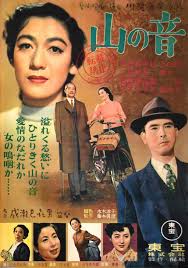 No Blood Relation (Dir. Mikio Naruse, Japan, 1932) (Screening format – Digital, 79 mins) An actress returns to Tokyo after a successful stint in Hollywood to reclaim — with the help of her gangster brother — the daughter she abandoned years before. Mikio Naruse was one of the most important directors and screenwriters in what has become known as the `Golden Age’ of Japanese cinema (which, unlike its Western counterpart, continued to be silent for some time into the 1930s). His focus on `common people’
 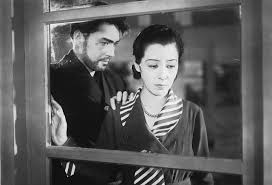 drama and fusing of traditional and modern Japanese motifs have drawn comparisons with his more celebrated contemporary Yasujirō Ozu. Much of his earlier work, mostly from the 1920s, is considered lost. No Blood Relation, photographed by Suketaro Inokai, is his earliest surviving feature-length film. Based on a novel by Shunyo Yanagawa, No Blood Relation is a gripping early example of Mikio Naruse’s cinematic boldness, featuring a screenplay by Ozu’s famed collaborator Kogo Noda. Find out more at dennisschwartzreviews.com Presented by the Kennington Bioscope. With live musical accompaniment . Cinema Museum, Lambeth Link
27 February
Battleship Potemkin (Dir. Sergei Eisenstein, 1925) (Screening format – not known, 75mins) Considered one of the most important films in the history of silent pictures, as well as possibly Eisenstein’s greatest work, Battleship Potemkin brought Eisenstein’s theories of cinema art to the world in a powerful showcase; his emphasis on montage, his stress of intellectual contact, and his treatment of the mass instead of the individual as the protagonist. The film tells the story of the mutiny on the Russian ship Prince Potemkin during the 1905 uprising.Their mutiny was short-lived, however, as during their attempts to get the population of Odessa to join the uprising, soldiers arrived and laid waste to the insurgents. Battleship Potemkin is a work of extraordinary pictorial beauty and great elegance of form. It is symmetrically broken into five movements or acts. In the first of these, “Men and Maggots,” the flagrant mistreatment of the sailors at the hands of their officers is demonstrated, while the second, “Drama on the Quarterdeck,” presents the actual mutiny and the ship’s arrival in Odessa. “Appeal from the Dead” establishes the solidarity of the citizens of Odessa with the mutineers. It is the fourth sequence, “The Odessa Steps,” which depicts the massacre of the citizens, that thrust Eisenstein and his film into the historical eminence that both occupy today. It is unquestionably the most famous sequence of its kind in film history, and Eisenstein displays his legendary ability to convey large-scale action scenes. The shot of the baby carriage tumbling down the long staircase has been re-created in many films. The sequence’s power is such that the film’s conclusion, “Meeting the Squadron,” in which the Potemkin in a show of brotherhood is allowed to pass through the squadron unharmed, is anticlimactic. Find out more at classicartfilms.com With live musical accompaniment by Body Orchestra. Theatreship, Canary Wharf, London Link
28 February
The Garden Of Eden (Dir. Lewis Milestone, US, 1928) (Screening format – not known, 80 mins) Minus only the gatling-gun dialogue, this is effectively a silent screwball. Scripted by Hans Kraly, Lubitsch’s regular writer, the film follows the fortunes of Corinne Griffith’s radiant young singer as she flees a pretzel bakery for the bright lights of Budapest, only to find herself on offer to wealthy men in a disreputable music hall. The action then traces her journey to Monte Carlo and the notorious Hotel Eden, where Viennese comedy joyfully turns to French farce. Find out more at moviessilently.com With live musical accompaniment by composer/pianist Michael Holohan. Droichead Arts Centre, Drogheda, Ireland Link
 City Lights (Dir. Charlie Chaplin, US, 1931) (Screening format – not known, 84mins) Subtitled ‘A Comedy in Pantomime’, City Lights is viewed by many as Chaplin’s greatest film – a ‘silent film’ released three years into the talkie era. The melodramatic film, a combination of pathos, slapstick and comedy, was a tribute to the art of body language and pantomime – a lone hold-out against the assault of talking film. The writer-director-star achieved new
  levels of grace, in both physical comedy and dramatic poignancy, with this silent tale of a lovable vagrant falling for a young blind woman who sells flowers on the street (a magical Virginia Cherrill) and mistakes him for a millionaire. Though this Depression-era smash was made after the advent of sound, Chaplin remained steadfast in his love for the expressive beauty of the pre-talkie form. The result was the epitome of his art and the crowning achievement of silent comedy. Find out more at rogerebert.com. With recorded musical score composed by Chaplin himself. FeckenOdeon Cinema, Redditch Link
Battleship Potemkin (Dir. Sergei Eisenstein, 1925) (Screening format – not known, 75mins) Considered one of the most important films in the history of silent pictures, as well as possibly Eisenstein’s greatest work, Battleship Potemkin brought Eisenstein’s theories of cinema art to the world in a powerful showcase; his emphasis on montage, his stress of intellectual contact, and his treatment of the mass instead of the individual as the protagonist. The film tells the story of the mutiny on the Russian ship Prince Potemkin during the 1905 uprising.Their mutiny was short-lived, however, as during their attempts to get the population of Odessa to join the uprising, soldiers arrived and laid waste to the insurgents. Battleship Potemkin is a work of extraordinary pictorial beauty and great elegance of form. It is symmetrically broken into five movements or acts. In the first of these, “Men and Maggots,” the flagrant mistreatment of the sailors at the hands of their officers is demonstrated, while the second, “Drama on the Quarterdeck,” presents the actual mutiny and the ship’s arrival in Odessa. “Appeal from the Dead” establishes the solidarity of the citizens of Odessa with the mutineers. It is the fourth sequence, “The Odessa Steps,” which depicts the massacre of the citizens, that thrust Eisenstein and his film into the historical eminence that both occupy today. It is unquestionably the most famous sequence of its kind in film history, and Eisenstein displays his legendary ability to convey large-scale action scenes. The shot of the baby carriage tumbling down the long staircase has been re-created in many films. The sequence’s power is such that the film’s conclusion, “Meeting the Squadron,” in which the Potemkin in a show of brotherhood is allowed to pass through the squadron unharmed, is anticlimactic. Find out more at classicartfilms.com With live musical accompaniment by Body Orchestra. Theatreship, Canary Wharf, London Link
 Silentfilmcalendar.org