



January
6 January
 Sunrise; A Song of Two Humans (Dir. F W Murnau, US, 1927) (Screening format – digital, 94mins) F W Murnau’s debut American film, made at the technical zenith of the silent era but already heralding the arrival of the talkies being one of the first silents made with synchronized musical score and sound effects soundtrack. The simple story of a husband’s betrayal of his wife with a treacherous city girl, Sunrise moves from a fairytale-like depiction of
 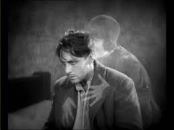 rural life to a dynamic portrait of the bustling modern American city. Explored in elaborate tracking shots by Charles Rocher and Karl Struss’s pioneering camerawork, the city set was one of the most costly yet
 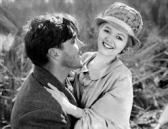 produced. The result was a commercial flop, though the achievement did not go unheralded: Sunrise was awarded a special Oscar for unique and artistic production at the first ever Academy Awards and Janet Gaynor won the first Academy Award for Best Actress for her performance. The film’s legacy has endured, and it is now widely considered a masterpiece with many calling it the greatest film of the silent era. Find out more at theguardian.com With recorded Hugo Riesenfeld score. BFI Southbank, London Link
7 January
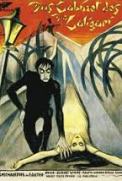 Cabinet of Dr Caligari (Dir. Robert Wiene, 1920) (Screening format – not known, 77 mins) In the village of Holstenwall, fairground hypnotist Dr Caligari (Werner Krauss) puts on show a somnambulist called Cesare (Conrad Veidt) who has
 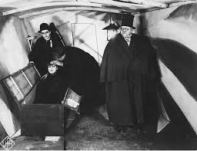 been asleep for twenty three years. At night, Cesare walks the streets murdering people on the doctor’s orders. A student (Friedrich Feher) suspects Caligari after a friend is found dead and it transpires that the doctor is the director of a lunatic asylum. Fueled by the pessimism and gloom of post-war Germany, the sets by Hermann Warm stand unequaled as a shining example of Expressionist design. Find out more at wikipedia.org. With live musical accompaniment by Hugo Max. Prince Charles Cinema, London Link
10 January
Sunrise; A Song of Two Humans (Dir. F W Murnau, US, 1927) (Screening format – digital, 94mins) F W Murnau’s debut American film, made at the technical zenith of the silent era but already heralding the arrival of the talkies being one of the first silents made with synchronized musical score and sound effects soundtrack. The simple story of a husband’s betrayal of his wife with a treacherous city girl, Sunrise moves from a fairytale-like depiction of rural life to a dynamic portrait of the bustling modern American city. Explored in elaborate tracking shots by Charles Rocher and Karl Struss’s pioneering camerawork, the city set was one of the most costly yet produced. The result was a commercial flop, though the achievement did not go unheralded: Sunrise was awarded a special Oscar for unique and artistic production at the first ever Academy Awards and Janet Gaynor won the first Academy Award for Best Actress for her performance. The film’s legacy has endured, and it is now widely considered a masterpiece with many calling it the greatest film of the silent era. Find out more at theguardian.com Introduced by freelance film programmer Margaret Deriaz. With recorded Hugo Riesenfeld score. BFI Southbank, London Link
 Phantom Of The Opera (Dir. Rupert Julian, 1925) (Screening format – not known, 103mins) A title that needs no introduction, but perhaps in a version you may not have seen before. Stories surrounding various versions of The Phantom of the Opera are legion, most arising from the decision of Universal Studios to re-edit their silent version of the film, shoot some additional footage and re-release it in 1929 in a sound version. The version this evening is believed to be that restored by Photoplay Productions released in 2003. To find out more, including extensive discussion of the various versions, check out wikipedia.org. Presented by the Kennington Bioscope. With live musical accompaniment. Cinema Museum, Lambeth Link
13 January
 Safety Last (Dir. Fred C Newmeyer/Sam Taylor, US, 1923) (Screening format – not known, 73mins) A boy (Harold Lloyd) moves to New York City to make enough money to support his loving girlfriend (Mildred Davis), but soon discovers that
  making it in the big city is harder than it looks. When he hears that a store manager will pay $1,000 to anyone who can draw people to his store, he convinces his friend, the “human fly,” (Bill Strother) to climb the building and split the profit with him. But when his pal gets in trouble with the law, he must complete the crazy stunt on his own. The image of Harold Lloyd hanging desperately from the hands of a skyscraper clock during Safety Last! is one of the great icons of film history (although it was achieved with a certain amount of film trickery) and this remains one of the best and best loved comedies of the silent era. Find out more at rogerebert.com. With recorded score. Prince Charles Cinema, London Link
 The Blinking Buzzards The UK Buster Keaton Society. Quarterly meeting of the society dedicated to the appreciation of the silent comedian. Main presentation is The Cameraman (Dir. Edward Sedgwick/Buster Keaton, US, 1928) (Screening format – not known, 67mins) Buster (Buster Keaton) meets Sally (Marceline Day), who works as a secretary for the newsreel department at MGM, and falls hard. Trying to win her attention, Buster abandons photography in order to become a news cameraman. In spite of his early failures with a motion camera, Sally takes to him as well. However, veteran cameraman Stagg (Harold Goodwin) also fancies Sally, meaning Buster will need to learn how to film quickly before he loses his job. Find out more at slantmagazine.com With recorded score. Cinema Museum, Lambeth Link
18 January
 Neil Brand Presents Laurel And Hardy After the national success of his long-running show ‘Neil Brand Presents Buster Keaton’, the composer/writer/broadcaster/musician returns with an all-new show about the immortal comedy duo recently portrayed in the hit film ‘Stan and Ollie’. Fully illustrated with stills, clips (both silent and sound) and Neil’s superlative piano accompaniment and culminating in two of the Boys’ best silent short films, Big Business and Liberty, this is a show that promises gales of laughter throughout, as well as getting under the skin of two warm, funny men who continue to make the world laugh when it needs it most. With live piano accompaniment by Neil Brand. Storeyhouse, Chester Link
19 January
Sunrise; A Song of Two Humans (Dir. F W Murnau, US, 1927) (Screening format – digital, 94mins) F W Murnau’s debut American film, made at the technical zenith of the silent era but already heralding the arrival of the talkies being one of the first silents made with synchronized musical score and sound effects soundtrack. The simple story of a husband’s betrayal of his wife with a treacherous city girl, Sunrise moves from a fairytale-like depiction of rural life to a dynamic portrait of the bustling modern American city. Explored in elaborate tracking shots by Charles Rocher and Karl Struss’s pioneering camerawork, the city set was one of the most costly yet produced. The result was a commercial flop, though the achievement did not go unheralded: Sunrise was awarded a special Oscar for unique and artistic production at the first ever Academy Awards and Janet Gaynor won the first Academy Award for Best Actress for her performance. The film’s legacy has endured, and it is now widely considered a masterpiece with many calling it the greatest film of the silent era. Find out more at theguardian.com With recorded Hugo Riesenfeld score. BFI Southbank, London Link
23 January
Neil Brand Presents Laurel And Hardy After the national success of his long-running show ‘Neil Brand Presents Buster Keaton’, the composer/writer/broadcaster/musician returns with an all-new show about the immortal comedy duo recently portrayed in the hit film ‘Stan and Ollie’. Fully illustrated with stills, clips (both silent and sound) and Neil’s superlative piano accompaniment and culminating in two of the Boys’ best silent short films, Big Business and Liberty, this is a show that promises gales of laughter throughout, as well as getting under the skin of two warm, funny men who continue to make the world laugh when it needs it most. With live piano accompaniment by Neil Brand. Garrick Theatre, Litchfield Link
24 January
 Go West (Dir. Buster Keaton, US, 1925) (68 mins) In an unusual twist on the romantic comedy formula, Buster Keaton stars opposite an affectionate cow in this Western Comedy. Friendless Homer Holiday drifts west eventually finding employment on the Thompson ranch. He soon befriends Brown Eyes, a cow that he bonds with after she saves his life. When Brown Eyes is included in a shipment of cattle bound for the slaughterhouse, Homer goes along in hopes of rescuing her. But when the herd escapes from the cattle cars, causing chaos through downtown L.A.; it is then up to Friendless to round them up and save the day. Look closely during the hilarious stampede scene to see Roscoe “Fatty” Arbuckle playing a part in drag. Find out more at silentfilm.org With recorded score. Picture House, Hackney Link
Neil Brand Presents Laurel And Hardy After the national success of his long-running show ‘Neil Brand Presents Buster Keaton’, the composer/writer/broadcaster/musician returns with an all-new show about the immortal comedy duo recently portrayed in the hit film ‘Stan and Ollie’. Fully illustrated with stills, clips (both silent and sound) and Neil’s superlative piano accompaniment and culminating in two of the Boys’ best silent short films, Big Business and Liberty, this is a show that promises gales of laughter throughout, as well as getting under the skin of two warm, funny men who continue to make the world laugh when it needs it most. With live piano accompaniment by Neil Brand. Palace Theatre, Newark Link
26 January
 The Coming Of Cinema To Istanbul An illustrated talk by Nezih Erdogan, leading Turkish film historian and currently a visiting scholar at Birkbeck. This presentation will include a selection of early films of Constantinople/Istanbul. Introduced by Ian Christie. With piano accompaniment from Cigdem Borucu. Birkbeck University, London Link
Neil Brand Presents Laurel And Hardy After the national success of his long-running show ‘Neil Brand Presents Buster Keaton’, the composer/writer/broadcaster/musician returns with an all-new show about the immortal comedy duo recently portrayed in the hit film ‘Stan and Ollie’. Fully illustrated with stills, clips (both silent and sound) and Neil’s superlative piano accompaniment and culminating in two of the Boys’ best silent short films, Big Business and Liberty, this is a show that promises gales of laughter throughout, as well as getting under the skin of two warm, funny men who continue to make the world laugh when it needs it most. With live piano accompaniment by Neil Brand. Haymarket, Basingstoke Link
28 January
 Steamboat Bill Jr (Dir. Buster Keaton/Charles Reisner, US, 1928) (Screening format – digital, 71 mins) In Steamboat Bill Jr a crusty river boat captain hopes that his long departed son’s return will help him compete with a business rival. Unfortunately, William Canfield Jnr (Buster Keaton) is an effete college boy. Worse still, he has fallen for the business rival’s daughter (Marion Byron). Featuring some of Buster’s finest and most dangerous stunts, it’s a health and safety nightmare maybe but it’s entertainment that will live forever. The final storm sequence is still as breathtaking today as it was on first release. Not a commercial success at the time, this is now rightly regarded as a Keaton classic. Find out more at Wikipedia With recorded score. Picture House, Bromley, Clapham, Crouch End, Ealing, East Dulwich, Finsbury Park, Fulham, Greenwich, Central, Ritzy, Stratford, Gate, West Norwood, Arts, Ashford, Cameo, Chester, Cinema City, City Screen, Duke Of Yorks, Exeter, Fact, Harbour Lights, Little Theatre, Phoenix and Regal. Link
 Haxan: Witchcraft Through the Ages (Dir. Benjamin Christensen, Swe., 1922) ( Screening format – not known, 105mins) A fictionalized documentary with dramatic reconstructions showing the evolution of witchcraft, from its pagan roots to its confusion with hysteria in modern (1922) Europe. Based partly on Christensen’s study of the Malleus
 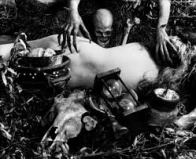 Maleficarum, a 15th-century German guide for inquisitors, Häxan is a study of how superstition and the misunderstanding of diseases and mental illness could lead to the hysteria of the witch hunts. Although it won acclaim in Denmark and Sweden when first released, Haxan was heavily censored or banned outright in many countries. But it is now considered to be Christensen’s finest work, a witches’ brew of the scary, the grotesque, and the darkly humorous. Find out more at thedevilsmanor.blogspot.co.uk . With live musical accompaniment by Nick Carlisle. Barbican, London Link
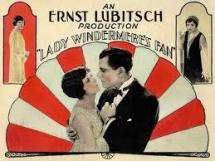 Lady Windermere’s Fan (Dir. Ernst Lubitsch, US, 1925) (Screening Format – digital 4k, 89mins) Ronald Colman has one of his first important screen roles as the slightly caddish Lord Darlington, who is in love with the very pretty–and very married–Lady Windermere (May McAvoy). The lady is rescued from disgrace at the hands of Darlington by the notorious Mrs. Erlynne (Irene Rich), who unbeknownst to everyone is Lady Windemere’s long-lost mother. Unable to rely upon Oscar Wilde’s epigrammatic dialogue to carry the day
  (this was, after all, the silent-film era), director Ernst Lubitsch substitutes visual wit for the verbal variety in his 1925 interpretation of Lady Windermere’s Fan. The film was an enormous hit, and an instant candidate for the many “Ten Best” lists tabulated by the fan magazines of the era, and viewed nearly a hundred years later it remains a superb adaption. The characters and the story are Wilde’s, while the acting and the style are pure Lubitsch. Find out more at sensesofcinema.com. Introduced by Bryony Dixon, BFI National Archive curator. With live musical accompaniment. BFI Southbank, London Link
31 January
Steamboat Bill Jr (Dir. Buster Keaton/Charles Reisner, US, 1928) (Screening format – digital, 71 mins) In Steamboat Bill Jr a crusty river boat captain hopes that his long departed son’s return will help him compete with a business rival. Unfortunately, William Canfield Jnr (Buster Keaton) is an effete college boy. Worse still, he has fallen for the business rival’s daughter (Marion Byron). Featuring some of Buster’s finest and most dangerous stunts, it’s a health and safety nightmare maybe but it’s entertainment that will live forever. The final storm sequence is still as breathtaking today as it was on first release. Not a commercial success at the time, this is now rightly regarded as a Keaton classic. Find out more at Wikipedia With recorded score. Picture House, Hackney Link
 Heart O’ the Hills (Dir. Joseph de Grasse/Sydney Franklin, US, 1919) (Screening format – 35mm, 87mins) Heart O’ the Hills was one of four films Mary Pickford released in 1919 and the last she would make for a distributor other than her own. It was a tumultuous year for Mary, who was running her own studio, forming United Artists and conducting a clandestine affair with Douglas Fairbanks. A backwoods melodrama about land-
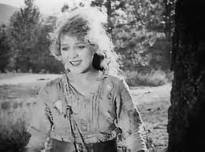 grabbing in the mountains of Kentucky, the film gave Mary the chance to extend her range from her previous half-dozen parts. For almost two years, audiences had seen her in a series of urban settings or in familiar roles
  from popular projects. Heart O’ the Hills, with its often brutal subject matter and frank treatment of poverty, could hardly have been a greater change of pace from the lighthearted Daddy-Long-Legs, made the same year. The resulting melodrama, culminating in a memorable court trial sequence, would prove to be a dramatic and critical success. Find out more at wikipedia.org. Presented by the Kennington Bioscope. With live musical accompaniment. Cinema Museum, Lambeth Link
Neil Brand Presents Laurel And Hardy After the national success of his long-running show ‘Neil Brand Presents Buster Keaton’, the composer/writer/broadcaster/musician returns with an all-new show about the immortal comedy duo recently portrayed in the hit film ‘Stan and Ollie’. Fully illustrated with stills, clips (both silent and sound) and Neil’s superlative piano accompaniment and culminating in two of the Boys’ best silent short films, Big Business and Liberty, this is a show that promises gales of laughter throughout, as well as getting under the skin of two warm, funny men who continue to make the world laugh when it needs it most. With live piano accompaniment by Neil Brand. Alban Arena, St Albans Link
 Silentfilmcalendar.org