
5 January
 Haxan: Witchcraft Through the Ages (Dir. Benjamin Christensen, Swe., 1922) ( Screening format – not known, 105mins) A fictionalized documentary with dramatic reconstructions showing the evolution of witchcraft, from its pagan roots to its confusion with hysteria in modern (1922) Europe. Based partly on Christensen’s study of the Malleus Maleficarum, a 15th-century German guide for inquisitors,
 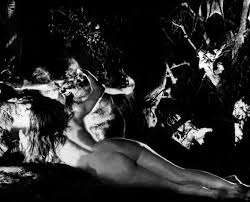 Häxan is a study of how superstition and the misunderstanding of diseases and mental illness could lead to the hysteria of the witch hunts. Although it won acclaim in Denmark and Sweden when first released, Haxan was heavily censored or banned outright in many countries. But it is now considered to be Christensen’s finest work, a witches’ brew of the scary, the grotesque, and the darkly humorous. Find out more at thedevilsmanor.blogspot.co.uk With live musical accompaniment by Hugo Max. Prince Charles Cinema, London Link
8 January
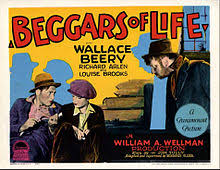 Beggars of Life (Dir. William Wellman, 1928) (Screening format – not known, 100 mins) Nancy (Louise Brooks), is a young woman on a farm who kills her foster father when he attempts to rape her. She is assisted in escaping from the farm by Jim (Richard Arlen), a young hobo who has stopped to ask for food. By dressing in rough men’s clothing, Nancy, with the assistance of Jim, eludes the police. They hop a freight
 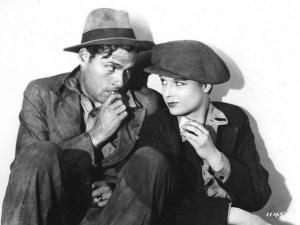 train and, when thrown off by the brakeman, they wander into a hobo camp. The hobo camp is run by Oklahoma Red (Wallace Beery), a villain….or maybe not! Beggars of Life is based on the 1924 novelistic memoir of the same name by Jim Tully, a celebrated “hobo author”. Directed by William Wellman the year after he made Wings (the first film to win an Academy Award), the location shooting for Beggars of Life was awash with hair-raising stunts, hard-drinking nights and countless fights, apparently the norm for a William Wellman picture, and nicely detailed in Louise Brooks’ own words in her book ‘Lulu In Hollywood’. Find out more at silentfilm.org . Presented by the Kennington Bioscope. With live musical accompaniment. Cinema Museum, Lambeth Link
11 January
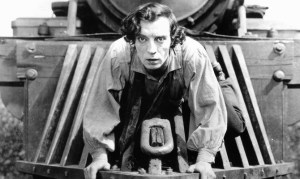 The General (Dir. Buster Keaton/Clyde Bruckman, 1926) (Screening format – not known, 75mins) Widely considered one of the greatest films ever made and one of the most revered comedies of the silent era,
 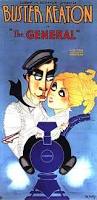 Buster Keaton’s effortless masterpiece sees hapless Southern railroad engineer Johnny Gray (Keaton) facing off against Union soldiers during the American Civil War. When Johnny’s fiancée, Annabelle Lee (Marion Mack), is accidentally taken away while on a train stolen by Northern forces, Gray pursues the soldiers, using various modes of transportation in comic action scenes that highlight Keaton’s boundless, innovative wit and joyful, lighthearted dexterity, to reclaim the train and thereby save the South. Find out more at busterkeaton.com . With live musical accompaniment by Harmonieband. Home, Manchester Link
13 January
 Sherlock Jnr (Dir. Buster Keaton, 1924) + shorts. (Screening format – not known, 45 mins) In Sherlock Jr, a kindly movie projectionist (Buster Keaton) longs to be a detective. When his fiancée (Kathryn McGuire) is robbed by a local thief (Ward Crane), the poor projectionist is framed for the crime. Using his amateur detective skills, the projectionist follows the thief to the train station – only to find himself locked in a train car. Disheartened, he returns to his movie theatre, where he falls asleep and dreams that he is the great Sherlock Holmes. Although not a popular success on its initial release, the film has come to be recognised as a Keaton classic with its special effects and elaborate stunts making it a landmark in motion picture history. Find out more at silentfilm.org. With live piano accompaniment by Neil Brand. The Picture House, Uckfield Link
18 January
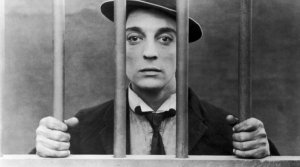 The Blinking Buzzards Quarterly meeting of the UK Buster Keaton Society, dedicated to the appreciation of the silent comedian. Likely featuring some silent shorts. With recorded score. Cinema Museum, Lambeth Link
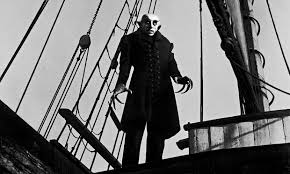 Nosferatu (Dir. F W Murnau, 1922) (Screening format – not known, 96mins) A German Expressionist horror masterpiece starring Max Shreck as the vampire Count Orlok. The film was an unauthorised adaption of Bram Stoker’s ‘Dracula’ with names and other details changed because the studio could not obtain the rights to the novel. Stoker’s heirs sued over the adaption and a court ruling ordered that all copies of the film be destroyed. However, a few prints survived and the film came to be regarded as an inspirational master work of the cinema. In the film, Count Orlok travels across Europe leaving a trail of death in his wake. Brilliantly eerie, with imaginative touches which later adaptions never achieved. Find out more at wikipedia.org Presented by South West Silents. With live musical accompaniment by Stephen Horne. Bristol IMAX Link
19 January
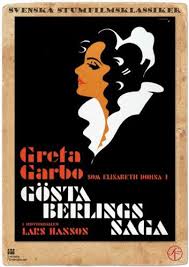 Gosta Berling’s Saga (aka The Saga of Gosta Berling) (Dir. Mauritz Stiller, Swe, 1924) (Screening format – digital, 206mins) Based on the celebrated 1891 novel by Selma Lagerlöf, the first woman to win the Nobel Prize for literature, Swedish priest Gösta Berling (Lars Hanson) is defrocked and publicly humiliated due to his fondness for drink. Gösta is soon hired by a countess to tutor
  her step daughter, in hopes that the daughter will marry Berling so that she will be disinherited for marrying a commoner, allowing the mother’s natural son, Hendrik, to become heir to the estate. But her plans start to go awry when Hendrik returns from Italy with his new wife who is soon attracted to Berling. Although the film’s cast included
 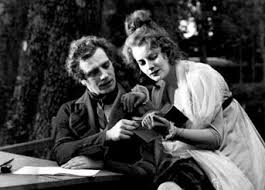 distinguished stage actress Gerda Lundequist as well as prima ballerina Jenny Hasselquist, most subsequent attention was focused upon the young Greta Garbo in her breakout role. A year later Garbo was in Germany co-starring with Asta Nielsen in The Joyless Street (1925) and a year after that in Hollywood and the rest, as they say, is history. But for Mauritz Stiller, who discovered and mentored Garbo, things took a rather different trajectory. Traveling with her to America he was sacked as director of her second film and unable to cope with the strictures of the US film studio system he returned to Sweden in 1927 and died the following year. But Gosta Berling’s Saga stands out as a fitting epitaph to his work. Find out more at silentfilm.org Introduced by film writer Paul Joyce. With live musical accompaniment. BFI Southbank, London Link
25 January
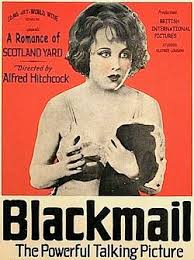 Blackmail (Dir. Alfred Hitchcock, UK, 1929) (Screening format – not known, 84mins) Alice White is the daughter of a shopkeeper in 1920’s London. Her boyfriend, Frank Webber is a Scotland Yard detective who seems more interested in police work than in her. Frank takes Alice out one night, but she has secretly arranged to meet another man. Later that night Alice agrees to go back to his flat to see his studio. The man has other ideas and
  as he tries to rape Alice, she defends herself and kills him with a bread knife. When the body is discovered, Frank is assigned to the case, he quickly determines that Alice is the killer, but so has someone else and blackmail is threatened. Alfred Hitchcock’s sinister, suspenseful tale of crime and romance is one of the last British silent films to be made (a sound version, which involved some re-shooting and dubbing and is now famous for its ‘KNIFE!!!’ scene, was subsequently released). With his traditional cameo appearance in the first reel, to a spectacular moonlit chase through the British Museum in the final reel, Blackmail is a classic thriller from the Master of Suspense. Find out more at screenonline.org.uk With live organ accompaniment by Darius Battiwalla. St Mary-at-Finchley, London Link
26 January
 Laurel & Hardy Happy Hour. An hour (and a bit!) of the Boys with shorts including Duck Soup (Dir. Fred Guiol, US, 1927) which sees L&H hide out in someone else’s a mansion and then try to rent it out to an English couple. But when the rightful owner returns, the boys are in trouble (especially Stan who’s disguised as the maid. There’s also Do Detectives Think (Dir. Fred Guiol, US, 1927) in which an escaped convict vows revenge on the judge who sentenced him, the judge engages a detective agency which sends its two best men, Laurel and Hardy, to protect him! What could go wrong!! With live piano accompaniment from Lillian Henley. Palace Cinema, Broadstairs. Link
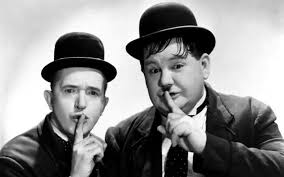 The Boys Are Back In Town. An afternoon featuring a selection of silent short films featuring Laurel and Hardy (together and separately). Film titles to be confirmed. With live organ accompaniment by Donald MacKenzie. Brentford Musical Museum, London Link
 Steamboat Bill Jr (Dir. Buster Keaton/Charles Reisner, US, 1928) (Screening format – not known, 71 mins) In Steamboat Bill Jr a crusty river boat captain hopes that his long departed son’s return will help him compete with a business rival. Unfortunately, William Canfield Jnr (Buster Keaton) is an effete college boy. Worse still, he has fallen for the business rival’s daughter (Marion Byron). Featuring some of Buster’s finest and most dangerous stunts, it’s a health and safety nightmare maybe but it’s entertainment that will live forever. The final storm sequence is still as breathtaking today as it was on first release. Not a commercial success at the time, this is now rightly regarded as a Keaton classic. Find out more at Wikipedia With live piano accompaniment by John Sweeney. Barbican, London Link
29 January
 Dr Jekyll And Mr Hyde (Dir. John S. Robertson ,US, 1920) (Screening format – not known, 79mins) Not the first cinematic version of Stevenson’s famous story but one of the most memorable with John Barrymore’s classic transformation scenes, a mixture of facial and bodily contortions as well as make–up. He tends to be hammy as the leering beast of a thug but brings a tortured struggle to the repressed doctor, horrified at the demon he’s unleashed,
  guilty that he enjoys Hyde’s unrestrained life of drinking and whoring and terrified that he can no longer control the transformations. Martha Mansfield co-stars as his pure and innocent sweetheart, and Nita Naldi (the vamp of Blood and Sand) has a small but memorable role as the world-weary dance-hall darling who first “wakens” Jekyll’s “baser nature”. The film uses elements from a 1887 stage version of Stevenson’s original novella by Thomas Russell Sullivan. A huge box office success on its release. Find out more at moviessilently.com Presented by the Kennington Bioscope. With live musical accompaniment. Cinema Museum, London Link
30 January
 An Evening Of Silent Cinema Comedy A quadruple bill of comedy classics featuring Buster Keaton in One Week which sees Buster and his new bride struggling with a pre-fabricated home and The Boat in which Buster is determined to take his family on a trip in his self-built yacht, no matter what the cost, together with Laurel and Hardy in Do Detectives Think in which an escaped
  convict vows revenge on the judge who sentenced him so the judge engages a detective agency which sends its two best men, (guess who) to protect him! and Big Business which sees Ollie and Stan as two Christmas tree salesmen (in February!) who get into one of their usual mutual destruction fights with a homeowner. With live piano accompaniment by Forrester Pyke. Bridge of Allan Parish Church Link
 Silentfilmcalendar.org