


7 January
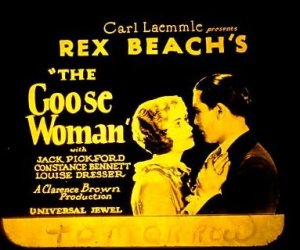 The Goose Woman (Dir. Clarence Brown, US, 1925) (Screening format – 35mm, 80mins) Louise Dresser plays Marie du Nard, a celebrated opera diva who loses her voice and her reputation after giving birth to an illegitimate son. Reverting to her given name of Mary Holmes, she returns to her hometown,
 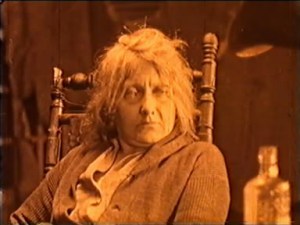 living in a squalid shack and raising geese. Years later, a headline-making murder case is played out in her town. Hoping to capture her past celebrity, Mary claims to be a witness to the murder, but then discovers that her son may be implicated.…Find out more at silentfilm.org . Presented by the Kennington Bioscope. Introduced by silent film historian, writer and collector Kevin Brownlow. With live musical accompaniment. Cinema Museum, Lambeth Link
11 January
 Celebrating 100 Years of Laurel and Hardy with Neil Brand Neil Brand returns with the premiere of his all-new Laurel and Hardy Centenary Tour. Neil will
  introduce and live-accompany the best gags, stunts and stories from their earliest days, tracing the development of their timeless and hilarious comic technique, in pristine clips from the latest restorations. Two classic shorts, The Finishing Touch and You’re Darn Tootin’, complete the show with Neil’s own score. With live piano accompaniment by Neil Brand. BFI Southbank, London Link
17 January
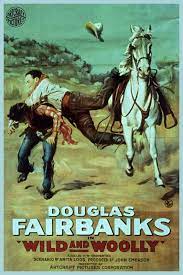 Wild And Woolly (Dir. John Emerson, US, 1917) (Screening format – not known, 72 mins) Douglas Fairbanks stars as Jeff Hillington, the son of a New York based railroad magnate who only dreams of the plains and adventures of the American wild west. Dispatched by his father to Bitter Spurs, Arizona, to check out the prospects for a new rail line, Jeff finally thinks he will be visiting the real wild west. However, the town’s ‘wild’ days are long gone and it is now an
 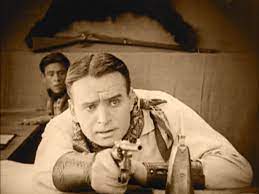 orderly and civilized place. But the townsfolk, not wanting to risk loosing the new rail line, contrive to convince Jeff that he is indeed living the ‘wild west’ dream. They dress as cowboys, disguise Bitter Spurs as a frontier town, stage a fake shootout and plan a fake train robbery. But when the corrupt local Indian agent hears about the planned fake train robbery he seeks to take advantage of it for his own ends. Can Jeff save the day…and the girl? In this great comedy, written by the fantastic Anita Loos, Wild and Woolly showcases the many talents of Fairbanks as an action star as well as a comedy actor. Find out more at moviessilently.com Presented by South West Silents. With live musical accompaniment by Dominic Irving. Megascreen, Bristol Link
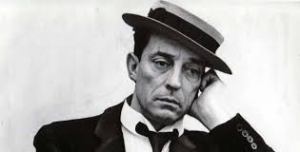 The Blinking Buzzards – Quarterly Meeting. Quarterly meeting of The UK Buster Keaton Society (AKA The Blinking Buzzards) – dedicated to the appreciation of the silent comedian. With recorded score. Cinema Museum, Lambeth Link
18 January
 High Treason (Dir. Maurice Elvey, UK, 1929) (Screening format – 35mm, 95mins) A British sci-fi thriller set in 1950s London, involving a plot by evil arms dealers to blow up the Channel Tunnel and fly planes into buildings. Based on
  a stage-play by Noel Pemberton-Billing MP, the film features imagined variants of television used for broadcasting and televisual telephony. A very British vision of the future, it was unquestionably influenced by Fritz Lang’s Metropolis. Find out more at scifist.net With live musical accompaniment. BFI Southbank, London Link
19 January
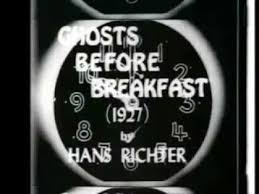 Avant-Garde short films from the 1920s A selection of short avant garde films featuring New Items (1923) Claude Autant-Lara, Ballet Machanique (1924) Dudley Murphy, Emak-Bakia (1926) Man Ray, Hands: The Life and Loves of the Gentler Sex (1927) Stella Simon, Ghosts Before Breakfast (1928) Hans Richter and Arabesque (1929) Germaine Dulac. Presented by Kinomad and the SECT Silent Film Club. With live musical accompaniment by Mutterichbindoom. The Bath House, Hackney Link
21 January
 The Fall of The House of Usher (Dir. Jean Epstein, Fr, 1928) (Screening format – 35mm, 63 mins) An unnamed man pays a visit to the decaying, aristocratic mansion of his childhood friend, Roderick Usher. He finds Usher to be demented… obsessed by death, consumed with fear that his beloved wife Madeline will die, and no less fearful that she will be buried alive. He spends his days painting an eerily lifelike portrait of Madeline, but with each brushstroke the life seems to drain from her. Director Jean Epstein and screenwriter Luis Buñuel studiously avoided cheap shocks and opted for a controlled, spookily subtle technique, in this tale of hereditary madness. Epstein’s version changes the relationship of Madeline and Roderick from brother and sister to husband and wife but matches the horror and menace of Poe’s story, with weird, surreal images and an insidious atmosphere conveyed by the glowering halls, fluttering curtains, and nightmarish suggestiveness of the veil and coffin. Look out for French director Abel Gance, fresh from directing Napoleon (1927) in a minor role while his then wife, Marguerite, stars as Madeline. Find out more at rogerebert.com. With live musical accompaniment by Marika Tyler-Clark The Nickel Cinema, London Link
23 January
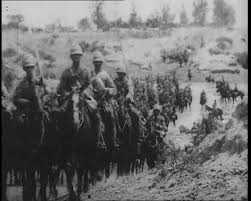 Victorian New Media: The Anglo-Boer War In Film, Stereographs and Lantern Slides Stereoscopy was the 19th century’s first great optical innovation, just before photography, which soon became its essential partner. Discovered by Charles Wheatstone and embraced by Victoria and Albert, stereoscopes took off at the Great Exhibition in 1851. Soon they were an essential part of the Victorian parlour. They could transport you to distant places – and even take you to the heart of distant wars, like the South African War of 1899-1902. So too could the even newer ‘animated pictures’… but which of the new media was most effective? Professor Ian Christie will show a selection of Boer War films by Robert Paul, and offer stereoscopic views from the battlefields for comparison. Without score (?) BIMI London Link
24 January
 Silent Sherlock: Three Classic Cases. The Adventures of Sherlock Holmes series, which was so popular it ran for 45 episodes, was sanctioned by Arthur Conan Doyle, who thoroughly approved of Eille Norwood as Holmes. This programme features a selection of three episodes: ‘A Scandal in Bohemia’, wherein Holmes falls for ‘the woman’; ‘The Golden Pince-Nez’, which features Holmes’ deductive powers at work, and ‘The Final Problem’, featuring the sinister Professor Moriarty. With recorded scores composed by Joanna MacGregor, Neil Brand and Joseph Havlat. Theatres and Museum, Worthing Link
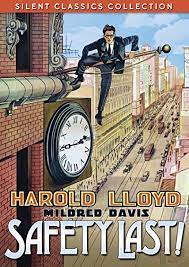 Safety Last (Dir. Fred C Newmeyer/Sam Taylor, US, 1923) (Screening format – not known, 73mins) A boy (Harold Lloyd) moves to New York City to make enough money to support his loving girlfriend (Mildred Davis), but soon discovers that making it in the big city is harder than it looks. When he hears that a store manager will pay $1,000 to anyone who can draw people to his store, he convinces his friend, the “human fly,” (Bill Strother) to climb the building and split the profit with him. But when his pal gets in trouble with the law, he must complete the crazy stunt on his own. The image of Harold Lloyd hanging desperately from the hands of a skyscraper clock during Safety Last! is one of the great icons of film history (although it was achieved with a certain amount of film trickery) and this remains one of the best and best loved comedies of the silent era. Find out more at rogerebert.com. With live organ accompaniment by Darius Battiwalla. St Mary-at-Finchley, London Link
25 January
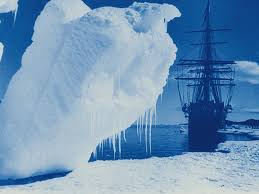 The Great White Silence (Dir. Herbert G. Ponting, UK, 1924) (Screening format – not known, 107 mins) This documentary captured the story of the British Antarctic Expedition, led by Captain Scott, to reach the South Pole. With extraordinary footage of many stages of the
 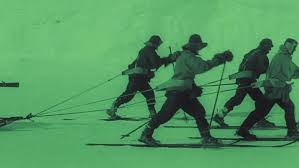 exploration: on board the Terra Nova ship; life in the base camp; crew preparations and scientific research; and the local penguins, whales and seals. Still images, maps, miniature model shots, diary entries and recreations illustrate the rest of the journey across the ice. “The alien beauty of the landscape is brought dramatically to life and the world of the expedition revealed in brilliant detail.” – BFI. Find out more at bfi.org.uk. With live piano accompaniment by Lillian Henley. Palace Cinema, Broadstairs Link
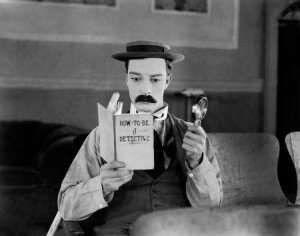 Sherlock Jnr (Dir. Buster Keaton, 1924) + Cops (Dir. Edward F Cline/Buster Keaton, US, 1922)(Screening format – not known, 45/18 mins ) In Sherlock Jr, a kindly movie projectionist (Buster Keaton) longs to be a detective. When his fiancée (Kathryn McGuire) is robbed by a local thief (Ward Crane), the poor projectionist is framed for the crime. Using his amateur detective skills, the projectionist follows the thief to the train station – only to
  find himself locked in a train car. Disheartened, he returns to his movie theatre, where he falls asleep and dreams that he is the great Sherlock Holmes. Although not a popular success on its initial release, the film has come to be recognised as a Keaton classic with its special effects and elaborate stunts making it a landmark in motion picture history. Find out more at silentfilm.org. Cops sees Buster Keaton ending up with a load of furniture in the middle of parade of policemen. An anarchist’s bomb lands in his carriage. After lighting his cigarette with it, he tosses it into the ranks of police. When it explodes the police chase him all over town by the entire Los Angeles Police Department. Find out more at wikipedia.org . With live musical accompaniment by John Sweeney. Barbican, London Link
27 January
Silent Sherlock: Three Classic Cases. The Adventures of Sherlock Holmes series, which was so popular it ran for 45 episodes, was sanctioned by Arthur Conan Doyle, who thoroughly approved of Eille Norwood as Holmes. This programme features a selection of three episodes: ‘A Scandal in Bohemia’, wherein Holmes falls for ‘the woman’; ‘The Golden Pince-Nez’, which features Holmes’ deductive powers at work, and ‘The Final Problem’, featuring the sinister Professor Moriarty. With recorded scores composed by Joanna MacGregor, Neil Brand and Joseph Havlat. Theatres and Museum, Worthing Link
28 January
Cinders (Dir. Louis Mercanton, UK, 1926) + Daughter of the Regiment (Dir. Hans Behrendt, UK/Ger, 1929) A double treat for Betty Balfour fans. Firstly, Cinders (not to be confused with Ella Cinders, a vehicle for Colleen Moore released the same year) about a professor who inherits both a vast fortune and a luxurious hotel on the French Riviera. He leaves his modest family house in 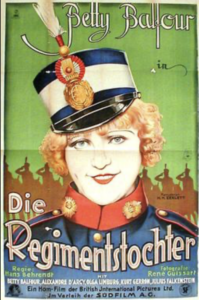 London – where he keeps his insects! – and takes Betty, the maid, along with him to his new home. Cinders survives in a four-reel 9.5mm abridgement with French titles. Followed by Daughter of the Regiment a British/German co-production released in Germany as Die Regimentstochter. The plot is loosely based on the 1840 opera composed by Gaetano Donizetti and revolves around Marie, a foundling raised by a regiment, who falls in love with a local boy named Tonio, screened tonight from a 16mm print. Presented by the Kennington Bioscope. With live musical accompaniment. Cinema Museum, Lambeth Link
29 January
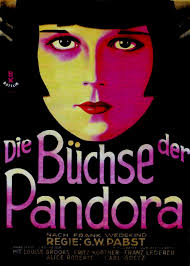 Pandora’s Box (Dir. G W Pabst, Ger, 1929) (Screening format – not known, 135mins) Based on two plays by the German author Frank Wedekind, Erdgeist (Earth Spirit, 1895), which Pabst himself had directed for the stage, and Die Büchse der Pandora (Pandora’s Box, 1904), the silent drama follows the tumultuous life of the showgirl Lulu whose unselfconscious sexuality brings about the ruin of all those that fall for her and eventually her own. In a daring move, Pabst chose a
 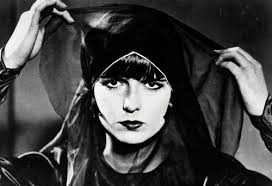 little known American actress over the more experienced Marlene Dietrich for the part of Lulu, a decision that made the young Louise Brooks an international star. Her innocent looks paired with her natural erotic allure and sense of movement – Brooks was also a dancer – perfectly matched Pabst’s idea of his heroine as unwitting seductress. Subjected to cuts to eliminate some of its “scandalous” content and unfavourably reviewed by critics at the time, it is now considered one of the boldest and most modern films of the Weimar era highlighting Pabst’s command of camera language and montage. Find out more at silentlondon.co.uk . With recorded score. Film Theatre, Glasgow Link
31 January
 An Evening with the Kings of Silent Comedy Featuring four classic comedy shorts; Chaplin’s The Tramp; Harold
  Lloyd’s Number Please; Buster Keaton’s The High Sign; and Laurel and Hardy’s Angora Love. With live piano accompaniment by Forrester Pyke. Chalmers Church Hall, Bridge of Allen Link
 Silentfilmcalendar.org