
3 June
 The General (Dir. Buster Keaton/Clyde Bruckman, 1926) (Screening format – not known, 75mins) Widely considered one of the greatest films ever made and one of the most revered comedies of the silent era, Buster Keaton’s effortless masterpiece sees hapless Southern railroad engineer Johnny Gray (Keaton) facing off against Union soldiers during the American Civil War. When Johnny’s fiancée, Annabelle Lee (Marion Mack), is accidentally taken away while on a train stolen by Northern forces, Gray pursues the soldiers, using various modes of transportation in comic action scenes that highlight Keaton’s boundless, innovative wit and joyful, lighthearted dexterity, to reclaim the train and thereby save the South. Find out more at busterkeaton.com . Screened as part of a Keatonmania day which also includes free screenings of some of Keaton’s best early short films, including One Week, Good Night Nurse and The Cook. With recorded score. The Little Theatre Cinema, Bath Link
Slapstick For Children (And Their Adults) A 50 minute show which brings live-scored silent film alive for children, and includes opportunities to join in with making music and sound effects. The performance is most suitable for children of five years and over, but children and babies of all ages are welcome. Presented by the Yorkshire Silent Film Festival. With live musical accompaniment by the YSFF Ensemble. , Link
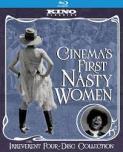 Cinema’s First Nasty Women – Strike. Striking nurses, violent milkmaids, and destructive housemaids run riot in this thirteen-film selection of badly-behaved women. Silent film curators Maggie Hennefield and Laura Horak have selected this programme from their Cinema’s First Nasty Women compilation disc of 99-films drawn from thirteen archives around the world and celebrating feminist protest, slapstick destruction, and gender non-conformity. Presented by the Yorkshire Silent Film Festival. With live musical accompaniment by the YSFF Ensemble. , Link
 The Girl In Tails: A Light Summer Film Story (Flickan i frack: En sommarlätt filmhistoria) (Dir. Karin Swanström. Swe, 1926) (120 mins) Katja is about to graduate, but she has nothing to wear for the graduation ball. Her father, the eccentric inventor Carl Axel Kock does not spend much of his income on Katja while her brother Curry gets everything he wants. So on the day of the ball, Katja simply dresses up in her
  brother’s brand new evening attire and attends the dance, smokes cigars, drinks brandy–and causes a scandal. Director Karin Swanström plays the somewhat unflattering role of an ageing and overweight matriarchal widow (sporting double chin, flaring nostrils and piercing stare) in this amusing take on the conflict between diversity and conformity, tradition and change, with a surprisingly (for its time) feminist perspective. Find out more at silentfilm.org Presented by the Yorkshire Silent Film Festival. With live musical accompaniment by Jonny Best. , Link
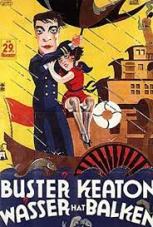 Steamboat Bill Jr (Dir. Buster Keaton/Charles Reisner, US, 1928) (Screening format – not known, 71 mins) In Steamboat Bill Jr a crusty river boat captain hopes that his long departed son’s return will help him compete with a business rival. Unfortunately, William Canfield Jnr (Buster Keaton) is an effete college boy. Worse still, he has fallen for the business rival’s daughter (Marion Byron). Featuring some of Buster’s finest and most dangerous stunts, it’s a health and safety nightmare maybe but it’s entertainment that will live forever. The final storm sequence is still as breathtaking today as it was on first release. Not a commercial success at the time, this is now rightly regarded as a Keaton classic. Find out more at Wikipedia. Presented by the Yorkshire Silent Film Festival. With live musical accompaniment by jazz pianist Adam Fairhall. , Link
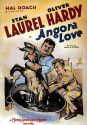 The Live Ghost Tent The quarterly meeting of The Laurel and Hardy Society. Films being screened include Angora Love (Dir. Lewis R Foster, US, 1929) (Screening format – not known, 21 mins) in which Laurel and Hardy are adopted by a runaway goat, whose noise and aroma in turn get the goat of their suspicious landlord. Attempts to bathe the smelly animal result in a waterlogged free-for-all. Find out more at laurelandhardycentral.com . With recorded score. Cinema Museum, London Link
4 June
 Menilmontant (Dir. Dimitri Kirsanoff, 1926) + shorts (Screening format – not known, 90 mins) In Menilmontant, a couple are brutally murdered in the working-class district of Paris. Later on, the narrative follows the lives of their two daughters (Nadia Sibirskaïa and Yolande Beaulieu), both in love with a Parisian thug (Guy Belmont) and leading them to separate ways. Kirsanoff’s second film, Menilmontant is also his best known. It has been described as “une oevre presque parfaite” (“a nearly perfect work”) . Its story is told entirely in images, without the use of explanatory intertitles; Kirsanoff was among the very rare filmmakers of the silent era to attempt this. The film makes use of techniques such as montage, hand-held camera, ultra-rapid montage, and superposition. For more info see seul-le-cinema.blogspot.co.uk With live musical accompaniment by the Electronic & Produced Music Department. Barbican, London Link
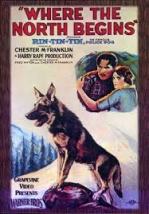 Where The North Begins (Dir. Chester M. Franklin, US, 1923) + short (Screening format – not known, 60/?mins) Bonafide movie royalty Rin Tin Tin takes the lead in his first star vehicle, released 100 years ago in 1923. A German Shepherd puppy (‘the Wolf-Dog’) is adopted by a wolf pack in northern Canada. He encounters a French fur-trapper and the pair develop a bond, becoming inseparable… until their happy unit is disrupted by a corrupt trading post manager. The film’s star had been rescued as a puppy from a French WW1 battlefield by soldier Lee Duncan who trained him and, recognising the handsome hound’s talent to “register emotions and portray a real character”, wrote the scenario for Where the North Begins. The film cost Warner Bros. around $1.2 million in today’s money but made back many times this much – reputedly rescuing the studio from bankruptcy and earning Rin Tin Tin the nickname: The Dog Who Saved Hollywood. Find out more at wikipedia.org. Presented by the Yorkshire Silent Film Festival. With live musical accompaniment by Jonny Best (piano) and Will Pound (harmonica) , Link
 Foolish Wives (Dir. Erich von Stroheim, US, 1922) (Screening format – not known, 117mins) In Stroheim’s 1922 film a con artist masquerades as Russian nobility and attempts to seduce the wife of an American diplomat. When released in 1922, the film was the most expensive film made at that time, and billed
  by Universal Studios as the “first million-dollar movie” to come out of Hollywood. Originally, von Stroheim intended the film to run anywhere between 6 and 10 hours, and be shown over two evenings, but Universal executives opposed this idea. The studio bosses cut the film drastically before the release date. Find out more at sensesofcinema.com. Presented by the Yorkshire Silent Film Festival. With live musical accompaniment by Jonny Best (piano) and Trevor Bartlett (percussion) , Link
7 June
 The Lodger: A Story of the London Fog (Dir. Alfred Hitchcock, UK, 1927) (Screening format – not known, 91 mins ) In The Lodger, a serial killer known as “The Avenger” is on the loose in London, murdering blonde women. A mysterious man (Ivor Novello) arrives at the house of Mr. and Mrs. Bunting looking for a room to rent. The Bunting’s daughter (June Tripp) is a blonde model and is seeing one of the detectives (Malcolm Keen) assigned to the case. The detective becomes jealous of the lodger and begins to suspect he may be the avenger. Based on a best-selling novel by Marie Belloc Lowndes, first published in 1913, loosely based on the Jack the Ripper murders, The Lodger was Hitchcock’s first thriller, and his first critical and commercial success. Made shortly after his return from Germany, the film betrays the influence of the German expressionist tradition established in such films as The Cabinet of Dr. Caligari (1919) and Nosferatu (1922). Find out more at silentfilm.org . With recorded Nita Sawhney score. Garden Cinema, London Link
9 June
 The First Born (Dir. Miles Mander, UK, 1928) (Screening format – 35mm, 101mins) This is both the best work of a fascinating talent (writer, director and actor Miles Mander) and a chance to admire the beautifully honed screenwriting of Alma Reville, distinct from her work with husband Alfred Hitchcock. The film concerns the double standards of the political élite in its domestic setting, as prospective MP Sir Hugo Boycott (Mander) and upper-class beauty Madeleine (Carroll) battle to overcome her initial ‘failure’ to produce an heir and his serial philandering. With innovative touches, such as hand-held camera and delicate tinting, The First Born is a fine example of a sophisticated, all-British late silent film. It was restored from a gorgeous tinted nitrate print preserved by the BFI, supplemented with some material from the George Eastman Museum. Find out more at wikipedia.org Presented as part of the Film On Film Festival. With live piano accompaniment by Stephen Horne. BFI Southbank, London Link
10 June
 Safety Last (Dir. Fred C Newmeyer/Sam Taylor, US, 1923) (Screening format – not known, 73mins) A boy (Harold Lloyd) moves to New York City to make enough money to support his loving girlfriend (Mildred Davis), but soon discovers that making it in the big city is harder than it looks. When he hears
 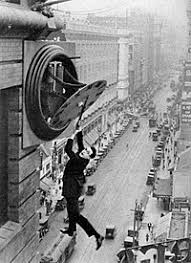 that a store manager will pay $1,000 to anyone who can draw people to his store, he convinces his friend, the “human fly,” (Bill Strother) to climb the building and split the profit with him. But when his pal gets in trouble with the law, he must complete the crazy stunt on his own. The image of Harold Lloyd hanging desperately from the hands of a skyscraper clock during Safety Last! is one of the great icons of film history (although it was achieved with a certain amount of film trickery) and this remains one of the best and best loved comedies of the silent era. Find out more at rogerebert.com. With live musical accompaniment by the BBC Scottish Symphony Orchestra performing a Carl Davis score. Concert Hall, Glasgow Link
11 June
 Menilmontant (Dir. Dimitri Kirsanoff, 1926) + Sherlock Jnr (Dir. Buster Keaton, 1924) (Screening format – not known, 38/45 mins) In Menilmontant, a couple are brutally murdered in the working-class district of Paris. Later on, the narrative follows the lives of their two daughters (Nadia Sibirskaïa and Yolande Beaulieu), both in love with a Parisian thug (Guy Belmont) and leading them to separate ways. Kirsanoff’s second film, Menilmontant is also his best known. It has been described as “une oevre presque parfaite” (“a nearly perfect work”) . Its story is told entirely in images, without the use of explanatory intertitles; Kirsanoff was among the very rare filmmakers of the silent era to attempt this. The film makes use of techniques such as montage, hand-held camera, ultra-rapid montage, and superposition. For more info see seul-le-cinema.blogspot.co.uk In Sherlock Jr, a kindly movie projectionist (Buster Keaton) longs to be a detective. When his fiancée (Kathryn McGuire) is robbed by a local thief (Ward Crane), the poor projectionist is framed for the crime. Using his amateur detective skills, the projectionist follows the thief to the train station – only to find himself locked in a train car. Disheartened, he returns to his movie theatre, where he falls asleep and dreams that he is the great Sherlock Holmes. Although not a popular success on its initial release, the film has come to be recognised as a Keaton classic with its special effects and elaborate stunts making it a landmark in motion picture history. Find out more at silentfilm.org. With live organ accompaniment by Ashley Valentine. St Giles Church, Camberwell, London Link
 The Boatswain’s Mate (Dir. H. Manning Haynes, UK, 1924) + Sam’s Boy (Dir. H. Manning Haynes, UK, 1924) (Screening format – not known, 24/63mins) Written by Lydia Hayward from the humorous story by the now largely forgotten W.W. Jacobs,The Boatswain’s Mate sees Florence Turner (famed as the ‘Vitagraph Girl’ and one of the film industry’s first stars) plays savvy pub landlady Mrs Waters. According to lazy ex-boatswain George Benn, who fancies himself as a publican by proxy, she is the ideal woman. Benn enlists a ‘mate’, a burly out-of-work seaman, in an over-complicated plan to appear heroic in Mrs Waters’ eyes. This doesn’t quite go to plan. This adaptation was accorded a rapturous reception by the press; Motion Picture Studio pointed out that Artistic Pictures – the company owned by H. Manning Haynes, and through which he released all of his W. W. Jacobs adaptations – had developed such an excellent reputation for their cinematic adaptations that even the most hardened admirer of Jacobs’ writing would find little fault in the film. Sam’s Boyis a real charmer of a comedy. It revels in the adventures of Billie Jones (a delightful turn by child actor Bobbie Rudd), an orphan living rough in the London docks who, inspired by a stray dog, adopts as his ‘father’ the first man he sees: seaman Sam Brown. Beautifully photographed coastal locations add to this masterly adaptation by respected screenwriter Lydia Hayward. Presented as part of the Film On Film Festival. With live piano accompaniment by Neil Brand. BFI Southbank, London Link
14 June
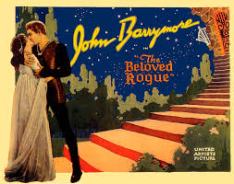 The Beloved Rogue (Dir. Alan Crosland, US, 1927) (Screening format – 16mm, 94mins) A lavish spectacle boasting the set designs of Oscar winning art director William Cameron Menzies (The Thief of Baghdad), The Beloved Rogue is Hollywood myth-making at its most ambitious…and entertaining. Hollywood star John Barrymore sought to out-swashbuckle Douglas Fairbanks in his breathless depiction of France’s rapscallion poet,
  thief and vagabond: François Villon (1431-1463). To prove his mettle, he bounds over the snowy rooftops of Paris, scales a castle tower, and is hurled skyward by the royal catapult, but this is no mere stunt picture. Barrymore wielded a simmering sexuality that Fairbanks lacked, endowing the film with an element of eroticism that perfectly suits Villon, who loved “France earnestly, Frenchwomen excessively, French wine exclusively.” Beyond Barrymore, the cast is sprinkled with celebrated
  character actors. Fresh from a series of diabolical roles in the German silent cinema, Conrad Veidt (The Man Who Laughs, Casablanca) made his American film debut as the sinister King Louis XI. Appearing here as the scheming Thibault d’Aussigny and François’s sidekick Beppo the Dwarf, Henry Victor and Angelo Rossitto would reunite five years later in Tod Browning’s Freaks. The Beloved Rogue is a star studded action packed roller coaster which symbolises the true greatness of Hollywood in the silent era. Find out more at moviessilently.com. Presented by the Kennington Bioscope. With live musical accompaniment. Cinema Museum, London Link
18 June
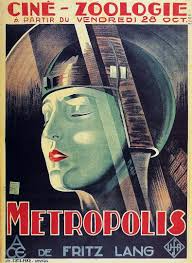 Metropolis (Dir. Fritz Lang, 1927) (Screening format –not known , 149 mins ) Made in Germany during the Weimar period, Metropolis is set in a futuristic urban dystopia and follows the attempts of Freder (Gustav Frohlich), the wealthy son of the city’s ruler, and Maria (Brigitte Helm), a poor worker, to overcome the vast gulf separating the classes of their city. Filming took place in 1925 at a cost of
  approximately five million Reichmarks, making it the most expensive film ever released up to that point. It is regarded as a pioneering work of science fiction and is among the most influential films of all time. Following its world premiere in 1927, half an hour was cut from Fritz Lang’s masterpiece and lost to the world. Eighty years later a spectacular discovery was made when the footage was found in a small, dusty museum in Buenos Aires. The film was then painstakingly reconstructed and digitally restored so that at last audiences could see the iconic futuristic fairy tale as Lang had envisioned it. Find out more at silentfilm.org With live piano accompaniment by John Sweeney. Institut Francais, London Link
 Looking for Leontine Who was Léontine? One of the most popular international comedians of the silent film era, this unidentified French persona appeared in dozens of films from 1910-1912—and then vanished from the face of the earth and from cultural memory. Where did she go? Who was Léontine really? And why are her surviving films so irresistibly hilarious?Join us for a special programme of short slapstick comedies from the Léontine series curated and introduced by Dr Maggie Hennefeld, Associate Professor of Cultural Studies and Comparative Literature at the University of Minnesota. In conversation with Dr Alix Beeston, Senior Lecturer in English at Cardiff University, Maggie will guide us in exploring what it means to resurrect Léontine in the context of contemporary politics, media culture, and feminist comedy. With recorded score. Chapter Cinema, Cardiff Link
 Delightful Dickens The Palace Cinema, in conjunction with the 86th Broadstairs Dickens Festival and the Kent Museum of the Moving Image (MOMI), present an afternoon of Dickens in silent film and magic lantern accompanied live on piano. Silent films include the Canterbury location shoot of The Honourable Event, part of a 1913 adaption of Dickens’ The Pickwick Papers . The adaptation stars John Bunny, one of the early twentieth century’s most famous stars of stage and screen. Then there a unique opportunity to see the oldest known film adaptation of Dickens’ 1850 novel David Copperfield (US 1911). In three parts, it begins with ‘The Early Life of David Copperfield’ in which we meet young David, his poor mother, his eccentric Aunt Betsey, mean Mr Murdstone and Little Em’ly. Part 2, ‘Little Em’ly and David Copperfield’, introduces us to smarmy Steerforth, wholesome Ham and the Italian adventure, and finally, in Part 3 ‘The Loves of David Copperfield’, via various twists and turns from Uriah Heep and help from Mr Micawber, grown-up David finds true love and peace at last. The afternoon also includes a chance to see a real Victorian Magic Lantern and lantern slides from Kent Museum of the Moving Image. Before cinema, it was the light of magic lanterns that transported audiences through time and space, on voyages with kings and queens, on amazing journeys to real and fantastical lands and into the wonderful stories of much-loved authors. Compered by Kent MOMI curators, Joss Marsh and David Francis OBE. With live piano accompaniment by Lillian Henley. Palace Cinema, Broadstairs Link
24 June
 Arsenal (Dir. Aleksandr Dovzhenko, USSR, 1928) (Screening format – not known, 87mins) This avant garde film was compared to Pablo Picasso’s Guernica because of director’s frank depiction of war. Arsenal made Dovzhenko famous not only in the Soviet Union, but also in Western Europe and North America. Ultimately, the National Society of American Film Critics named Arsenal one of the five best films of 1929, along with Karl Theodor Dreyer’s The Passion of Joan of Arc. Dovzhenko’s focus is once again on revolution and civil war in Ukraine, particularly the events that took place at the end of World War I which resulted in an unsuccessful Bolshevik uprising in January 1918 in Kyiv. In Soviet mythology, the uprising at the Arsenal factory is one of the key episodes in the tale of Bolshevik martyrdom in Ukraine. Dovzhenko, enthusiastic about the ideas of national liberation and social revolution, took the events of the uprising to the narrative’s margins, ultimately creating a political film for Ukrainian intelligentsia on both sides of the barricades of the civil war. A vague portrayal of the opposing forces of the uprising and parallel editing of different events leave the viewer with a sense of the chaos of war, rather than with a clear political message or a forced interpretation. At the same time idiosyncratic acting, expressive lighting, camerawork and editing enable the director to bring to life the stories of individual characters and cast them into a broader historical canvas and a clear pacifist message. Find out more at filmreference.com . Presented as part of the Folk Film Festival. With a newly-commissioned live score from ground-breaking Scottish musicians Dalhous. Cameo Cinema, Edinburgh. Link
25 June
 The Secrets Of The Silent Film Pianist Discover the art of the silent film pianist. The craft of the improvising silent film pianist can seem mysterious. While watching the film with the audience, a musical score is invented and performed spontaneously – without any notated, composed music. Presented by the Yorkshire Silent Film Festival. Holmfirth musician Jonny Best is one of the UK’s leading silent film improvisers and a researcher of silent film music. In this short, accessible event Jonny will explain how this little understood practice works and demonstrate some tricks of the trade using clips from a variety of silent films. There’ll be a few minutes for a Q&A too. Link
 Metropolis (Dir. Fritz Lang, 1927) (Screening format –not known , 149 mins ) Made in Germany during the Weimar period, Metropolis is set in a futuristic urban dystopia and follows the attempts of Freder (Gustav Frohlich), the wealthy son of the city’s ruler, and Maria (Brigitte Helm), a poor worker, to overcome the vast gulf separating the classes of their city. Filming took place in 1925 at a cost of
 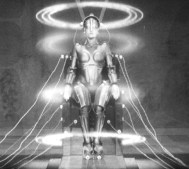 approximately five million Reichmarks, making it the most expensive film ever released up to that point. It is regarded as a pioneering work of science fiction and is among the most influential films of all time. Following its world premiere in 1927, half an hour was cut from Fritz Lang’s masterpiece and lost to the world. Eighty years later a spectacular discovery was made when the footage was found in a small, dusty museum in Buenos Aires. The film was then painstakingly reconstructed and digitally restored so that at last audiences could see the iconic futuristic fairy tale as Lang had envisioned it. Find out more at silentfilm.org. Presented by the Yorkshire Silent Film Festival. With live musical accompaniment by Jonny Best (piano). Link
26 June
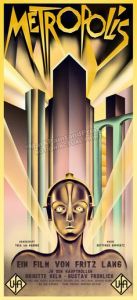 Metropolis (Dir. Fritz Lang, 1927) (Screening format –not known , 149 mins ) Made in Germany during the Weimar period, Metropolis is set in a futuristic urban dystopia and follows the attempts of Freder (Gustav Frohlich), the wealthy son of the city’s ruler, and Maria (Brigitte Helm), a poor worker, to overcome the vast gulf separating the classes of their city. Filming took place in 1925 at a cost of approximately five million Reichmarks, making it
 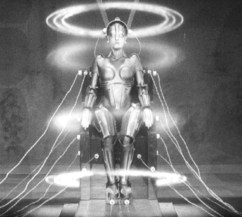 the most expensive film ever released up to that point. It is regarded as a pioneering work of science fiction and is among the most influential films of all time. Following its world premiere in 1927, half an hour was cut from Fritz Lang’s masterpiece and lost to the world. Eighty years later a spectacular discovery was made when the footage was found in a small, dusty museum in Buenos Aires. The film was then painstakingly reconstructed and digitally restored so that at last audiences could see the iconic futuristic fairy tale as Lang had envisioned it. Find out more atsilentfilm.org Presented as part of the Proms at St Jude’s Festival. With live orchestral accompaniment by the Covent Garden Sinfonia, conducted by Ben Palmer with a new arrangement of Gottfried Huppertz’s richly romantic original 1927 score. St Jude’s, Hampstead Link
 Silentfilmcalendar.org