



1 June
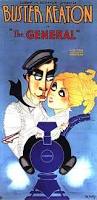 The General (Dir. Buster Keaton/Clyde Bruckman, 1926) (Screening format – not known, 75mins) Widely considered one of the greatest films ever made and one of the most revered comedies of the silent era, Buster Keaton’s effortless masterpiece sees hapless Southern railroad engineer Johnny Gray (Keaton) facing off against Union soldiers during the American Civil War. When Johnny’s fiancée, Annabelle Lee (Marion Mack), is accidentally taken away while on a train stolen by Northern forces, Gray pursues the soldiers, using various modes of transportation in comic action scenes that highlight Keaton’s boundless, innovative wit and joyful, lighthearted dexterity, to reclaim the train and thereby save the South. Find out more at busterkeaton.com . With recorded Carl Davis score. BFI Southbank, London Link
2 June
The General (Dir. Buster Keaton/Clyde Bruckman, 1926) (Screening format – not known, 75mins) Widely considered one of the greatest films ever made and one of the most revered comedies of the silent era, Buster Keaton’s effortless masterpiece sees hapless Southern railroad engineer Johnny Gray (Keaton) facing off against Union soldiers during the American Civil War. When Johnny’s fiancée, Annabelle Lee (Marion Mack), is accidentally taken away while on a train stolen by Northern forces, Gray pursues the soldiers, using various modes of transportation in comic action scenes that highlight Keaton’s boundless, innovative wit and joyful, lighthearted dexterity, to reclaim the train and thereby save the South. Find out more at busterkeaton.com . With recorded Carl Davis score. BFI Southbank, London Link
8 June
 Blackmail (Dir. Alfred Hitchcock, 1929) (Screening format – not known, 84mins) Alice White is the daughter of a shopkeeper in 1920’s London. Her boyfriend, Frank Webber is a Scotland Yard detective who seems more interested in police work than in her. Frank takes Alice out one night, but she has secretly arranged to meet another man. Later that night Alice agrees to go back to his flat to see his studio. The man has other ideas and as he tries to rape Alice, she defends herself and kills him with a bread
  knife. When the body is discovered, Frank is assigned to the case, he quickly determines that Alice is the killer, but so has someone else and blackmail is threatened. Alfred Hitchcock’s sinister, suspenseful tale of crime and romance is one of the last British silent films to be made (a sound version, which involved some re-shooting and dubbing and is now famous for its ‘KNIFE!!!’ scene, was subsequently released). With his traditional cameo appearance in the first reel, to a spectacular moonlit chase through the British Museum in the final reel, Blackmail is a classic thriller from the Master of Suspense. Find out more at screenonline.org.uk With live musical accompaniment by pianist Ashley Valentine and the Camberwell Community Chior. St Giles’ Church, Camberwell Link
 Your Brain on Slapstick – Pratfalls, chaos, custard pies and other mishaps – why is slapstick
  comedy funny and what is happening in our brains when we laugh? Professor Sophie Scott, world-acknowledged expert in the neuroscience of comedy, joins composer and broadcaster Neil Brand to explore what is going on in our heads when we laugh at silent film comedy. Presented by Northern Silents as part of the Silents By The Sea Festival. Winter Gardens, Morecambe Link
 The Kid (Dir. Charles Chaplin, US, 1921) (Screening format – not known, 68mins) Chaplin’s first full-length feature is a silent masterpiece about a little tramp who discovers a little orphan and brings him up but is left desolate when the orphanage reclaims him. Beneath the comedy, there are definitely some more serious thematic elements at work and and the film is noted for its pathos. In that regard, the opening inter-title proves to be true: “A picture with a smile — and perhaps, a tear.”Chaplin directed, produced and starred in the film, as well as composed the score. Find out more at wikipedia.org . Presented by Northern Silents as part of the Silents By The Sea Festival. With live musical accompaniment by the sixteen-strong Northern Silents Sinfonia who will play Chaplin’s own score for The Kid. Winter Gardens, Morecambe Link
9 June
 Human Law (Dir. Maurice Elvey, UK/Ger, 1927) (Screening format – 35mm, 91mins) An unusually frank 1920s drama of a wife seeking custody of her child. Isobel Elsom gives a strong performance as a wife deprived of her child by having technically ‘deserted’ her husband, despite being morally justified in doing so. Her husband, who spent three years in prison for assaulting a man in a jealous rage, finds on release that his wife has fallen in love with his lawyer. The ‘Human’ Law enables him not only to abuse her with impunity, but to gain custody of the ensuing child. Maurice Elvey was having a good year, having just directed Hindle Wakes. This German co-production is in a similar, socially progressive vein, while featuring some impressionistic camera work in the German style. Find out more at wikipedia.org With live piano accompaniment. BFI Southbank, London Link
 Marvellous Méliès: The Magician of Cinema – In December 1895, a young Paris magician attended the first demonstration of moving pictures – a year later, Georges Méliès had built his own camera and started to experiment. But rather than record ordinary life as so many early film makers were content to do, Méliès
  unleashed his imagination, creating bizarre and beautiful cinematic visions of angels and aliens, shooting stars and spaceships. Silents by the Sea brings together a selection of Méliès’ creations, including his most famous, A Trip to the Moon, side by side with films by his Spanish counterpart, Segundo de Chomon, and others. Presented by Northern Silents as part of the Silents By The Sea Festival. With live musical accompaniment by Off the Rails Creative Jazz Orchestra, Frame Ensemble, Neil Brand, and Silents by the Sea’s new vocal group, The People’s Cinematic Voices. Winter Gardens, Morecambe Link
 On the Spot: Making Improvised Music – How do improvising musicians create music out of thin air? Silents by the Sea’s band of players reveal their secrets. Much of the music at Silents by the Sea is invented on the spur of the moment by the musicians, as they watch the film. How do they know what to play? Where do their ideas come from? Why does the score never grind to a halt? Northern Silents Artistic Director Jonny Best hosts an engaging, illustrated conversation and audience Q&A with festival musicians. This event is suitable for musicians and non-musicians alike. Presented by Northern Silents as part of the Silents By The Sea Festival. Winter Gardens, Morecambe Link
 The Lost World (Dir. Harry Hoyt, US, 1925) (Screening format – not known, 106mins) Arthur Conan Doyle’s dinosaur adventure is brought to the big screen for the first time in an adventure across continents to the land that time forgot, featuring swooping beasts, the terrifying ‘apeman’ and the odd volcano too! This film used pioneering techniques in stop motion by Willis O’Brien (a forerunner of his work on the original King Kong film) and was one of the first to use a tinting technique that brought colour to film. It also features an introduction from the author himself. Find out more at moviessilently.com Presented by Northern Silents as part of the Silents By The Sea Festival. Introduced by Bruce Bennett, professor in Film Studies at Lancaster University. With live musical accompaniment by Frame Ensemble. Winter Gardens, Morecambe Link
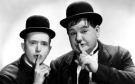 Comedy Great Short Films – It’s Summer at the Musical Museum and time for comedy shorts starring Laurel & Hardy, Charlie Chaplin, Monty Banks and Buster Keaton who are bound to tickle your sense of humour. Lots of slapstick fun from these big-four favourites from the silent silver screen. With live organ accompaniment by Donald Mackenzie. Musical Museum, Brentford Link
11 June
 Diary Of A Lost Girl (Dir. G W Pabst, Ger, 1929) (Screening format – not known, 106mins) A masterpiece of the German silent era, Diary of a Lost Girl was the second and final collaboration of actress Louise Brooks and director G.W. Pabst, just months after their first collaboration in the now-legendary Pandora’s Box (1929). Brooks plays Thymian Henning, a
  beautiful young woman raped by an unscrupulous character employed at her father’s pharmacy (played with gusto by Fritz Rasp, the villain of such Fritz Lang classics as Metropolis, Spione, and Frau im Mond). After Thymian gives birth to his child and rejects her family’s expectations of marriage, the baby is torn from her care, and Thymian enters a purgatorial reform school that seems less an institute of learning than a conduit for fulfilling the headmistress’s sadistic sexual fantasies. Find out more at rogerebert.com Presented by Northern Silents. With live musical accompaniment by pianist Utsav Lal. Link
12 June
The General (Dir. Buster Keaton/Clyde Bruckman, 1926) (Screening format – not known, 75mins) Widely considered one of the greatest films ever made and one of the most revered comedies of the silent era, Buster Keaton’s effortless masterpiece sees hapless Southern railroad engineer Johnny Gray (Keaton) facing off against Union soldiers during the American Civil War. When Johnny’s fiancée, Annabelle Lee (Marion Mack), is accidentally taken away while on a train stolen by Northern forces, Gray pursues the soldiers, using various modes of transportation in comic action scenes that highlight Keaton’s boundless, innovative wit and joyful, lighthearted dexterity, to reclaim the train and thereby save the South. Find out more at busterkeaton.com . With recorded Carl Davis score. BFI Southbank, London Link
 The Hound Of The Baskervilles (Dir. Richard Oswald, Ger, 1929) (Screening format – not known, 65mins) The last Sherlock Holmes adaptation in the silent film era, this version was long thought lost. However, a copy was discovered in 2009 (along with nine other films), in the basement of a Polish church, apparently hidden by a priest in violation of an earlier Papal edict
 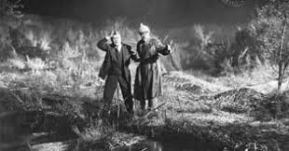 banning the showing and storage of films on church property. The film boasted an unusually international cast, including American actor Carlyle Blackwell, German actor Fritz Rasp, Russian actor Alexander Murski and Italian actor Livio Pavanelli and the result is a reasonably accurate retelling of Conan Doyls’s story and an effective thriller. But coming right at the end of the silent era, this version, although popular in Europe, quickly fell from view, particularly after the release of an English talkie version in 1931. Find out more atsilentfilm.org. Presented by the Kennington Bioscope. With live musical accompaniment. Cinema Museum, Lambeth. Link
14 June
 Epic of Everest (Dir. J B L Noel, UK, 1924) (Screening format – not known, 85mins) A real adventure captured on film! The Epic of Everest is the official record of the fateful 1924 expedition to reach the summit. This third attempt to climb Everest culminated in the deaths of two of the finest climbers of their generation, George Mallory and Andrew Irvine, and sparked an on-going debate over whether or not they did indeed reach the summit. Filming in brutally harsh conditions with a specially adapted camera, Captain John Noel captured images of breathtaking beauty and considerable historic significance. This is the very earliest footage of the Himalayas and beautifully captures its untouched landscape in colour (tinted) film, while displaying the bravery of this group of British mountaineers and their Nepalese team. The film is also among the earliest filmed records of life in Tibet and features sequences at Phari Dzong (Pagri), Shekar Dzong (Xegar) and Rongbuk monastery. But what resonates so deeply is Noel’s ability to frame the vulnerability, isolation and courage of people persevering in one of the world’s harshest landscapes. Find out more at silentlondon.co.uk Introduced by Welsh mountaineer and Everest conqueror Tori James. With live musical accompaniment by Natalie Ollis. , Wales Link
15 June
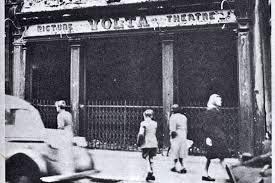 At The Volta With James Joyce Towards the end of 1909, James Joyce, future author of Ulysses and Finnegans Wake, founded and managed the first ever permanent cinema in Dublin. Remarkably, scholars have been able to trace a number of the films that Joyce selected and screened there and copies of reels of those films survive. This special programme brings
  together a number of these rare short films and will include little-known gems such as How Cretinetti Pays his Debts (Italy, 1909) , Aviation Weeks at Rheims (Great Britain 1909) , A Glass of Goat’s Milk (Great Britain 1909), The Way of the Cross (USA 1909), Pêche aux Crocodiles (France 1909), Bianca Capello (Italy 1909) and Une Conquête (France 1909). Presented as part of the 19th International James Joyce Symposium. Introduced by John McCourt (University of Macerata). With live musical accompaniment by Forrester Pyke. Film Theatre, Glasgow Link
 Passion of Joan of Arc (Dir. Carl Theodore Dreyer, 1928) (Screening format – not known, 82 mins) In 1926 Danish film director Dreyer was invited to make a film in France by the Societe Generale des Films and chose to direct a film about Joan of Arc, due to her renewed popularity in France (having been canonised as a saint of
  the Roman Catholic Church in 1920 and subsequently adopted as one of the patron saints of France). Apparently discarding a script provided by the Societe, Dreyer spent over a year researching Joan of Arc including study of the actual transcripts of her trial before producing a script of his own. In the title role Dreyer cast the little-known stage actress Renee Jeanne Falconnetti who had previously acted in just two previous, inconsequential films, both back in 1917. The film focuses upon the trial and eventual execution of Joan of Arc after she is captured by the English. Although not a popular success at the time, the film attracted immediate critical
 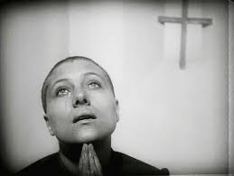 praise. The New York Times critic wrote “…as a film work of art, this takes precedence over anything so far produced. It makes worthy pictures of the past look like tinsel shams. It fills one with such intense admiration that other pictures appear but trivial in comparison.” Falconnetti’s performance has been widely lauded with critic Pauline Kael writing in 1982 that her portrayal “…may be the finest performance ever recorded on film.” The film was subsequently re-edited against Dreyer’s wishes and his original version was long thought lost. But in 1981 a near perfect copy was found in the attic of a psychiatric hospital in Oslo. The Passion of Joan of Arc now regularly appears in ‘Top Ten’ lists not just of silent films but best films of all time. Find out more at rogerebert.com . Presented by Northern Silents. With live musical accompaniment by pianist Utsav Lal. , Link
16 June
The General (Dir. Buster Keaton/Clyde Bruckman, 1926) (Screening format – not known, 75mins) Widely considered one of the greatest films ever made and one of the most revered comedies of the silent era, Buster Keaton’s effortless masterpiece sees hapless Southern railroad engineer Johnny Gray (Keaton) facing off against Union soldiers during the American Civil War. When Johnny’s fiancée, Annabelle Lee (Marion Mack), is accidentally taken away while on a train stolen by Northern forces, Gray pursues the soldiers, using various modes of transportation in comic action scenes that highlight Keaton’s boundless, innovative wit and joyful, lighthearted dexterity, to reclaim the train and thereby save the South. Find out more at busterkeaton.com . With recorded Carl Davis score. BFI Southbank, London Link
19 June
 Kohlhiesel’s Daughters (Dir. Ernst Lubitsch, Ger, 1920) (Screening format – digital, 63mins) A silent comedy masterwork by the famed director Ernst Lubitsch, Kohlhiesel’s Daughters offers an alpine, German take on Shakespeare’s Taming of the
 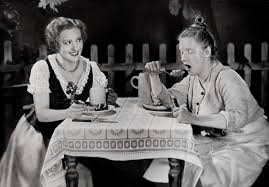 Shrew. Featuring two of the greatest stars of German silent cinema, Henny Porten and Emil Jannings, Lubitsch’s slapstick farce tells the story of two sisters (both played by Porten), one sweet and flirtatious, the other angry and ill-tempered, with one not allowed to marry until the other also finds a partner. Featuring many delightful moments characteristic of the famed “Lubitsch touch,” this slapstick farce was one of the director’s most popular films when it was released in Weimar Germany in 1920. Find out more at sensesofcinema.com. With live musical accompaniment. Byre Theatre, St Andrews Link
22 June
 Cabinet of Dr Caligari (Dir. Robert Wiene, 1920) (Screening format – not known, 77 mins) In the village of Holstenwall, fairground hypnotist Dr Caligari (Werner Krauss) puts on show a somnambulist called Cesare (Conrad Veidt) who has been asleep for twenty three years. At night, Cesare walks the streets murdering people on the doctor’s orders. A student (Friedrich Feher) suspects Caligari after a friend is found dead and it transpires that the doctor is the director of a lunatic asylum. Fueled by the pessimism and gloom of post-war Germany, the sets by Hermann Warm stand unequaled as a shining example of Expressionist design. Find out more at wikipedia.org. With live musical accompaniment composed and played by Karl Bartos (ex-Kraftwerk). Barbican, London Link
24 June
 Pandora’s Box (Dir. G W Pabst, Ger, 1929) (Screening format – not known, 135mins) Based on two plays by the German author Frank Wedekind, Erdgeist (Earth Spirit, 1895), which Pabst himself had directed for the stage, and Die Büchse der Pandora (Pandora’s Box, 1904), the silent drama follows Pthe tumultuous life of the showgirl Lulu whose unselfconscious sexuality brings about the ruin of all those that fall for her and eventually her own. In a daring move, Pabst chose a little known American actress over the
  more experienced Marlene Dietrich for the part of Lulu, a decision that made the young Louise Brooks an international star. Her innocent looks paired with her natural erotic allure and sense of movement – Brooks was also a dancer – perfectly matched Pabst’s idea of his heroine as unwitting seductress. Subjected to cuts to eliminate some of its “scandalous” content and unfavourably reviewed by critics at the time, it is now considered one of the boldest and most modern films of the Weimar era highlighting Pabst’s command of camera language and montage. Find out more at silentlondon.co.uk . Presented by The Lucky Dog Picturehouse. With live musical accompaniment. Wilton’s Music Hall, London Link
25 June
 The Hunchback of Notre Dame (Dir.Wallace Worsley, US, 1923) (Screening format – not known, 117mins) A classic silent film, full of drama, frights, romance, and excitement – Quasimodo’s story is told with the thrilling addition of a live score – bringing this extraordinary movie to life like never before. Quasimodo is ordered to kidnap a gypsy girl, Esmerelda,
 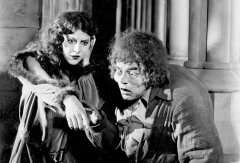 by his wicked master, and an unlikely friendship forms between them. However, the reclusive hunchback is tested to his limits when Esmerelda is framed for attempted murder, and must fight back against the powers that have subjugated him. Victor Hugo’s tragic tale of the deformed bellringer and his love for Esmeralda, a doomed gypsy girl, has been filmed so many times and it’s not hard to see the film’s ageless appeal. While some movie lovers who cite the 1939 Charles Laughton version as their favorite interpretation, the general consensus is that Chaney remains the definitive Quasimodo. Find out more at wikipedia.org. Presented by The Lucky Dog Picturehouse. With live musical accompaniment by Ben Comeau. Wilton’s Music Hall, London Link
26 June
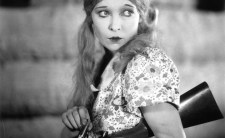 Shooting Stars (Dir. Anthony Asquith and A.V. Bramble, UK, 1928) (Screening format – 35mm, 80mins) At Zenith Studios, a starlet plots an escape to Hollywood with her lover and the murder of her superfluous husband. Shooting Stars is a must for
  any silent cinema fan. Offering a rare insight into the workings of a 1920s film studio, there are location scenes, comic stunts and an on-set jazz band which demonstrate just what life was like in the early days of cinema. Shooting Stars begins as a witty and affectionate look at the smoke-and-mirrors world of filmmaking, with many a wink to its audience, but as the paranoia associated with adultery takes its toll, the mood becomes somewhat darker. Find out more at screenonline.org.uk . Presented by The Lucky Dog Picturehouse. With live musical accompaniment by Sam Watts. Wilton’s Music Hall, London Link
30 June
 Neil Brand Presents Hole In One Brimming with golf-related high-jinks and featuring some of the finest comedy slapstick icons from the silent era, including Convict 13 (1920) starring Buster Keaton as a young golfer who is mugged by an escaped convict and finds himself mistakenly in jail about to be hanged, is packed with burly villains, endless gags and cop chases galore. Plus, Charlie Chaplin’s misadventures on a golf course in The Golf Links (1918) and the all-time classic Should Married Men Go Home? (1928) – a Hal Roach film featuring Ollie and Stan on a golf course, with a pair of young women, a mud-throwing battle, and endless antics, is comedy genius. Presented as part of the East Neuk Festival. Introduced by silent film historian, musician and TV personality Neil Brand who also provides live musical accompaniment. Town Hall, Earlsferry Link
 Silentfilmcalendar.org