


1 March
 Man With a Movie Camera (Dir. Dziga Vertov, USSR, 1929) + The Cameraman (Dir. Edward Sedgwick/Buster Keaton, US, 1928) (Screening format – not known, 67/68mins) Part documentary and part cinematic art, this film follows a city in the 1920s Soviet Union throughout the day, from morning to night. Directed by Vertov, with a variety of complex and innovative camera shots (filmed by Vertov’s equally talented and innovative brother Mikhail Kaufman), the film depicts scenes of ordinary daily life in Russia. Vertov celebrates the modernity of the city, with its vast buildings, dense population and bustling industries. While there are no titles or narration, director and cameraman still naturally
 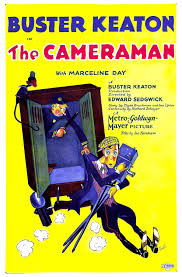 convey the marvels of the modern city. Find out more at rogerebert.com . In The Cameraman, Buster (Buster Keaton) meets Sally (Marceline Day), who works as a secretary for the newsreel department at MGM, and falls hard. Trying to win her attention, Buster abandons photography in order to become a news cameraman. In spite of his early failures with a motion camera, Sally takes to him as well. However, veteran cameraman Stagg (Harold Goodwin) also fancies Sally, meaning Buster will need to learn how to film quickly before he loses his job. Find out more at slantmagazine.com Presented by the Future City Film Festival and South West Silents. With live piano accompaniment by John Sweeney. Megascreen (IMAX), Bristol Link
7 March
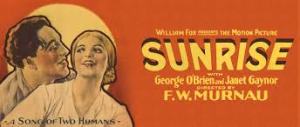 Sunrise; A Song of Two Humans (Dir. F W Murnau, US, 1927) (Screening format – not known, 94mins) F W Murnau’s debut American film, made at the technical zenith of the silent era but already heralding the arrival of the talkies being one of the first silents made with synchronized musical score and sound effects soundtrack. The simple story of a husband’s betrayal of his wife with a treacherous city girl, Sunrise moves
  from a fairytale-like depiction of rural life to a dynamic portrait of the bustling modern American city. Explored in elaborate tracking shots by Charles Rocher and Karl Struss’s pioneering camerawork, the city set was one of the most costly yet produced. The result was a commercial flop, though the achievement did not go unheralded: Sunrise was awarded a special Oscar for unique and artistic production at the first ever Academy Awards and Janet Gaynor won the first Academy Award for Best Actress for her performance. The film’s legacy has endured, and it is now widely considered a masterpiece with many calling it the greatest film of the silent era. Find out more at theguardian.com With live musical accompaniment by Stephen Horne and Eliabeth Jane Baldry. Fleapit Cinema Club, Westerham, Kent Link
8 March
 The Live Ghost Tent – The quarterly meeting of The Laurel and Hardy Society. The films to be shown include the silent short Putting Pants on Philip (1927), directed by Clyde Bruckman. With recorded soundtrack. Cinema Museum, London. Link
9 March
 Forgotten Faces (Dir. Victor Schertzinger, US, 1928) (Screening format – digital, 83mins) Film noir didn’t come from nowhere, as this cynical silent thriller proves. Forgotten Faces follows gentleman thief ‘Heliotrope’ Harry Harlow, played by Clive Brook (fresh from his success in von Sternberg’s crime drama Underworld), as he tries to save his daughter from his vengeful
  wife and mother from hell, the latter played with evil brilliance by Russian actor Olga Baclanova. Sordid and shocking, the film also features William Powell in an unusual role as Heliotrope’s partner in crime, before he developed his suave Thin Man persona. Adapted from the short story “A Whiff of Heliotrope” by Richard Washburn Child, first published in Heart’s magazine in 1919, the film is notable for its somber performances and the eloquence of its late silent-film style. With its mobile camera, ingenious transitions, and expressionist lighting, Forgotten Faces demonstrates the influence of F.W. Murnau, who had arrived at Fox in 1926. Find out more at silentfilm.org. With live musical accompaniment. BFI Southbank, London Link
10 March
 Bed And Sofa (Dir. Abram Room, USSR, 1927) (Screening format – digital, 76mins) Volodya, a printer, lands a job in Moscow and is looking for a place to stay. Unable to find a room in a hotel, he meets up with construction worker Kolya, his Civil War comrade from years before. Even though Kolya lives in a small one-room apartment, he offers Volodya the sofa, the bed being occupied by Kolya himself and his wife Liudmila. But put-upon Liudmila is soon attracted to the handsome Volodya and when Kolya returns from a work trip he now finds himself on the sofa and Volodya in the bed with Liudmila. But rather than simply a romantic farce Bed And Sofa is far more, a commentary on the continued enforced domesticity of women in Soviet society, on overcrowded living conditions and, ultimately, on a woman’s right to choose. Needless to say, the film went down badly with the Soviet authorities while its somewhat racy subject matter ran into similar problems with censors in the West. However, Bed And Sofa is now regarded as a classic of silent Soviet cinema. Find out more at www.brentonfilm.com. With recorded score. BFI Southbank, London Link
12 March
 Phantom Of The Opera (Dir. Rupert Julian, 1925) (Screening format – not known, 103mins) A title that needs no introduction, The Phantom of the Opera has spawned many remakes, remasters and sequels. This original film version, produced with moments of early Technicolour, sees Lon Chaney, the ‘Man of a Thousand Faces’ perform one of his most iconic roles. His ghastly make-up and outrageous performance made this title a benchmark in the American silent film era. The film was a critical and commercial success upon release, and still stands as an important film in cinematic history to this day, with press quotes from the time labeling the film an ‘ultra-fantastic melodrama’ (New York Times), ‘produced on a stupendous scale’ (Moving Picture World) and ‘probably the greatest inducement to nightmare that has yet been screened’ (Variety). The mysterious phantom (Lon Chaney) is a vengeful composer living in the catacombs under the Paris Opera House, determined to promote the career of the singer he loves (Mary Philbin). Famed for the phantom’s shock unmasking, incredible set designs and the masked ball sequence, it still packs a punch. Find out more at wikipedia.org Presented by Northern Silents. With live musical accompaniment by Jonny Best. Storyhouse, Chester. Link
14 March
Phantom Of The Opera (Dir. Rupert Julian, 1925) (Screening format – not known, 103mins) A title that needs no introduction, The Phantom of the Opera has spawned many remakes, remasters and sequels. This original film version, produced with moments of early Technicolour, sees Lon Chaney, the ‘Man of a Thousand Faces’ perform one of his most iconic roles. His ghastly make-up and outrageous performance made this title a benchmark in the American silent film era. The film was a critical and commercial success upon release, and still stands as an important film in cinematic history to this day, with press quotes from the time labeling the film an ‘ultra-fantastic melodrama’ (New York Times), ‘produced on a stupendous scale’ (Moving Picture World) and ‘probably the greatest inducement to nightmare that has yet been screened’ (Variety). The mysterious phantom (Lon Chaney) is a vengeful composer living in the catacombs under the Paris Opera House, determined to promote the career of the singer he loves (Mary Philbin). Famed for the phantom’s shock unmasking, incredible set designs and the masked ball sequence, it still packs a punch. Find out more at wikipedia.org Presented by Northern Silents. With live musical accompaniment by Jonny Best. Stoller Hall, Manchester Link
15 March
 Laurel & Hardy Triple Bill Three classics from everybody’s favourite twosome, featuring; The Second Hundred Years (Dir. Fred Guiol, US, 1927) which sees convicts Laurel and Hardy making ever more desperate and laughable efforts to escape prison; Liberty (Dir. Leo McCarey, US, 1929) sees the boys making a successful prison break but mixed up trousers and an escaped crab somehow leads them to the top a partially completed skyscraper! Wrong Again (Dir. Leo McCarey, US, 1929) one of their more bizarre films focusing on confusion over a race horse and a famous painting and ending with a struggle to get a horse on top of the grand piano! Find out more at laurel-and-hardy.com With live piano accompaniment from Forrester Pyke. Macrobert Arts Centre, Stirling Link
 The Constant Nymph (Dir. Basil Dean, UK, 1928) (Screening format – not known, 110 mins) This is the first of three film versions of Margaret Kennedy’s controversial 1924 novel The Constant Nymph, with a screenplay by Alma Reville and marking Basil Dean’s debut as director. Mabel Poulton plays the title character, an impressionable young girl named Tessa, who falls in love with brilliant but impoverished composer Lewis Dodd (Ivor Novello). Dodd, however, barely acknowledges Tessa’s
 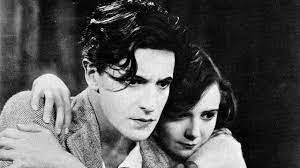 existence, preferring instead the company of the older, prettier and wealthier Paulina (Dorothy Boyd). Only when it is nearly too late does Dodd realize how much he loves Tessa and how the girl has influenced his finest musical work. Initially arousing concern from the censors over Poulten’s portrayl of 16 year old Tessa, they relented on learning that Poulten was in fact 26. The film was long thought lost until a copy was found as a result of a 1992 British Film Institute campaign to locate missing movies. Find out more at screenonline.org.uk With live piano accompaniment by Mike Nolan. Introduced by Dr Josephine Botting. Barony Theatre, Bo’ness Link
 Berlin: Symphony of a Great City (Berlin: Die Sinfonie der Groβtadt) (Dir. Walter Ruttman, Ger, 1927) (Screening format – not known, 65mins) This is a visual symphony in five movements celebrating the Berlin of 1927: the people, the place, the everyday details of life on the streets. Director Walter Ruttman, an experimental filmmaker, approached cinema in similar ways to his Russian contemporary Dziga Vertoz, mixing documentary, abstract, and expressionist modes for a nonnarrative style that captured the life of his countrymen. But where Vertov mixed his observations with examples of the communist dream in action, Ruttman re-creates documentary as, in his own words, “a melody of pictures.” Within the loose structure of a day in the life of the city (with a prologue that travels from the country into the city on a barreling train), the film takes us from dawn to dusk, observing the silent city as it awakens with a bustle of activity, then the action builds and calms until the city settles back into sleep. But the city is as much the architecture, the streets, and the machinery of industry as it is people, and Ruttman weaves all these elements together to create a portrait in montage, the poetic document of a great European city captured in action. Held together by rhythm, movement, and theme, Ruttman creates a documentary that is both involving and beautiful to behold. Find out more at sensesofcinema.com . Presented by the Future City Film Festival and South West Silents. With live piano accompaniment (?). Megascreen (IMAX), Bristol Link
16 March
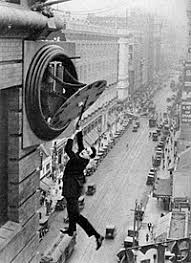 Safety Last (Dir. Fred C Newmeyer/Sam Taylor, US, 1923) (Screening format – not known, 73mins) A boy (Harold Lloyd) moves to New York City to make enough money to support his loving girlfriend (Mildred Davis), but soon discovers that making it in the big city is harder than it looks. When he hears that a store manager will pay $1,000 to anyone who can draw people to his store, he convinces his friend, the “human fly,” (Bill Strother) to climb the building and split the profit with him. But when his pal gets in trouble with the law, he must complete the crazy stunt on his own. The image of Harold Lloyd hanging desperately from the hands of a skyscraper clock during Safety Last! is one of the great icons of film history (although it was achieved with a certain amount of film trickery) and this remains one of the best and best loved comedies of the silent era. Find out more at rogerebert.com. With live musical accompaniment by Donald MacKenzie. Plaza Cinema, Weston Super Mare Link
19 March
 Modern Times (Dir, Charlie Chaplin, US, 1936) (Screening format – not known, 87mins) Regarded as the last great silent film and made almost a decade into the sound era, Modern Times is Charlie Chaplin’s last outing as the Little Tramp and finds our hero struggling to make ends meet in the Depression of the 1930s. Enlivened by bits of inventive sound design the film is an imaginative and hilarious send-up of the modern industrialized world. Chaplin’s classic Little Tramp character is a factory worker tightening bolts on an assembly line, until a mishap with an
  automatic feeding machine sends him off course. Mixing the joyfulness of his comedy gags with a satire of modern bureaucracy, Modern Times remains the funniest of the comedian’s social critiques. Chaplin had not been seen on a theatre screen for five years when Modern Times premiered to great acclaim in 1936. Still stubbornly resisting work in “talkies,” he stood alone in his insistence upon preserving the silent film although his voice is heard on the soundtrack he himself composed. Find out more at www.charliechaplin.com Introduced by Chaplin’s grandson, Spencer Chaplin. With live musical accompaniment by the Covent Garden Sinfonia, conducted by Ben Palmer and performing Chaplin’s own original score for the film. Cadogan Hall, London Link
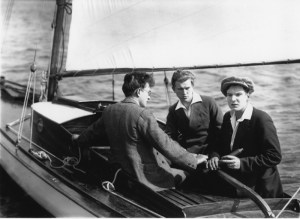 Before The Face Of The Sea (Dir. Teuvo Puro, Fin, 1926) (Screening format – not known, 100mins) Three students set out on an aimless midsummer sailing trip and become entranced by the mysterious inhabitants of a remote island. One of them – Kristoffer – is drawn to Henrika – a wide-eyed and ethereal young woman who lives a simple, frugal life with no-one for company
  but her gruff father, an uncouth farmhand and an eccentric old fisherman. But what secrets are the islanders keeping? Unable to tear himself away, Kristoffer decides to stay for the summer to unravel the mysteries of this isolated, superstitious community. Folklore, the supernatural and ritual weave a sinister spell, intensified by the starkly beautiful archipelago locations. Find out more at moviessilently.com Presented as part of the Hippodrome Silent Film Festival. With lve musical accompaniment by Jane Gardner (piano) and Caroline Salmon (voice, bass, tenor violin). Hippodrome Cinema, Bo’ness Link
 With Reindeer and Sled in Inka Lanta’s Winterland (Dir. Erik Bergström, Swe, 1926) (Screening format – not known, 60mins) A beautiful, naturalistic portrait of everyday life for the indigenous people of Sweden. The film follows Inka Länta and her family of reindeer herders in northern Sweden as they strive to subsist in the harsh winter months. Documentary-like sequences alongside staged scenes combine to give an intimate portrayal of the region’s traditional way of life. The stunning landscape is an awe-inspiring backdrop to the domestic rituals,
 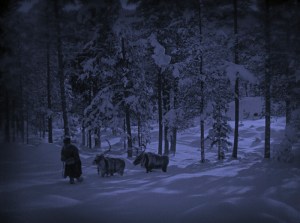 dramatic hunting trips and momentous life events which ultimately signal a proud message of survival. Though directed and photographed by outsiders, and overlooking the ethnicity politics of the time, the film achieves a touching authenticity and shows a relative respect for its subject – the Sámi. Find out more at filmarkivet-se. Presented as part of the Hippodrome Silent Film Festival. With live musical accompaniment by Lávre Johan Eira, Svante Henryson, Hildá Länsman and Tuomas Norvio with the world premier of a newly commissioned score. Introduced by Lisa Hoen (Director, Tromsø International Film Festival) Hippodrome Cinema, Bo’ness Link
 A Programme of Antiquities A series of silent films based around Greek and Roman antiquity. The programme includes (TBC): Visit to Pompeii (1901), directed by George A. Smith and Charles Urban, Warwick Trading Company, UK. This British travelogue documents, in long panning shots, the state of the excavations at Pompeii in 1901 and the journey up to Vesuvius in a railway carriage ; Julius Caesar (1908). An America version of Shakespeare’s play; The Private Life of Helen of Troy (1927). Two fragments from an America burlesque of the Trojan War, directed by Alexander Korda; The Odyssey / L’Odissea (1911), directed by Francesco Bertolini, Adolfo Padovan, and Giuseppe de Liguoro, Milano Films, Italy; Bending Hur / Roaming Romeo (1928). Comedy directed by and starring Lupino Lane. Presented by the Kennington Bioscope. Introduced by Professor Maria Wyke from the Department of Greek and Latin, UCL, London. With live musical accompaniment. Cinema Museum, London Link
20 March
 The Shamrock Handicap (Dir. John Ford, US, 1926) (Screening format – not known, 77mins) Legendary director John Ford digs deep into his Irish roots for this affectionate tale about Irish immigrants to America, set in the dramatic world of horse-racing. A good-hearted Irish landowner finds he has no choice but to sell his beloved horses to a rich American. They strike a bargain that includes the stable boy Neil as part of the package, whose exceptional skills as a jockey will be a great asset in the New World. Neil agrees to up sticks, pledging to send for his sweetheart once he has made his fortune… but Fate deals a hard blow. This racetrack drama, with its spectacular final race sequence, has a suitably brisk pace plus a host of loveable, Irish characters (the O’Sheas, the O’Haras etc.) and a fully-faceted, multicultural band of jockeys at the track. This memorable ensemble cast features an early performance for Janet Gaynor – who would go on to win the Academy Award for Best Actress a year later in Sunrise. Find out more at letterboxd.com Presented as part of the Hippodrome Silent Film Festival. With live piano accompaniment by Mike Nolan. Hippodrome Cinema, Bo’ness Link
 Flora Kerrigan – Rediscovering a Film Pioneer Discover the darkly comedic and idiosyncratic world of Irish animator Flora Kerrigan – the rediscovered “amateur” filmmaker with a professional sensibility. Cork-born filmmaker Flora Kerrigan crafted a remarkable collection of silent animation and live-action shorts on 8mm film in the 1960s. The surreal playfulness of her animation belied the painstaking meticulousness of their production and her work earned
 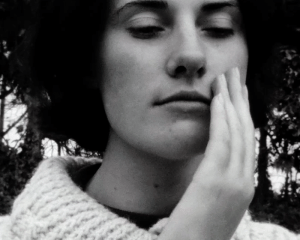 international accolades and an airing on Irish national television. The live-action films are an equally fascinating treasure trove – featuring friends and family – variously absurd, comedic, macabre and concerned with female sexuality. Following Kerrigan’s move to the UK in the late 1960s, her work faded into obscurity until it was recently rediscovered through the Women in Focus Film Archives project and a collaboration between the IFI Irish Film Archive and Maynooth University. Presented as part of the Hippodrome Silent Film Festival. With live piano accompaniment by Paul G. Smyth performing a newly commissioned score. Hippodrome Cinema, Bo’ness Link
 The Near Shore: A Scottish Irish Cine-Concert A delightful collection of short silent films from the IFI Irish Film Archive and National Library of Scotland Moving Image Archive presenting alternating perspectives on Scotland and Ireland through the lens of Scottish and Irish filmmakers. This special reciprocal programme includes Royal Clyde Yacht Club (1899) – the earliest known film made by an Irishman; Ireland by Air – featuring Scottish aviatrix Winnie Drinkwater (1933); two charming films by Butlins camp photographer John Tomkins – Butlins Holiday Camp and Rush Hour (1950s); and The Farm Below the Mountain – a record by Scottish filmmaker Ernest Tiernan of his travels with his young bride Kathleen to meet her family in rural Ireland (1958). Presented as part of the Hippodrome Silent Film Festival. With live piano accompaniment by Paul G. Smyth. Hippodrome Cinema, Bo’ness Link
21 March
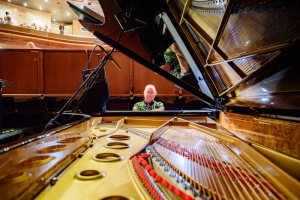 Neil Brand: Key Notes An audience with silent cinema music maestro Neil Brand! A high speed voyage into the art of silent cinema accompaniment presented by the world’s foremost proponent of this specialised artform. Neil will draw on his expertise presenting BBC TV’s Sound of Cinema: The Music That Made the Movies series, and his years composing and improvising for silent film, to provide insightful commentary on how music contributes to an audience’s appreciation of film, with real-time, live demonstration. From the earliest, earthiest comedies and thrillers, and a cine-verité classic shot by a young Billy Wilder (which the audience gets to score!), to the glories of Hollywood glamour, crowned by a live performance of a film he hasn’t seen, Neil provides improvised accompaniment and pithy commentary on everything from deep focus to his own live cinema disasters. A unique and memorable show that will leave you in awe of the great filmmakers of the silent era and the artistry of the accompanists who breathed life… and sound into their work. Presented as part of the Hippodrome Silent Film Festival. Introduced and with live piano accompaniment by Neil Brand. Hippodrome Cinema, Bo’ness Link
 The Pleasure Garden (Dir. Alfred Hitchcock, UK, 1925) (Screening format – not known, 75mins) Patsy (Virginia Valli), a chorus girl at the Pleasure Garden music hall helps down on her luck dancer Jill (Carmelita Geraghty) get a job in her show. But when Jill’s fiance Hugh (John Stuart) turns up, he and Patsy are drawn to each other. Meanwhile Jill is living the highlife and being courted by a rich prince. Jealousy! Madness! Murder! Alfred Hitchcock’s debut as a film director was this long-thought-
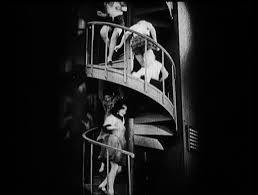 to-be-lost and now restored brilliant hothouse silent melodrama. There is an early chance to spot all the later iconic Hitchcock motifs used here for the very first time. The very first shot shows chorus girls descending a spiral staircase just like the staircase shot in Vertigo, while a man uses opera glasses to better appreciate a dancer just as Jimmy Stewart uses them in Rear Window. Even the classic icy Hitchcock Blonde first appears here. Find out more at silentlondon.co.uk . Presented as part of the Hippodrome Silent Film Festival. With live musical accompaniment by Jane Gardner (piano) and Hazel Morrison (percussion). Hippodrome Cinema, Bo’ness Link
 The Pride Of The Clan (Dir. Maurice Tourneur, USA, 1917) (Screening format – not kmown, 84mins) The sea-swept Hebridean island may be fictitious, and the stunning Scottish location-shooting may actually be in Massachusetts, but this charming tale of West Coast fisher-folk will beguile you with its proud tartan heart. Mary Pickford plays plucky Marget MacTavish – only daughter of the last Chieftain of the Clan MacTavish, a fishing community on the Scottish island of Killean. When her
  father dies at sea it is up to Marget to assume leadership of the Clan and to whip the islanders into shape. Her happiness seems assured at last when she is betrothed to Jamie Campbell but secrets from the past threaten their future together. The “Woman who made Hollywood” brought her formidable talents for successful collaboration with director Maurice Tourneur and art director Ben Carré to make this enchanting ‘Scottish’ gem – available at last in a new restoration that reveals the makers’ beautiful composition, lighting and art direction. Find out more at wikipedia.org. Presented as part of the Hippodrome Silent Film Festival. With live musical accompaniment by Stephen Horne (piano, flute, accordion) and Elizabeth-Jane Baldry (harp) Hippodrome Cinema, Bo’ness Link
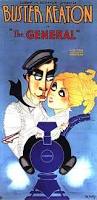 The General (Dir. Buster Keaton/Clyde Bruckman, 1926) (Screening format – not known, 75mins) Widely considered one of the greatest films ever made and one of the most revered comedies of the silent era, Buster Keaton’s effortless masterpiece sees hapless Southern railroad engineer Johnny Gray (Keaton) facing off against Union soldiers during the American Civil War. When Johnny’s fiancée, Annabelle Lee (Marion Mack), is accidentally taken away while on a train stolen by Northern forces, Gray pursues the soldiers, using various modes of transportation in comic action scenes that highlight Keaton’s boundless, innovative wit and joyful, lighthearted dexterity, to reclaim the train and thereby save the South. Find out more at busterkeaton.com . With live organ accompaniment by Darius Battiwalla. Heptonstall Church, West Yorks. Link
22 March
 Our Hospitality (Dir. Buster Keaton/John G Blystone, US, 1923) (Screening format – not known, 73mins) Our Hospitality is a riotous satire of family feuds and Southern codes of honor. In 1831, Keaton leaves his home in New York to take charge of his family mansion down South. En route, Keaton befriends pretty Natalie Talmadge (Keaton’s real-life wife at the time), who invites him to dine at her family home. Upon meeting Talmadge’s father and brothers, Keaton learns that he is the last surviving member of a family with whom Talmadge’s kin
  have been feuding for over 20 years. The brothers are all for killing Keaton on the spot, but Talmadge’s father insists that the rules of hospitality be observed: so long as Keaton is a guest in the house, he will not be harmed. Thus, Keaton spends the next few reels alternately planning to sneak out of the mansion without being noticed or contriving to remain within its walls as long as possible. But once he is out of the house the chase is on, with the father and brothers in hot pursuit. In the climactic waterfall stunt a dummy stood in for Talmadge but Keaton used no doubles, and nearly lost his life as a result. This 7-reel silent film represents the only joint appearance of Buster Keaton and Natalie Talmadge; Keaton hoped that by spending several weeks on location with his wife, he could patch up their shaky marriage (it didn’t work). Also appearing are two other members of the Keaton family: Keaton’s ex-vaudevillian father Joe (who performs an eye-popping “high kick”) and his son Joseph Keaton IV, playing Buster as a baby. Find out more at wikipedia.org Presented as part of the Hippodrome Silent Film Festival. With live musical accompaniment by Neil Brand. Hippodrome Cinema, Bo’ness Link
 Skinner’s Dress Suit (Dir. William A. Seiter, USA, 1926) (Screening format – not known, 70 mins) A delightful and extremely funny domestic comedy starring Reginald Denny, the silent era’s answer to Cary Grant. Excited by her husband’s career prospects, Honey (Laura La Plante) starts making plans for spending the extra salary. But plans fall through, and Honey’s husband fails to tell her. A suit is bought and a tailor must be paid. With the tailor after him for payment and Honey merrily spending the money they
  don’t have, the couple’s social triumph is in danger of being compromised… until they cause a sensation, showing off their fancy footwork for the latest dance craze!A superb showcase for Denny’s fine comedic talents and fine example of both his successful on-screen pairing with his favourite leading lady – Laura La Plante – and his ideal collaborator – William A. Seiter, director of classic comedy double-acts including Laurel and Hardy the Marx Brothers, and Abbott and Costello. Find out more at moviessilently.com . Presented as part of the Hippodrome Silent Film Festival. With live musical accompaniment by Neil Brand. Hippodrome Cinema, Bo’ness Link
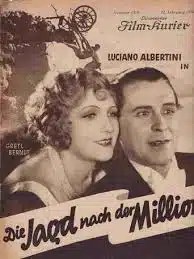 The Chase After Millions (Die Jagd nach der Million) (Dir. Max Obal. Ger, 1930) (91 mins) A fast-paced, enjoyable romp mixing high drama and exciting stunt work, plus a generous pinch of humour. Former circus-performer Luciano Albertini shines as a debonair stowaway who teams up with droll side-kick Carlos (Ernst Verebes) to track down a band of duplicitous villains. The duo’s mysterious mission takes them from cruise-liner, to steam train, high-rise buildings and
  speeding car, along the gorgeous backdrop of the Dalmatian coast. Our hero: Italian-born actor, producer, director and ex-strongman Albertini, is given ample opportunity to show off his muscular agility and winning star persona. Little-known today, Albertini was considered a cast-iron box-office draw in the ‘twenties, whose athletic prowess and Latin looks reputedly induced fervent admiration amongst his international fanbase.It was one of the last German silents and also one of the first German sound films, utilising am orchestral soundtrack and sound effects. Find out more at imdb.com Presented as part of the Hippodrome Silent Film Festival. With live musical accompaniment by Günter Buchwald (piano, violin) and Frank Bockius (percussion). Hippodrome Cinema, Bo’ness Link
 I Want To Be A Train Driver (Dir. Iuldash Agzimov, USSR – Uzbek SSR, 1935) (Screening format – not known, 38mins) A charming tale about a mischievous boy who dreams of riding on a steam train. Young Klych lives in a remote Uzbek village – he has heard about magnificent locomotives and yearned to travel in one, until one day his dream comes true when a friendly railway worker takes him to the big city of
  Tashkent on a magnificent steam train. Produced specifically for a junior audience, this Uzbek film advocates the wonders of urban living with its bounteous nursery schools and technological advancements, and has a clear ideological message for the new Soviet youth. Ideology aside, this is a thoroughly delightful film thanks to its endearing young stars and its playful use of animation. Presented as part of the Hippodrome Silent Film Festival. With live musical accompaniment by Neil Brand. Railway Station, Bo’ness Link
 What The Waters Remember – The Dark Mirror A new moving image and live music joint commission with Flatpack Festival, The Dark Mirror weaves a mythological tale inspired by the rich recorded history and transnational cultural significance of canals. Composed using archival footage, the film delves into the untold stories of those who built and used the canals, exploring the displacement of people and geographies caused by their construction and the eco-human relationships shaped by these waterways. The title is inspired by the Falkirk Tunnel, known in the local imagination as “The Darkkie” which serves in the film as a site of confluence and transformation for three imagined historical travellers connected via the global trade routes of canals. Presented as part of the Hippodrome Silent Film Festival. With live musical accompaniment by Andrew Wasylyk and Tommy Perman. Hippodrome Cinema, Bo’ness Link
 L’Hirondelle et la Mésange (aka The Swallow and the Titmouse) (Dir. Andre Antoine, Fr, 1920) (Screening format – not known, 80mins) Shot entirely on location on the waterways of Flanders, the story is set on two canal barges, L’Hirondelle (The Swallow) and La Mesange (The Titmouse). The drama involves the tensions between the barge captain and the pilot whom he
 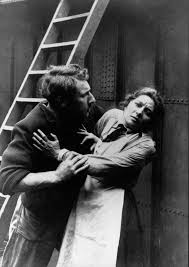 has hired to steer the coal-bearing ships to areas in France devastated by the war, but who sullenly lusts after the captain’s wife. Never released upon its completion on the grounds that it was not commercially viable, the unedited film lay in the archives of Cinémathèque Française until the early 1980s when the perfectly preserved footage was edited into a completed film using Gustave Grillet’s script and the director’s detailed notes as a guide. Find out more at silentfilm.org Presented as part of the Hippodrome Silent Film Festival. With live musical accompaniment by Stephen Horne (piano, flute, accordion) and Elizabeth-Jane Baldry (harp). Hippodrome Cinema, Bo’ness Link
 Haxan: Witchcraft Through the Ages (Dir. Benjamin Christensen, Swe., 1922) ( Screening format – not known, 105mins) A fictionalized documentary with dramatic reconstructions showing the evolution of witchcraft, from its pagan roots to its confusion with hysteria in modern (1922) Europe. Based partly on Christensen’s study of the Malleus Maleficarum, a 15th-century German guide for inquisitors,
 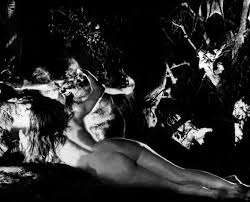 Häxan is a study of how superstition and the misunderstanding of diseases and mental illness could lead to the hysteria of the witch hunts. Although it won acclaim in Denmark and Sweden when first released, Haxan was heavily censored or banned outright in many countries. But it is now considered to be Christensen’s finest work, a witches’ brew of the scary, the grotesque, and the darkly humorous. Find out more at thedevilsmanor.blogspot.co.uk With live musical accompaniment by four-piece band Autohaus. Rio Cinema, Dalston Link
The General (Dir. Buster Keaton/Clyde Bruckman, 1926) (Screening format – not known, 75mins) Widely considered one of the greatest films ever made and one of the most revered comedies of the silent era, Buster Keaton’s effortless masterpiece sees hapless Southern railroad engineer Johnny Gray (Keaton) facing off against Union soldiers during the American Civil War. When Johnny’s fiancée, Annabelle Lee (Marion Mack), is accidentally taken away while on a train stolen by Northern forces, Gray pursues the soldiers, using various modes of transportation in comic action scenes that highlight Keaton’s boundless, innovative wit and joyful, lighthearted dexterity, to reclaim the train and thereby save the South. Find out more at busterkeaton.com . With live organ accompaniment by Darius Battiwalla. Heptonstall Church, West Yorks. Link
23 March
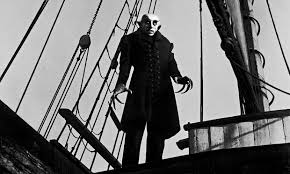 Nosferatu (Dir. F W Murnau, 1922) (Screening format – not known, 96mins) A German Expressionist horror masterpiece starring Max Shreck as the vampire Count Orlok. The film was an unauthorised adaption of Bram Stoker’s ‘Dracula’ with names and other details changed because the studio could not obtain the rights to the novel. Stoker’s heirs sued over the adaption and a court ruling ordered that all copies of the film be destroyed. However, a few prints survived and the film came to be regarded as an inspirational master work of the cinema. In the film, Count Orlok travels across Europe leaving a trail of death in his wake. Brilliantly eerie, with imaginative touches which later adaptions never achieved. Find out more at wikipedia.org With live musical accompaniment by Minima. Community Hall, Caryford Link
 Laurel & Hardy – Double Bill Spend an afternoon in the company of the world’s best-loved comedy team. Proceedings open with We Faw Down in which Stan and Ollie sneak off for a poker game but tell their wives they are going to the theatre. En route, the pair are side-tracked by a couple of good time gals. What could possibly go wrong! This well constructed film has lots of laughs and a characteristic premise that was later reworked for the duo’s feature-length sound classic Sons of the Desert. The screening ends with a showing of one of Laurel and Hardy’s best loved silent films: Big Business, co-starring Falkirk’s own Jimmy Finlayson! Stan and Ollie are door-to-door Christmas tree salesmen who go head-to-head with Finlayson’s reluctant customer. Guess what! Mayhem and destruction ensue. Presented as part of the Hippodrome Silent Film Festival. With live musical accompaniment by John Sweeney (piano) and Frank Bockius (percussion). Hippodrome Cinema, Bo’ness Link
 The Cave Of The Spider Woman (Dir. Dan Duyu, Chi, 1927) (Screening format – not known, 60mins) Adapted from one of China’s most beloved novels, this “spirit magic” film follows the adventures of characters familiar to Gen X from the cult BBC dubbed broadcasts of the Chinese TV series Monkey in the late 70s and early 80s. Pious Buddhist monk Tripitaka is tasked by the Goddess of Mercy – on instructions from the Buddha – with the mission of journeying to “the
  West” and bringing back sacred texts. Accompanying Tripitaka on his quest are three disciples, Monkey, Pigsy and Sandy, and the Dragon prince, who has taken the form of a white horse. Considered lost until it turned up in the National Library of Norway film collection in 2011 (the first reel and some sequences of the central part of the story remain missing sadly) this lively film featuring shape-shifting, cannibalistic spider-women, elaborate costumes, special effects and a nifty double-axe battle is an exciting rediscovery. Find out more at silentfilm.org Presented as part of the Hippodrome Silent Film Festival. With live musical accompaniment by Günter Buchwald (piano, violin) and Frank Bockius (percussion). Hippodrome Cinema, Bo’ness Link
 Smouldering Fires (Dir. Clarence Brown, US, 1925) (Screening format – not known, 80mins) Fourty-ish businesswoman Jane Vale (Pauline Frederick) falls in love with a much younger Robert Elliott (Malcolm McGregor) an employee from her factory. She promotes him to the position of her
  private secretary, and out of gratitude and to defend her reputation from rumors, he asks her to marry him. However, before the marriage can take place, Jane’s younger sister Dorothy (Laura La Plante) returns home from college and Robert and Dorothy fall in love. Lacking the courage to confess to Jane of his love for her sister, Robert marries Jane but finds that the difference in ages between him and Jane are creating complications. The now almost forgotten Pauline Frederick gives an outstanding performance, her subtlety, sensitivity, and intelligence creating an unforgettable characterisation. Find out more at giornatedelcinemamuto.it Presented as part of the Hippodrome Silent Film Festival. With live musical accompaniment by John Sweeney (piano). Hippodrome Cinema, Bo’ness Link
Forgotten Faces (Dir. Victor Schertzinger, USA, 1928) (Screening format – not known, 83mins)Meet “Heliotrope” Harry – the most debonair of all gentlemen thieves to have ever graced a cinema screen. Harry might be a master criminal, but his gallantry knows no bounds. What’s more, he’s a loyal husband and devoted father. These qualities are deftly painted for us in the opening minutes of this cleverly directed and tightly scripted feature, propelling us into the subsequent explosive events which see Harry finding out the truth about his treacherous wife and forced to act quickly to protect his baby daughter from her mother’s depravity. It is scarcely believable that such a splendid film has languished unknown for decades despite the Library of Congress initiated restoration completed ten years ago, and that it is only now enjoying a moment in the sun. Find out more at silentfilm.org. Presented as part of the Hippodrome Silent Film Festival. With live musical accompaniment by Stephen Horne (piano, accordion, flute) and Frank Bockius (percussion). Hippodrome Cinema, Bo’ness Link
 So This is Paris (Dir: Ernst Lubitsch, US, 1926) (Screening format – not known, 80mins ) So This is Paris is a clever American silent comedy from Germany’s master director Ernst Lubitsch starring Monte Blue and Patsy Ruth Miller. Paul is happily married to Suzanna, living together in a quiet suburb. Then Suzanna discovers their new neighbours are expressive dancers with revealing outfits and demands that Paul complain to them about their lack of morality. But when Paul knocks on their door, he meets an old flame. Four-way complications result and are only resolved finally in an astounding Charleston sequence! Find out more at sensesofcinema.com. With live organ accompaniment by Donald MacKenzie. Brentford Musical Museum, London. Link
25 March
 South (Dir. Frank Hurley, UK/Aus, 1919) (Screening format – not known, 88mins). Australian filmmaker Frank Hurley’s record of Shackleton’s 1914-17 Antarctic expedition is also a document of life – human and otherwise – striving to survive in the most adverse climatic conditions imaginable. More than a mere chronicle of an epic undertaking, the film is visually
  magnificent, its images of the vast frozen wilderness composed with a meticulous attention to framing and light. Restored with its original tinting and toning by the BFI National Archive and EYE Filmmuseum, this incredible film of true-life heroism and survival in the most formidable conditions is over a century old. It lives on as an enthralling testimony to the delicate balance between humanity and the natural world.Find out more at moviessilently.com With live musical accompaniment by the BBC Concert Orchestra conducted by Hugh Brunt and performing a newly commissioned score composed by Neil Brand. Theatre Royal and Royal Concert Hall, Nottingham Link
26 March
Nosferatu (Dir. F W Murnau, 1922) (Screening format – not known, 96mins) A German Expressionist horror masterpiece starring Max Shreck as the vampire Count Orlok. The film was an unauthorised adaption of Bram Stoker’s ‘Dracula’ with names and other details changed because the studio could not obtain the rights to the novel. Stoker’s heirs sued over the adaption and a court ruling ordered that all copies of the film be destroyed. However, a few prints survived and the film came to be regarded as an inspirational master work of the cinema. In the film, Count Orlok travels across Europe leaving a trail of death in his wake. Brilliantly eerie, with imaginative touches which later adaptions never achieved. Find out more at wikipedia.org With live musical accompaniment by Minima. Wardrobe Theatre, Bristol Link
27 March
Nosferatu (Dir. F W Murnau, 1922) (Screening format – not known, 96mins) A German Expressionist horror masterpiece starring Max Shreck as the vampire Count Orlok. The film was an unauthorised adaption of Bram Stoker’s ‘Dracula’ with names and other details changed because the studio could not obtain the rights to the novel. Stoker’s heirs sued over the adaption and a court ruling ordered that all copies of the film be destroyed. However, a few prints survived and the film came to be regarded as an inspirational master work of the cinema. In the film, Count Orlok travels across Europe leaving a trail of death in his wake. Brilliantly eerie, with imaginative touches which later adaptions never achieved. Find out more at wikipedia.org With live musical accompaniment by Minima. Wardrobe Theatre, Bristol Link
28 March
 Early Colour Live A look at some early colour processes from the silent era. Including a screening of Toll Of The Sea (Dir. Chester M Franklin, US, 1922) (Screening format – not known, 48mins) A popular melodrama based on Puccini’s “Madame Butterfly,“ The Toll of the Sea is not only the first-ever, two-strip Technicolor film, but also Anna May Wong’s first leading role. Interestingly the screenplay is by another leading woman of early 20th century cinema, Frances Marion. In this
 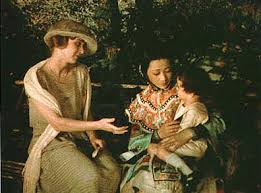 tragic tale of Western exploitation, an American man in China falls in love with and marries a young Asian woman named Lotus Flower (Anna May Wong). After he leaves her to return to the United States, Lotus Flower gives birth to a son, whom she dotingly raises on her own. When the man later returns to China with his new American wife Elsie, he meets his mixed-race son and his understanding white wife urges adoption. In a destructive act of self-sacrifice, Lotus Flower allows her son to return to American with his father. Find out more at silentfilm.org Introduced by editor and film historian Christopher Bird. With live musical accompaniment (?). BIMI, London Link
29 March
 Battleship Potemkin (Dir. Sergei Eisenstein, 1925) (Screening format – not known, 75mins) Considered one of the most important films in the history of silent pictures, as well as possibly Eisenstein’s greatest work, Battleship Potemkin brought Eisenstein’s theories of cinema art to the world in a powerful showcase; his emphasis on montage, his stress of intellectual contact, and his treatment of the mass instead of the individual as the protagonist. The film tells the story of the mutiny on the Russian ship Prince Potemkin during the 1905 uprising.Their mutiny was short-lived, however, as during their attempts to get the population of Odessa to join the uprising, soldiers arrived and laid waste to the insurgents. Battleship Potemkin is a work of extraordinary pictorial beauty and great elegance of form. It is symmetrically broken into five movements or acts. In the first of these, “Men and Maggots,” the flagrant mistreatment of the sailors at the hands of their officers is demonstrated, while the second, “Drama on the Quarterdeck,” presents the actual mutiny and the ship’s arrival in Odessa. “Appeal from the Dead” establishes the solidarity of the citizens of Odessa with the mutineers. It is the fourth sequence, “The Odessa Steps,” which depicts the massacre of the citizens, that thrust Eisenstein and his film into the historical eminence that both occupy today. It is unquestionably the most famous sequence of its kind in film history, and Eisenstein displays his legendary ability to convey large-scale action scenes. The shot of the baby carriage tumbling down the long staircase has been re-created in many films. The sequence’s power is such that the film’s conclusion, “Meeting the Squadron,” in which the Potemkin in a show of brotherhood is allowed to pass through the squadron unharmed, is anticlimactic. Find out more at classicartfilms.com Presented by the Future City Film Festival and South West Silents. With live piano accompaniment (?). Megascreen (IMAX), Bristol Link
30 March
 Sensation Seekers (Dir. Lois Weber, US, 1927) (Screening format – not known, 70mins) “Egypt” Hagen is a hedonistic party girl whose main concern is the pursuit of her own pleasure. While engaging in her daily sunbathing ritual, she meets Norman Lodge, a man of the cloth unimpressed by her daring swimming attire. Entranced by his sanctity, Egypt falls for the noble reverend, despite his pending engagement. Declaring herself a new woman, she faithfully attends Norman’s sermons in hopes of catching his eye. But old habits are hard to break, and a casual visit to a speakeasy lands Egypt in jail. Now the foolhardy girl must redeem herself to Norman before he embarks on his marriage, dashing all her dreams and hopes……The Sensation Seekers is one of the few
 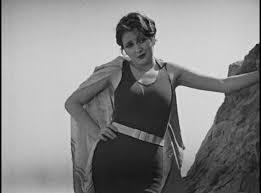 surviving works of the innovative and ahead-of-her-time Lois Weber (1879-1939), who was considered by some to be the equal of D.W. Griffith. In 1914 Weber became the first American woman to direct a feature-length film with her adaptation of Shakespeare’s The Merchant of Venice. In her over 100 pictures, she pioneered the use of split-screen technique in Suspense (1913) tackled abortion and birth control in Where Are My Children? (1916) and even provided the silver screen with
 its first instance of female full-frontal nudity in Hypocrites (1915). As a screenwriter, she penned the first big-screen version of Tarzan of the Apes (1918) with Elmo Lincoln. She also discovered and served as mentor to several acclaimed actresses, including The Sensation Seekers‘ star, Billie Dove. Based on a novel by Ernest Pascal, The Sensation Seekers was a hit at the box office upon its release on March 20, 1927. Surprisingly considering the technical deftness of the production, Weber had time during filming to assist Harry A. Pollard with his adaptation of Uncle Tom’s Cabin (1927). Find out more at catalog.afi.com With live musical accompaniment by Lillian Henley. Palace Cinema, Broadstairs Link
31 March
Modern Times (Dir, Charlie Chaplin, US, 1936) (Screening format – digital, 87mins) Regarded as the last great silent film and made almost a decade into the sound era, Modern Times is Charlie Chaplin’s last outing as the Little Tramp.and finds our hero struggling to make ends meet in the Depression of the 1930s Enlivened by bits of inventive sound design the film is an imaginative and hilarious send-up of the modern industrialized world. His classic Little Tramp character is a factory worker tightening bolts on an assembly line, until a mishap with an automatic feeding machine sends him off course. Mixing the joyfulness of Chaplin’s comedy gags with a satire of modern bureaucracy, Modern Times remains the funniest of the comedian’s social critiques. Chaplin had not been seen on a theatre screen for five years when Modern Times premiered to great acclaim in 1936. Still stubbornly resisting work in “talkies,” he stood alone in his insistence upon preserving the silent film although his voice is heard on the soundtrack he himself composed. Find out more at www.charliechaplin.com With recorded Chaplin score. BFI Southbank, London Link
 Silentfilmcalendar.org