

1 March
 Silent Shorts Three silent classics. Cops sees our hapless hero, Buster Keaton, pursued by hundreds of police officers after an unfortunate mistake. In Two Tars, Laurel and Hardy star as two sailors on shore leave who buy a car to take out the girls they’ve met and cause a massive traffic jam, amongst other missteps and mayhem. Finally, Never Weaken sees Harold Lloyd believe that the woman he loves has fallen for someone else and decides to attempts suicide, which fails in a most spectacular manner, time and time again. With live musical accompaniment by Stephen Horne. Light House Cinema, Dublin Link
3 March
 Man With a Movie Camera (Dir. Dziga Vertov, USSR, 1929) (Screening format – not known, 68mins) Part documentary and part cinematic art, this film follows a city in the 1920s Soviet Union throughout the day, from morning to night. Directed by Vertov, with a variety of complex and innovative camera shots (filmed by Vertov’s equally talented and innovative brother Mikhail Kaufman), the film depicts scenes of ordinary daily life in Russia. Vertov celebrates the modernity of the city, with its vast buildings, dense population and bustling industries. While there are no titles or narration, director and cameraman still naturally convey the marvels of the modern city. Find out more at rogerebert.com . With live musical accompaniment by Joe Harvey-Whyte and Owen Spafford. Theatreship, Canary Wharf, London Link
4 March
 Piccadilly (Dir E A Dupont, UK, 1929) (Screening format – not known, 92 mins) A film noir before the term was in use, uncredited German director E.A. Dupont’s Piccadilly is one of the true greats of British silent films, on a par with the best of Anthony Asquith or Alfred Hitchcock during this period. Valentine Wilmot (Jameson Thomas) owns a nightclub featuring dancers Mabel (Gilda Gray) and Vic (Cyril Ritchard). After a
  confrontation with Wilmot, Vic quits performing at the club. When the joint starts losing business, a desperate Wilmot hires former dishwasher Shosho (Anna May Wong) as a dancer. She is an instant hit and forms a rapport with Wilmot, which makes both Mabel and Shosho’s friend (King Ho Chang) jealous, leading to a mysterious murder. A stylish evocation of Jazz Age London, with dazzlingly fluid
 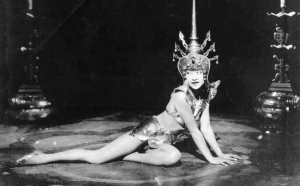 cinematography and scenes ranging from the opulent West End to the seediness of Limehouse. One of the pinnacles of British silent cinema, Piccadilly is a sumptuous show business melodrama seething with sexual and racial tension – with an original screenplay by Arnold Bennett. Find out more at screenonline.org.uk . With live musical accompaniment by Donald Mackenzie. Introduced by New York based film historian and filmmaker Shane Fleming. Cinema Museum, Lambeth Link
6 March
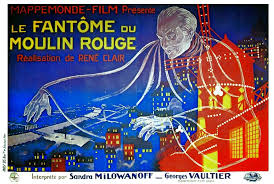 Phantom of the Moulin Rouge (aka Le Fantôme du Moulin Rouge)(Dir Rene Clair, Fr, 1925) (Screening format – not known, 90 mins) After two short films, Entr’acte and Paris qui Dort (both 1924) Rene Clair went on to direct this, his first feature length film. The Phantom of the Moulin Rouge continues with the same mischievously surreal themes of his first two short films with the story of
 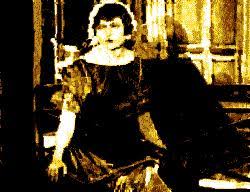 a man, frustrated in his romantic ambitions, who becomes the victim for a scientific experiment in which a strange doctor separates the soul of the man from his body. Disembodied and invisible, the man whiles away his time playing practical jokes but eventually seeks to return to his own body. However, that body has now been discovered by the police and the doctor charged with murder. Will soul and body ever be reunited. Perhaps not in the same class as later Clair silents such as The Italian Straw Hat or Les Deux Timides (both 1928) this is a wonderfully amusing tale. Find out more at imdb.com. With live musical accompaniment by Stephen Horne. Fleapit Cinema Club, Westerham Link
8 March
 Variety (Dir. E A Dupont, Ger, 1925) (Screening format – not known, 94mins) An International smash hit in 1925, Variety is a gripping tale of passion and revenge under the Big Top. Its star, Emil Jannings was one of the most esteemed actors of this time, working with directors such as F.W. Murnau and Josef von Sternberg, before moving to America to become the first winner of the Oscar for Best Actor, and ending his career in disgrace after appearing in Nazi propaganda films. In this steamy melodrama, he plays Boss Huller, a former trapeze artist who abandons his family for a younger colleague (Lya De Putti). When the couple becomes a professional trio, a love triangle is formed, and tragedy ensues. The film features some of the most inventive camerawork of the period, its
  ‘unchained’ approach making for breathtaking performance scenes. For female lead Lya De Putti, a German ‘vamp’ of the Weimar era, Variety was probably the peak of her film career. Shortly after its release she departed for Hollywood but had only limited success especially with the advent of the sound era when her strong German accent held her back. Tragically, after having to have a chicken bone surgically removed from her throat she developed pleurisy from which she died in 1931 aged just 34. Find out more at moviessilently.com With live musical accompaniment by Stephen Horne. Introduced by film historian and filmmaker from New York City Shane Fleming. Cinema Museum, Lambeth Link
 The Lodger: A Story of the London Fog (Dir. Alfred Hitchcock, UK, 1927) (Screening format – not known, 91 mins ) In The Lodger, a serial killer known as “The Avenger” is on the loose in London, murdering blonde women. A mysterious man (Ivor Novello) arrives at the house of Mr. and Mrs. Bunting looking for a room to rent. The Bunting’s daughter (June Tripp) is a blonde model and is seeing one of the detectives (Malcolm Keen)
  assigned to the case. The detective becomes jealous of the lodger and begins to suspect he may be the avenger. Based on a best-selling novel by Marie Belloc Lowndes, first published in 1913, loosely based on the Jack the Ripper murders, The Lodger was Hitchcock’s first thriller, and his first critical and commercial success. Made shortly after his return from Germany, the film betrays the influence of the German expressionist tradition established in such films as The Cabinet of Dr. Caligari (1919) and Nosferatu (1922). Find out more at silentfilm.org With live musical accompaniment by Hugo Max. Magdalen College, Oxford Link
 Phantom Of The Opera (Dir. Rupert Julian, 1925) (Screening format – not known, 103mins) A title that needs no introduction, The Phantom of the Opera has spawned many remakes, remasters and sequels. This original film version, produced with moments of early Technicolour, sees Lon Chaney, the ‘Man of a Thousand Faces’ perform one of his most iconic roles. His ghastly make-up and outrageous performance made this title a benchmark in the American silent film era. The film was a critical and commercial success upon release, and still stands as an important film in cinematic history to this day, with press quotes from the time labelling the film an ‘ultra-fantastic melodrama’ (New York Times), ‘produced on a stupendous scale’ (Moving Picture World) and ‘probably the greatest inducement to nightmare that has yet been screened’ (Variety). The mysterious phantom (Lon Chaney) is a vengeful composer living in the catacombs under the Paris Opera House, determined to promote the career of the singer he loves (Mary Philbin). Famed for the phantom’s shock unmasking, incredible set designs and the masked ball sequence, it still packs a punch. Find out more at wikipedia.org With live musical accompaniment by Minima. Crayford Community Hall, Castle Cary Link
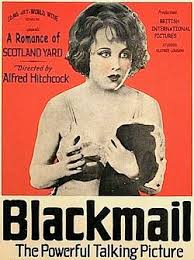 Blackmail (Dir. Alfred Hitchcock, 1929) (Screening format – not known, 84mins) Alice White is the daughter of a shopkeeper in 1920’s London. Her boyfriend, Frank Webber is a Scotland Yard detective who seems more interested in police work than in her. Frank takes Alice out one night, but she has secretly arranged to meet another man. Later that night Alice agrees to go back to his flat to see his studio. The man has other ideas and as he tries to rape Alice, she
  defends herself and kills him with a bread knife. When the body is discovered, Frank is assigned to the case, he quickly determines that Alice is the killer, but so has someone else and blackmail is threatened. Alfred Hitchcock’s sinister, suspenseful tale of crime and romance is one of the last British silent films to be made (a sound version, which involved some re-shooting and dubbing and is now famous for its ‘KNIFE!!!’ scene, was subsequently released). With his traditional cameo appearance in the first reel, to a spectacular moonlit chase through the British Museum in the final reel, Blackmail is a classic thriller from the Master of Suspense. Find out more at screenonline.org.uk With live musical accompaniment with a new score by Barbara de Biasi, performed by a classical ensemble. Barbican, London Link
13 March
The Lodger: A Story of the London Fog (Dir. Alfred Hitchcock, UK, 1927) (Screening format – not known, 91 mins ) In The Lodger, a serial killer known as “The Avenger” is on the loose in London, murdering blonde women. A mysterious man (Ivor Novello) arrives at the house of Mr. and Mrs. Bunting looking for a room to rent. The Bunting’s daughter (June Tripp) is a blonde model and is seeing one of the detectives (Malcolm Keen) assigned to the case. The detective becomes jealous of the lodger and begins to suspect he may be the avenger. Based on a best-selling novel by Marie Belloc Lowndes, first published in 1913, loosely based on the Jack the Ripper murders, The Lodger was Hitchcock’s first thriller, and his first critical and commercial success. Made shortly after his return from Germany, the film betrays the influence of the German expressionist tradition established in such films as The Cabinet of Dr. Caligari (1919) and Nosferatu (1922). Find out more at silentfilm.org With live musical accompaniment by Hugo Max. Picture House, Finsbury Park Link
14 March
 Buster Keaton: Two Silent Comedy Classics The Goat (Dir. Buster Keaton/Mal St Clair, US, 1921) + One Week (Dir. Buster Keaton/Eddie Cline, 1920) (Screening format – not Known, 27/19 mins) In The Goat, Buster Keaton is already on the run from the cops when he’s mistaken for murderer Dead Shot Dan (portrayed, incidentally, by Keaton’s co-director Mal St. Clair).
  Keaton has eluded the previous group of policeman, but he’s no match for the ill-tempered, heavyweight detective Joe Roberts who’s hot on his trail…or is he? The battle of wits and punishing physical stunts is a pleasure to behold — Keaton wrings every bit of mirth from props such as an old-fashioned dump truck, an elevator, windows and, of course, the passing train. A delightful, fast-moving film.Find out more at wikipedia.org. One Week sees Buster and his new bride struggling with a pre-fabricated home unaware that his bride’s former suitor has renumbered all of the boxes. Find out more at wikipedia.org .With live musical accompaniment by Albert Lamb. Well Walk Theatre, Hampstead Link
 Our Hospitality (Dir. Buster Keaton/John G Blystone, US, 1923) (Screening format – not known, 73mins) Our Hospitality is a riotous satire of family feuds and Southern codes of honor. In 1831, Keaton leaves his home in New York to take charge of his family mansion down South. En route, Keaton befriends pretty Natalie Talmadge (Keaton’s real-life wife at the time), who invites him to dine at her family home. Upon meeting Talmadge’s father and brothers, Keaton learns that he is the last surviving member of a family with whom Talmadge’s kin have been feuding for over 20 years. The brothers are all for killing Keaton on the spot, but Talmadge’s father insists that the rules of hospitality be observed: so long as Keaton is a guest in the house, he will not be harmed. Thus, Keaton spends the next few reels alternately planning to sneak out of the mansion without being noticed or contriving to remain within its walls as long as possible. But once he is out of the house the chase is on, with the father and brothers in hot pursuit. In the climactic waterfall stunt a dummy stood in for Talmadge but Keaton used no doubles, and nearly lost his life as a result. This 7-reel silent film represents the only joint appearance of Buster Keaton and Natalie Talmadge; Keaton hoped that by spending several weeks on location with his wife, he could patch up their shaky marriage (it didn’t work). Also appearing are two other members of the Keaton family: Keaton’s ex-vaudevillian father Joe (who performs an eye-popping “high kick”) and his son Joseph Keaton IV, playing Buster as a baby. Find out more at wikipedia.org. With live musical accompaniment by Albert Lamb. Well Walk Theatre, Hampstead Link
15 March
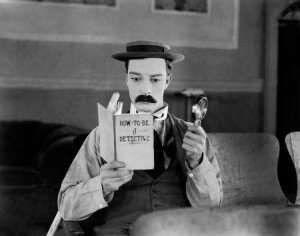 Sherlock Jnr (Dir. Buster Keaton, 1924) (Screening format – not known, 45 mins) In Sherlock Jr, a kindly movie projectionist (Buster Keaton) longs to be a detective. When his fiancée (Kathryn McGuire) is robbed by a local thief (Ward Crane), the poor projectionist is framed for the crime. Using his amateur detective skills, the projectionist follows the thief to the train station – only to find himself locked in a train car. Disheartened, he returns to his movie theatre, where he falls asleep and dreams that he is the great Sherlock Holmes. Although not a popular success on its initial release, the film has come to be recognised as a Keaton classic with its special effects and elaborate stunts making it a landmark in motion picture history. Find out more at silentfilm.org. With live musical accompaniment by Albert Lamb. Well Walk Theatre, Hampstead Link
17 March
 Hellbound Train (Dir. Eloyce and James Gist, US, 1930) (Screening format – not known, 50mins) The film is the work of self-taught filmmakers James and Eloyce Gist, African-American evangelists who employed cinema as a tool for their travelling ministry. Their surreal visual allegories were screened in churches and meeting halls, accompanied by a sermon and the passing of a collection plate. Rather than having a linear story, the film is instead a catalogue of
  iniquity, a car-by-car dramatization of the sins of the Jazz Age (including gambling, dancing, alcohol, and the mistreatment of animals), presided over by a horned devil, culminating in a colossal derailment (a model train tossed into a bonfire). Admittedly, the production values are minimal—being shot with hand-held 16mm equipment with natural light, and without audio—but the surreality of it all makes for a compelling viewing experience, and shows that renegade, visionary filmmakers can be found in the most unexpected places. Findout more at onlysky.media With live musical accompaniment by Mutterichbindoom. The Nickel, London Link
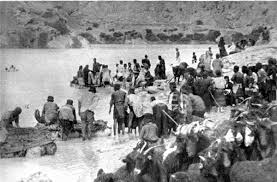 Grass: A Nation’s Battle For Life (Dir. Merian C. Cooper/Ernest B. Schoedsack, US, 1925) (Screening format – not known, 71 mins) Before they went on to make King Kong, Merian C. Cooper and Ernest B. Schoedsack told the jaw-dropping true story of a tribe of nomads in Iran known as the Bakhtiari and
  their epic annual 48 day trek across inhospitable terrain from Turkey to Iran to their flock’s summer pastures. Venturing through deserts, mountains, rivers and snowy wastelands in search of the life-sustaining grasslands, the Bakhtiari’s 50,000 strong caravan – complete with 500,000 cattle and goats – becomes the sole focus of the camera’s gaze. A spectacular ethnographic record, this film was intended for the lecture circuit but was snapped up by Paramount for theatrical distribution on the strength of its powerful dramatic punch. It’s easy to see how the character of Denham in King Kong was modelled after the adventurer Cooper, whose daredevil real-life exploits were the stuff of Hollywood adventure films. Find out more at wikipedia.org . Presented as part of the Borderlands Film Festival. With recorded score (?) Malvern Theatres, Malvern Link
18 March
Grass: A Nation’s Battle For Life (Dir. Merian C. Cooper/Ernest B. Schoedsack, US, 1925) (Screening format – not known, 71 mins) Before they went on to make King Kong, Merian C. Cooper and Ernest B. Schoedsack told the jaw-dropping true story of a tribe of nomads in Iran known as the Bakhtiari and their epic annual 48 day trek across inhospitable terrain from Turkey to Iran to their flock’s summer pastures.  Venturing through deserts, mountains, rivers and snowy wastelands in search of the life-sustaining grasslands, the Bakhtiari’s 50,000 strong caravan – complete with 500,000 cattle and goats – becomes the sole focus of the camera’s gaze. A spectacular ethnographic record, this film was intended for the lecture circuit but was snapped up by Paramount for theatrical distribution on the strength of its powerful dramatic punch. It’s easy to see how the character of Denham in King Kong was modelled after the adventurer Cooper, whose daredevil real-life exploits were the stuff of Hollywood adventure films. Find out more at wikipedia.org . Presented as part of the Borderlands Film Festival. With recorded score (?) Courtyard, Hereford Link
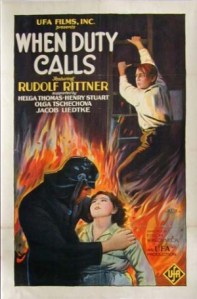 Man In The Fire ( Released in the US as When Duty Calls.) (Dir. Erich Waschneck, Ger, 1926) (Screening format – 35mm, 89mins) A serious accident occurs at a Berlin subway station, and firefighter Johann Michael (Rudolph Rittner) is so severely injured during the rescue efforts that he can never return to his profession. He finds work on an assembly line, which increasingly depresses him. His daughter Lore (Helga Thomas) is a costume designer at the Scala Theater, and head lighting technician Karl Winter (Kurt Vespermann), a ward of her father, has fallen in love with her. Lore, however, only has eyes for fire engineer Frank, who reciprocates her feelings, unaware that she is the daughter of firefighter Michael, whom he recently dismissed. A conflict immediately erupts between father and daughter, and the rejected Karl Winter further incites the father. Rudolph Rittner became a celebrated stage actor at the beginning of the 20th century, but surprised the world of the theatre when he retired from acting in 1907. He returned to acting in 1922, but this time in films. His appearance in front of the camera in Der Graf von Charolais (1922), was followed by other movies such as Ein Glas Wasser (1923), Fritz Lang’s Die Nibelungen (1924), Zur Chronik von Grieshuus (1925) and Der Meister von Nürnberg (1927). Find out more at wikipedia.org Presented by the Kennington Bioscope. With live musical accompaniment. Cinema Museum, Lambeth Link
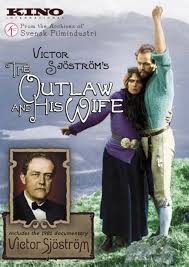 The Outlaw And His Wife (Dir. Victor Sjöström, Swe, 1918) (Screening format – not known, 111 mins) A tempestuous melodrama set in 18th century Iceland. While not as well known as Sjöström’s The Wind, The Outlaw and His Wife is considered by many to be his silent-era masterpiece. The outlaw (magnificently played by Sjöström himself) arrives at the farm of a rich widow (Erastoff), seeking work. The pair soon fall happily in love, until they are forced to flee to the mountains to make a life in the wilds. Here, among the majestic glaciers and
 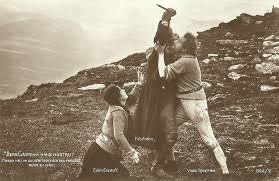 volcanic hot springs, the outlawed couple live out their love affair to the bitter end. This powerful portrayal of two characters trying to escape their destiny is played out against nature’s impervious and devastatingly beautiful backdrop. The portrayal by Sjöström and Erastoff of two people bound by an all-consuming passion is immediate and palpable, with the pair’s real-life romance lending potency to the performances. Find out more at silentfilm.org. Presented as part of the Hippodrome Silent Film Festival. With live musical accompaniment by Meg Morley. Hippodrome Cinema, Bo’ness Link
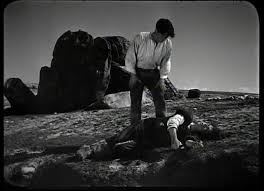 Finis Terrae (Dir. Jean Epstein, Fr, 1929) (Screening format – not known, 80 Mins) On a tiny island off Brittany two young men eke out a living by harvesting seaweed to burn for prized soda. When one of them cuts his thumb and an infection sets in, it challenges the boundaries of their relationship and galvanises the neighbouring community. Jean Epstein’s timeless narrative about survival in extremis is underpinned by avant-garde techniques and deeply resonant images, such as the recurrent lighthouse or the sight of women sheltering by rocks like giant black birds. Even without sound you can almost hear the ocean. This is a film about the possibilities of cinema and anyone thinking of picking up a camera should watch and be inspired. Find out more at worldscinema.org. Presented as part of the Hippodrome Silent Film Festival. With live musical accompaniment by Composer / guitarist Dan Abrahams and French drummer Philippe Boudot. Hippodrome Cinema, Bo’ness Link
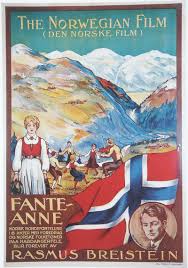 Fante-Anne (Dir. Rasmus Breistein, Nor, 1920) (Screening format – not known, 75mins) Rasmus Breistein’s classic film (and Norway’s first indigenous feature film) tells the story of the spirited orphan Anne and her complicated love for farm boy Haldor, set amidst the rural life, folk traditions
  and stunning landscapes of Norway. The film is charming, painterly, dramatically truthful and uniquely Norwegian. It was a huge success on its release and marked the beginning of Norway’s national romantic cinema. Find out more at kosmorama.org Presented as part of the Hippodrome Silent Film Festival. With live musical accompaniment (and the UK premiere of a new score) by Dina Konradsen and Jo Einar Jansen. Hippodrome Cinema, Bo’ness Link
19 March
 The Lodger: A Story of the London Fog (Dir. Alfred Hitchcock, UK, 1927) (Screening format – not known, 91 mins ) In The Lodger, a serial killer known as “The Avenger” is on the loose in London, murdering blonde women. A mysterious man (Ivor Novello) arrives at the house of Mr. and Mrs. Bunting looking for a room to rent. The Bunting’s daughter (June Tripp) is a blonde model and is seeing one of the detectives (Malcolm Keen) assigned to the case. The detective becomes jealous of the lodger and begins to suspect he may be the avenger. Based on a best-selling novel by Marie Belloc Lowndes, first published in 1913, loosely based on the Jack the Ripper murders, The Lodger was Hitchcock’s first thriller, and his first critical and commercial success. Made shortly after his return from Germany, the film betrays the influence of the German expressionist tradition established in such films as The Cabinet of Dr. Caligari (1919) and Nosferatu (1922). Find out more at silentfilm.org With live musical accompaniment by Hugo Max. Picture House, Greenwich Link
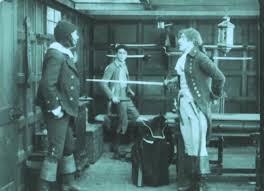 Kidnapped (Dir. Alan Crosland, USA, 1917) (Screening format – not known, 64mins) The first screen adaptation of Robert Louis Stevenson’s rip-roaring adventure yarn set against the backdrop of the Jacobite Rebellion. In 18th century Scotland, David Balfour sets out to claim his inheritance from his greedy old uncle, who colludes with an unscrupulous sea captain to have David press ganged on board a ship. When Alan Breck (‘an outlaw and a gentleman’) joins the ship, he and David become
 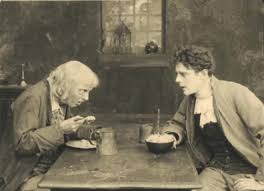 unlikely allies, setting off across Scotland together to reclaim David’s birthright. The adventure proceeds briskly from the start, but the swash is firmly buckled in when Breck appears, cutting a dash with his splendid garb and prodigious moustache. The New Jersey locations may be a poor stand- in for the Scottish Highlands, and the scene at Queensferry may fudge the view across the Firth of Forth, but the film’s tartan heart is absolutely in the right place. Find out more at moviessilently.com Presented as part of the Hippodrome Silent Film Festival. With live musical accompaniment by John Sweeney. Hippodrome Cinema, Bo’ness Link
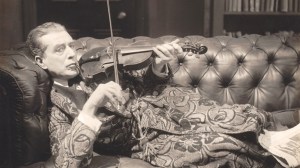 Silent Sherlock: Three Classic Cases. The Adventures of Sherlock Holmes series, which was so popular it ran for 45 episodes, was sanctioned by Arthur Conan Doyle, who thoroughly approved of Eille Norwood as Holmes. This programme features a selection of three episodes: ‘A Scandal in Bohemia’, wherein Holmes falls for ‘the woman’; ‘The Golden Pince-Nez’, which features Holmes’ deductive powers at work, and ‘The Final Problem’, featuring the sinister Professor Moriarty. Presented as part of the Hippodrome Silent Film Festival. With live musical accompaniment by Günter Buchwald. Hippodrome Cinema, Bo’ness Link
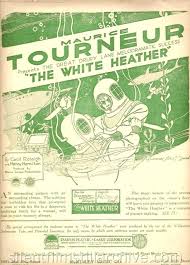 The White Heather (Dir. Maurice Tourneur, USA, 1919) (Screening format – not known, 70mins) Painter-turned-film-director Maurice Tourneur applies his pioneering talent for expressive lighting and composition to this sensational melodrama about class, morality and social ambition. Our story begins at ‘Shetland castle… nestled amongst the heather-covered hills of Scotland, where the ancient customs of that region are still scrupulously observed’. Here we
 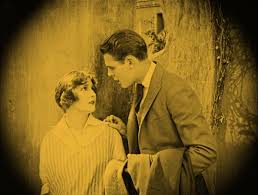 meet Lord Angus Cameron, facing financial ruin and desperate to annul his secret marriage to lowly housekeeper Marion. The only proof of their union is a marriage certificate locked in a trunk aboard a sunken yacht: The White Heather. The hunt is on as Marion, with the help of lovelorn Alec McClintock and the gamekeeper Dick (played by a young John Gilbert, just before he found fame as cinema’s hottest heart-throb besides Valentino!) fights to save her reputation and secure a future for her son. The film’s dramatic climax features groundbreaking underwater sequences that enraptured contemporary reviewers and still thrill today. Find out more at silentfilm.org Presented as part of the Hippodrome Silent Film Festival. With live musical accompaniment by Stephen Horne. Hippodrome Cinema, Bo’ness Link
20 March
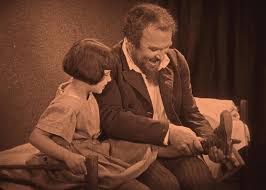 April Fool (Dir. Nat Ross, USA, 1926) (Screening format – not known, 75mins) Devoted single father Jacob Goodman is a Jewish immigrant ‘who landed in America without a pair of shoes to his back’. Jacob is a hard-worker and keen to better himself, but when his efforts at book-learning cost him his job at a garment
 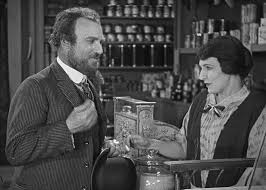 sweatshop, he is forced to rely on his business acumen to provide for his young daughter (played by Baby Peggy). As Jacob gradually builds a successful business, and secures a chance of a happy, prosperous marriage for his now grown-up daughter, trouble looms when
 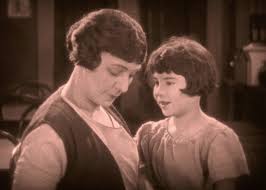 the nefarious nephew of Jacob’s rival threatens to derail everyone’s chance of a happy ending. This charming rom-com is an undiscovered gem – with the tender relationship between the older of the two pairs of would-be lovers stealing our hearts even more than their junior counterparts. As Jacob and Amelia navigate the rise and fall of their respective finances, meddlesome matchmakers, and misunderstandings, the film balances humour with genuine emotional warmth. Find out more at catalog.afi.com Presented as part of the Hippodrome Silent Film Festival. With live musical accompaniment by Meg Morley. Hippodrome Cinema, Bo’ness Link
 High Treason (Dir. Maurice Elvey, UK, 1929) (Screening format – not known, 95mins) A British sci-fi thriller set in 1950s London, involving a plot by evil arms dealers to blow
  up the Channel Tunnel and fly planes into buildings. Based on a stage-play by Noel Pemberton-Billing MP, the film features imagined variants of television used for broadcasting and televisual telephony. A very British vision of the future, it was unquestionably influenced by Fritz Lang’s Metropolis. Find out more at scifist.net Presented as part of the Hippodrome Silent Film Festival. With live musical accompaniment by Mike Nolan. Hippodrome Cinema, Bo’ness Link
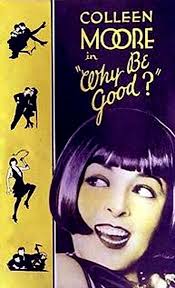 Why Be Good (Dir. William A Seiter, US, 1929) (Screening format – not known, 89mins) One of the defining ‘flappers’ of the 1920s, Colleen Moore sparkled in a series of deliciously frothy light comedies. Why Be Good? is a classic jazz-age tale set in a metropolitan world of department stores and night clubs: a real time capsule. Life-of-the-party Pert Kelly (Moore) falls for the boss of the department store where she works – but will her
 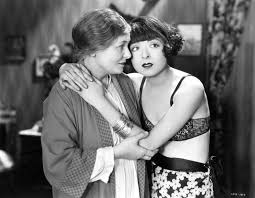 free-spirited ways be tolerated by high society? For a movie that’s nearly 100 years old, Why Be Good? remains remarkably fresh and modern with a great commentary on the double standards for women. Considered lost for many years, a copy of Why Be Good? was discovered in an Italian film archive and eventually restored in 2014, complete with its original ‘Vitaphone’ music and effects soundtrack. Find out more at silentfilm.org. Presented as part of the Hippodrome Silent Film Festival. With live musical accompaniment Meg Morley and Frank Bockius. Hippodrome Cinema, Bo’ness Link
21 March
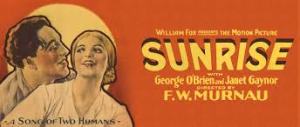 Sunrise; A Song of Two Humans (Dir. F W Murnau, US, 1927) (Screening format – not known, 94mins) F W Murnau’s debut American film, made at the technical zenith of the silent era but already heralding the arrival of the talkies being one of the first silents made with synchronized musical score and sound effects soundtrack. The simple story of a husband’s betrayal of his wife with a treacherous city girl,
 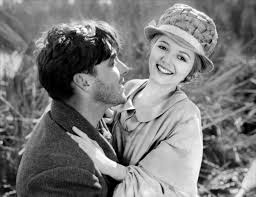 Sunrise moves from a fairytale-like depiction of rural life to a dynamic portrait of the bustling modern American city. Explored in elaborate tracking shots by Charles Rocher and Karl Struss’s pioneering camerawork, the city set was one of the most costly yet produced. The result was a commercial flop, though the achievement did not go unheralded: Sunrise was awarded a special Oscar for unique and artistic production at the first ever Academy Awards and Janet Gaynor won the first Academy Award for Best Actress for her performance. The film’s legacy has endured, and it is now widely considered a masterpiece with many calling it the greatest film of the silent era. Find out more at theguardian.com. With live musical accompaniment by Wurlitza. Holy Trinity Church, Drewsteignton. Link
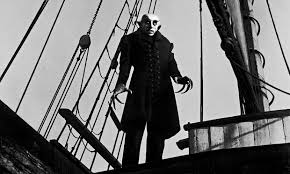 Nosferatu (Dir. F W Murnau, 1922) (Screening format – not known, 96mins) A German Expressionist horror masterpiece starring Max Shreck as the vampire Count Orlok. The film was an unauthorised adaption of Bram Stoker’s ‘Dracula’ with names and other details changed because the studio could not obtain the rights to the novel. Stoker’s heirs sued over the adaption and a court ruling ordered that all copies of the film be destroyed. However, a few prints survived and the film came to be regarded as an inspirational master work of the cinema. In the film, Count Orlok travels across Europe leaving a trail of death in his wake. Brilliantly eerie, with imaginative touches which later adaptions never achieved. Find out more at wikipedia.org With live musicalm accompaniment by Hugo Max. Prince Charles Cinema, London Link
 Metropolis (Dir. Fritz Lang, 1927) (Screening format –not known , 149 mins ) Made in Germany during the Weimar period, Metropolis is set in a futuristic urban dystopia and follows the attempts of Freder (Gustav Frohlich), the wealthy son of the city’s ruler, and Maria (Brigitte Helm), a poor worker, to overcome the vast gulf separating the classes of their city. Filming took place in 1925 at a cost of approximately five million Reichmarks,
 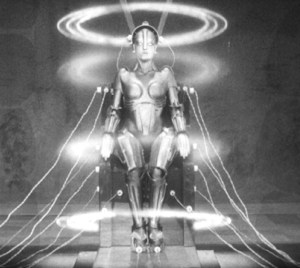 making it the most expensive film ever released up to that point. It is regarded as a pioneering work of science fiction and is among the most influential films of all time. Following its world premiere in 1927, half an hour was cut from Fritz Lang’s masterpiece and lost to the world. Eighty years later a spectacular discovery was made when the footage was found in a small, dusty museum in Buenos Aires. The film was then painstakingly reconstructed and digitally restored so that at last audiences could see the iconic futuristic fairy tale as Lang had envisioned it. Find out more at silentfilm.org With live organ accompaniment by Donald Mackenzie. Musical Museum, Brentford Link
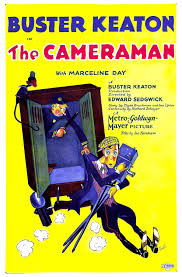 The Cameraman (Dir. Edward Sedgwick/Buster Keaton, US, 1928) (Screening format – not known, 67mins) Buster (Buster Keaton) meets Sally (Marceline Day), who works as a secretary for the newsreel department at MGM, and falls hard. Trying to win her attention, Buster abandons photography in order to become a news cameraman. In spite of his early failures with a motion camera, Sally takes to him as well. However, veteran cameraman Stagg (Harold Goodwin) also fancies Sally, meaning Buster will need to learn how to film quickly before he loses his job. Find out more at slantmagazine.com Presented as part of the Hippodrome Silent Film Festival. With live musical accompaniment by John Sweeney and Frank Bockius. Hippodrome Cinema, Bo’ness Link
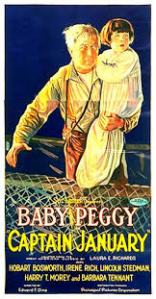 Captain January (Dir. Edward F. Cline, US, 1924) (Screening format – not known, 65mins) This heart-warming family drama showcases the extraordinary star appeal of Baby Peggy, one of the most popular child performers of the silent era. With her expressive face,
 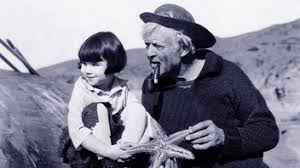 impeccable comic timing, and apparent emotional intelligence, Baby Peggy was just five years old when she shot this film – already with an astonishing 45 shorts and features to her name. In Captain January, she charms as a foundling adopted by Hobart Basworth’s grizzled old lighthouse keeper, forming an unlikely family together with only a parrot and the sea for company. The pair’s happiness is threatened when local do-gooders begin meddling and
 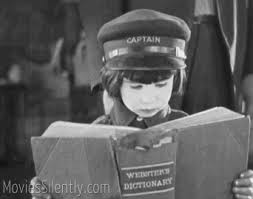 wealthy relatives arrive looking for the lost child. Unashamedly sentimental, brimming with gentle humour and playful mischief, this is a delight from start to finish – guaranteed to melt the most cynical of hearts. Peggy (later known as Diana Serra Cary) disappeared from the spotlight aged eight, re-emerging as an author and campaigner for child actors’ rights. Find out more at moviessilently.com Presented as part of the Hippodrome Silent Film Festival. With live musical accompaniment by Stephen Horne. Hippodrome Cinema, Bo’ness Link
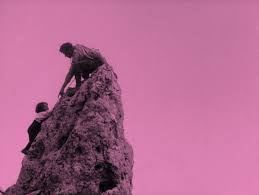 Mountain of Destiny (Dir. Arnold Fanck, Ger, 1924) (Screening format – not known, 86mins) A landmark of early mountain cinema, celebrated for its breathtaking alpine scenery and exhilarating realism, where physical endurance and cinematic ambition collide. Director Arnold Fanck coined the term ‘Natur-Spielfilm’ to describe this genre-defying natural-world drama, set amidst the vertiginous rock faces of the High Alps and
 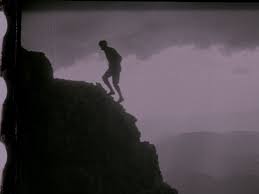 photographed with enthralling clarity and scale. The story follows a young man who has vowed to his mother that he will never attempt to reach the summit of the formidable Guglia del Diavolo, the mountain on which his father died years earlier. His resolve is tested when his childhood friend Hella decides that she can conquer the mountain. When she gets into difficulty, the young man must decide between honouring his promise and risking everything to save her. Central to the film’s success are the performers, notably Olympic ski champion Hannes Schneider (the father) and professional mountaineer Luis Trenker (his adult son) who perform climbs and descents that are genuinely awe-inspiring, even today. Find out more at wikipedia.org Presented as part of the Hippodrome Silent Film Festival. With live musical accompaniment by Günter Buchwald and Frank Bockius. Hippodrome Cinema, Bo’ness Link
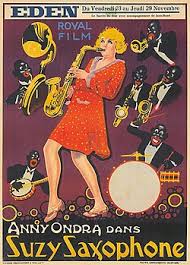 Saxophone Susy (Dir. Karel Lamač, Ger, 1928) (Screening format – not known, 83mins) A joyous jazz-age comedy of errors about two girlfriends chasing very different dreams. Susy is a chorus girl who longs to pursue her education, but instead finds herself
 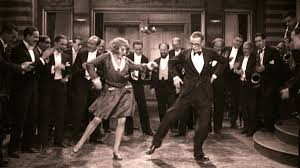 reluctantly enrolled at Tiller’s Dance School in London. Anni yearns for a life in showbiz, but her father thinks the best place for his wayward daughter is at a strict English boarding school. En route to their mismatched destinations, the girls hatch a bold plan: they will trade places! Anni’s enthusiasm more than makes up for her lack of training, and it’s not long before her eccentric dancing is taking London by storm. Czech film star Anny Ondra shines as Anni, the good-time gal whose infectious vivacity is more than a match for mere men. Find out more at giornatedelcinemamuto.it Presented as part of the Hippodrome Silent Film Festival. With live musical accompaniment by Jane Gardner, Hazel Morrison and John Burgess . Hippodrome Cinema, Bo’ness Link
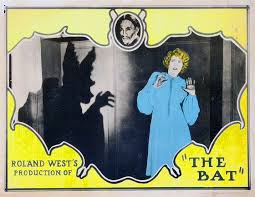 The Bat (Dir. Roland West, US, 1926) (Screening format -not known, 90 mins) The Bat, a master criminal terrorizing the city wearing a fearsome bat costume, sets his sinister sights on the eerie Fleming mansion. Within the walls of this spooky house, a bank robber has stashed $20,000 in stolen loot. Leasing the mansion is the wealthy Cornelia Van Gorder, along with her niece Dale. Dale’s fiance, Brooks Bailey, a cashier at the bank, becomes the prime suspect in the robbery investigation. But after the bank president is found dead, we’re in old dark house territory and everybody is a suspect. Based on the famous play by Mary Roberts Rinehart and Avery
 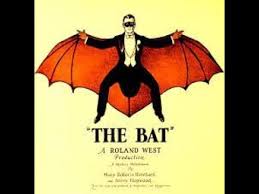 Hopwood, The Bat is renowned for its expert use of miniatures and striking set designs by William Cameron Menzies. In 1930, Roland West skillfully remade the film as a talkie, The Bat Whispers. Vincent Price starred in yet another version of The Bat in 1959. West, an innovator of movie-making techniques in the silent era, also made The Monster in 1925 with legendary silent star Lon Chaney. Along with the 1927 classic, The Cat And The Canary, The Bat is highly regarded as a prototype for the haunted house film genre that flourished in the ’30s and ’40s. Find out more at silentology.wordpress.com Presented as part of the Hippodrome Silent Film Festival. With live musical accompaniment by Stephen Horne. Hippodrome Cinema, Bo’ness Link
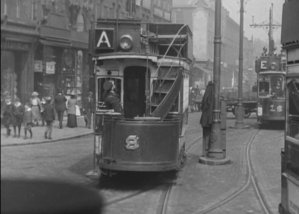 A Phantom Tram Ride Around the UK Imagine a city without cars! You don’t have to – because before World War One early film-makers went around the globe capturing exactly that! The resulting filmic records give a fascinating glimpse of a world where the curb is not an impermeable barrier between safety and danger, and the streets are for all manner of pedestrians and vehicles.
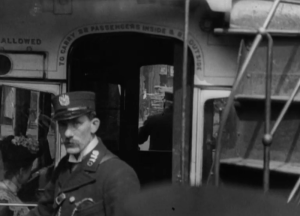 Paramount among these transportation modes are the new electric trams which glide majestically – and quite slowly (!) – around the cities of Britain. In this entertaining and informative show, Dr Lawrence Napper will guide you through familiar places made strange by the absence of motorcars and the dominance of trams. Hop on board for this series of carefully curated and beautiful phantom rides around the UK between 1898 and 1914. Presented as part of the Hippodrome Silent Film Festival. Introduced by Dr Lawrence Napper. With live musical accompaniment by Mike Nolan. Bo’ness and Kinneil Railway, Bo’ness Link
 Chicago (Dir. Frank Urson & Cecil B.DeMille (uncredited), 1927) (Screening format – not known, 118mins ) Seventy-five years before Bob Fosse’s Oscar-winning musical version of Maurine Watkins’ successful stage play, Cecil B. DeMille’s production company made this saucy silent film version. Phyllis Haver is hugely entertaining as the brazen Roxie Hart “Chicago’s most beautiful murderess” – a woman so pathologically shallow she sees notoriety for a murder rap as an opportunity to secure her fortune.
  Egged on by her crooked lawyer (“they’ll be naming babies after you”) Roxie neglects her long-suffering loyal husband and sets about milking her celebrity status for all she’s worth. The sequence in the prison is an absolute delight – particularly the rivalry between Roxie and fellow-murderess Velma (played by Julia Faye, DeMille’s mistress), as are the climactic courtroom scenes. A cracking, satire on fame and the media, this fun-filled tale of adultery, murder and sin (so sinful that DeMille – known for his Biblical epics – was at pains to keep his name off the credits) is as fresh and relevant as ever. Find out more at wikipedia.org . With live musical accompaniment by Jonny Best. Brewery Arts, Kendal Link
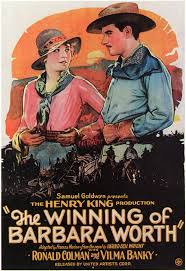 Winning of Barbara Worth (Dir. Henry King, 1926) (Screening format – not known, 89mins) Based on the novel of the same name by Harold Bell Wright this tells the story of two engineers vying for the affections of the adoptive daughter of a landowner. Barbara Worth ( Vilma Banky) wants to help her father, Jefferson Worth (Charles Lane), build a dam on the Colorado River to help irrigate the desert land he owns. The elder Worth gets a loan from a New York banker, who brings with him his stepson, Willard Holmes (Ronald Coleman), an engineer. Local engineer Abe Lee (Gary Cooper, in
 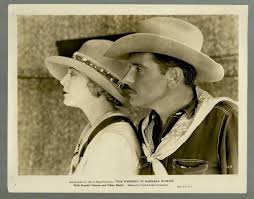 one of his first big roles) and Holmes both fall in love with Barbara. But who gets the girl and does the dam ever get built? This romantic Western is a story of ambition, love, and survival set against the stark beauty of the California desert. At its heart is a breathtaking, edge-of-your-seat flood sequence – a landmark in early cinema – brought to life with the full force of the orchestra live on stage. Expect soaring melodies, dramatic tension, and the magic of classic cinema as you’ve never experienced it before. Whether you’re a film buff, a music lover, or just looking for something totally different –this will be a unique night out at the movies complete with a live symphonic twist. Find out more at imdb.com . With a score composed by Neil Brand and performed live by the Sheffield Philharmonic Orchestra. Link
22 March
The Lodger: A Story of the London Fog (Dir. Alfred Hitchcock, UK, 1927) (Screening format – not known, 91 mins ) In The Lodger, a serial killer known as “The Avenger” is on the loose in London, murdering blonde women. A mysterious man (Ivor Novello) arrives at the house of Mr. and Mrs. Bunting looking for a room to rent. The Bunting’s daughter (June Tripp) is a blonde model and is seeing one of the detectives (Malcolm Keen) assigned to the case. The detective becomes jealous of the lodger and begins to suspect he may be the avenger. Based on a best-selling novel by Marie Belloc Lowndes, first published in 1913, loosely based on the Jack the Ripper murders, The Lodger was Hitchcock’s first thriller, and his first critical and commercial success. Made shortly after his return from Germany, the film betrays the influence of the German expressionist tradition established in such films as The Cabinet of Dr. Caligari (1919) and Nosferatu (1922). Find out more at silentfilm.org With live musical accompaniment by Hugo Max. Harbour Lights Picture House, Southampton Link
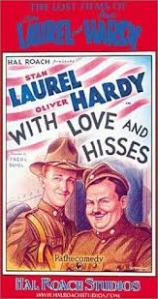 Laurel & Hardy Double Bill First up is the world premiere of the new restoration of With Love and Hisses (Dir. Fred Guiol, US, 1927), with Oliver ‘Babe’ Hardy as a pompous sergeant in the Home Guard, driven to distraction by Stan’s well-meaning but infuriating private. James Finlayson joins the mayhem as Captain Bustle, exasperated by the hapless recruits in his charge. It’s an auspicious early outing for the Laurel-Hardy-
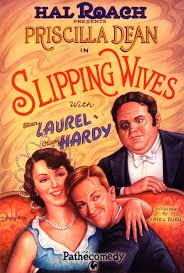 Finlayson trio, whose comedy chemistry, sparked earlier that same year, would flourish across 13 years of filmmaking together. We finish with Slipping Wives (Dir. Fred Guiol, US, 1927) – an early on-screen pairing in which the gormless Stan is enlisted in a society wife’s plot to make her neglectful husband jealous, much to the consternation of Ollie’s bullish butler. Expect farcical mishaps, mistaken identities and pantomime tussles… plus the first instance of Laurel and Hardy in a bed together, one of their trademark scenarios, later affectionately given homage in the sketches Morecambe and Wise. Presented as part of the Hippodrome Silent Film Festival. With live musical accompaniment by Günter Buchwald and Frank Bockius. Hippodrome Cinema, Bo’ness Link
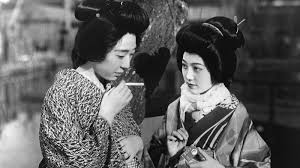 Apart from You (Dir. Mikio Naruse, Jap 1933) (Screening format – not known, 72mins) Mikio Naruse was one of the most important directors and screenwriters in what has become known as the `Golden Age’ of Japanese cinema (which, unlike its Western counterpart, continued to be silent for some time into the 1930s). His focus on `common people’ drama and fusing of traditional and modern Japanese motifs have drawn comparisons with his more celebrated contemporary Yasujirō Ozu. Much of his earlier work, mostly from the 1920s, is considered lost. Apart From You was produced and distributed by Shochiku, the oldest of Japan’s `big four’ production companies. Mitsuko Yoshikawa, the star of Apart From You, was a favoured actress of Ozu,
 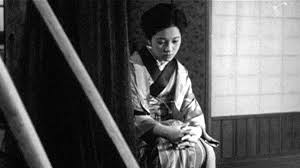 appearing in several of his notable works. One of Japan’s most enduring screen talents, her career spanned more than five decades and over 260 films. By the late 1920s, she was a regular presence at Shochiku, often portraying maternal figures and women of quiet strength. For Apart from You, Naruse turned his camera on the lives of working women, which he would continue to do throughout his long career. In this gently devastating drama, a critical breakthrough for the director, he contrasts the life of an ageing geisha, whose angry teenage son is ashamed of her profession, with that of her youthful counterpart, a lovely young girl resentful of her family for forcing her into a life of ignominy. Find out more at silentfilm.org Presented as part of the Hippodrome Silent Film Festival. With live musical accompaniment by John Sweeney Hippodrome Cinema, Bo’ness Link
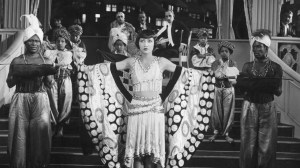 Song (Dir. Richard Eichberg, Ger, 1928) (Screening format – not known, 122mins) Anna May Wong gives one of the most compelling screen performances of her career as a woman tormented by unrequited love.
 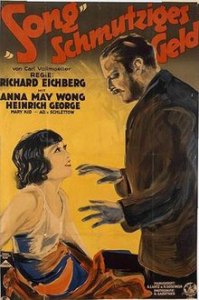 This superb melodrama, a British-German co-production, was designed to appeal to international markets. Set in a bustling Asian port, it centres on a vaudeville artist (Chinese-American star Anna May Wong) whose emotional attachment to a knife-thrower (Heinrich George) is complicated by the reappearance of his former mistress. A lavish treat, with scintillating dance numbers and mesmerising close-ups of Wong. Find out more at berlinale.de. Presented as part of the Hippodrome Silent Film Festival. With live musical accompaniment by Stephen Horne
and Frank Bockius. Hippodrome Cinema, Bo’ness Link
 The Crowd (Dir. King Vidor, US, 1928) (Screening format – not known, 98 mins) One of the last great masterpieces of the silent era, The Crowd combines awe-inspiring camera–work with a thrilling, often tender realism that would influence the great postwar directors, King Vidor’s pioneering film follows John and his wife Mary as they struggle against the de-humanising effects of ordinary life in the city, and strive to set themselves apart from the crowd. More akin to the neo–realism of European films, The Crowd offers a rare morbid view
  of society far removed from the upbeat, lively fare reflected in most American silent films of the era. Vidor won universal acclaim for his innovative methods of illustrating the harsh, impersonal aspects of urban existence. The cinematography by Henry Sharp (much of it shot on location in New York City with hidden cameras) earned enthusiastic praise for his innovative style and amazing camera angles. Under pressure from MGM, Vidor reluctantly filmed an upbeat alternate ending, where John inherits a fortune and ends living in the lap of luxury, but this was thankfully rejected by preview audiences and his more ambivalent finale prevailed. Find out more at afi.com. Presented as part of the Hippodrome Silent Film Festival. With live musical accompaniment by John Sweeney. Hippodrome Cinema, Bo’ness Link
24 March
Finis Terrae (Dir. Jean Epstein, Fr, 1929) (Screening format – not known, 80 Mins) On a tiny island off Brittany two young men eke out a living by harvesting seaweed to burn for prized soda. When one of them cuts his thumb and an infection sets in, it challenges the boundaries of their relationship and galvanises the neighbouring community. Jean Epstein’s timeless narrative about survival in extremis is underpinned by avant-garde techniques and deeply resonant images, such as the recurrent lighthouse or the sight of women sheltering by rocks like giant black birds. Even without sound you can almost hear the ocean. This is a film about the possibilities of cinema and anyone thinking of picking up a camera should watch and be inspired. Find out more at worldscinema.org. With live musical accompaniment by Composer / guitarist Dan Abrahams and French drummer Philippe Boudot. Institut Français Écosse, Edinburgh Link
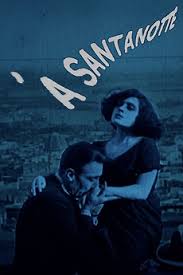 ‘A santanotte (The Holy Night) (Dir. Elvira Notari, It, 1922) (Screening format – not known, 61mins) Based on a popular Neapolitan song, ‘A Santanotte is the earliest extant feature film by Elvira Notari, Italy’s first and most prolific female filmmaker. It tells the story of Nanninella, a waitress in a café, who supports her father Giuseppone with her wages — a drunkard who mistreats her and takes advantage of her kindness. Courted by Tore, the girl would
 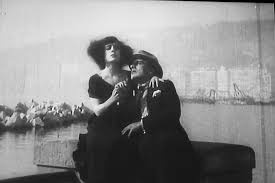 like to become engaged to him, but her father prefers to promise her in marriage to Carluccio, who convinces him by saying that if he accepts him as son-in-law, he will buy him drinks forever. Instigated by Carluccio, Giuseppone has an argument with Tore,
 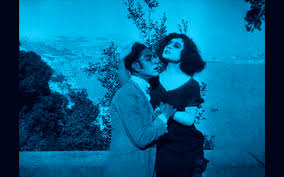 during which he falls into a ravine and dies. Tore is accused of the murder by Carluccio and is arrested… Director Maria Elvira Giuseppa Coda, known as “Elvira Notari” (1875 – 1946), was the first Italian female film director. Her work is considered a forerunner of Neorealism. Of her many productions between 1906 and 1929 — 60 feature films and hundreds of short films and documentaries — very few have survived time, censorship, and an era in which the artistic value of women’s cultural work was not recognized. Find out more at ithankyouarthur.blogspot.com. With live musical accompaniment by Silvia Cignoli. Italian Cultural Institute, London Link
26 March
The Lodger: A Story of the London Fog (Dir. Alfred Hitchcock, UK, 1927) (Screening format – not known, 91 mins ) In The Lodger, a serial killer known as “The Avenger” is on the loose in London, murdering blonde women. A mysterious man (Ivor Novello) arrives at the house of Mr. and Mrs. Bunting looking for a room to rent. The Bunting’s daughter (June Tripp) is a blonde model and is seeing one of the detectives (Malcolm Keen) assigned to the case. The detective becomes jealous of the lodger and begins to suspect he may be the avenger. Based on a best-selling novel by Marie Belloc Lowndes, first published in 1913, loosely based on the Jack the Ripper murders, The Lodger was Hitchcock’s first thriller, and his first critical and commercial success. Made shortly after his return from Germany, the film betrays the influence of the German expressionist tradition established in such films as The Cabinet of Dr. Caligari (1919) and Nosferatu (1922). Find out more at silentfilm.org With live musical accompaniment by Hugo Max. Regal Picture House, Henley Link
 Sherlock Jnr (Dir. Buster Keaton, 1924) (Screening format – not known, 45 mins) In Sherlock Jr, a kindly movie projectionist (Buster Keaton) longs to be a detective. When his fiancée (Kathryn McGuire) is robbed by a local thief (Ward Crane), the poor projectionist is framed for the crime. Using his amateur detective skills, the projectionist follows the thief to the train station – only to find himself locked in a train car. Disheartened, he returns to his movie theatre, where he falls asleep and dreams that he is the great Sherlock Holmes. Although not a popular success on its initial release, the film has come to be recognised as a Keaton classic with its special effects and elaborate stunts making it a landmark in motion picture history. Find out more at silentfilm.org. Presented by Northern Silents. With live musical accompaniment by Jonny Best. , Farsley Link
28 March
The Lodger: A Story of the London Fog (Dir. Alfred Hitchcock, UK, 1927) (Screening format – not known, 91 mins ) In The Lodger, a serial killer known as “The Avenger” is on the loose in London, murdering blonde women. A mysterious man (Ivor Novello) arrives at the house of Mr. and Mrs. Bunting looking for a room to rent. The Bunting’s daughter (June Tripp) is a blonde model and is seeing one of the detectives (Malcolm Keen) assigned to the case. The detective becomes jealous of the lodger and begins to suspect he may be the avenger. Based on a best-selling novel by Marie Belloc Lowndes, first published in 1913, loosely based on the Jack the Ripper murders, The Lodger was Hitchcock’s first thriller, and his first critical and commercial success. Made shortly after his return from Germany, the film betrays the influence of the German expressionist tradition established in such films as The Cabinet of Dr. Caligari (1919) and Nosferatu (1922). Find out more at silentfilm.org With live musical accompaniment by Hugo Max. Tyneside Cinema, Newcastle Link
29 March
 Mantrap (Dir. Victor Fleming, US, 1926) (Screening format – not known, 71mins ) Clara Bow, the quientisential ‘It’ girl, certainly flaunts ‘It’ in this masterpiece of Roaring Twenties flapper comedy. In the film, country-dwelling Joe (played by Edinburgh-born Ernest Torrence) heads to the big city seeking female company where he encounters flirtatious beauty Alverna (Bow). Alverna makes eyes at Joe (“How she vamps with her lamps,” wrote the Variety critic of the day) and Joe is instantly smitten – whisking her home to the backwoods town of Mantrap as his wife.
  But small town life doesn’t suit Alverna, and Joe soon learns he has taken on more than he had bargained for. By 1926 Clara Bow had already appeared in more than two dozen films, but Mantrap would prove to be her breakout vehicle, and it’s not hard to see why. The film is based on a prestigious source, a novel by celebrated American author Sinclair Lewis, for which Paramount paid $50,000 (compared with $750 a week to Bow). Sinclair Lewis would be awarded the Nobel Prize in Literature four years later, no doubt in spite of, rather than because of his novel, but while the novel may now be largely forgotten, the film, and particularly Clara Bow’s performance will live forever. Find out more at silentfilm.org With live musical accompaniment (?). Palace Cinema, Broadstairs Link
31 March
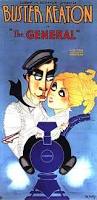 The General (Dir. Buster Keaton/Clyde Bruckman, 1926) (Screening format – not known, 75mins) Widely considered one of the greatest films ever made and one of the most revered comedies of the silent era, Buster Keaton’s effortless masterpiece sees hapless Southern railroad engineer Johnny Gray (Keaton) facing off against Union soldiers during the American Civil War. When Johnny’s fiancée, Annabelle Lee (Marion Mack), is accidentally taken away while on a train stolen by Northern forces, Gray pursues the soldiers, using various modes of transportation in comic action scenes that highlight Keaton’s boundless, innovative wit and joyful, lighthearted dexterity, to reclaim the train and thereby save the South. Find out more at busterkeaton.com . With live musical accompaniment by Meg Morley. Pound Arts Centre, Corsham Link
 Silentfilmcalendar.org