



May
1 May
 Charley’s Aunt (Dir. Scott Sidney, US, 1925) (Screening format – not known, 80mins) If his beautiful young wards Kitty Verdun and niece Amy Spettigue marry, aging guardian Stephen Spettigue loses his income. He is determined to derail their romance at all costs and whisks the girls off to Scotland, out of the reach of their suitors, Jack Chesney and Charley Wykeham. To the rescue comes
  pal Lord Fancourt Babberly (Syd Chaplin) – ‘Babbs’ – who agrees to dress in drag and assume the identity of Charley’s aunt Donna Lucia, a filthy rich Brazilian heiress. Under the premise of a visit from Charley’s aunt, the boys are able to gain an invitation to visit Scotland, where they plan to distract Spettigue, and propose to their
  sweethearts. The plan is ruined when Amy’s uncle learns of Dona Lucia’s millions, and decides he must have ‘her’ for his own. Sydney Chaplin, the older half-brother of Hollywood legend Charlie Chaplin, enjoyed screen success in Keystone comedies, most notably A Submarine Pilot (1915). He quit acting to successfully negotiate Charlie’s first million dollar contract in 1916 but reappeared on the screen in the 1920s in a string of comedies including The Perfect Flapper (1924), Charley’s Aunt (1925) and The Better Ole (1926). Find out more at moviessilently.com Presented by the Kennington Bioscope. With live musical accompaniment. Cinema Museum, Lambeth. Link
4 May
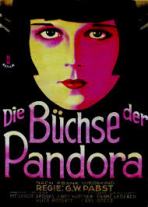 Pandora’s Box (Dir. G W Pabst, Ger, 1929) (Screening format –digital, 135mins) Based on two plays by the German author Frank Wedekind, Erdgeist (Earth Spirit, 1895), which Pabst himself had directed for the stage, and Die Büchse der Pandora (Pandora’s Box, 1904), the silent drama follows the tumultuous life of the showgirl Lulu whose unselfconscious sexuality brings about the ruin of all those that fall for her and eventually her own. In a daring move, Pabst chose a little known American
  actress over the more experienced Marlene Dietrich for the part of Lulu, a decision that made the young Louise Brooks an international star. Her innocent looks paired with her natural erotic allure and sense of movement – Brooks was also a dancer – perfectly matched Pabst’s idea of his heroine as unwitting seductress. Subjected to cuts to eliminate some of its “scandalous” content and unfavourably reviewed by critics at the time, it is now considered one of the boldest and most modern films of the Weimar era highlighting Pabst’s command of camera language and montage. Find out more at silentlondon.co.uk . With recorded Peer Raben score. BFI Southbank, London Link
5 May
 Sherlock Jnr (Dir. Buster Keaton, 1924) (Screening format – not known, 45 mins) In Sherlock Jr, a kindly movie projectionist (Buster Keaton) longs to be a detective. When his fiancée (Kathryn McGuire) is robbed by a local thief (Ward Crane), the poor projectionist is framed for the crime. Using his amateur detective skills, the projectionist follows the thief to the train station – only to find himself locked in a train car. Disheartened, he returns to his movie theatre, where he falls asleep and dreams that he is the great Sherlock Holmes. Although not a popular success on its initial release, the film has come to be recognised as a Keaton classic with its special effects and elaborate stunts making it a landmark in motion picture history. Find out more at silentfilm.org. With live musical accompaniment by Hugo Max. Prince Charles Cinema, London Link
10 May
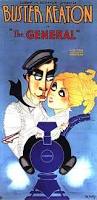 The General (Dir. Buster Keaton/Clyde Bruckman, 1926) (Screening format – not known, 75mins) Widely considered one of the greatest films ever made and one of the most revered comedies of the silent era, Buster Keaton’s effortless masterpiece sees hapless Southern railroad engineer Johnny Gray (Keaton) facing off against Union soldiers during the American Civil War. When Johnny’s fiancée, Annabelle Lee (Marion Mack), is accidentally taken away while on a train stolen by Northern forces, Gray pursues the soldiers, using various modes of transportation in comic action scenes that highlight Keaton’s boundless, innovative wit and joyful, lighthearted dexterity, to reclaim the train and thereby save the South. Find out more at busterkeaton.com . With live piano accompaniment by Neil Brand. Station Hall, Herne Hill Link
11 May
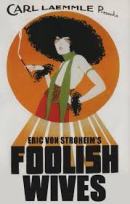 Foolish Wives (Dir. Erich von Stroheim, US, 1922) (Screening format – not known, 117mins) In Stroheim’s 1922 film a con artist masquerades as Russian nobility and attempts to seduce the wife of an American diplomat. When released in 1922, the film was the most expensive film made at that time, and billed by Universal
  Studios as the “first million-dollar movie” to come out of Hollywood. Originally, von Stroheim intended the film to run anywhere between 6 and 10 hours, and be shown over two evenings, but Universal executives opposed this idea. The studio bosses cut the film drastically before the release date. Find out more at sensesofcinema.com. Presented as part of the Maynooth University Arts And Minds Festival. With live musical accompaniment by Stephen Horne. Maynooth University, Eire Link
12 May
 Safety Last (Dir. Fred C Newmeyer/Sam Taylor, US, 1923) (Screening format – not known, 73mins) A boy (Harold Lloyd) moves to New York City to make enough money to support his loving girlfriend (Mildred Davis), but soon discovers that making it in the big city is harder than it looks. When he hears that a store manager will pay $1,000 to anyone who can draw people to his store, he convinces his friend, the “human fly,” (Bill Strother) to climb the building and split the profit with him. But when his pal gets in trouble with the law, he must complete the crazy stunt on his own. The image of Harold Lloyd hanging desperately from the hands of a skyscraper clock during Safety Last! is one of the great icons of film history (although it was achieved with a certain amount of film trickery) and this remains one of the best and best loved comedies of the silent era. Find out more at rogerebert.com. With live musical accompaniment by Stephen Horne. Irish Film Institute, Dublin Link
14 May
 Hellbound Train (Dir. Eloyce and James Gist, US, 1930) (Screening format – not known, 50mins) The film is the work of self-taught filmmakers James and Eloyce Gist, African-American evangelists who employed cinema as a tool for their travelling ministry. Their surreal visual allegories were screened in churches and meeting halls, accompanied by a sermon and the passing of a collection plate. Rather than having a linear story, the film is instead a catalogue of iniquity, a car-by-car
 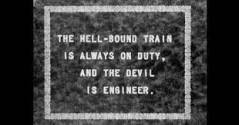 dramatization of the sins of the Jazz Age (including gambling, dancing, alcohol, and the mistreatment of animals), presided over by a horned devil, culminating in a colossal derailment (a model train tossed into a bonfire). Admittedly, the production values are minimal—being shot with hand-held 16mm equipment with natural light, and without audio—but the surreality of it all makes for a compelling viewing experience, and shows that renegade, visionary filmmakers can be found in the most unexpected places. Findout more at onlysky.media Presented as part of the Flatpack Film Festival. With live jazz accompaniment by swaampcat (Ebunoluwa Adepoju). Lyttelton Theatre , Birmingham Link
17 May
Pandora’s Box (Dir. G W Pabst, Ger, 1929) (Screening format –digital, 135mins) Based on two plays by the German author Frank Wedekind, Erdgeist (Earth Spirit, 1895), which Pabst himself had directed for the stage, and Die Büchse der Pandora (Pandora’s Box, 1904), the silent drama follows the tumultuous life of the showgirl Lulu whose unselfconscious sexuality brings about the ruin of all those that fall for her and eventually her own. In a daring move, Pabst chose a little known American actress over the more experienced Marlene Dietrich for the part of Lulu, a decision that made the young Louise Brooks an international star. Her innocent looks paired with her natural erotic allure and sense of movement – Brooks was also a dancer – perfectly matched Pabst’s idea of his heroine as unwitting seductress. Subjected to cuts to eliminate some of its “scandalous” content and unfavourably reviewed by critics at the time, it is now considered one of the boldest and most modern films of the Weimar era highlighting Pabst’s command of camera language and montage. Find out more at silentlondon.co.uk . With recorded Peer Raben score. BFI Southbank, London Link
18 May
 Action! The (not so silent) Silent Movie Show It’s ‘Lights, Camera, Action!’ as the musicians of The Lucky Dog Picturehouse take over Wilton’s for this special family show. A treat for any age, expect honky horns and hilarity with cartoons and comedies from over 100 years ago! Experience a trip to the cinema 1920s-style, with live accompaniment and a behind-the-scenes look at some of the bizarre and bonkers musical instruments that bring film alive. Presented by The Lucky Dog Picturehouse. With live musical accompaniment. Wilton’s Music Hall, London Link
 Girl Shy (Dir. Fred Newmeyer and Sam Taylor, US, 1924) (Screening format – not known, 89mins) He may be completely inept around girls in real life, but that doesn’t stop poor tailor’s apprentice Harold Meadows (Harold Lloyd) from publishing “The Secret of Making Love,” his guidebook on how to woo women.
 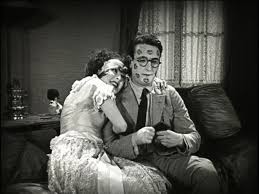 When romance finally does come along—in the form of a wealthy, already-engaged heiress (Jobyna Ralston)—can this bumbling boy put his own advice into practice? Lloyd’s first independent feature (following his association with Hal Roach) features an epic, two-reel chase climax that may be the comedian’s finest. Find out more at moviessilently.com Presented by The Lucky Dog Picturehouse. With live musical accompaniment. Wilton’s Music Hall, London Link
19 May
 The Adventures of Prince Achmed (Dir. Lotte Reiniger , Ger, 1926) (Screening format – not known, 65mins) The first feature-length animation in film history, masterminded by Lotte Reiniger and hand-tinted frame by frame. Based on
  ‘The Arabian Nights’, the film tells the epic tale of Prince Achmed, who is tricked into mounting a magical flying horse by a wicked sorcerer. The horse carries Achmed off on a series of adventures, over the course of which he joins forces with young Aladdin, battles ogres and monsters and romances the beautiful Princess Peri Banu.Find out more at wikipedia.org . With live harp accompaniment by Elizabeth-Jane Baldry. The Engine Room, Bridgewater. Link
 Show People (Dir. King Vidor, US, 1928) (Screening format – not known, 79mins) This delightful King Vidor comedy features Marion Davies (also the film’s producer) as Peggy Pepper, an aspiring young actress fascinated by the allure of Hollywood. After meeting Billy Boone, the slapstick comedy actor played by
  William Haines, Peggy begins her journey through the strange world of the dream factory. Davies is a knockout as the aspiring actress, but will her emerging ego destroy her career or will she realize who her real friends are? Look out for cameo appearances by Charlie Chaplin, Douglas Fairbanks, William S. Hart and King Vidor himself… as well as the real Marion Davies!! Find out more at moviessilently.com With live organ accompaniment by Donald Mackenzie. Musical Museum, Brentford Link
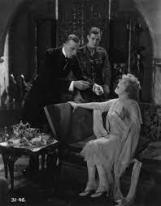 Vagabond Queen (Dir. Geza von Bolvary, UK, 1929) + Long Fliv The King (Dir. Leo McCarey, US, 1926) (Screening Format – 35mm, 94/24 mins) Before we had the universes of Star Wars, DC, Marvel etc, there was the fantasy land of Ruritania, a make-believe central-European kingdom in which princesses were imperilled
  by glamorous but deadly pretenders to the throne, and where mistaken identity was the norm. The already ridiculous Ruritania was ripe for parody. This merciless and fun-filled example was impressively directed by Geza von Bolvary and gives full rein to the comedic talents of Betty Balfour and a spiky Ernest Thesiger. Find out more at slapstick.org.uk Long Fliv The King features the hilarious Charley Chase, with Oliver Hardy and Max Davidson. Another fine spoof of Ruritanian life. Introduced by Bryony Dixon, BFI Silent Film Curator. With live musical accompaniment. BFI Southbank, London Link
21 May
 The Assassination of the Duke of Guise (Dir. Charles Le Bargy and André Calmettes, Fr, 1908) (Screening format – not known, 19mins) Made by the Comédie Française for the Société Film d’Art, which was formed for the express purpose of transferring prestigious stage plays
 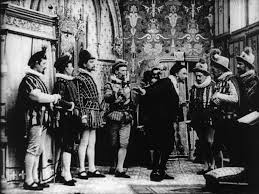 starring famous performers, the film depicts the events of the day in 1588 when King Henry III (played by co-director Le Bargy) summoned his powerful rival, Duke Henri de Guise, to his chambers at the Château de Blois and had him brutally murdered. The film is notable for having one of the earliest documented original film scores, composed by Camille Saint-Saëns. Find out more at moviessilently.com . With live musical accompaniment by Ensemble 360. Crucible, Sheffield Link
22 May
 The Phantom Carriage (Dir. Victor Sjöström, Swe, 1921) (Screening format – not known, 107mins) The last person to die on New Year’s Eve before the clock strikes twelve is doomed to take the reins of Death’s chariot and work tirelessly collecting fresh souls for the next year. So says the legend that drives The Phantom Carriage (Körkarlen), directed by the father of Swedish cinema, Victor Sjöström. The story, based on a novel by Nobel Prize winner Selma Lagerlöf, concerns an alcoholic, abusive
 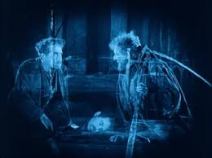 ne’er-do-well (Sjöström himself) who is shown the error of his ways, and the pure-of-heart Salvation Army sister who believes in his redemption. This extraordinarily rich and innovative silent classic (which inspired Ingmar Bergman to make movies) is a Dickensian ghost story and a deeply moving morality tale, as well as a showcase for groundbreaking special effects. Find out more at lukemcgrath.co.uk Presented by the Kennington Bioscope. With live musical accompaniment. Cinema Museum, Lambeth. Link
 Neil Brand Presents Laurel And Hardy After the national success of his long-running show ‘Neil Brand Presents Buster Keaton’, the composer/writer/broadcaster/musician returns with an all-new show about the immortal comedy duo recently portrayed in the hit film ‘Stan and Ollie’. Fully illustrated with stills, clips (both silent and sound) and Neil’s superlative piano accompaniment and culminating in two of the Boys’ best silent short films, Big Business and Liberty, this is a show that promises gales of laughter throughout, as well as getting under the skin of two warm, funny men who continue to make the world laugh when it needs it most. With live piano accompaniment by Neil Brand. New Theatre Royal, Portsmouth Link
26 May
 Silent Piano – An unmissable chance to see three great silent comedies – Big Business, Easy Street and One Week
  starring Laurel and Hardy, Charlie Chaplin and Buster Keaton – as they would have been enjoyed 100 years ago. Presented as part of the Ludlow Piano Festival. With live musical accompaniment from Stephen Horne on piano and Martin Pyne on percussion. Assembly Halls, Ludlow Link
27 May
Pandora’s Box (Dir. G W Pabst, Ger, 1929) (Screening format –digital, 135mins) Based on two plays by the German author Frank Wedekind, Erdgeist (Earth Spirit, 1895), which Pabst himself had directed for the stage, and Die Büchse der Pandora (Pandora’s Box, 1904), the silent drama follows the tumultuous life of the showgirl Lulu whose unselfconscious sexuality brings about the ruin of all those that fall for her and eventually her own. In a daring move, Pabst chose a little known American actress over the more experienced Marlene Dietrich for the part of Lulu, a decision that made the young Louise Brooks an international star. Her innocent looks paired with her natural erotic allure and sense of movement – Brooks was also a dancer – perfectly matched Pabst’s idea of his heroine as unwitting seductress. Subjected to cuts to eliminate some of its “scandalous” content and unfavourably reviewed by critics at the time, it is now considered one of the boldest and most modern films of the Weimar era highlighting Pabst’s command of camera language and montage. Find out more at silentlondon.co.uk . With live musical accompaniment. BFI Southbank, London Link
30 May
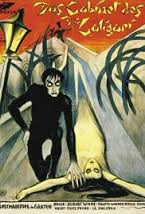 Cabinet of Dr Caligari (Dir. Robert Wiene, 1920) (Screening format – not known, 77 mins) In the village of Holstenwall, fairground hypnotist Dr Caligari (Werner Krauss) puts on show a somnambulist called Cesare (Conrad Veidt) who has been asleep for twenty three years. At night, Cesare walks the streets murdering people on the doctor’s orders. A student (Friedrich Feher) suspects Caligari after a friend is found dead and it transpires that the doctor is the director of a lunatic asylum. Fueled by the pessimism and gloom of post-war Germany, the sets by Hermann Warm stand unequaled as a shining example of Expressionist design. Find out more at wikipedia.org. With live piano accompaniment by Hugo Max. Prince Charles Cinema, London Link
31 May
Pandora’s Box (Dir. G W Pabst, Ger, 1929) (Screening format –digital, 135mins) Based on two plays by the German author Frank Wedekind, Erdgeist (Earth Spirit, 1895), which Pabst himself had directed for the stage, and Die Büchse der Pandora (Pandora’s Box, 1904), the silent drama follows the tumultuous life of the showgirl Lulu whose unselfconscious sexuality brings about the ruin of all those that fall for her and eventually her own. In a daring move, Pabst chose a little known American actress over the more experienced Marlene Dietrich for the part of Lulu, a decision that made the young Louise Brooks an international star. Her innocent looks paired with her natural erotic allure and sense of movement – Brooks was also a dancer – perfectly matched Pabst’s idea of his heroine as unwitting seductress. Subjected to cuts to eliminate some of its “scandalous” content and unfavourably reviewed by critics at the time, it is now considered one of the boldest and most modern films of the Weimar era highlighting Pabst’s command of camera language and montage. Find out more at silentlondon.co.uk . With recorded Peer Raben score. BFI Southbank, London Link
 Silentfilmcalendar.org