
May
1 May
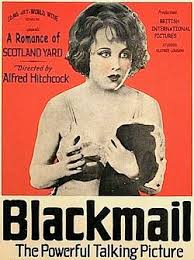 Blackmail (Dir. Alfred Hitchcock, 1929) (Screening format – not known, 84mins) Alice White is the daughter of a shopkeeper in 1920’s London. Her boyfriend, Frank Webber is a Scotland Yard detective who seems more interested in police work than in her. Frank takes Alice out one night, but she has secretly arranged to meet another man. Later that night Alice agrees to go back to his flat to see his studio. The man has other ideas and as he tries to rape Alice, she defends herself and kills him with a bread knife. When the body is discovered, Frank is assigned to the case, he quickly determines that Alice is the killer, but so has someone else and blackmail is threatened. Alfred Hitchcock’s sinister, suspenseful tale of crime and romance is one of the last British silent films to be made (a sound version, which involved some re-shooting and dubbing and is now famous for its ‘KNIFE!!!’ scene, was subsequently released). With his traditional cameo appearance in the first reel, to a spectacular moonlit chase through the British Museum in the final reel, Blackmail is a classic thriller from the Master of Suspense. Find out more at screenonline.org.uk Presented by Northern Silents. With live musical accompaniment by Jonny Best. Link
6 May
 Phantom Of The Opera (Dir. Rupert Julian, 1925) (Screening format – not known, 103mins) A title that needs no introduction, The Phantom of the Opera has spawned many remakes, remasters and sequels. This original film version, produced with moments of early Technicolour, sees Lon Chaney, the ‘Man of a Thousand Faces’ perform one of his most iconic roles. His ghastly make-up and outrageous performance made this title a benchmark in the American silent film era. The film was a critical and commercial success upon release, and still stands as an important film in cinematic history to this day, with press quotes from the time labeling the film an ‘ultra-fantastic melodrama’ (New York Times), ‘produced on a stupendous scale’ (Moving Picture World) and ‘probably the greatest inducement to nightmare that has yet been screened’ (Variety). The mysterious phantom (Lon Chaney) is a vengeful composer living in the catacombs under the Paris Opera House, determined to promote the career of the singer he loves (Mary Philbin). Famed for the phantom’s shock unmasking, incredible set designs and the masked ball sequence, it still packs a punch. Find out more at wikipedia.org Presented by Northern Silents. With live musical accompaniment by Jonny Best. Link
7 May
 The General (Dir. Buster Keaton/Clyde Bruckman, 1926) (Screening format – not known, 75mins) Widely considered one of the greatest films ever made and one of the most revered comedies of the silent era, Buster Keaton’s effortless masterpiece sees hapless Southern railroad engineer Johnny Gray (Keaton) facing off against Union soldiers during the American Civil War. When Johnny’s fiancée, Annabelle Lee (Marion Mack), is accidentally taken away while on a train
 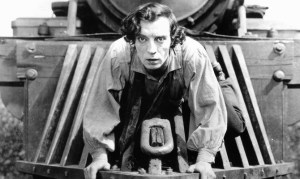 stolen by Northern forces, Gray pursues the soldiers, using various modes of transportation in comic action scenes that highlight Keaton’s boundless, innovative wit and joyful, lighthearted dexterity, to reclaim the train and thereby save the South. Find out more at busterkeaton.com . Presented as part of the Chipping Campden Literary Festival. Preceded by a discussion between Professor Lisa Stein Haven and Meg Sanders on the early years of Keaton’s life and career. With live musical accompaniment by Stephen Horne. Cidermill Theatre, Chipping Campden Link
 Phantom Of The Opera (Dir. Rupert Julian, 1925) (Screening format – not known, 103mins) A title that needs no introduction, The Phantom of the Opera has spawned many remakes, remasters and sequels. This original film version, produced with moments of early Technicolour, sees Lon Chaney, the ‘Man of a Thousand Faces’ perform one of his most iconic roles. His ghastly make-up and outrageous performance made this title a benchmark in the American
  silent film era. The film was a critical and commercial success upon release, and still stands as an important film in cinematic history to this day, with press quotes from the time labelling the film an ‘ultra-fantastic melodrama’ (New York Times), ‘produced on a stupendous scale’ (Moving Picture World) and ‘probably the greatest inducement to nightmare that has yet been screened’ (Variety). The mysterious phantom (Lon Chaney) is a vengeful composer living in the catacombs under the Paris Opera House, determined to promote the career of the singer he loves (Mary Philbin). Famed for the phantom’s shock unmasking, incredible set designs and the masked ball sequence, it still packs a punch. Find out more at wikipedia.org With live musical accompaniment by Minima. Key Theatre, Peterborough Link
8 May
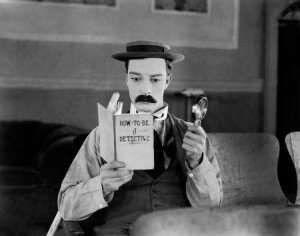 Sherlock Jnr (Dir. Buster Keaton, 1924) + short (Screening format – not known, 45/20 mins) In Sherlock Jr, a kindly movie projectionist (Buster Keaton) longs to be a detective. When his fiancée (Kathryn McGuire) is robbed by a local thief (Ward Crane), the poor projectionist is framed for the crime. Using his amateur detective skills, the projectionist follows the thief to the train station – only to find himself locked in a train car. Disheartened, he returns to his movie theatre, where he falls asleep and dreams that he is the great Sherlock Holmes. Although not a popular success on its initial release, the film has come to be recognised as a Keaton classic with its special effects and elaborate stunts making it a landmark in motion picture history. Find out more at silentfilm.org. With live musical accompaniment by Tom Horton. The Cut Arts Centre, Halesworth Link
 Nosferatu (Dir. F W Murnau, 1922) (Screening format – not known, 96mins) A German Expressionist horror masterpiece starring Max Shreck as the vampire Count Orlok. The film was an unauthorised adaption of Bram Stoker’s ‘Dracula’ with names and other details changed because the studio could not obtain the rights to the novel. Stoker’s heirs sued over the adaption and a court ruling ordered that all copies of the film be destroyed. However, a few prints survived and the film came to be regarded as an inspirational master work of the cinema. In the film, Count Orlok travels across Europe leaving a trail of death in his wake. Brilliantly eerie, with imaginative touches which later adaptions never achieved. Find out more at wikipedia.org With live musical accompaniment by Hugo Max. Picturehouse @ Fact, Liverpool Link
Phantom Of The Opera (Dir. Rupert Julian, 1925) (Screening format – not known, 103mins) A title that needs no introduction, The Phantom of the Opera has spawned many remakes, remasters and sequels. This original film version, produced with moments of early Technicolour, sees Lon Chaney, the ‘Man of a Thousand Faces’ perform one of his most iconic roles. His ghastly make-up and outrageous performance made this title a benchmark in the American silent film era. The film was a critical and commercial success upon release, and still stands as an important film in cinematic history to this day, with press quotes from the time labelling the film an ‘ultra-fantastic melodrama’ (New York Times), ‘produced on a stupendous scale’ (Moving Picture World) and ‘probably the greatest inducement to nightmare that has yet been screened’ (Variety). The mysterious phantom (Lon Chaney) is a vengeful composer living in the catacombs under the Paris Opera House, determined to promote the career of the singer he loves (Mary Philbin). Famed for the phantom’s shock unmasking, incredible set designs and the masked ball sequence, it still packs a punch. Find out more at wikipedia.org With live musical accompaniment by Minima. St Ives Library, St Ives Link
9 May
Phantom Of The Opera (Dir. Rupert Julian, 1925) (Screening format – not known, 103mins) A title that needs no introduction, The Phantom of the Opera has spawned many remakes, remasters and sequels. This original film version, produced with moments of early Technicolour, sees Lon Chaney, the ‘Man of a Thousand Faces’ perform one of his most iconic roles. His ghastly make-up and outrageous performance made this title a benchmark in the American silent film era. The film was a critical and commercial success upon release, and still stands as an important film in cinematic history to this day, with press quotes from the time labelling the film an ‘ultra-fantastic melodrama’ (New York Times), ‘produced on a stupendous scale’ (Moving Picture World) and ‘probably the greatest inducement to nightmare that has yet been screened’ (Variety). The mysterious phantom (Lon Chaney) is a vengeful composer living in the catacombs under the Paris Opera House, determined to promote the career of the singer he loves (Mary Philbin). Famed for the phantom’s shock unmasking, incredible set designs and the masked ball sequence, it still packs a punch. Find out more at wikipedia.org With live musical accompaniment by Minima. March Library, March. Link
10 May
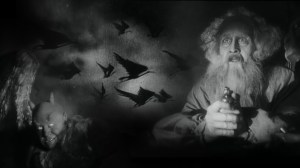 Faust (Dir. F W Murnau, Ger, 1926) (Screening format – not known, 107mins) Like Fritz Lang, F.W. Murnau is a towering figure of Weimar cinema, thanks to films such as Nosferatu (1922), The Last Laugh (1924), and, after moving to America, Sunrise: A Song of Two Humans (1927). Murnau’s approach to framing and his use of liberating camera movements suggested to subsequent filmmakers a new way of using the pictorial space. Faust, the director’s final German film, draws on sources including Marlowe and Goethe in service of the story of a man who makes a deal with the devil. Murnau’s Faust was the most technically elaborate and expensive production undertaken by Ufa until it was surpassed by Metropolis the following year. Filming took six months, at a cost of 2 million marks, only half of which was recovered at the box office. According to many film historians, Faust seriously influenced subsequent studio shooting and special effects techniques. Murnau used two cameras, each filming multiple shots; with many scenes requiring multiple takes. rogerebert.com. With live musical accompaniment by Hugo Max. Ultimate Picture Palace, Oxford Link
11 May
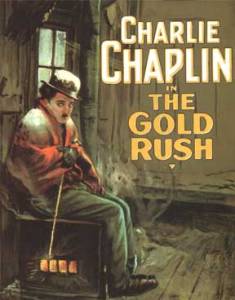 The Goldrush (Dir. Charles Chaplin, US, 1925) (Screening format – not known, 95mins) In this classic silent comedy, the Little Tramp (Charles Chaplin) heads north to join in the Klondike gold rush. Trapped in a small cabin by a blizzard, the Tramp is forced to share close quarters with a successful prospector (Mack Swain) and a fugitive (Tom Murray). Eventually able to leave the cabin, he falls for a lovely barmaid (Georgia Hale), trying valiantly to win her affections. When the prospector needs help locating his claim, it appears the Tramp’s fortunes may change. It is today one of Chaplin’s most celebrated works, and he himself declared several times that it was the film for which he most wanted to be remembered. The film contains some of Chaplin’s most iconic sequences, such as the eating of a boot and the dance of the bread rolls. Find out more at moviessilently.com . With live organ accompaniment by Donald MacKenzie. Penistone Paramount, Penistone Link
13 May
Faust (Dir. F W Murnau, Ger, 1926) (Screening format – not known, 107mins)Like Fritz Lang, F.W. Murnau is a towering figure of Weimar cinema, thanks to films such as Nosferatu (1922), The Last Laugh (1924), and, after moving to America, Sunrise: A Song of Two Humans (1927). Murnau’s approach to framing and his use of liberating camera movements suggested to subsequent filmmakers a new way of using the pictorial space. Faust, the director’s final German film, draws on sources including Marlowe and Goethe in service of the story of a man who makes a deal with the devil. Murnau’s Faust was the most technically elaborate and expensive production undertaken by Ufa until it was surpassed by Metropolis the following year. Filming took six months, at a cost of 2 million marks, only half of which was recovered at the box office. According to many film historians, Faust seriously influenced subsequent studio shooting and special effects techniques. Murnau used two cameras, each filming multiple shots; with many scenes requiring multiple takes. Find out more at rogerebert.com. With live musical accompaniment by Hugo Max. Little Theatre Picturehouse, Bath Link
15 May
Nosferatu (Dir. F W Murnau, 1922) (Screening format – not known, 96mins) A German Expressionist horror masterpiece starring Max Shreck as the vampire Count Orlok. The film was an unauthorised adaption of Bram Stoker’s ‘Dracula’ with names and other details changed because the studio could not obtain the rights to the novel. Stoker’s heirs sued over the adaption and a court ruling ordered that all copies of the film be destroyed. However, a few prints survived and the film came to be regarded as an inspirational master work of the cinema. In the film, Count Orlok travels across Europe leaving a trail of death in his wake. Brilliantly eerie, with imaginative touches which later adaptions never achieved. Find out more at wikipedia.org With live musical accompaniment by Hugo Max. Harbour Lights, Southampton Link
18 May
 100 Years Of Film As Art: Celebrating The Centenery of The Film Society. It’s 100 years since a group of London cinephiles founded The Film Society. From its first screenings in October of that year, the society was hugely influential – expanding the appreciation of film as an art form, sparking-off the establishment of UK-wide film societies and providing a forum for the idea of developing the film archive. To celebrate the centenary, here are three eye-opening avant-garde films, all filmed in Paris. This programme is made up of prints deriving directly from materials acquired by the Film Society in the 1920s and 30s, sent for safe-keeping to the BFI National Archive during the Second World War. The films are; Menilmontant (Dir. Dimitri Kirsanoff, 1926) (Screening format – 35mm, 38 mins) Described as “une oevre presque parfaite” (“a nearly perfect work”) its story is told entirely in images, without the use of explanatory intertitles; Kirsanoff was among the very rare filmmakers of the silent era to attempt
  this. The film makes use of techniques such as montage, hand-held camera, ultra-rapid montage, and superposition. For more info see seul-le-cinema.blogspot.co.uk ; Entr’acte (Dir. René Clair, Fr, 1924) (Screening format – 35mm, 22mins) A classic of avant-garde cinema, Entr’acte was made as an intermission piece for a Dada theater work that premiered in Paris The individual shots and the connections between them resulted in what Clair described as “visual babblings.” Key figures of the contemporary Parisian art appear in the film in absurd comic cameos, including Man Ray and Marcel Duchamp. Find out more at
  openculture.com, and: Rien que les heures(Dir. Alberto Cavalcanti. Fr, 1926) (Screening format – 35mm, 40mins) A ground-breaking experimental silent film showing the life of Paris through one day, a film that played an important part in the development of the city symphony genre. Avoiding some of the grander images of later city symphonies, the film focuses more on the underbelly of the city with a series of unforgettable images, such as a doll in the gutter, rats eating leftovers, and a dead cat lying in the street with a homeless man. Find out more at mimichootings.wordpress.com. Introduced by BFI National Curator Bryony Dixon. With live musical accompaniment. BFI Southbank, London Link
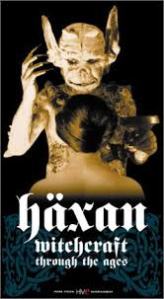 Haxan: Witchcraft Through the Ages (Dir. Benjamin Christensen, Swe., 1922) ( Screening format – not known, 105mins) A fictionalized documentary with dramatic reconstructions showing the evolution of witchcraft, from its pagan roots to its confusion with hysteria in modern (1922) Europe. Based partly on Christensen’s study of the Malleus Maleficarum, a 15th-century German guide for inquisitors,
  Häxan is a study of how superstition and the misunderstanding of diseases and mental illness could lead to the hysteria of the witch hunts. Although it won acclaim in Denmark and Sweden when first released, Haxan was heavily censored or banned outright in many countries. But it is now considered to be Christensen’s finest work, a witches’ brew of the scary, the grotesque, and the darkly humorous. Find out more at thedevilsmanor.blogspot.co.uk . With live musical accompaniment by Hugo Max. Prince Charles Cinema, London Link
21 May
 Au Bonheur des Dames (aka Ladie’s Paradise) (Dir. Julien Duvivier, Fr, 1930) (Screening format – not known, 90mins) Set within the glamorous world of a Parisian department store, Julien Duvivier’s long-forgotten masterpiece was one of the last silent films to be made in France and is ripe for rediscovery. Dita Parlo, a German actress who later appeared in Jean Vigo’s L’Atalante (1934) and Jean Renoir’s The Grand Illusion (1937), plays a wide-eyed innocent from the country who is relocated to the city of lights and is lured away from her
 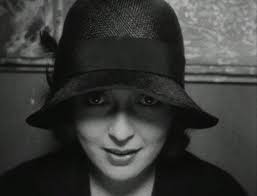 uncle’s small shop by the richness of the department store. While Duvivier’s film celebrates the richness of Parisian life, it is, at the same time, a damning portrait of rampant consumerism and the demise of small, local shops. Directed by the iconic director of future celebrated French classics such as La belle équipe (1936), Pépé le Moko (1936) and Un carnet de bal (1937), Julien Duvivier’s breathtaking Au Bonheur des Dames will leave you laughing, crying and asking for more. Find out more at silentfilm.org. Presented by the Kennington Bioscope. With live musical accompaniment. Cinema Museum, Lambeth Link
23 May
 Toll Of The Sea (Dir. Chester M Franklin, US, 1922) (Screening format – not known, 48mins) A popular melodrama based on Puccini’s “Madame Butterfly”, The Toll of the Sea is not only the first-ever, two-strip Technicolor film, but also Anna May Wong’s first leading role. Interestingly the screenplay is by another leading woman of early 20th century cinema, Frances Marion. In this tragic tale of Western exploitation, an American man in China falls in love with and marries a young Asian woman named Lotus Flower (Anna May Wong). After he leaves her to return to the United States, Lotus Flower gives birth to a son, whom she dotingly raises on her own. When the man later returns to China with his new American wife Elsie can anything other than tragedy unfold. Find out more at silentfilm.org Introduction by Isabella Coraça. With live musical accompaniment by Stephen Horne. Garden Cinema, London Link
25 May
 Steamboat Bill Jr (Dir. Buster Keaton/Charles Reisner, US, 1928) (Screening format – not known, 71 mins) In Steamboat Bill Jr a crusty river boat captain hopes that his long departed son’s return will help him compete with a business rival. Unfortunately, William Canfield Jnr (Buster Keaton) is an effete
  college boy. Worse still, he has fallen for the business rival’s daughter (Marion Byron). Featuring some of Buster’s finest and most dangerous stunts, it’s a health and safety nightmare maybe but it’s entertainment that will live forever. The final storm sequence is still as breathtaking today as it was on first release. Not a commercial success at the time, this is now rightly regarded as a Keaton classic. Find out more at Wikipedia With live piano accompaniment by Lillian Henley. Palace Cinema, Broadstairs Link
Faust (Dir. F W Murnau, Ger, 1926) (Screening format – not known, 107mins) Like Fritz Lang, F.W. Murnau is a towering figure of Weimar cinema, thanks to films such as Nosferatu (1922), The Last Laugh (1924), and, after moving to America, Sunrise: A Song of Two Humans (1927). Murnau’s approach to framing and his use of liberating camera movements suggested to subsequent filmmakers a new way of using the pictorial space. Faust, the director’s final German film, draws on sources including Marlowe and Goethe in service of the story of a man who makes a deal with the devil. Murnau’s Faust was the most technically elaborate and expensive production undertaken by Ufa until it was surpassed by Metropolis the following year. Filming took six months, at a cost of 2 million marks, only half of which was recovered at the box office. According to many film historians, Faust seriously influenced subsequent studio shooting and special effects techniques. Murnau used two cameras, each filming multiple shots; with many scenes requiring multiple takes. Find out more at rogerebert.com. With live musical accompaniment by Hugo Max. Prince Charles Cinema, London Link
30 May
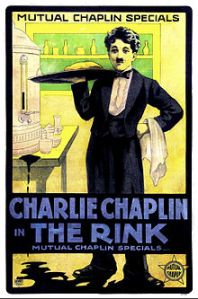 Music For Silent Movies Three classics from the golden age of the silver screen silent comedies. In The Rink (1916)Charlie Chaplin’s Tramp initiates the greatest roller-skating chase of all time, Buster Keaton unwittingly ends up as a paid assassin for a bunch of crooks (and features in another breathtaking chase sequence) in The High Sign (1921)and Harold Lloyd’s bespectacled lovelorn hero dodges girders and cranes on a half-built skyscraper high above Los Angeles in Never Weaken (1921) . With live piano accompaniment by Neil Brand. Saffron Hall, Saffron Walden Link
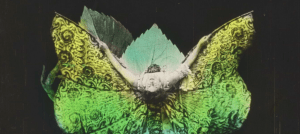 Into The Garden Of Chimerical Delights (Screening format – digital(?)) A kaleidoscope of feminine imagery: women decorated or posing with floral arrangements, examining and creating them, or even dressed as them and magically appearing from them. Spanning various pre-World War I genres, including films by Georges Melies, Segundo de Chomón and Gaston Velle, these shorts reflect 19th-century ideas of femininity as synonymous with beauty, sensuality and enchantment while also revealing ideas of ‘dangerous’ female erotic power. With live musical accompaniment by experimental choir group Musarc. The screening is followed by a panel discussion with Musarc, joined by the programme curators Marketa Uhlirova and Elif Rongen. Moderated by writer Dal Chodha. Barbican, London Link
June
1 June
Nosferatu (Dir. F W Murnau, 1922) (Screening format – not known, 96mins) A German Expressionist horror masterpiece starring Max Shreck as the vampire Count Orlok. The film was an unauthorised adaption of Bram Stoker’s ‘Dracula’ with names and other details changed because the studio could not obtain the rights to the novel. Stoker’s heirs sued over the adaption and a court ruling ordered that all copies of the film be destroyed. However, a few prints survived and the film came to be regarded as an inspirational master work of the cinema. In the film, Count Orlok travels across Europe leaving a trail of death in his wake. Brilliantly eerie, with imaginative touches which later adaptions never achieved. Find out more at wikipedia.org With live musical accompaniment by Hugo Max. Arts Picturehouse, Cambridge Link
5 June
Nosferatu (Dir. F W Murnau, 1922) (Screening format – not known, 96mins) A German Expressionist horror masterpiece starring Max Shreck as the vampire Count Orlok. The film was an unauthorised adaption of Bram Stoker’s ‘Dracula’ with names and other details changed because the studio could not obtain the rights to the novel. Stoker’s heirs sued over the adaption and a court ruling ordered that all copies of the film be destroyed. However, a few prints survived and the film came to be regarded as an inspirational master work of the cinema. In the film, Count Orlok travels across Europe leaving a trail of death in his wake. Brilliantly eerie, with imaginative touches which later adaptions never achieved. Find out more at wikipedia.org With live musical accompaniment by Hugo Max. Picturehouse, Hackney Link
8 June
 A Colour Box Burst into summer with this vibrant programme of early and pre-Technicolor short films featuring butterflies, fairies, fireworks, crystals and more. We tend to think of early films as being black and white, when in fact cinema has been a colourful medium and artform from its earliest decades. From the mid-1890s, filmmakers could make use of tinting, hand- and stencil-colouring, and the early experimental systems that predated Technicolor. A surprising variety of material was brought to the screen in colour – not just the prestige productions of foundational filmmakers such as Georges Méliès, but also science films, travelogues, and early abstract animations. With live musical accompaniment by the Electronic & Produced Music Department at the Guildhall School of Music & Drama. Barbican, London Link
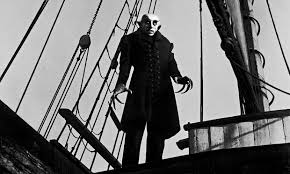 Nosferatu (Dir. F W Murnau, 1922) (Screening format – not known, 96mins) A German Expressionist horror masterpiece starring Max Shreck as the vampire Count Orlok. The film was an unauthorised adaption of Bram Stoker’s ‘Dracula’ with names and other details changed because the studio could not obtain the rights to the novel. Stoker’s heirs sued over the adaption and a court ruling ordered that all copies of the film be destroyed. However, a few prints survived and the film came to be regarded as an inspirational master work of the cinema. In the film, Count Orlok travels across Europe leaving a trail of death in his wake. Brilliantly eerie, with imaginative touches which later adaptions never achieved. Find out more at wikipedia.org With live musical accompaniment by Hugo Max. Prince Charles Cinema, London Link
13 June
 The Student Prince in Old Heidelberg (Dir. Ernst Lubitsch/John M. Stahl, 1928) (Screening format – 35mm, 105mins) Crown Prince Karl Heinrich (Phillippe de Lacy/Ramon Navorro) , nephew of the king of a small domain, has a joyless existence in the pretentious formalism of the moribund court until his tutor, Dr. Juttner (Jean Hersholt) , arrives. After several years, Juttner takes Karl Heinrich to Heidelberg to study at the university. Here the prince falls in love with Kathi (Norma
 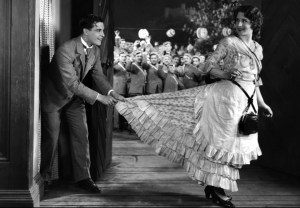 Shearer) , the niece of the owner of an inn where the tutor and the prince have taken rooms. But when the King dies and Karl is called home will things ever be the same? An utterly delightful romantic drama directed by the maestro of subtlety and wit – Ernst Lubitsch. The film is pure movie magic – Novarro’s performance as the young prince is thoroughly charming and he wins our hearts from his first moments on screen. Shearer is his perfect match as the gutsy gal who can down a stein of beer as well as any man but whose heart is liable to be broken by loving unwisely. Find out more atsilentfilm.org Presented as part of the BFI’s Film on Film Festival. With recorded Carl Davis orchestral score. BFI Southbank, London Link
14 June
 Un Chien Andalou (Dir. Luis Bunuel/Salvador Dali, Fr, 1928 (Screening Format – 35mm nitrate, 16 mins) The opening sequence of Un Chien Andalou, Buñuel’s first film, contains one of the most
  indelible images, and most primal “cuts”, in film history – the chillingly tranquil slicing of an eyeball with a razor blade. From there, Buñuel and collaborator Salvador Dali use a Surrealist version of narrative to thread together sequences involving a heterosexual couple, a disembodied hand and a rotting carcass inside a piano. Find out more at rogerebert.com. Presented as part of the BFI’s Film on Film Festival. With recorded score(?). BFI Southbank, London Link
15 June
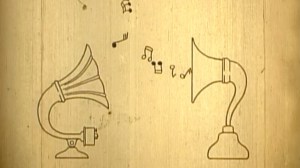 Sing-Along-A-Silents (Screening format – celluloid, 90mins) The component parts of what we call film now speak to each other seamlessly through digits. But for the first century or so of cinema, all sorts of mechanical, electrical, photochemical and musical solutions were needed to bring sound and picture together. Before the transition to synchronised picture and sound, which was largely complete by the early 1930s, filmmakers experimented with a multitude of weird and wonderful devices, in both commercial and artistic spheres. This cheery, all-celluloid variety programme brings you some fascinating surviving sound-picture and ‘visual sound’ combinations, as well as a ‘show-and-tell’ demonstration of some technological artifacts from the archive. Stars on the bill include Little Tich, Teddy Brown and his vibes, Leslie Sarony, Billy Mayerl and Gwen Farrar, Oscar Fischinger, and the master of the under-engineered device, Heath Robinson. Presented as part of the BFI’s Film on Film Festival. With recorded and live musical accompaniment. BFI Southbank, London Link
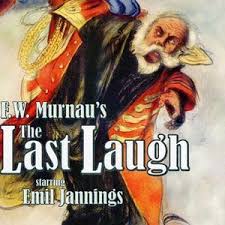 The Last Laugh (Dir. F W Murnau, Ger, 1924) (Screening format – not known, 90mins) A landmark work of the silent era, F.W. Murnau’s masterpiece Der Letzte Mann (The Last Laugh) is one of the most notable films made during the Weimar Republic. Emil Jannings, probably the greatest actor of his time, stars as an ageing doorman whose happiness crumbles when he is relieved of the duties and uniform which had, for years, been the foundation of his pride and which compensates for him living in a slum. The Last Laugh is not just the plight of a single doorman, but a mournful dramatisation of the frustration and anguish of the universal working class, a clash of the old and the new, and how one individual is lost in the modern cityscape of the early twentieth century.
  However, the plot of The Last Laugh is just half the story. Dispensing with the customary inter-titles and filming while moving the camera in extraordinarily inventive ways, Murnau and his cinematographer, Karl Freund, transformed the language of film. In shooting the opening sequence, the camera descended in the hotel’s glass elevator and was then carried on a bicycle through the lobby. In addition, The Last Laugh succeeds in combining expressionist elements—such as extreme camera angles, distorted dream imagery, and disturbing light and shadow effects—with a complex psychological study of the main character in his fall from privilege. Find out more at rogerebert.com . With live musical accompaniment by Hugo Max. Midlands Arts Centre, Birmingham Link
18 June
 Asphalt (Dir. Joe may, Ger, 1929) (Screening format – digital, 94mins) From its amazing opening sequence of human and vehicular traffic sweeping through a nighttime cityscape entirely created inside the Ufa film factory, Asphalt marks a late addition to the eye-catching, mind-bending artistry of the German Expressionist cinema of the ’20s. Joe May’s Asphalt is a love story set in the traffic-strewn Berlin of the late 1920s. Starring the delectable Betty Amann in her most famous leading role, Asphalt is a luxuriously produced Ufa classic where tragic liaisons and fatal encounters are shaped alongside the constant roar of traffic. A well-dressed lady thief (Betty Amann) steals a precious stone from a jewellery shop. The aged jeweller prefers to let the young woman
  go, but the policeman who catches her explains he is obliged to pursue the case further. She tries to seduce the policeman (Gustav Fröhlich), and he gradually succumbs to her charms, but her criminal background dooms their relationship when an argument leads to murder. Joe May’s sensual drama of life in the Berlin underworld is in many ways the perfect summation of German film-making in the silent era: a dazzling visual style, a psychological approach to its characters, and the ability to take a simple and essentially melodramatic story and turn it into something far more complex and inherently cinematic. Find out more at moviessilently.com Presented by the Kennington Bioscope. With live musical accompaniment. Cinema Museum, Lambeth Link
19 June
The Last Laugh (Dir. F W Murnau, Ger, 1924) (Screening format – not known, 90mins) A landmark work of the silent era, F.W. Murnau’s masterpiece Der Letzte Mann (The Last Laugh) is one of the most notable films made during the Weimar Republic. Emil Jannings, probably the greatest actor of his time, stars as an ageing doorman whose happiness crumbles when he is relieved of the duties and uniform which had, for years, been the foundation of his pride and which compensates for him living in a slum. The Last Laugh is not just the plight of a single doorman, but a mournful dramatisation of the frustration and anguish of the universal working class, a clash of the old and the new, and how one individual is lost in the modern cityscape of the early twentieth century. However, the plot of The Last Laugh is just half the story. Dispensing with the customary inter-titles and filming while moving the camera in extraordinarily inventive ways, Murnau and his cinematographer, Karl Freund, transformed the language of film. In shooting the opening sequence, the camera descended in the hotel’s glass elevator and was then carried on a bicycle through the lobby. In addition, The Last Laugh succeeds in combining expressionist elements—such as extreme camera angles, distorted dream imagery, and disturbing light and shadow effects—with a complex psychological study of the main character in his fall from privilege. Find out more at rogerebert.com . With live musical accompaniment by Hugo Max. Electric Palace, Harwich Link
21 June
Au Bonheur des Dames (aka Ladie’s Paradise) (Dir. Julien Duvivier, Fr, 1930) (Screening format – not known, 90mins) Set within the glamorous world of a Parisian department store, Julien Duvivier’s long-forgotten masterpiece was one of the last silent films to be made in France and is ripe for rediscovery. Dita Parlo, a German actress who later appeared in Jean Vigo’s L’Atalante (1934) and Jean Renoir’s The Grand Illusion (1937), plays a wide-eyed innocent from the country who is  relocated to the city of lights and is lured away from her uncle’s small shop by the richness of the department store. While Duvivier’s film celebrates the richness of Parisian life, it is, at the same time, a damning portrait of rampant consumerism and the demise of small, local shops. Directed by the iconic director of future celebrated French classics such as La belle équipe (1936), Pépé le Moko (1936) and Un carnet de bal (1937), Julien Duvivier’s breathtaking Au Bonheur des Dames will leave you laughing, crying and asking for more. Find out more at silentfilm.org. Presented by Northern Silents. With live piano accompaniment by Jonny Best. Link
Faust (Dir. F W Murnau, Ger, 1926) (Screening format – not known, 107mins) Like Fritz Lang, F.W. Murnau is a towering figure of Weimar cinema, thanks to films such as Nosferatu (1922), The Last Laugh (1924), and, after moving to America, Sunrise: A Song of Two Humans (1927). Murnau’s approach to framing and his use of liberating camera movements suggested to subsequent filmmakers a new way of using the pictorial space. Faust, the director’s final German film, draws on sources including Marlowe and Goethe in service of the story of a man who makes a deal with the devil. Murnau’s Faust was the most technically elaborate and expensive production undertaken by Ufa until it was surpassed by Metropolis the following year. Filming took six months, at a cost of 2 million marks, only half of which was recovered at the box office. According to many film historians, Faust seriously influenced subsequent studio shooting and special effects techniques. Murnau used two cameras, each filming multiple shots; with many scenes requiring multiple takes. Find out more at rogerebert.com. With live musical accompaniment by Hugo Max. Picturehouse @ Fact, Liverpool Link
22 June
Faust (Dir. F W Murnau, Ger, 1926) (Screening format – not known, 107mins) Like Fritz Lang, F.W. Murnau is a towering figure of Weimar cinema, thanks to films such as Nosferatu (1922), The Last Laugh (1924), and, after moving to America, Sunrise: A Song of Two Humans (1927). Murnau’s approach to framing and his use of liberating camera movements suggested to subsequent filmmakers a new way of using the pictorial space. Faust, the director’s final German film, draws on sources including Marlowe and Goethe in service of the story of a man who makes a deal with the devil. Murnau’s Faust was the most technically elaborate and expensive production undertaken by Ufa until it was surpassed by Metropolis the following year. Filming took six months, at a cost of 2 million marks, only half of which was recovered at the box office. According to many film historians, Faust seriously influenced subsequent studio shooting and special effects techniques. Murnau used two cameras, each filming multiple shots; with many scenes requiring multiple takes. Find out more at rogerebert.com. With live musical accompaniment by Hugo Max. City Screen Picturehouse, York Link
23 June
Faust (Dir. F W Murnau, Ger, 1926) (Screening format – not known, 107mins) Like Fritz Lang, F.W. Murnau is a towering figure of Weimar cinema, thanks to films such as Nosferatu (1922), The Last Laugh (1924), and, after moving to America, Sunrise: A Song of Two Humans (1927). Murnau’s approach to framing and his use of liberating camera movements suggested to subsequent filmmakers a new way of using the pictorial space. Faust, the director’s final German film, draws on sources including Marlowe and Goethe in service of the story of a man who makes a deal with the devil. Murnau’s Faust was the most technically elaborate and expensive production undertaken by Ufa until it was surpassed by Metropolis the following year. Filming took six months, at a cost of 2 million marks, only half of which was recovered at the box office. According to many film historians, Faust seriously influenced subsequent studio shooting and special effects techniques. Murnau used two cameras, each filming multiple shots; with many scenes requiring multiple takes. Faust was Murnau’s last German film, immediately prior to his move to the US. Find out more at rogerebert.com. With live musical accompaniment by Hugo Max. Prince Charles Cinema, London Link
29 June
 Haxan: Witchcraft Through the Ages (Dir. Benjamin Christensen, Swe., 1922) ( Screening format – not known, 105mins) A fictionalized documentary with dramatic reconstructions showing the evolution of witchcraft, from its pagan roots to its confusion with hysteria in modern (1922) Europe. Based partly on Christensen’s study of the Malleus Maleficarum, a 15th-century German guide for inquisitors, Häxan is a study of how superstition and the misunderstanding of diseases and mental illness could lead to the hysteria of the witch hunts. Although it won acclaim in Denmark and Sweden when first released, Haxan was heavily censored or banned outright in many countries. But it is now considered to be Christensen’s finest work, a witches’ brew of the scary, the grotesque, and the darkly humorous. Find out more at thedevilsmanor.blogspot.co.uk . With live musical accompaniment by Hugo Max. Prince Charles Cinema, London Link
30 June
Nosferatu (Dir. F W Murnau, 1922) (Screening format – not known, 96mins) A German Expressionist horror masterpiece starring Max Shreck as the vampire Count Orlok. The film was an unauthorised adaption of Bram Stoker’s ‘Dracula’ with names and other details changed because the studio could not obtain the rights to the novel. Stoker’s heirs sued over the adaption and a court ruling ordered that all copies of the film be destroyed. However, a few prints survived and the film came to be regarded as an inspirational master work of the cinema. In the film, Count Orlok travels across Europe leaving a trail of death in his wake. Brilliantly eerie, with imaginative touches which later adaptions never achieved. Find out more at wikipedia.org With live musical accompaniment by Hugo Max. Duke Of York’s, Brighton Link
July
2 July
 Lazybones (Dir. Frank Borage, US,1925) (Screening format – not known, 95mins) In a small town during the early 20th century, the local `lazybones’, Steve Tuttle (Buck Jones) takes on the responsibility of raising a small girl, in order to protect the identity of the child’s mother – who is the sister of his sweetheart, Agnes. Steve loses Agnes as a result and later goes to fight in World War I. On his return, he hopes to marry the now grown-up girl (Madge Bellamy), only to find
  that she loves someone of her own age. Lazybones was based on the Broadway play of the same title by the Pulitzer Prize-winning Owen Davis. Director Frank Borzage was working near the height of his powers. As with so many Borzage projects, the film is beautifully shot and his restrained handling of the actors and staging of the scenes make this comedy-drama seem far less dated than many of its contemporaries. Buck Jones, for most of his career a B-Western star, shows what he can do under a fine director: He has expressive eyes and a tender rapport with the rest of the cast. Find out more at slantmagazine.com Presented by the Kennington Bioscope. With live musical accompaniment. Cinema Museum, Lambeth Link
5 July
The Last Laugh (Dir. F W Murnau, Ger, 1924) (Screening format – not known, 90mins) A landmark work of the silent era, F.W. Murnau’s masterpiece Der Letzte Mann (The Last Laugh) is one of the most notable films made during the Weimar Republic. Emil Jannings, probably the greatest actor of his time, stars as an ageing doorman whose happiness crumbles when he is relieved of the duties and uniform which had, for years, been the foundation of his pride and which compensates for him living in a slum. The Last Laugh is not just the plight of a single doorman, but a mournful dramatisation of the frustration and anguish of the universal working class, a clash of the old and the new, and how one individual is lost in the modern cityscape of the early twentieth century. However, the plot of The Last Laugh is just half the story. Dispensing with the customary inter-titles and filming while moving the camera in extraordinarily inventive ways, Murnau and his cinematographer, Karl Freund, transformed the language of film. In shooting the opening sequence, the camera descended in the hotel’s glass elevator and was then carried on a bicycle through the lobby. In addition, The Last Laugh succeeds in combining expressionist elements—such as extreme camera angles, distorted dream imagery, and disturbing light and shadow effects—with a complex psychological study of the main character in his fall from privilege. Find out more at rogerebert.com . With live musical accompaniment by Hugo Max. Saffron Screen, Uttlesford Link
6 July
The Last Laugh (Dir. F W Murnau, Ger, 1924) (Screening format – not known, 90mins) A landmark work of the silent era, F.W. Murnau’s masterpiece Der Letzte Mann (The Last Laugh) is one of the most notable films made during the Weimar Republic. Emil Jannings, probably the greatest actor of his time, stars as an ageing doorman whose happiness crumbles when he is relieved of the duties and uniform which had, for years, been the foundation of his pride and which compensates for him living in a slum. The Last Laugh is not just the plight of a single doorman, but a mournful dramatisation of the frustration and anguish of the universal working class, a clash of the old and the new, and how one individual is lost in the modern cityscape of the early twentieth century. However, the plot of The Last Laugh is just half the story. Dispensing with the customary inter-titles and filming while moving the camera in extraordinarily inventive ways, Murnau and his cinematographer, Karl Freund, transformed the language of film. In shooting the opening sequence, the camera descended in the hotel’s glass elevator and was then carried on a bicycle through the lobby. In addition, The Last Laugh succeeds in combining expressionist elements—such as extreme camera angles, distorted dream imagery, and disturbing light and shadow effects—with a complex psychological study of the main character in his fall from privilege. Find out more at rogerebert.com . With live musical accompaniment by Hugo Max. Phoenix Cinema, London Link
26 July
 The Blinking Buzzards Quarterly meeting of the UK Buster Keaton Society, dedicated to the appreciation of the silent comedian. With recorded score. Cinema Museum, Lambeth Link
 Silentfilmcalendar.org