


1 November
 Phantom Of The Opera (Dir. Rupert Julian, 1925) (Screening format – not known, 103mins) A title that needs no introduction, The Phantom of the Opera has spawned many remakes, remasters and sequels. This original film version, produced with moments of early Technicolour, sees Lon Chaney, the ‘Man of a Thousand Faces’ perform one of his most iconic roles. His ghastly make-up and outrageous performance made this title a benchmark in the American silent film era. The film was a critical and commercial
  success upon release, and still stands as an important film in cinematic history to this day, with press quotes from the time labelling the film an ‘ultra-fantastic melodrama’ (New York Times), ‘produced on a stupendous scale’ (Moving Picture World) and ‘probably the greatest inducement to nightmare that has yet been screened’ (Variety). The mysterious phantom (Lon Chaney) is a vengeful composer living in the catacombs under the Paris Opera House, determined to promote the career of the singer he loves (Mary Philbin). Famed for the phantom’s shock unmasking, incredible set designs and the masked ball sequence, it still packs a punch. Find out more at wikipedia.org With live Wurlitzer Organ accompniament. East Sussex National, Uckfield Link
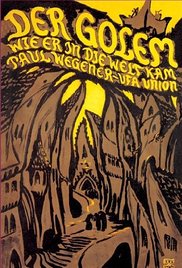 The Golem: How He Came into the World (Dir. Paul Wegener, Ger, 1920) (Screening format – not known, 60mins) This is the only surviving film of the Golem trilogy, made by German expressionist film director Wegener. Based on the old Jewish folk legend of a clay creature that is brought to life by black magic, Wegener wrote and directed the film and also starred as the Golem. The story is set in the ghetto of Medieval Prague where sorcerer and astrologer Rabbi Loew creates the Golem to save the Jewish community from persecution by the tyrannical Emperor Rudolph II. But the creature gets out of control and becomes a terrifying force of destruction, trailing fire and death in its wake. Find out more at albany.edu With live musical accompaniment by Hugo Max. Well Walk Theatre, London Link
 Helen Of Four Gates (Dir. Cecil Hepworth, UK, 1920) (Screening format – not known, 90 mins) Adapted from a novel of the same name by Ethel Carnie Holdsworth, one of Britain’s first authentically working-class novelists , Helen Of Four Gates is a vivid rural melodrama in which our heroine falls victim to a lurid revenge plot hatched by her mother’s rejected beau. A fine performance
  from James Carew as the devious villain is a prime ingredient in this heady brew. Then there is Alma Taylor as Helen, one of the first named stars of British cinema. But the extensive filming around Heptonstall in Yorkshire steals the limelight in this powerful tale of treachery, madness and thwarted love among 19th-century country folk. Find out more at screenonline.org.uk. With live organ accompaniment by Darius Battiwalla. Heptonstall Church Link
2 November
 The Mark Of Zorro (Dir. Fred Niblo, US, 1920) (Screening format – digital, 85mins) Don Diego Vega (Douglas Fairbanks) masquerades as an ineffectual fop to bamboozle his enemies and conceal his secret persona: ‘Zorro’: avenger of the oppressed. The first King of Hollywood – dashing, athletic Fairbanks, pretty much defined the swashbuckling genre with this rip-roaring adventure flick. Featuring horseback stunts, witty chase sequences and sword fighting, this entertaining romp achieves a satisfying blend of humour and heroics that remains the benchmark for action films today. Find out more at silentfilm.org With live piano accompaniment by Costas Fotopoulos , BFI Southbank, London Link
 Nosferatu (Dir. F W Murnau, 1922) (Screening format – not known, 96mins) A German Expressionist horror masterpiece starring Max Shreck as the vampire Count Orlok. The film was an un-authorised adaption of Bram Stoker’s ‘Dracula’ with names and other details changed because the studio could not obtain the rights to the novel. Stoker’s heirs sued over the adaption and a court ruling ordered that all copies of the film be destroyed. However, a few prints survived and the film came to be regarded as an inspirational master work of the cinema. In the film, Count Orlok travels across Europe leaving a trail of death in his wake. Brilliantly eerie, with imaginative touches which later adaptions never achieved. Find out more at wikipedia.org With live musical accompaniment by Berlin-based electronic pioneer Gudrun Gut and acclaimed Irish composers Irene Buckley & Linda Buckley. Civic House, Glasgow Link
 Neil Brand Presents Laurel And Hardy After the national success of his long-running show ‘Neil Brand Presents Buster Keaton’, the composer/writer/broadcaster/musician returns with an all-new show about the immortal comedy duo recently portrayed in the hit film ‘Stan and Ollie’. Fully illustrated with stills, clips (both silent and sound) and Neil’s superlative piano accompaniment and culminating in two of the Boys’ best silent short films, Big Business and Liberty, this is a show that promises gales of laughter throughout, as well as getting under the skin of two warm, funny men who continue to make the world laugh when it needs it most. With live piano accompaniment by Neil Brand. Stratford Playhouse, Stratford upon Avon Link
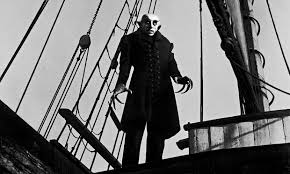 Nosferatu: A Symphony of Horror (Dir. F W Murnau, 1922) (Screening format – not known, 96mins) F W Murnau’s Nosferatu is one of the most iconic films of the German expressionist era, let alone cinema itself. In this first-ever screen adaptation of Bram Stoker’s novel Dracula, a simple real-estate transaction leads an intrepid businessman deep into the superstitious heart of Transylvania. There he encounters the otherworldly Count Orlok (portrayed by the legendary Max Schreck, in a performance the very backstory of which has spawned its own mythology) who soon after embarks upon a cross-continental voyage to take up residence in a distant new land… and establish his
 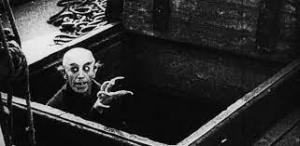 ambiguous dominion. The film was an unauthorised adaption of Stoker’s ‘novel with names and other details changed because the studio could not obtain the rights to the story. Stoker’s heirs sued over the adaption and a court ruling ordered that all copies of the film be destroyed. However, a few prints survived and the film came to be regarded as an inspirational master work of the cinema. Brilliantly eerie, with imaginative touches which later adaptions never achieved and featuring some of the most iconic images in cinema history, Nosferatu continues to haunt modern audiences with its unshakable power of gothic imagery and blood curdling suspense.. Find out more at www.rogerebert.com With live musical accompaniment by Hugo Max. Hippodrome Cinema, Bo’ness Link
Helen Of Four Gates (Dir. Cecil Hepworth, UK, 1920) (Screening format – not known, 90 mins) Adapted from a novel of the same name by Ethel Carnie Holdsworth, one of Britain’s first authentically working-class novelists , Helen Of Four Gates is a vivid rural melodrama in which our heroine falls victim to a lurid revenge plot hatched by her mother’s rejected beau. A fine performance from James Carew as the devious villain is a prime ingredient in this heady brew. Then there is Alma Taylor as Helen, one of the first named stars of British cinema. But the extensive filming around Heptonstall in Yorkshire steals the limelight in this powerful tale of treachery, madness and thwarted love among 19th-century country folk. Find out more at screenonline.org.uk. With live organ accompaniment by Darius Battiwalla. Heptonstall Church Link
5 November
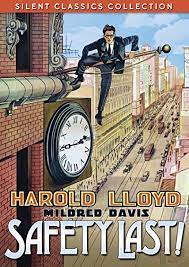 Safety Last (Dir. Fred C Newmeyer/Sam Taylor, US, 1923) (Screening format – digital, 73mins) A boy (Harold Lloyd) moves to New York City to make enough money to support his loving girlfriend (Mildred Davis), but soon discovers that making it in the big city is harder than it looks. When he hears that a store manager will pay $1,000 to anyone who can draw people to his store, he convinces his friend, the “human fly,” (Bill Strother) to climb the building and split the profit with him. But when his pal gets in trouble with the law, he must complete the crazy stunt on his own. The image of Harold Lloyd hanging desperately from the hands of a skyscraper clock during Safety Last! is one of the great icons of film history (although it was achieved with a certain amount of film trickery) and this remains one of the best and best loved comedies of the silent era. Find out more at rogerebert.com. With recorded score. BFI Southbank, London Link
7 November
 Battleship Potemkin (Dir. Sergei Eisenstein, 1925) (Screening format – digital, 75mins) Considered one of the most important films in the history of silent pictures, as well as possibly Eisenstein’s greatest work, Battleship Potemkin brought Eisenstein’s theories of cinema art to the world in a powerful showcase; his emphasis on montage, his stress of intellectual contact, and his treatment of the mass instead of the individual as the protagonist. The film tells the story of the mutiny on the Russian ship Prince Potemkin during the 1905 uprising.Their mutiny was short-lived, however, as during their attempts to get the population of Odessa to join the uprising, soldiers arrived and laid waste to the insurgents. Battleship Potemkin is a work of extraordinary pictorial beauty and great elegance of form. Find out more at classicartfilms.com With recorded Edmund Meisel score. BFI Southbank, London Link
8 November
 Sherlock Jnr (Dir. Buster Keaton, 1924) (Screening format – not known, 45 mins) In Sherlock Jr, a kindly movie projectionist (Buster Keaton) longs to be a detective. When his fiancée (Kathryn McGuire) is robbed by a local thief (Ward Crane), the poor projectionist is framed for the crime. Using his amateur detective skills, the projectionist follows the thief to the train station – only to find himself locked in a train car. Disheartened, he returns to his movie theatre, where he falls asleep and dreams that he is the great Sherlock Holmes. Although not a popular success on its initial release, the film has come to be recognised as a Keaton classic with its special effects and elaborate stunts making it a landmark in motion picture history. Find out more at silentfilm.org. With live organ accompaniment by Donald Mackenzie. Caird Hall, Dundee. Link
 The Lodger: A Story of the London Fog (Dir. Alfred Hitchcock, UK, 1927) (Screening format – not known, 91 mins ) In The Lodger, a serial killer known as “The Avenger” is on the loose in London, murdering blonde women. A mysterious man (Ivor Novello) arrives at the house of Mr. and Mrs. Bunting looking for a room to rent. The Bunting’s daughter (June Tripp) is a blonde model and is
 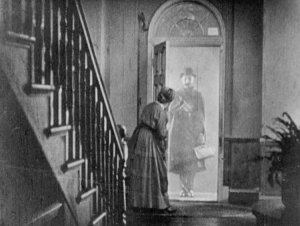 seeing one of the detectives (Malcolm Keen) assigned to the case. The detective becomes jealous of the lodger and begins to suspect he may be the avenger. Based on a best-selling novel by Marie Belloc Lowndes, first published in 1913, loosely based on the Jack the Ripper murders, The Lodger was Hitchcock’s first thriller, and his first critical and commercial success. Made shortly after his return from Germany, the film betrays the influence of the German expressionist tradition established in such films as The Cabinet of Dr. Caligari (1919) and Nosferatu (1922). Find out more at silentfilm.org With live musical accompaniment by Minima. The Maltings, Farnham Link
9 November
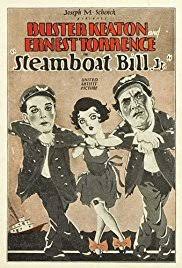 Steamboat Bill Jr (Dir. Buster Keaton/Charles Reisner, US, 1928) (Screening format – not known, 71 mins) In Steamboat Bill Jr a crusty river boat captain hopes that his long departed son’s return will help him compete with a business rival. Unfortunately, William Canfield Jnr (Buster Keaton) is an effete college boy. Worse still, he has fallen for the business rival’s daughter (Marion Byron). Featuring some of Buster’s finest and most dangerous stunts, it’s a health and safety nightmare maybe but it’s entertainment that will live forever. The final storm sequence is still as breathtaking today as it was on first release. Not a commercial success at the time, this is now rightly regarded as a Keaton classic. Find out more at Wikipedia With live organ accompaniment by Donald Mackenzie. Astoria, Copstorphine, Edinburgh. Link
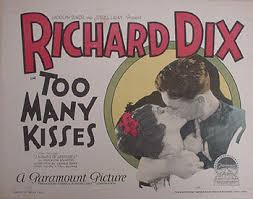 Too Many Kisses (Dir. Paul Sloane, US,1925) (Screening format – not known, 60 mins) This is a real novelty: a silent film featuring a Marx Brother! This charming light comedy stars Richard Dix, but is especially noteworthy for a
  supporting role played by Harpo Marx. Though the Marx Brothers are a quintessential sound film act, Harpo’s pantomime fitted right in with the world of silent comedy. He later claimed that he only featured in one close up, but his part is significantly more than that. Recently restored, this is a rare chance to see this fun and enjoyable film – a real curiosity for Marx fans! Find out more at marx-brothers.org. Presented as part of the Kennington Bioscope‘s Silent Comedy Weekend. With live musical accompaniment by Meg Morley. Cinema Museum, Lambeth Link
 Crikey, It’s the Keystone Kops! The Keystone Kops are one of the indelible images of silent comedy, but their history and identity has often been confused and misrepresented. Who were the Kops? And why have they remained such an iconic image? Lon Davies, author of Chase! A Tribute to the Keystone Kops, investigates, assisted by Dave Glass. Expect Keystone Khaos and clips galore! Presented as part of the Kennington Bioscope‘s Silent Comedy Weekend. With live musical accompaniment by Ashley Valentine. Cinema Museum, Lambeth Link
 The Mannequins (Højt paa en kvist) (Dir. Lau Lauritzen, Den, 1929) (Screening format – not known, 97 mins) In Europe, the Danish comedy team Pat & Patachon were almost as popular as Chaplin or Laurel & Hardy. Though their surviving films are a mixed bag, this one is a real gem. A picaresque romantic comedy featuring some
  wonderful sight gags, it allows the team to show off their unique charm and comic vocabulary as they flit from job to job, while trying to woo the girls in the opposite tenement. Find out more at letterboxd.com. Presented as part of the Kennington Bioscope‘s Silent Comedy Weekend. Introduced by European silent film expert and Pat and Patachon champion, Prof. Ulrich Ruedel, University of Applied Sciences, Berlin. With live musical accompaniment by Stephen Horne. Cinema Museum, Lambeth Link
 Animations and Illusions Almost from the dawn of cinema, filmmakers found ways to employ camera trickery for comedic effect. From the early experiments of George Meliés to the mind-blowing stop-motion comedies of Charley Bowers, many of these films still have the power to make us think “but how did they DO that??”. In this programme we put the spotlight on some of the cleverest, funniest and most bizarre comedies to feature animation and camera tricks. Presented as part of the Kennington Bioscope‘s Silent Comedy Weekend. Introduced by Matthew Ross, editor of The Lost Laugh silent comedy blog and magazine.. With live musical accompaniment by Stephen Horne. Cinema Museum, Lambeth Link
 Rarities and Rediscoveries An assortment of rare, restored and recently discovered silent comedy gems, including rarities starring Monty Banks, Dorothy Devore, Charlie Murray, Bobby Dunn and more! Presented as part of the Kennington Bioscope‘s Silent Comedy Weekend. With live musical accompaniment by Ashley Valentine. Cinema Museum, Lambeth Link
 Oh! What a Nurse! (Dir. Charles Reisner, US, 1926) (Screening format – not known, 70mins) Syd Chaplin will forever be in his brother Charlie’s shadow, but he was a popular and very capable comic in his own right. In the 1920s he made a series of features at Warner Brothers, including this, in which he plays a reporter who goes undercover in drag. Recently rediscovered and restored, this film was one of the big hits at last year’s Pordenone. The Ken Bio are very proud to present the UK premiere of this gem, the first time it’s been seen in this country for almost a century! In keeping with the cross-dressing theme, this programme will also feature Charlie Chaplin in the short A Woman (1915), plus the Syd-Arbuckle rarity Fatty’s Wine Party (1914). Find out more at catalog.afi.com Presented as part of the Kennington Bioscope‘s Silent Comedy Weekend. With live musical accompaniment by Colin Sell. Cinema Museum, Lambeth Link
Sherlock Jnr (Dir. Buster Keaton, 1924) + The Navigator (Dir. Donald Crisp/Buster Keaton, US, 1924) (Screening format – not known, 45/59 mins) In Sherlock Jr, a kindly movie projectionist (Buster Keaton) longs to be a detective. When his fiancée (Kathryn McGuire) is robbed by a local thief (Ward Crane), the poor projectionist is framed for the crime. Using his amateur detective skills, the projectionist follows the thief to the train station – only to find himself locked in a train car. Disheartened, he returns to his movie theatre, where he falls asleep and dreams that he is the great Sherlock Holmes. Although not a popular success on its initial release, the film has come to be recognised as a Keaton classic with its special effects and elaborate stunts making it a landmark in motion picture history.  Find out more at silentfilm.org. In The Navigator, when the wealthy and impulsive Rollo Treadway (Buster Keaton) decides to propose to his beautiful socialite neighbour, Betsy O’Brien (Kathryn McGuire), things don’t go as planned. Although Betsy turns Rollo down, he still opts go on the cruise that he intended as their honeymoon. When circumstances find both Rollo and Betsy on the wrong ship, with no one else on board, they end up with some hilarious high adventures on the high seas, which allows Keaton plenty of opportunities to display his trademark agility. Find out more at busterkeaton.com. With live musical accompaniment by Meg Morley. Turner Sims Concert Hall, Southampton Link
 Nosferatu (Dir. F W Murnau, 1922) (Screening format – not known, 96mins) A German Expressionist horror masterpiece starring Max Shreck as the vampire Count Orlok. The film was an unauthorised adaption of Bram Stoker’s ‘Dracula’ with names and other details changed because the studio could not obtain the rights to the novel. Stoker’s heirs sued over the adaption and a court ruling ordered that all copies of the film be destroyed. However, a few prints survived and the film came to be regarded as an inspirational master work of the cinema. In the film, Count Orlok travels across Europe leaving a trail of death in his wake. Brilliantly eerie, with imaginative touches which later adaptions never achieved. Find out more at wikipedia.org With live musical accompaniment by Minema. Assembly Rooms, Tamworth Link
10 November
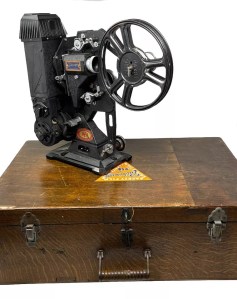 Only on 9.5mm A unique event, featuring real film and vintage projectors in action! The 9.5mm film gauge was responsible for preserving the only known copies of many comedies before it became obsolete. Film collector Christopher Bird will project some of these rarities, using his collection of amazing 9.5mm projectors. Presented as part of the Kennington Bioscope‘s Silent Comedy Weekend. Introduced by Christopher Bird. With live musical accompaniment by Colin Sell. Cinema Museum, Lambeth Link
 The Patsy (Dir. King Vidor, US, 1928) (Screening format – not known, 88mins) Legendary Hollywood director King Vidor recognised Davies’ hitherto underused talent for
 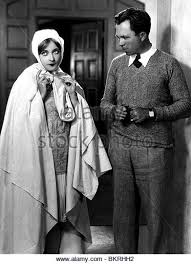 comedy, hailing her as a “darn good comedienne” and casting her as the gloriously impudent Patricia. Patsy by name and Patsy by nature she is the black sheep of the family, in thrall to her glamorous and favoured older sister Grace and hopelessly in love with her sister’s beau. Davies will win your heart with her hilarious clowning and impersonations and the effortless charm of her performance. Find out more at silentfilm.org . Presented as part of the Kennington Bioscope‘s Silent Comedy Weekend. Introduced by Michelle Facey. With live musical accompaniment by Cyrus Gabrysch. Cinema Museum, Lambeth Link
 Focus on Vitagraph Vitagraph was one of the foremost comedy studios of the 1910s. The New York-based studio proved that Hollywood didn’t have the monopoly on great silent comedy, and even had its own ‘Big V Riot Squad’ to match the Keystone Kops. Glenn Mitchell and Dave Glass will spotlight some of Vitagraph’s finest short comedies, featuring John Bunny, Larry Semon and more. Presented as part of the Kennington Bioscope‘s Silent Comedy Weekend. Introduced by Glenn Mitchell and Dave Glass. With live musical accompaniment by Timothy Rumsey. Cinema Museum, Lambeth Link
 The Gorilla (Dir. Alfred Santell, US, 1927) (Screening format – not known, 72 mins) This long-lost film is a fantastic horror-comedy-thriller, in the vein of The Cat and the Canary. Based on the play by Ralph Spence, it’s a tale of a
  gruesome murder, thought to be perpetrated by a brutal gorilla on the loose. Two detectives (Charlie Murray and Fred Kelsey) turn up to investigate, but soon there are more disappearances and spooky goings on… This will be the U.K. premiere of this newly rediscovered and restored spooky classic. And, just to make it an even bigger occasion, the film will be supported by another new discovery: a previously lost appearance of Clara Bow with Gorilla star Charlie Murray, in The Pill Pounder (1923) featuring a filmed introduction by silent comedy expert and author, Steve Massa. Find out more at wikipedia.org Presented as part of the Kennington Bioscope‘s Silent Comedy Weekend. With live musical accompaniment by Costas Fotopolous. Cinema Museum, Lambeth Link
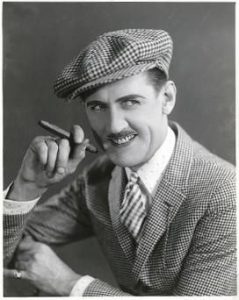 Charley Chase The wonderful, multi-talented Mr Chase is always a hit at the Bioscope. His short farces, full of subtle character comedy, split second timing and wonderful absurdities, are among the best comedies ever made. By popular demand, we’re delighted to be able to show some very rare, and newly restored, comedies starring this wonderful comic, including Us (1927) and What Women Did for Me (1927). Presented as part of the Kennington Bioscope‘s Silent Comedy Weekend. Introduced by author, film historian and Chase expert Richard M Roberts. With live musical accompaniment by Cyrus Gabrysch. Cinema Museum, Lambeth Link
 Miniature Masterpieces A showcasing of some of the best – but less regularly screened- short films starring the classic silent comedians. For many of
  these stars, short comedies let them try out some ideas that they later turned into trademarks in features: Harold Lloyd’s wonderful Never Weaken (1921) is a prime example, a forerunner of his building climb in Safety Last, while Buster Keaton’s The Paleface (1922) gives a taste of his later chases through dramatic landscapes. Charlie Chaplin’s Behind The Screen provides slapstick par excellence. Also showing are two newly restored classics from Hal Roach studios: Laurel and Hardy in Leave ’em Laughing, and Charley Chase in Assistant Wives, a long-unseen, hilarious farce, co-starring the wonderful Anita Garvin. Presented as part of the Kennington Bioscope‘s Silent Comedy Weekend. With live musical accompaniment by Costas Fotopolous. Cinema Museum, Lambeth Link
Neil Brand Presents Laurel And Hardy After the national success of his long-running show ‘Neil Brand Presents Buster Keaton’, the composer/writer/broadcaster/musician returns with an all-new show about the immortal comedy duo recently portrayed in the hit film ‘Stan and Ollie’. Fully illustrated with stills, clips (both silent and sound) and Neil’s superlative piano accompaniment and culminating in two of the Boys’ best silent short films, Big Business and Liberty, this is a show that promises gales of laughter throughout, as well as getting under the skin of two warm, funny men who continue to make the world laugh when it needs it most. With live piano accompaniment by Neil Brand. Apex Theatre, Bury St Edmunds Link
 The Lodger: A Story of the London Fog (Dir. Alfred Hitchcock, UK, 1927) (Screening format – not known, 91 mins ) In The Lodger, a serial killer known as “The Avenger” is on the loose in London, murdering blonde women. A mysterious man (Ivor Novello) arrives at the house of Mr. and Mrs. Bunting looking for a room to rent. The Bunting’s daughter (June Tripp) is a blonde model and is seeing one of the detectives (Malcolm Keen) assigned to the case. The detective becomes
  jealous of the lodger and begins to suspect he may be the avenger. Based on a best-selling novel by Marie Belloc Lowndes, first published in 1913, loosely based on the Jack the Ripper murders, The Lodger was Hitchcock’s first thriller, and his first critical and commercial success. Made shortly after his return from Germany, the film betrays the influence of the German expressionist tradition established in such films as The Cabinet of Dr. Caligari (1919) and Nosferatu (1922). Find out more at silentfilm.org With live musical accompaniment by Minema. Tamworth Castle Link
11 November
The Lodger: A Story of the London Fog (Dir. Alfred Hitchcock, UK, 1927) (Screening format – not known, 91 mins ) In The Lodger, a serial killer known as “The Avenger” is on the loose in London, murdering blonde women. A mysterious man (Ivor Novello) arrives at the house of Mr. and Mrs. Bunting looking for a room to rent. The Bunting’s daughter (June Tripp) is a blonde model and is seeing one of the detectives (Malcolm Keen) assigned to the case. The detective becomes jealous of the lodger and begins to suspect he may be the avenger. Based on a best-selling novel by Marie Belloc Lowndes, first published in 1913, loosely based on the Jack the Ripper murders, The Lodger was Hitchcock’s first thriller, and his first critical and commercial success. Made shortly after his return from Germany, the film betrays the influence of the German expressionist tradition established in such films as The Cabinet of Dr. Caligari (1919) and Nosferatu (1922). Find out more at silentfilm.org With live musical accompaniment by Minima. Spatial Arts, Chesterfield Link
12 November
Battleship Potemkin (Dir. Sergei Eisenstein, 1925) (Screening format – digital, 75mins) Considered one of the most important films in the history of silent pictures, as well as possibly Eisenstein’s greatest work, Battleship Potemkin brought Eisenstein’s theories of cinema art to the world in a powerful showcase; his emphasis on montage, his stress of intellectual contact, and his treatment of the mass instead of the individual as the protagonist. The film tells the story of the mutiny on the Russian ship Prince Potemkin during the 1905 uprising.Their mutiny was short-lived, however, as during their attempts to get the population of Odessa to join the uprising, soldiers arrived and laid waste to the insurgents. Battleship Potemkin is a work of extraordinary pictorial beauty and great elegance of form. Find out more at classicartfilms.com With recorded Edmund Meisel score. BFI Southbank, London Link
Nosferatu: A Symphony of Horror (Dir. F W Murnau, 1922) (Screening format – not known, 96mins) F W Murnau’s Nosferatu is one of the most iconic films of the German expressionist era, let alone cinema itself. In this first-ever screen adaptation of Bram Stoker’s novel Dracula, a simple real-estate transaction leads an intrepid businessman deep into the superstitious heart of Transylvania. There he encounters the otherworldly Count Orlok (portrayed by the legendary Max Schreck, in a performance the very backstory of which has spawned its own mythology) who soon after embarks upon a cross-continental voyage to take up residence in a distant new land… and establish his ambiguous dominion. The film was an unauthorised adaption of Stoker’s ‘novel with names and other details changed because the studio could not obtain the rights to the story. Stoker’s heirs sued over the adaption and a court ruling ordered that all copies of the film be destroyed. However, a few prints survived and the film came to be regarded as an inspirational master work of the cinema. Brilliantly eerie, with imaginative touches which later adaptions never achieved and featuring some of the most iconic images in cinema history, Nosferatu continues to haunt modern audiences with its unshakable power of gothic imagery and blood curdling suspense.. Find out more at www.rogerebert.com With live musical accompaniment by Minima. Key Theatre, Peterborough Link
13 November
 The Passion of Joan of Arc (Dir. Carl Theodore Dreyer, 1928) (Screening format – not known, 82 mins) In 1926 Danish film director Dreyer was invited to make a film in France by the Societe Generale des Films and chose to direct a film about Joan of Arc, due to her renewed popularity in France (having been canonised as a saint of the Roman Catholic Church in 1920 and subsequently adopted as one of the patron saints of France). Apparently discarding a script provided by the Societe, Dreyer spent over a year researching Joan of Arc including study of the actual transcripts of her trial before producing a script of his own. In the title role Dreyer cast the little-known stage actress Renee Jeanne Falconnetti who had previously acted in just two previous, inconsequential films, both back in 1917. The film focuses upon the trial and eventual execution of Joan of Arc after she is captured by the English. Although not a popular success at the time, the film attracted immediate critical praise.
  The New York Times critic wrote “…as a film work of art, this takes precedence over anything so far produced. It makes worthy pictures of the past look like tinsel shams. It fills one with such intense admiration that other pictures appear but trivial in comparison.” Falconnetti’s performance has been widely lauded with critic Pauline Kael writing in 1982 that her portrayal “…may be the finest performance ever recorded on film.” The film was subsequently re-edited against Dreyer’s wishes and his original version was long thought lost. But in 1981 a near perfect copy was found in the attic of a psychiatric hospital in Oslo. The Passion of Joan of Arc now regularly appears in ‘Top Ten’ lists not just of silent films but best films of all time. Find out more at rogerebert.com . With recorded soundtrack. Garden Cinema, London Link
The Lodger: A Story of the London Fog (Dir. Alfred Hitchcock, UK, 1927) (Screening format – not known, 91 mins ) In The Lodger, a serial killer known as “The Avenger” is on the loose in London, murdering blonde women. A mysterious man (Ivor Novello) arrives at the house of Mr. and Mrs. Bunting looking for a room to rent. The Bunting’s daughter (June Tripp) is a blonde model and is seeing one of the detectives (Malcolm Keen) assigned to the case. The detective becomes jealous of the lodger and begins to suspect he may be the avenger. Based on a best-selling novel by Marie Belloc Lowndes, first published in 1913, loosely based on the Jack the Ripper murders, The Lodger was Hitchcock’s first thriller, and his first critical and commercial success. Made shortly after his return from Germany, the film betrays the influence of the German expressionist tradition established in such films as The Cabinet of Dr. Caligari (1919) and Nosferatu (1922). Find out more at silentfilm.org With live musical accompaniment by Minima. Foxlowe Arts Centre, Leek Link
14 November
The Lodger: A Story of the London Fog (Dir. Alfred Hitchcock, UK, 1927) (Screening format – not known, 91 mins ) In The Lodger, a serial killer known as “The Avenger” is on the loose in London, murdering blonde women. A mysterious man (Ivor Novello) arrives at the house of Mr. and Mrs. Bunting looking for a room to rent. The Bunting’s daughter (June Tripp) is a blonde model and is seeing one of the detectives (Malcolm Keen) assigned to the case. The detective becomes jealous of the lodger and begins to suspect he may be the avenger. Based on a best-selling novel by Marie Belloc Lowndes, first published in 1913, loosely based on the Jack the Ripper murders, The Lodger was Hitchcock’s first thriller, and his first critical and commercial success. Made shortly after his return from Germany, the film betrays the influence of the German expressionist tradition established in such films as The Cabinet of Dr. Caligari (1919) and Nosferatu (1922). Find out more at silentfilm.org With live musical accompaniment by Minima. Mill Arts Centre, Banbury Link
15 November
Nosferatu: A Symphony of Horror (Dir. F W Murnau, 1922) (Screening format – not known, 96mins) F W Murnau’s Nosferatu is one of the most iconic films of the German expressionist era, let alone cinema itself. In this first-ever screen adaptation of Bram Stoker’s novel Dracula, a simple real-estate transaction leads an intrepid businessman deep into the superstitious heart of Transylvania. There he encounters the otherworldly Count Orlok (portrayed by the legendary Max Schreck, in a performance the very backstory of which has spawned its own mythology) who soon after embarks upon a cross-continental voyage to take up residence in a distant new land… and establish his ambiguous dominion. The film was an unauthorised adaption of Stoker’s ‘novel with names and other details changed because the studio could not obtain the rights to the story. Stoker’s heirs sued over the adaption and a court ruling ordered that all copies of the film be destroyed. However, a few prints survived and the film came to be regarded as an inspirational master work of the cinema. Brilliantly eerie, with imaginative touches which later adaptions never achieved and featuring some of the most iconic images in cinema history, Nosferatu continues to haunt modern audiences with its unshakable power of gothic imagery and blood curdling suspense.. Find out more at www.rogerebert.com With live musical accompaniment by Minima. Playhouse, Norwich Link
16 November
 Steamboat Bill Jr (Dir. Buster Keaton/Charles Reisner, US, 1928) (Screening format – not known, 71 mins) In Steamboat Bill Jr a crusty river boat captain hopes that his long departed son’s return will help him compete with a business rival. Unfortunately, William Canfield Jnr (Buster Keaton) is an effete college boy. Worse still, he has fallen for the business rival’s daughter (Marion Byron). Featuring some of Buster’s finest and most dangerous stunts, it’s a health and safety nightmare maybe but it’s entertainment that will live forever. The final storm sequence is still as breathtaking today as it was on first release. Not a commercial success at the time, this is now rightly regarded as a Keaton classic. Find out more at Wikipedia With live organ accompaniment by David Ivory. St. Peter’s Church, Cradley, Halesowen Link
The Lodger: A Story of the London Fog (Dir. Alfred Hitchcock, UK, 1927) (Screening format – not known, 91 mins ) In The Lodger, a serial killer known as “The Avenger” is on the loose in London, murdering blonde women. A mysterious man (Ivor Novello) arrives at the house of Mr. and Mrs. Bunting looking for a room to rent. The Bunting’s daughter (June Tripp) is a blonde model and is seeing one of the detectives (Malcolm Keen) assigned to the case. The detective becomes jealous of the lodger and begins to suspect he may be the avenger. Based on a best-selling novel by Marie Belloc Lowndes, first published in 1913, loosely based on the Jack the Ripper murders, The Lodger was Hitchcock’s first thriller, and his first critical and commercial success. Made shortly after his return from Germany, the film betrays the influence of the German expressionist tradition established in such films as The Cabinet of Dr. Caligari (1919) and Nosferatu (1922). Find out more at silentfilm.org With live musical accompaniment by Minima. Magic Lantern Cinema, Tywyn Link
17 November
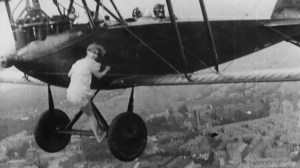 Girls Without Nerves: Action Women of the Silent Era Witness death-defying stunts and full-on action from these adventurous girls, a far cry from the conventional image of silent film heroines. Films include; The Wife’s Revenge – UK 1904; Girl Without Nerves. Topical Budget 545-2 with Babe Kalishek, UK 1922 ; Hazards of Helen: The Girl at the Throttle with Helen Holmes, USA 1914 ; Daredevil of the Movies with Emilie Sannom, Denmark 1925-29 ; and, Vittoria o Morte! (Victory or Death) Director Segundo de Chomón, with Berta Nelson Italy 1912. Introduced by BFI curator Bryony Dixon. With live piano accompaniment by John Sweeney. BFI Southbank, London Link
20 November
 Tragedy at the Circus Royal (aka Tragödie im Zirkus Royal) (Dir. Alfred Lind, Ger, 1928) (Screening format – 35mm, ??mins) In the Circus Royal, the young artists Ziska, Armand, Frank and their mentor Atto perform the aerial sensation `Ghosts of the Night’ every day in front of an enthusiastic crowd. Armand is in love with Ziska. When she rejects him because she loves only Frank, Armand throws himself from the
  trapeze and dies. A mysterious inventor, Dr. Magirus, constructs a radio-mechanical human puppet, who is supposed to replace Armand in the act. A strange tale of science fiction, love and death in the ring! The assistant director was Robert Siodmak who had already directed the silent masterpiece People On Sunday (1929) and who went on to have a glittering Hollywood career directing such classics as The Spiral Staircase (1945) and The Killers (1946). Find out more at wikipedia.org Presented by the Kennington Bioscope. With live musical accompaniment. Cinema Museum, Lambeth Link
Nosferatu: A Symphony of Horror (Dir. F W Murnau, 1922) (Screening format – not known, 96mins) F W Murnau’s Nosferatu is one of the most iconic films of the German expressionist era, let alone cinema itself. In this first-ever screen adaptation of Bram Stoker’s novel Dracula, a simple real-estate transaction leads an intrepid businessman deep into the superstitious heart of Transylvania. There he encounters the otherworldly Count Orlok (portrayed by the legendary Max Schreck, in a performance the very backstory of which has spawned its own mythology) who soon after embarks upon a cross-continental voyage to take up residence in a distant new land… and establish his ambiguous dominion. The film was an unauthorised adaption of Stoker’s ‘novel with names and other details changed because the studio could not obtain the rights to the story. Stoker’s heirs sued over the adaption and a court ruling ordered that all copies of the film be destroyed. However, a few prints survived and the film came to be regarded as an inspirational master work of the cinema. Brilliantly eerie, with imaginative touches which later adaptions never achieved and featuring some of the most iconic images in cinema history, Nosferatu continues to haunt modern audiences with its unshakable power of gothic imagery and blood curdling suspense.. Find out more at www.rogerebert.com With live musical accompaniment by Minima. Caryford Community Hall, Castle Cary Link
22 November
Nosferatu: A Symphony of Horror (Dir. F W Murnau, 1922) (Screening format – not known, 96mins) F W Murnau’s Nosferatu is one of the most iconic films of the German expressionist era, let alone cinema itself. In this first-ever screen adaptation of Bram Stoker’s novel Dracula, a simple real-estate transaction leads an intrepid businessman deep into the superstitious heart of Transylvania. There he encounters the otherworldly Count Orlok (portrayed by the legendary Max Schreck, in a performance the very backstory of which has spawned its own mythology) who soon after embarks upon a cross-continental voyage to take up residence in a distant new land… and establish his ambiguous dominion. The film was an unauthorised adaption of Stoker’s ‘novel with names and other details changed because the studio could not obtain the rights to the story. Stoker’s heirs sued over the adaption and a court ruling ordered that all copies of the film be destroyed. However, a few prints survived and the film came to be regarded as an inspirational master work of the cinema. Brilliantly eerie, with imaginative touches which later adaptions never achieved and featuring some of the most iconic images in cinema history, Nosferatu continues to haunt modern audiences with its unshakable power of gothic imagery and blood curdling suspense.. Find out more at www.rogerebert.com With live musical accompaniment by Minima. Curzon Cinema, Clevedon Link
23 November
The Mark Of Zorro (Dir. Fred Niblo, US, 1920) (Screening format – digital, 85mins) Don Diego Vega (Douglas Fairbanks) masquerades as an ineffectual fop to bamboozle his enemies and conceal his secret persona: ‘Zorro’: avenger of the oppressed. The first King of Hollywood – dashing, athletic Fairbanks, pretty much defined the swashbuckling genre with this rip-roaring adventure flick. Featuring horseback stunts, witty chase sequences and sword fighting, this entertaining romp achieves a satisfying blend of humour and heroics that remains the benchmark for action films today. Find out more at silentfilm.org With recorded score. BFI Southbank, London Link
Phantom Of The Opera (Dir. Rupert Julian, 1925) (Screening format – not known, 103mins) A title that needs no introduction, The Phantom of the Opera has spawned many remakes, remasters and sequels. This original film version, produced with moments of early Technicolour, sees Lon Chaney, the ‘Man of a Thousand Faces’ perform one of his most iconic roles. His ghastly make-up and outrageous performance made this title a benchmark 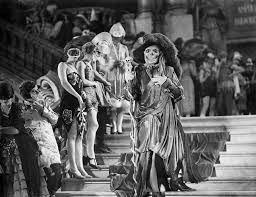 in the American silent film era. The film was a critical and commercial success upon release, and still stands as an important film in cinematic history to this day, with press quotes from the time labelling the film an ‘ultra-fantastic melodrama’ (New York Times), ‘produced on a stupendous scale’ (Moving Picture World) and ‘probably the greatest inducement to nightmare that has yet been screened’ (Variety). The mysterious phantom (Lon Chaney) is a vengeful composer living in the catacombs under the Paris Opera House, determined to promote the career of the singer he loves (Mary Philbin). Famed for the phantom’s shock unmasking, incredible set designs and the masked ball sequence, it still packs a punch. Find out more at wikipedia.org. With live musical accompaniment by Minima. Derby Museums Link
Nosferatu: A Symphony of Horror (Dir. F W Murnau, 1922) (Screening format – not known, 96mins) F W Murnau’s Nosferatu is one of the most iconic films of the German expressionist era, let alone cinema itself. In this first-ever screen adaptation of Bram Stoker’s novel Dracula, a simple real-estate transaction leads an intrepid businessman deep into the superstitious heart of Transylvania. There he encounters the otherworldly Count Orlok (portrayed by the legendary Max Schreck, in a performance the very backstory of which has spawned its own mythology) who soon after embarks upon a cross-continental voyage to take up residence in a distant new land… and establish his ambiguous dominion. The film was an unauthorised adaption of Stoker’s ‘novel with names and other details changed because the studio could not obtain the rights to the story. Stoker’s heirs sued over the adaption and a court ruling ordered that all copies of the film be destroyed. However, a few prints survived and the film came to be regarded as an inspirational master work of the cinema. Brilliantly eerie, with imaginative touches which later adaptions never achieved and featuring some of the most iconic images in cinema history, Nosferatu continues to haunt modern audiences with its unshakable power of gothic imagery and blood curdling suspense.. Find out more at www.rogerebert.com With live musical accompaniment by Minima. Derby Museums Link
24 November
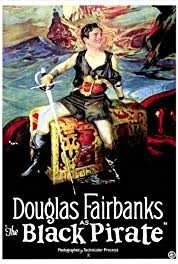 The Black Pirate (Dir. Albert Parker, US, 1926) (Screening format – not known, 97mins) Actor and producer Douglas Fairbanks, having swashed his buckle as every other action hero – Zorro, Musketeer, Robin Hood – here turned pirate. It’s the perfect vehicle for his athleticism and sensational stunt work, as well as his not insignificant on-screen charisma. Importantly, he chose to film it in
 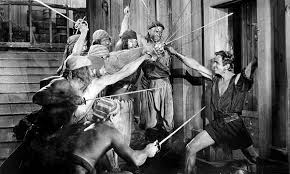 two-strip Technicolor, in a subtle ‘Old Master’ palette, which set a high bar for colour features to come. The story involves a young nobleman (Fairbanks) whose father is killed by pirates. He vows to avenge his dad’s death by becoming a buccaneer himself and routing out the villains. Along the way, he rescues damsel-in-distress Billie Dove (likewise of noble birth) and engages in a few bloody duels with the swarthy likes of Sam De Grasse and Anders Randolph. Charlie Stevens, a grandson of American Indian chief Geronimo — and whom Fairbanks regarded as a lucky charm — appears in several tiny roles. Find out more at silentfilm.org With live piano accompaniment by Lillian Henley. Palace Cinema, Broadstairs Link
 A Programme Of Early Animation – Back by popular demand after their debut sell out last year, this will be another unique evening of early animation combined with live saxophonic sound tracks! Expert in early cinema, Deac Rossell will be presenting 7 short early animations from pioneering studios, including Vitagraph, Pat Sullivan, Bray, Disney, Comicolor & the GPO film unit. Introduced by Deac Rossell. With live saxaphone accompaniment by The Crooks Saxes saxophone quartet. Cinema Museum, Lambeth Link
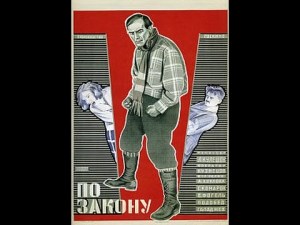 By the Law (aka Po Zakonu) (Dir . Lev Kuleshov, 1926) (Screening format – 35mm, 80mins ) Legendary director Lev Kuleshov adapted a short story by Jack London, fashioning a tense, existential study of moral pressure…in effect a pared-back Soviet Western. Three gold
  prospectors are holed up in a cabin – one driven to murder by greed, the other two wrestling with whether to wait for the snow and ice to thaw and go for the authorities or to take the Law into their own hands. The stage is set for a claustrophobic drama of raw power, combining naturalism and the grotesque, realism and melodrama… Find out more at silentsaregolden.com . with live musical accompaniment by Stephen Horne (piano) and Martin Pyne (percussion). Barbican, London Link
Early Animation Accompanied By The Sound of Saxophones Back by popular demand after their debut sell out last year – another opportunity to experience a unique evening of early animation combined with live saxophonic sound tracks! Deac Rossell will be presenting 7 short early animations from pioneering studios, including Vitagraph, Pat Sullivan, Bray, Disney, Comicolor & the GPO film unit. Presented by early cinema expert Deac Rossell. With live musical accompaniment by South London based saxophone quartet The Crooks Saxes. Cinema Museum, Kennington Link
 Foolish Wives (Dir. Erich von Stroheim, US, 1922) (Screening format – not known, 117mins) In Stroheim’s 1922 film a con artist masquerades as Russian nobility and attempts to seduce the wife of an American diplomat. When released in 1922, the film was the most
  expensive film made at that time, and billed by Universal Studios as the “first million-dollar movie” to come out of Hollywood. Originally, von Stroheim intended the film to run anywhere between 6 and 10 hours, and be shown over two evenings, but Universal executives opposed this idea. The studio bosses cut the film drastically before the release date. Find out more at sensesofcinema.com. With live organ accompaniment by Donald Mackenzie. Musical Museum, Brentford Link
28 November
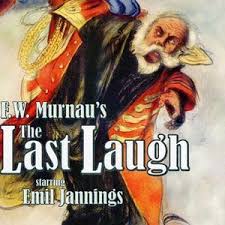 The Last Laugh (Dir. F W Murnau, Ger, 1924) (Screening format – not known, 90mins) A landmark work of the silent era, F.W. Murnau’s masterpiece Der Letzte Mann (The Last Laugh) is one of the most notable films made during the Weimar Republic. Emil Jannings, probably the greatest actor of his time, stars as an ageing doorman whose happiness crumbles when he is relieved of the duties and uniform which had, for years, been the foundation of his pride and which compensates for him living in a slum. The Last Laugh is not just the plight of a single doorman, but a mournful dramatisation of the frustration and anguish of the universal working class, a clash of the old and the new, and how one individual is lost in the modern
  cityscape of the early twentieth century. However, the plot of The Last Laugh is just half the story. Dispensing with the customary inter-titles and filming while moving the camera in extraordinarily inventive ways, Murnau and his cinematographer, Karl Freund, transformed the language of film. In shooting the opening sequence, the camera descended in the hotel’s glass elevator and was then carried on a bicycle through the lobby. In addition, The Last Laugh succeeds in combining expressionist elements—such as extreme camera angles, distorted dream imagery, and disturbing light and shadow effects—with a complex psychological study of the main character in his fall from privilege. Find out more at rogerebert.com . Introduced by Dr. Ian Roberts. With recorded soundtrack. University Of Warwick (Faculty of Arts Cinema), Coventry. Link
 The Rugged Island: a Shetland Lyric (Dir. Jenny Gilbertson, UK, 1933) (Screening format – not known, 56mins) A dramatised documentary story about a young couple torn between the choice of emigration to Australia or remaining to work their croft in Shetland. Documentary film maker
  Gilbertson ( who also did all her own scriptwriting, filming, sound and lighting as well as direction) was initially encouraged in her work by John Grierson, who had purchased some of her earlier documentary films for the GPO Film Library. While making The Rugged Island, she met and married John Gilbertson who was the star of the film. Find out more at movingimage.nls.uk . With live musical accompaniment by Inge Thomson and Catriona Macdonald. , Link
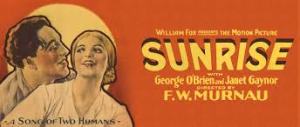 Sunrise; A Song of Two Humans (Dir. F W Murnau, US, 1927) (Screening format – not known, 94mins) F W Murnau’s debut American film, made at the technical zenith of the silent era but already heralding the arrival of the talkies being one of the first silents made with synchronized musical score and sound effects soundtrack. The simple story of a husband’s betrayal of his wife with a treacherous city girl, Sunrise moves
 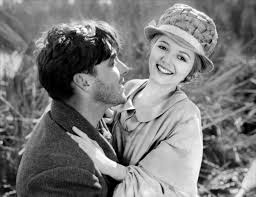 from a fairytale-like depiction of rural life to a dynamic portrait of the bustling modern American city. Explored in elaborate tracking shots by Charles Rocher and Karl Struss’s pioneering camerawork, the city set was one of the most costly yet produced. The result was a commercial flop, though the achievement did not go unheralded: Sunrise was awarded a special Oscar for unique and artistic production at the first ever Academy Awards and Janet Gaynor won the first Academy Award for Best Actress for her performance. The film’s legacy has endured, and it is now widely considered a masterpiece with many calling it the greatest film of the silent era. Find out more at theguardian.com With live musical accompaniment by Wurlitza. Ocean Studios, Plymouth Link
29 November
 Drifters (Dir. John Griersen, UK, 1929) (Screening format – not known, 61 mins) Drifters, the story of the North Sea herring fleets from Yarmouth and Lowestoft to Shetland, broke new ground in 1929. Filmed mainly
 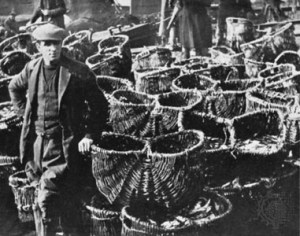 at sea in all weathers, but with studio sets for some interior scenes, it established Grierson’s style of “creative interpretation of actuality” which came to characterise the British school of documentary film-making. Directed and edited by Grierson and photographed by Basil Emmott. The film was successful both critically and commercially and helped kick off Grierson’s documentary film movement. Find out more at imdb.com . With live accompaniment by sound artist, nature beatboxer and composer Jason Singe. Arnolfini, Bristol Link
Nosferatu (Dir. F W Murnau, 1922) (Screening format – not known, 96mins) A German Expressionist horror masterpiece starring Max Shreck as the vampire Count Orlok. The film was an unauthorised adaption of Bram Stoker’s ‘Dracula’ with names and other details changed because the studio could not obtain the rights to the novel. Stoker’s heirs sued over the adaption and a court ruling ordered that all copies of the film be destroyed. However, a few prints survived and the film came to be regarded as an inspirational master work of the cinema. In the film, Count Orlok travels across Europe leaving a trail of death in his wake. Brilliantly eerie, with imaginative touches which later adaptions never achieved. Find out more at wikipedia.org With live musical accompaniment by Dmytro Morykit. Wilton’s Music Hall, London Link
30 November
The Black Pirate (Dir. Albert Parker, US, 1926) (Screening format – not known, 97mins) Actor and producer Douglas Fairbanks, having swashed his buckle as every other action hero – Zorro, Musketeer, Robin Hood – here turned pirate. It’s the perfect vehicle for his athleticism and sensational stunt work, as well as his not insignificant on-screen charisma. Importantly, he chose to film it in two-strip Technicolor, in a subtle ‘Old Master’ palette, which set a high bar for colour features to come. The story involves a young nobleman (Fairbanks) whose father is killed by pirates. He vows to avenge his dad’s death by becoming a buccaneer himself and routing out the villains. Along the way, he rescues damsel-in-distress Billie Dove (likewise of noble birth) and engages in a few bloody duels with the swarthy likes of Sam De Grasse and Anders Randolph. Charlie Stevens, a grandson of American Indian chief Geronimo — and whom Fairbanks regarded as a lucky charm — appears in several tiny roles. Find out more at silentfilm.org Presented by South West Silents. With live piano accompaniment by Lillian Henley. Firstsite, Colchester Link
Safety Last (Dir. Fred C Newmeyer/Sam Taylor, US, 1923) (Screening format – digital, 73mins) A boy (Harold Lloyd) moves to New York City to make enough money to support his loving girlfriend (Mildred Davis), but soon discovers that making it in the big city is harder than it looks. When he hears that a store manager will pay $1,000 to anyone who can draw people to his store, he convinces his friend, the “human fly,” (Bill Strother) to climb the building and split the profit with him. But when his pal gets in trouble with the law, he must complete the crazy stunt on his own. The image of Harold Lloyd hanging desperately from the hands of a skyscraper clock during Safety Last! is one of the great icons of film history (although it was achieved with a certain amount of film trickery) and this remains one of the best and best loved comedies of the silent era. Find out more at rogerebert.com. With live piano accompaniment by Neil Brand. BFI Southbank, London Link
Battleship Potemkin (Dir. Sergei Eisenstein, 1925) (Screening format – not known, 75mins) Considered one of the most important films in the history of silent pictures, as well as possibly Eisenstein’s greatest work, Battleship Potemkin brought Eisenstein’s theories of cinema art to the world in a powerful showcase; his emphasis on montage, his stress of intellectual contact, and his treatment of the mass instead of the individual as the protagonist. The film tells the story of the mutiny on the Russian ship Prince Potemkin during the 1905 uprising.Their mutiny was short-lived, however, as during their attempts to get the population of Odessa to join the uprising, soldiers arrived and laid waste to the insurgents. Battleship Potemkin is a work of extraordinary pictorial beauty and great elegance of form. It is symmetrically broken into five movements or acts. In the first of these, “Men and Maggots,” the flagrant mistreatment of the sailors at the hands of their officers is demonstrated, while 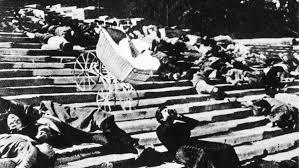 the second, “Drama on the Quarterdeck,” presents the actual mutiny and the ship’s arrival in Odessa. “Appeal from the Dead” establishes the solidarity of the citizens of Odessa with the mutineers. It is the fourth sequence, “The Odessa Steps,” which depicts the massacre of the citizens, that thrust Eisenstein and his film into the historical eminence that both occupy today. It is unquestionably the most famous sequence of its kind in film history, and Eisenstein displays his legendary ability to convey large-scale action scenes. The shot of the baby carriage tumbling down the long staircase has been re-created in many films. The sequence’s power is such that the film’s conclusion, “Meeting the Squadron,” in which the Potemkin in a show of brotherhood is allowed to pass through the squadron unharmed, is anticlimactic. Find out more at classicartfilms.com Presented by Northern Silents. With live musical accompaniment by Jonny Best (piano). Link
 Museum Of Dreamworlds The Emperor Nero sets fire to Rome, and Odysseus encounters the Cyclops on his journey home. This quartet of early silent films brings the ancient world alive on the screen. In the early twentieth century, silent cinema brought the classical world out of the distant past and the schoolrooms of the elites, and put it on show for
  millions of spectators across the globe. Ancient Greece and Rome gave cinema prestige and a remarkable set of stories about gods on earth, murder, love, slavery, and war. A short 1901 Pompeii travelogue starts the show, before the two dramatic centrepieces of the programme – Nero, or the Burning of Rome (1909) and a forty-minute high-octane dash through Homer’s epic in The Odyssey (1911). The show concludes with a cartoon chariot race! Presented by Northern Silents. With live musical accompaniment by Northern Silents‘ musicians. Link
 Slapstick Saturday In Habeus Corpus (1928), Laurel & Hardy are grave robbers hired by a mad scientist to steal a corpse. In High and Dizzy (1920), Harold Lloyd is a doctor who gets accidentally drunk before finding himself on top of a tall building with a sleepwalking patient. In Max Takes A Bath (1910) all Max Linder wants to do is have a bath, but somehow it all goes disastrously wrong. And in the grand finale, the female Laurel & Hardy, Anita Garvin and Marion Byron, cause chaos with ice cream in A Pair Of Tights (1928). Presented by Northern Silents. With live musical accompaniment by Jonny Best (piano) and Jeff Davenport (percussion). Link
 Silentfilmcalendar.org