



2 October
 Metropolis (Dir. Fritz Lang, 1927) (Screening format –not known , 149 mins ) Made in Germany during the Weimar period, Metropolis is set in a futuristic urban dystopia and follows the attempts of Freder (Gustav Frohlich), the wealthy son of the city’s ruler, and Maria (Brigitte Helm), a poor worker, to overcome the vast gulf separating the classes of their city. Filming took place in 1925 at a cost of approximately five million Reichmarks, making it the most expensive film ever released up to that point. It is regarded
 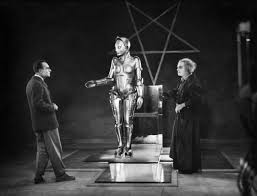 as a pioneering work of science fiction and is among the most influential films of all time. Following its world premiere in 1927, half an hour was cut from Fritz Lang’s masterpiece and lost to the world. Eighty years later a spectacular discovery was made when the footage was found in a small, dusty museum in Buenos Aires. The film was then painstakingly reconstructed and digitally restored so that at last audiences could see the iconic futuristic fairy tale as Lang had envisioned it. Find out more at silentfilm.org. Presented by Northern Silents. With live piano accompaniment by Jonny Best. Link
 In Search Of British Cinema’s ‘Missing Years’. French and American crime serials have a secure place in the history of early 20th century popular culture and how it influenced modern art. But was there any equivalent in Britain? Indeed, what was happening in British cinema during the ‘teens, when cinema attendance was reaching its climax? There were in fact British crime serials, and some evidence of their popular appeal, including among the rising generation of young artists, as well as some establishment figures. But none of this has yet become part of Britain’s received cultural history. So come and discover what Britain’s first cinephiles were watching, and the criminal appeal of Three Fingered Kate and Ultus, the Man from the Dead. The final film of the evening will be rare screening of Adrian Brunel’s satire on “film” types, So This is Jollygood found in the Cinema Museum’s film collection. Presented by the Kennington Bioscope. Introduced by Ian Christie, historian, broadcaster and curator, currently Professor of Film and Media History at Birkbeck, University of London. With live musical accompaniment. Cinema Museum, Kennington Link
3 October
 Surreal Film Scores A rare opportunity to see Buñuel’s famous Un Chien Andalou with live score, alongside a series of other short dadaist films by artists including Luis Buñuel and Salvador Dalí, Hans Richter, Marcel Duchamp, and Man Ray. The opening sequence of Un Chien Andalou (Dir. Luis Bunuel/Salvador Dali, Fr, 1928), Buñuel’s first film, contains one of the most indelible images, and most primal “cuts”, in film
  history – the chillingly tranquil slicing of an eyeball with a razor blade. From there, Buñuel and collaborator Salvador Dali use a Surrealist version of narrative to thread together sequences involving a heterosexual couple, a disembodied hand and a rotting carcass inside a piano. Find out more at rogerebert.com. Other films being screened include Ballet Mecanique (Dir. Fernand Léger, Dudley Murphy, Fr, 1924) and Entr’acte (Dir. René Clair, Fr, 1924) Presented by Northern Silents. With live musical accompaniment by Juliana Day (recorder, whistles, and electronics) and Alcyona Mick (jazz piano). Link
4 October
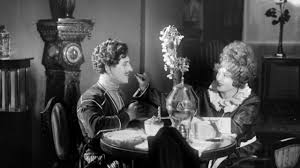 The Rider From The Wild West (Dir. Aleksandre Tsutsunava, Geo, 1925) (Screening format – not known, 104 mins) The Rider from the Wild West, originally called Who is Guilty?, was adapted from a Georgian play in 1925 by director Aleksandre Tsutsunava, who also directed the first Georgian feature film Qristine (1916). Siko, a young farmer from western Georgia, joins a group of riders who leave for America in the hope of becoming rich, leaving his wife Pati to face a series of unfortunate events while he is away. The film has elements of real-life events as horse-riders from Guria did actually travel to America. Tsutsunava built a pavilion to create an American circus in Georgia, and it was one of the first films of the region to include scenes with exteriors of this scale. Pati is played by silent film star Nato Vachnadze and Siko by acclaimed director Kote Mikaberidze. 2024 marks 120 years since the birth of Nato Vachnadze, perhaps the biggest film star Georgia has ever produced. The Nato Vachnadze Foundation was launched this year with the aim of supporting Georgian filmmaking. In June, the foundation hosted the first Georgian film awards at the museum dedicated to Vachnadze in her hometown of Gurjaani. Find out more at imdb.com. Presented as part of the London Georgian Film Festival. Introduced by Natalia Jugheli. With live piano accompaniment by John Sweeney. Cine Lumiere, London Link
 Nosferatu (Dir. F W Murnau, 1922) (Screening format – not known, 96mins) A German Expressionist horror masterpiece starring Max Shreck as the vampire Count Orlok. The film was an unauthorised adaption of Bram Stoker’s ‘Dracula’ with names and other details changed because the studio could not obtain the rights to the novel. Stoker’s heirs sued over the adaption and a court ruling ordered that all copies of the film be destroyed. However, a few prints survived and the film came to be regarded as an inspirational master work of the cinema. In the film, Count Orlok travels across Europe leaving a trail of death in his wake. Brilliantly eerie, with imaginative touches which later adaptions never achieved. Find out more at wikipedia.org With live musical accompaniment by Hugo Max. Prince Charles Cinema, London Link
5 October
 The Thief of Bagdad (Dir. Raoul Walsh , US, 1924) (Screening format – not known, 140mins) This swashbuckler, directed by Raoul Walsh and starring Douglas Fairbanks, tells the story of a thief who falls in love with the daughter of the Caliph. He originally means to steal from her, but when he sees this beauty before him, he becomes smitten. But when a group of princely suitors arrive at the palace for her to make her choice, the thief pretends to be a prince himself in order to win her hand. He gets found out and punished, but the princess, who falls for him too, arranges for him to be released. To buy more time, she gives the three suitors a task to bring her the rarest treasure they can find to help her make the important choice. The thief joins the
  hunt too, hoping to outdo them all to such a degree that he will be able to marry the princess regardless of his current status. Thus begins an epic adventure of magic and peril. The Thief of Bagdad is now widely considered one of the great silent films and Fairbanks’s greatest work. The film was a popular success, and Fairbanks made women swoon as one of the screen’s first superstars. Known for his dashing demeanor and incredible stunts, Fairbanks, who would also routinely contribute to the scripts of his films under the pseudonym Elton Thomas, actually created the story for this version of The Thief of Bagdad and included types of special effects and production design never previously seen by audiences. The film also proved a stepping stone for a scantily-clad Anna May Wong, who portrayed a Mongol slave. Find out more atsensesofcinema.com. Presented by Northern Silents. With live musical accompaniment by Jonny Best (piano). Link
 Slapstick Saturday In You’re Darn Tootin’ (1928), Stan and Ollie are musicians in a brass band and, despite them doing their best, everything goes disastrously wrong. In High and Dizzy (1920), Harold Lloyd is a doctor who gets accidentally drunk before finding himself on top of a tall building with a sleepwalking patient. In Max Takes A Bath (1910) all Max Linder wants to do is have a bath, but somehow it all goes disastrously wrong. And in the grand finale, the female Laurel & Hardy, Anita Garvin and Marion Byron, cause chaos with ice cream in A Pair Of Tights (1928). Presented by Northern Silents. With live musical accompaniment by Jonny Best (piano). Link
7 October
 The Mark Of Zorro (Dir. Fred Niblo, US, 1920) (Screening format – not known, 85mins) Don Diego Vega (Douglas Fairbanks) masquerades as an ineffectual fop to bamboozle his enemies and conceal his secret persona: ‘Zorro’: avenger of the oppressed. The first King of Hollywood – dashing, athletic Fairbanks, pretty much defined the swashbuckling genre with this rip-roaring adventure flick. Featuring horseback stunts, witty chase sequences and sword fighting, this entertaining romp achieves a satisfying blend of humour and heroics that remains the benchmark for action films today. Find out more at silentfilm.org Presented by Northern Silents. With live musical accompaniment by Jonny Best (piano) and Trevor Bartlett (percussion). Storyhouse, Chester Link
10 October
Nosferatu (Dir. F W Murnau, 1922) (Screening format – not known, 96mins) A German Expressionist horror masterpiece starring Max Shreck as the vampire Count Orlok. The film was an unauthorised adaption of Bram Stoker’s ‘Dracula’ with names and other details changed because the studio could not obtain the rights to the novel. Stoker’s heirs sued over the adaption and a court ruling ordered that all copies of the film be destroyed. However, a few prints survived and the film came to be regarded as an inspirational master work of the cinema. In the film, Count Orlok travels across Europe leaving a trail of death in his wake. Brilliantly eerie, with imaginative touches which later adaptions never achieved. Find out more at wikipedia.org With live musical accompaniment by Hugo Max. Electric Cinema, Harwich Link
11 October
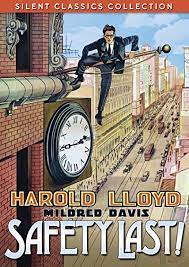 Safety Last (Dir. Fred C Newmeyer/Sam Taylor, US, 1923) (Screening format – not known, 73mins) A boy (Harold Lloyd) moves to New York City to make enough money to support his loving girlfriend (Mildred Davis), but soon discovers that making it in the big city is harder than it looks. When he hears that a store manager will pay $1,000 to anyone who can draw people to his store, he convinces his friend, the “human fly,” (Bill Strother) to climb the building and split the profit with him. But when his pal gets in trouble with the law, he must complete the crazy stunt on his own. The image of Harold Lloyd hanging desperately from the hands of a skyscraper clock during Safety Last! is one of the great icons of film history (although it was achieved with a certain amount of film trickery) and this remains one of the best and best loved comedies of the silent era. Find out more at rogerebert.com. With recorded score. Glasgow Film Theatre. Link
12 October
 Steamboat Bill Jr (Dir. Buster Keaton/Charles Reisner, US, 1928) (Screening format – not known, 71 mins) In Steamboat Bill Jr a crusty river boat captain hopes that his long departed son’s return will help him compete with a business rival. Unfortunately, William Canfield Jnr (Buster Keaton) is an effete college boy. Worse still, he has fallen for the business rival’s daughter (Marion Byron). Featuring some of Buster’s finest and most dangerous stunts, it’s a health and safety nightmare maybe but it’s entertainment that will live forever. The final storm sequence is still as breathtaking today as it was on first release. Not a commercial success at the time, this is now rightly regarded as a Keaton classic. Find out more at Wikipedia With live organ accompaniment from Donald MacKenzie. Priory Church, Bridlington Link
Safety Last (Dir. Fred C Newmeyer/Sam Taylor, US, 1923) (Screening format – not known, 73mins) A boy (Harold Lloyd) moves to New York City to make enough money to support his loving girlfriend (Mildred Davis), but soon discovers that making it in the big city is harder than it looks. When he hears that a store manager will pay $1,000 to anyone who can draw people to his store, he convinces his friend, the “human fly,” (Bill Strother) to climb the building and split the profit with him. But when his pal gets in trouble with the law, he must complete the crazy stunt on his own. The image of Harold Lloyd hanging desperately from the hands of a skyscraper clock during Safety Last! is one of the great icons of film history (although it was achieved with a certain amount of film trickery) and this remains one of the best and best loved comedies of the silent era. Find out more at rogerebert.com. With recorded score. Glasgow Film Theatre. Link
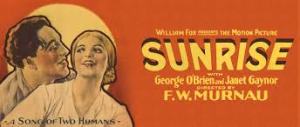 Sunrise; A Song of Two Humans (Dir. F W Murnau, US, 1927) (Screening format – not known, 94mins) F W Murnau’s debut American film, made at the technical zenith of the silent era but already heralding the arrival of the talkies being one of the first silents made with synchronized musical score and sound effects soundtrack. The simple story of a husband’s betrayal of his wife with a treacherous city girl, Sunrise moves
 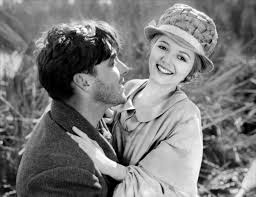 from a fairytale-like depiction of rural life to a dynamic portrait of the bustling modern American city. Explored in elaborate tracking shots by Charles Rocher and Karl Struss’s pioneering camerawork, the city set was one of the most costly yet produced. The result was a commercial flop, though the achievement did not go unheralded: Sunrise was awarded a special Oscar for unique and artistic production at the first ever Academy Awards and Janet Gaynor won the first Academy Award for Best Actress for her performance. The film’s legacy has endured, and it is now widely considered a masterpiece with many calling it the greatest film of the silent era. Find out more at theguardian.com With live musical accompaniment by Wurlitza. Village Hall, St Dominick, Cornwall Link
 The Flying Scotsman (Dir. Castleton Knight, UK, 1929) (Screening format – not known, 50mins) A thriller made in both silent and part-talkie versions set largely on the Flying Scotsman express between London and Edinburgh. A disgruntled railwayman
  (Alex Hurley) attempts to wreck the train after he is sacked after being caught drinking by the train’s driver Bob White (Moore Marriot), who is working his last day before retirement. White’s daughter Joan (Pauline Johnson) is also on the train, having fallen for White’s new fireman, Jim (Ray Milland). As well as being Milland’s first starring role, the film is also notable for all the stars doing their own stunts, including Pauline Johnson who was doubly challenged by wearing high heels while hanging off the side of the train. Find out more at heyuguys.com . With live piano accompaniment by Jane Gardner. Hippodrome Cinema, Bo’ness. Link
13 October
 Nosferatu (Dir. F W Murnau, 1922) (Screening format – not known, 96mins) A German Expressionist horror masterpiece starring Max Shreck as the vampire Count Orlok. The film was an unauthorised adaption of Bram Stoker’s ‘Dracula’ with names and other details changed because the studio could not obtain the rights to the novel. Stoker’s heirs sued over the adaption and a court ruling ordered that all copies of the film be destroyed. However, a few prints survived and the film came to be regarded as an inspirational master work of the cinema. In the film, Count Orlok travels across Europe leaving a trail of death in his wake. Brilliantly eerie, with imaginative touches which later adaptions never achieved. Find out more at wikipedia.org With live organ accompaniment from Donald MacKenzie. Paramount, Penistone Link
14 October
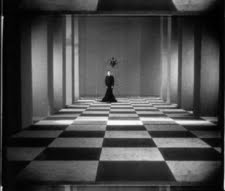 The Seashell and the Clergyman‘ ( aka La Coquille et le clergyman) (Dir. Germaine Dulac, Fr, 1928) + Foreign Body (Dir. Sára Ní Eithir, 2024) (Screening format – not known) Adapted from a story by Antonin Artaud, The Seashell and the Clergyman is now generally regarded by most critics as the first true Surrealist film, although its fame has largely been eclipsed by the later works of Man Ray ( L’Etoile de Mer, 1928) and Luis Buñuel and Salvador Dalí (Un Chien Andalou, 1929). The film tells of a young clergyman and his repressed sexual desire for a beautiful but unattainable aristocratic woman. and represented a critique of patriarchy – state and church – and of male sexuality.
 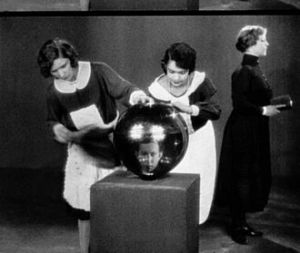 Director Dulac was already a successful filmmaker, albeit in a more conventional style, of which perhaps the best known today is The Smiling Madame Beudet (1923) a psychological melodrama. But The Seashell and The Clergyman represented a major departure from her previous work. However, on its initial French release, Artaud and other surrealists denounced the film and a virtual riot ensued at its first Paris screening. Nevertheless, the film was a crucial influence on future Surrealist films with the styles that Dulac employed in the film – superimpositions, montage, displacement shots, hallucinatory, spectral imagery – being reused in later, better-known Surrealist films. Upon coming before the British Board of Film Censors, they famously reported that the film was “so cryptic as to be almost meaningless. If there is a meaning, it is doubtless objectionable” and promptly banned it. Find out more at anothergaze.com Foreign Body is a new short silent film which explores themes of self-objectification, alienation and fetishisation in order to reveal the struggle of being in a female body today. Riffing on the poetic imagery and daring visual techniques of Dulac’s Seashell, the film creates a stirring 21st century response to the 1928 masterpiece by recontextualising these in contemporary film practice. With live musical accompaniment by The Hoolan Ensemble, a collective of composers and instrumentalists studying at the Royal Conservatoire of Scotland. Showcase Cinema, Sheffield Link
 The Ancient Law (aka Das Alte Gesetz) (Dir. E A Dupont, Ger, 1923) (Screening format – not known, 135 mins) In the mid 1800s in Galicia, Baruch Mayer (Ernst Deutsch), yearns to become an actor. Despite the expectation to follow in his father’s footsteps and become an orthodox rabbi, he breaks from tradition and
  leaves the shtetl in pursuit of his dream. Whilst performing in a traveling theatre troupe he meets the Austrian archduchess, Elisabeth Theresia (Henny Porten), who falls in love with the young man. With her support he joins the renowned Vienna’s Burg Theatre company where he soon rises to fame. “With its complex portrayal of orthodoxy and emancipation, E. A. Dupont’s period film marks a highpoint of Jewish filmmaking in Germany. Find out more at silentfilm.org Presented by Northern Silents. With live musical accompaniment by Alicia Svigals (klezmer violin) and Donald Sosin (piano). Link
15 October
The Seashell and the Clergyman‘ ( aka La Coquille et le clergyman) (Dir. Germaine Dulac, Fr, 1928) + Foreign Body (Dir. Sára Ní Eithir, 2024) (Screening format – not known) Adapted from a story by Antonin Artaud, The Seashell and the Clergyman is now generally regarded by most critics as the first true Surrealist film, although its fame has largely been eclipsed by the later works of Man Ray ( L’Etoile de Mer, 1928) and Luis Buñuel and Salvador Dalí (Un Chien Andalou, 1929). The film tells of a young clergyman and his repressed sexual desire for a beautiful but unattainable aristocratic woman. and represented a critique of patriarchy – state and church – and of male sexuality. Director Dulac was already a successful filmmaker, albeit in a more conventional style, of which perhaps the best known today is The Smiling Madame Beudet (1923) a psychological melodrama. But The Seashell and The Clergyman represented a major departure from her previous work. However, on its initial French release, Artaud and other surrealists denounced the film and a virtual riot ensued at its first Paris screening. Nevertheless, the film was a crucial influence on future Surrealist films with the styles that Dulac employed in the film – superimpositions, montage, displacement shots, hallucinatory, spectral imagery – being reused in later, better-known Surrealist films. Upon coming before the British Board of Film Censors, they famously reported that the film was “so cryptic as to be almost meaningless. If there is a meaning, it is doubtless objectionable” and promptly banned it. Find out more at anothergaze.com Foreign Body is a new short silent film which explores themes of self-objectification, alienation and fetishisation in order to reveal the struggle of being in a female body today. Riffing on the poetic imagery and daring visual techniques of Dulac’s Seashell, the film creates a stirring 21st century response to the 1928 masterpiece by recontextualising these in contemporary film practice. With live musical accompaniment by The Hoolan Ensemble, a collective of composers and instrumentalists studying at the Royal Conservatoire of Scotland. Plaza Community Cinema, Liverpool Link
The Ancient Law (aka Das Alte Gesetz) (Dir. E A Dupont, Ger, 1923) (Screening format – not known, 135 mins) In the mid 1800s in Galicia, Baruch Mayer (Ernst Deutsch), yearns to become an actor. Despite the expectation to follow in his father’s footsteps and become an orthodox rabbi, he breaks from tradition and leaves the shtetl in pursuit of his dream. Whilst performing in a traveling theatre troupe he meets the Austrian archduchess, Elisabeth Theresia (Henny Porten), who falls in love with the young man. With her support he joins the renowned Vienna’s Burg Theatre company where he soon rises to fame. “With its complex portrayal of orthodoxy and emancipation, E. A. Dupont’s period film marks a highpoint of Jewish filmmaking in Germany. Find out more at silentfilm.org Presented by Northern Silents. With live musical accompaniment by Alicia Svigals (klezmer violin) and Donald Sosin (piano). Link
16 October
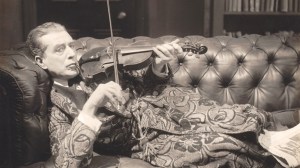 Silent Sherlock: Three Classic Cases The iconic screen Holmes of the silent era, Eille Norwood still holds the record for having appeared in more Sherlock Holmes films than any other actor connected to the role on the big screen. He portrayed the famous sleuth in 45 two-reelers across three series: The Adventures of Sherlock Holmes (1921), The Further Adventures of Sherlock Holmes (1922) and The Last Adventures of Sherlock Holmes (1923), plus two features, Hound of the Baskervilles (1921) and The Sign of Four (1923). Conan Doyle thoroughly approved of the first series to comprehensively, and closely, adapt his famous stories, and he particularly admired Norwood’s meticulous characterisation, observing: “His wonderful impersonation of Holmes has amazed me.” This LFF Archive Special Presentation features one episode from each of the three series: A Scandal in Bohemia, in which Holmes uncharacteristically falls for a woman; The Golden Pince-Nez, a classic example of Holmesian detection; and The Final Problem in which Holmes meets his nemesis, the sinister Dr Moriarty, with Cheddar Gorge famously standing in for the Reichenbach Falls. Presented as part of the London Film Festival. With live musical accompaniment comprising Joanna MacGregor conducting a live ensemble of ten players, in partnership with the Royal Academy of Music. Alexandra Palace, London Link
18 October
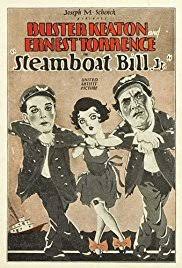 Steamboat Bill Jr (Dir. Buster Keaton/Charles Reisner, US, 1928) (Screening format – not known, 71 mins) In Steamboat Bill Jr a crusty river boat captain hopes that his long departed son’s return will help him compete with a business rival. Unfortunately, William Canfield Jnr (Buster Keaton) is an effete college boy. Worse still, he has fallen for the business rival’s daughter (Marion Byron). Featuring some of Buster’s finest and most dangerous stunts, it’s a health and safety nightmare maybe but it’s entertainment that will live forever. The final storm sequence is still as breathtaking today as it was on first release. Not a commercial success at the time, this is now rightly regarded as a Keaton classic. Find out more at Wikipedia With live musical accompaniment by Michael Holmes. Lucem House Community Cinema, St Helens Link
19 October
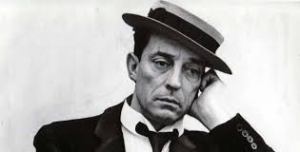 Blinking Buzzards – The UK Buster Keaton Society. Quarterly meeting of the society dedicated to the appreciation of the silent comedian. The last meeting of the year is a request session, so expect to see beloved gems chosen by Society members. With recorded score. Cinema Museum, Lambeth Link
 The City Without Jews (aka Die Stadt ohne Juden) (Dir. Hans Karl Breslauer, Aus, 1924) (Screening format – not known, 80mins) A dystopian prophecy of intolerance, Die Stadt ohne Juden is ominous, portentous, and completely unforgettable. H K Breslauer’s satirical dystopia shows the cultural and economic impoverishment of a city that expels its Jewish population, and is
 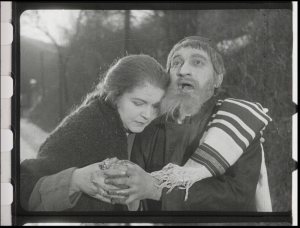 disturbingly prophetic in its depiction of the murderous anti-semitism in Vienna in the wake of the First World War. And the story of the film is almost as remarkable as its content. Lost during the Second World War, this version was only rediscovered in a Paris flea market in 2015. The political message is more sharply articulated in this newly restored version, with a hitherto lost ending and other sequences. For anyone interested in 20th-century history, this Austrian expressionist film is essential viewing.Find out more at theguardian.com. Presented by Northern Silents. With live musical accompaniment by Alicia Svigals (klezmer violin) and Donald Sosin (piano). Link
 The Manxman (Dir. Alfred Hitchcock, UK, 1929) (Screening format – not known, 100mins) In a small fishing community (with beautiful Cornish locations including Polperro village standing in for the story’s Isle of Man setting), two boyhood friends are inseparable as youths but take different paths in adulthood. When they both fall in love with Kate, the daughter of a puritanical Methodist, they are forced to deal with their own
 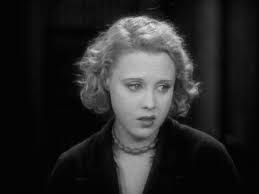 moral codes and with the strict Manx society in which they live. The Manxman was Hitchcock‘s last silent film, and one of his very best. Adapted from a novel by Hall Caine, which had already spawned a successful stage play and a previous film adaptation (d. George Loane Tucker, 1916), it was Hitchcock‘s last collaboration with writer Eliot Stannard, whose credit appears on all but one of the silent films. The film was a commercial success, described in Bioscope as a film of “remarkable power and gripping
  interest”, yet neither Hitchcock nor producer John Maxwell were happy with the film. Although somewhat stagey in places, the film effectively demonstrates the extent to which Hitchcock‘s visual style had developed in a short period, with this tempestuous melodrama certainly bursting with bold, Hitchcockian bravado and it shines even brighter thanks to the complex, sensual performance of Anny Ondra, as Kate. Find out more at wikipedia.org Presented by South West Silents. With live musical accompaniment from Stephen Horne. Polperro Village Hall, Polperro Link
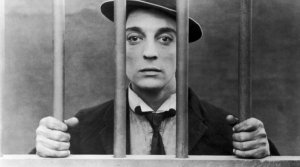 Blinking Buzzards – The UK Buster Keaton Society. Quarterly meeting of the society dedicated to the appreciation of the silent comedian. The last meeting of the year is a request session, so expect to see beloved gems chosen by Society members. With recorded score. Cinema Museum, Kennington Link
20 October
 The General (Dir. Buster Keaton/Clyde Bruckman, 1926) (Screening format – not known, 75mins) Widely considered one of the greatest films ever made and one of the most revered comedies of the silent era, Buster Keaton’s effortless masterpiece sees hapless Southern railroad engineer Johnny Gray (Keaton) facing off against Union soldiers during the American Civil War. When Johnny’s fiancée, Annabelle Lee (Marion Mack), is accidentally taken away while on a train stolen by Northern forces, Gray pursues the soldiers, using various modes of transportation in comic action scenes that highlight Keaton’s boundless, innovative wit and joyful, lighthearted dexterity, to reclaim the train and thereby save the South. Find out more at busterkeaton.com . With live musical accompaniment by Andrew Harrison King. The Magic Lantern, Tywyn Link
Nosferatu (Dir. F W Murnau, 1922) (Screening format – not known, 96mins) A German Expressionist horror masterpiece starring Max Shreck as the vampire Count Orlok. The film was an unauthorised adaption of Bram Stoker’s ‘Dracula’ with names and other details changed because the studio could not obtain the rights to the novel. Stoker’s heirs sued over the adaption and a court ruling ordered that all copies of the film be destroyed. However, a few prints survived and the film came to be regarded as an inspirational master work of the cinema. In the film, Count Orlok travels across Europe leaving a trail of death in his wake. Brilliantly eerie, with imaginative touches which later adaptions never achieved. Find out more at wikipedia.org With live musical accompaniment by Hugo Max. Aldeburgh Cinema, Suffolk Link
21 October
Safety Last (Dir. Fred C Newmeyer/Sam Taylor, US, 1923) (Screening format – digital, 73mins) A boy (Harold Lloyd) moves to New York City to make enough money to support his loving girlfriend (Mildred Davis), but soon discovers that making it in the big city is harder than it looks. When he hears that a store manager will pay $1,000 to anyone who can draw people to his store, he convinces his friend, the “human fly,” (Bill Strother) to climb the building and split the profit with him. But when his pal gets in trouble with the law, he must complete the crazy stunt on his own. The image of Harold Lloyd hanging desperately from the hands of a skyscraper clock during Safety Last! is one of the great icons of film history (although it was achieved with a certain amount of film trickery) and this remains one of the best and best loved comedies of the silent era. Find out more at rogerebert.com. With recorded score. BFI Southbank, London Link
23 October
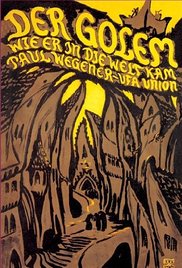 The Golem: How He Came into the World (Dir. Paul Wegener, Ger, 1920) (Screening format – not known, 60mins) This is the only surviving film of the Golem trilogy, made by German expressionist film director Wegener. Based on the old Jewish folk legend of a clay creature that is brought to life by black magic, Wegener wrote and directed the film and also starred as the Golem. The story is set in the ghetto of Medieval Prague where sorcerer and astrologer Rabbi Loew creates the Golem to save the Jewish community from persecution by the tyrannical Emperor Rudolph II. But the creature gets out of control and becomes a terrifying force of destruction, trailing fire and death in its wake. Find out more at albany.edu With live musical accompaniment by Hugo Max. Harbour Lights Picturehouse, Southampton Link
24 October
 The Mark Of Zorro (Dir. Fred Niblo, US, 1920) (Screening format – digital, 85mins) Don Diego Vega (Douglas Fairbanks) masquerades as an ineffectual fop to bamboozle his enemies and conceal his secret persona: ‘Zorro’: avenger of the oppressed. The first King of Hollywood – dashing, athletic Fairbanks, pretty much defined the swashbuckling genre with this rip-roaring adventure flick. Featuring horseback stunts, witty chase sequences and sword fighting, this entertaining romp achieves a satisfying blend of humour and heroics that remains the benchmark for action films today. Find out more at silentfilm.org Introduced by BFI National Archive curator Bryony Dixon. With recorded score. BFI Southbank, London Link
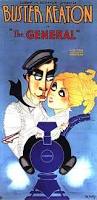 The General (Dir. Buster Keaton/Clyde Bruckman, US, 1926) (Screening format – not known, 75mins) Widely considered one of the greatest films ever made and one of the most revered comedies of the silent era, Buster Keaton’s effortless masterpiece sees hapless Southern railroad engineer Johnny Gray (Keaton) facing off against Union soldiers during the American Civil War. When Johnny’s fiancée, Annabelle Lee (Marion Mack), is accidentally taken away while on a train stolen by Northern forces, Gray pursues the soldiers, using various modes of transportation in comic action scenes that highlight Keaton’s boundless, innovative wit and joyful, lighthearted dexterity, to reclaim the train and thereby save the South. Find out more at busterkeaton.com . With live organ accompaniment by Darius Battiwalla. RNCM, Manchester Link
25 October
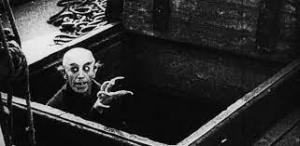 Nosferatu (Dir. F W Murnau, 1922) (Screening format – not known, 96mins) A German Expressionist horror masterpiece starring Max Shreck as the vampire Count Orlok. The film was an unauthorised adaption of Bram Stoker’s ‘Dracula’ with names and other details changed because the studio could not obtain the rights to the novel. Stoker’s heirs sued over the adaption and a court ruling ordered that all copies of the film be destroyed. However, a few prints survived and the film came to be regarded as an inspirational master work of the cinema. In the film, Count Orlok travels across Europe leaving a trail of death in his wake. Brilliantly eerie, with imaginative touches which later adaptions never achieved. Find out more at wikipedia.org With live organ accompaniment by Donald Mackenzie. Regent Street Cinema, London Link
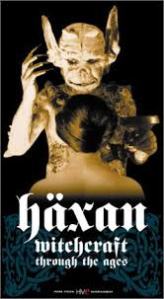 Haxan: Witchcraft Through the Ages (Dir. Benjamin Christensen, Swe., 1922) ( Screening format – not known, 105mins) A fictionalized documentary with dramatic reconstructions showing the evolution of witchcraft, from its pagan roots to its confusion with hysteria in modern (1922) Europe. Based partly on Christensen’s study of the Malleus Maleficarum, a 15th-century
  German guide for inquisitors, Häxan is a study of how superstition and the misunderstanding of diseases and mental illness could lead to the hysteria of the witch hunts. Although it won acclaim in Denmark and Sweden when first released, Haxan was heavily censored or banned outright in many countries. But it is now considered to be Christensen’s finest work, a witches’ brew of the scary, the grotesque, and the darkly humorous. Find out more at thedevilsmanor.blogspot.co.uk . With live musical accompaniment by Hugo Max. Ultimate Picture Palace, Oxford Link
26 October
 Xi Xiang Ji (aka Romance of the Western Chamber, aka Way Down West) (Dir. Hou Yao, China, 1927) (Screening format – 35mm, 45mins) Romance of the Western Chamber is based on the play of the same name and dating back to the Yuan Dynasty (1234-1368) and written by playright Wang Shifu. In ancient China, a young scholar named Chang Kung is on his way to the capital to take the imperial exam. He stops at a temple to rest and study for the night where he meets Ying Ying, the beautiful
  daughter of the late Prime Minister. He is immediately smitten by the young beauty, but he can do nothing about it since they are from different classes. The bandit king Sung Fei Fu hears about Ying Ying’s beauty too, and decides to have her for himself. He calls together his bandit horde and sets out to attack the temple. Once there he demands that the priests turn over the young girl or he will burn the temple to the ground. Inside everyone is panicking. Madam Cui, Ying Ying’s mother, proclaims that she will give Ying Ying’s hand to whoever can defeat the bandit army. This is all Chang needs to hear. He hatches a plan that just might save all of their lives. Find out more at wikipedia.org With live musical accompaniment by Aurora Engine. Film Theatre, Glasgow Link
 Battleship Potemkin (Dir. Sergei Eisenstein, 1925) (Screening format – digital, 75mins) Considered one of the most important films in the history of silent pictures, as well as possibly Eisenstein’s greatest work, Battleship Potemkin brought Eisenstein’s theories of cinema art to the world in a powerful showcase; his emphasis on montage, his stress of intellectual contact, and his treatment of the mass instead of the individual as the protagonist. The film tells the story of the mutiny on the Russian ship Prince Potemkin during the 1905 uprising.Their mutiny was short-lived, however, as during their attempts to get the population of Odessa to join the uprising, soldiers arrived and laid waste to the insurgents. Battleship Potemkin is a work of extraordinary pictorial beauty and great elegance of form. Find out more at classicartfilms.com With recorded Edmund Meisel score. BFI Southbank, London Link
Nosferatu (Dir. F W Murnau, 1922) (Screening format – not known, 96mins) A German Expressionist horror masterpiece starring Max Shreck as the vampire Count Orlok. The film was an unauthorised adaption of Bram Stoker’s ‘Dracula’ with names and other details changed because the studio could not obtain the rights to the novel. Stoker’s heirs sued over the adaption and a court ruling ordered that all copies of the film be destroyed. However, a few prints survived and the film came to be regarded as an inspirational master work of the cinema. In the film, Count Orlok travels across Europe leaving a trail of death in his wake. Brilliantly eerie, with imaginative touches which later adaptions never achieved. Find out more at wikipedia.org With live musical accompaniment by Hugo Max. Prince Charles Cinema, London Link
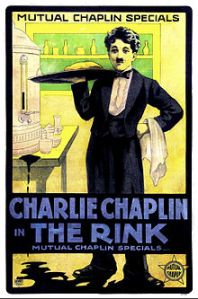 Silent Comedy Triple Bill Featuring; The Rink (1916) directed by and starring Charlie Chaplin as the Tramp working as a waiter in a high-class restaurant and bunking off to the roller-skating rink in his spare time, where he gets involved with a beautiful skater and a
  philandering villain, culminating in the roller-chase of all time! ; The High Sign (1921) which sees Buster Keaton looking for work on the beach boardwalk and unwittingly ending up as a paid assassin for a bunch of crooks. The final chase through the walls and floors of a two-storey house has to be seen to be believed! ; and Never Weaken (1921) in which the ever bespectacled Harold Lloyd clings to a high building after attempting suicide on mistakenly believing his girlfriend loves another – high above Los Angeles, he must use his wits to dodge girders and cranes as he attempts to get back to her from a half-built skyscraper! With live piano accompaniment by Neil Brand. Hippordome Cinema, Bo’ness Link
27 October
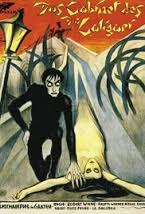 Cabinet of Dr Caligari (Dir. Robert Wiene, 1920) (Screening format – not known, 77 mins) In the village of Holstenwall, fairground hypnotist Dr Caligari (Werner Krauss) puts on show a somnambulist called Cesare (Conrad Veidt) who has been asleep for twenty three years. At night, Cesare walks the streets murdering people on the doctor’s orders. A student (Friedrich Feher) suspects Caligari after a friend is found dead and it transpires that the doctor is the director of a lunatic asylum. Fueled by the pessimism and gloom of post-war Germany, the sets by Hermann Warm stand unequaled as a shining example of Expressionist design. Find out more at wikipedia.org. With live organ accompaniment by Darius Battiwalla. Wainsgate Chapel, Hebden Bridge Link
Nosferatu (Dir. F W Murnau, 1922) (Screening format – not known, 96mins) A German Expressionist horror masterpiece starring Max Shreck as the vampire Count Orlok. The film was an unauthorised adaption of Bram Stoker’s ‘Dracula’ with names and other details changed because the studio could not obtain the rights to the novel. Stoker’s heirs sued over the adaption and a court ruling ordered that all copies of the film be destroyed. However, a few prints survived and the film came to be regarded as an inspirational master work of the cinema. In the film, Count Orlok travels across Europe leaving a trail of death in his wake. Brilliantly eerie, with imaginative touches which later adaptions never achieved. Find out more at wikipedia.org With live piano accompaniment by Lillian Henley. Palace Cinema, Broadstairs. Link
The Golem: How He Came into the World (Dir. Paul Wegener, Ger, 1920) (Screening format – not known, 60mins) This is the only surviving film of the Golem trilogy, made by German expressionist film director Wegener. Based on the old Jewish folk legend of a clay creature that is brought to life by black magic, Wegener wrote and directed the film and also starred as the Golem. The story is set in the ghetto of Medieval Prague where sorcerer and astrologer Rabbi Loew creates the Golem to save the Jewish community from persecution by the tyrannical Emperor Rudolph II. But the creature gets out of control and becomes a terrifying force of destruction, trailing fire and death in its wake. Find out more at albany.edu With live musical accompaniment by Hugo Max. Little Theatre Picturehouse, Bath Link
 The Cat And The Canary (Dir. Paul Leni, US, 1927) (Screening format – not known, 82mins) The Cat and the Canary, originally a stage play, weaves a tale now very familiar to lovers of the horror genre. Cyrus West, a millionaire, died a presumed madman. His will is only to be read 20 years following his death. The heir? A 20-something girl by the name of Annabelle West. However, the will has an odd condition – since the greed of West’s family drove him to madness (like cats surrounding a canary), Annabelle must be deemed psychologically sound, or the money turns over to a secret heir named in an
 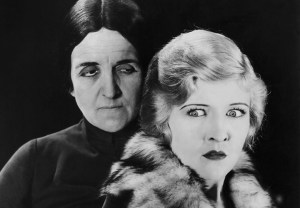 envelope held by Mr. Crosby, the lawyer overseeing the will reading. Mr. Crosby soon goes missing, with Annabelle the only witness to his disappearance. Is Annabelle spiraling into insanity? Or is the mystery heir pushing her there? The film takes us on a twisty whodunit, one of the very first of the genre, and indubitably one of the few that withstands the test of time. Directed by German expressionist film-maker Paul Leni, his first Hollywood film after having been recruited by producer Carl Laemmle for Universal, and remade three times in the sound era, this silent version is considered the definitive rendering. Find out more at silentfilm.org. Presented by Northern Silents. With live musical accompaniment by Jonny Best (piano) . Old Woolen, Link
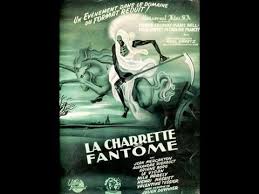 The Phantom Carriage (Dir. Victor Sjöström, Swe, 1921) (Screening format – not known, 107mins) The last person to die on New Year’s Eve before the clock strikes twelve is doomed to take the reins of Death’s chariot and work tirelessly collecting fresh souls for the next year. So says the legend that drives The Phantom Carriage (Körkarlen), directed by the father of Swedish cinema, Victor Sjöström. The story,
  based on a novel by Nobel Prize winner Selma Lagerlöf, concerns an alcoholic, abusive ne’er-do-well (Sjöström himself) who is shown the error of his ways, and the pure-of-heart Salvation Army sister who believes in his redemption. This extraordinarily rich and innovative silent classic (which inspired Ingmar Bergman to make movies) is a Dickensian ghost story and a deeply moving morality tale, as well as a showcase for groundbreaking special effects. Find out more at lukemcgrath.co.uk With live organ accompaniment by Donald Mackenzie. Musical Museum, Brentford Link
28 October
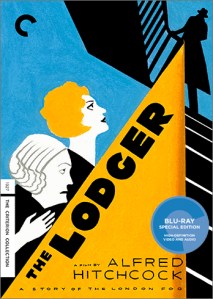 The Lodger: A Story of the London Fog (Dir. Alfred Hitchcock, UK, 1927) (Screening format – not known, 91 mins ) In The Lodger, a serial killer known as “The Avenger” is on the loose in London, murdering blonde women. A mysterious man (Ivor Novello) arrives at the house of Mr. and Mrs. Bunting looking for a room to rent. The Bunting’s daughter (June Tripp) is a blonde model and is seeing one of the detectives
 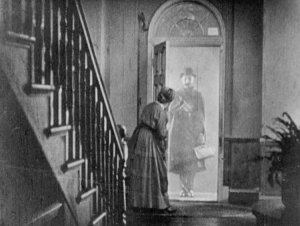 (Malcolm Keen) assigned to the case. The detective becomes jealous of the lodger and begins to suspect he may be the avenger. Based on a best-selling novel by Marie Belloc Lowndes, first published in 1913, loosely based on the Jack the Ripper murders, The Lodger was Hitchcock’s first thriller, and his first critical and commercial success. Made shortly after his return from Germany, the film betrays the influence of the German expressionist tradition established in such films as The Cabinet of Dr. Caligari (1919) and Nosferatu (1922). Find out more at silentfilm.org. With live musical accompaniment by Hugo Max. Stockport Plaza, Greater Manchester Link
29 October
Battleship Potemkin (Dir. Sergei Eisenstein, 1925) (Screening format – digital, 75mins) Considered one of the most important films in the history of silent pictures, as well as possibly Eisenstein’s greatest work, Battleship Potemkin brought Eisenstein’s theories of cinema art to the world in a powerful showcase; his emphasis on montage, his stress of intellectual contact, and his treatment of the mass instead of the individual as the protagonist. The film tells the story of the mutiny on the Russian ship Prince Potemkin during the 1905 uprising.Their mutiny was short-lived, however, as during their attempts to get the population of Odessa to join the uprising, soldiers arrived and laid waste to the insurgents. Battleship Potemkin is a work of extraordinary pictorial beauty and great elegance of form. Find out more at classicartfilms.com With recorded Edmund Meisel score. BFI Southbank, London Link
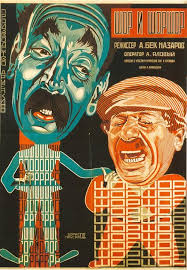 Shor and Shorshor (Dir. Hamo Beknazaryan, USSR, 1926) (Screening format – not known, 55mins) Shor and Shorshor was the first Armenian comedy to be released on the screen in 1926. Inspired by a friendly conversation, Beknazaryan expressed his desire to attempt filming a comedy. He wrote the script for the film in one night, based on the the same name story by Mushegh Bagratuni. Three days later, Beknazaryan submitted the script to the Art Council, which was considered and
 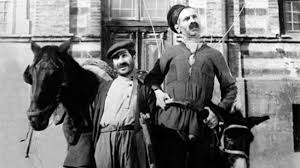 approved on the same day. The film narrates the humorous escapades of Shor and Shorshor – two lazy and alcoholic best friends. Film critics rated “Shor and Shorshor” as one of the most successful comedies of its time. Beknazaryan was a cinema pioneer in both Armenia and Georgia, initially as an actor then as a film director. He became director of the Georgian State Film Industry and was instrumental in the establishment of the Armenian film industry. Moving on from silent film he directed Armenia’s first sound film in 1935 and remained active until the late 1950s. Find out more at wikipedia.org With live electro-cello musical accompaniment by Artyom Manukyan. BFI Southbank, London Link
 Neil Brand Presents Laurel And Hardy After the national success of his long-running show ‘Neil Brand Presents Buster Keaton’, the composer/writer/broadcaster/musician returns with an all-new show about the immortal comedy duo recently portrayed in the hit film ‘Stan and Ollie’. Fully illustrated with stills, clips (both silent and sound) and Neil’s superlative piano accompaniment and culminating in two of the Boys’ best silent short films, Big Business and Liberty, this is a show that promises gales of laughter throughout, as well as getting under the skin of two warm, funny men who continue to make the world laugh when it needs it most. With live piano accompaniment by Neil Brand. Malthouse Theatre, Canterbury Link
30 October
 Nosferatu (Dir. F W Murnau, 1922) (Screening format – not known, 96mins) A German Expressionist horror masterpiece starring Max Shreck as the vampire Count Orlok. The film was an unauthorised adaption of Bram Stoker’s ‘Dracula’ with names and other details changed because the studio could not obtain the rights to the novel. Stoker’s heirs sued over the adaption and a court ruling
 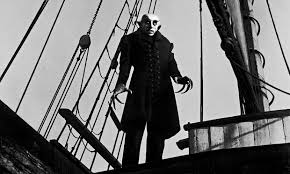 ordered that all copies of the film be destroyed. However, a few prints survived and the film came to be regarded as an inspirational master work of the cinema. In the film, Count Orlok travels across Europe leaving a trail of death in his wake. Brilliantly eerie, with imaginative touches which later adaptions never achieved. Additionally, there is a screening of Disney’s The Skeleton Dance from the 1929 Silly Symphonies cartoons, a beloved animated classic
  that has entertained audiences of all ages for nearly a century. Find out more at wikipedia.org With live musical accompaniment by the 16 strong Brixton Chamber Orchestra, performing Hans Erdmann’s original score for the film. There will be two screenings, a Halloween-themed afternoon matinee for kids and an evening screening which will also include a newly commissioned horror short by local Brixton filmmakers (and a free Brixton Brewery beer!!). Brixton Ritzy, London Link
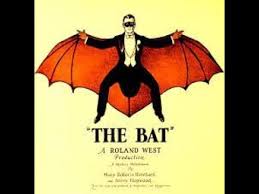 The Bat (Dir. Roland West, US, 1926) (Screening format – digital, 90 mins) The Bat, a master criminal terrorizing the city wearing a fearsome bat costume, sets his sinister sights on the eerie Fleming mansion. Within the walls of this spooky house, a bank robber has stashed $20,000 in stolen loot. Leasing the mansion is the wealthy Cornelia Van Gorder, along with her niece Dale. Dale’s fiance, Brooks Bailey, a
 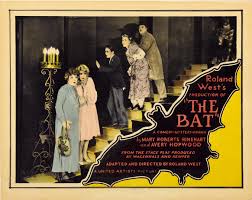 cashier at the bank, becomes the prime suspect in the robbery investigation. But after the bank president is found dead, we’re in old dark house territory and everybody is a suspect. Based on the famous play by Mary Roberts Rinehart and Avery Hopwood, The Bat is renowned for its expert use of miniatures and striking set designs by William
  Cameron Menzies. In 1930, Roland West skillfully remade the film as a talkie, The Bat Whispers. Vincent Price starred in yet another version of The Bat in 1959. West, an innovator of movie-making techniques in the silent era, also made The Monster in 1925 with legendary silent star Lon Chaney. Along with the 1927 classic, The Cat And The Canary, The Bat is highly regarded as a prototype for the haunted house film genre that flourished in the ’30s and ’40s. Find out more at silentology.wordpress.com Presented by the Kennington Bioscope. With live piano accompaniment. Cinema Museum, Kennington. Link
31 October
Nosferatu (Dir. F W Murnau, 1922) (Screening format – not known, 96mins) A German Expressionist horror masterpiece starring Max Shreck as the vampire Count Orlok. The film was an unauthorised adaption of Bram Stoker’s ‘Dracula’ with names and other details changed because the studio could not obtain the rights to the novel. Stoker’s heirs sued over the adaption and a court ruling ordered that all copies of the film be destroyed. However, a few prints survived and the film came to be regarded as an inspirational master work of the cinema. In the film, Count Orlok travels across Europe leaving a trail of death in his wake. Brilliantly eerie, with imaginative touches which later adaptions never achieved. Find out more at wikipedia.org Presented as part of the St Albans Film Festival. With live improvised musical accompaniment at the organ, piano and electronics, by students from the Royal Academy of Music led by organist and improviser Franz Danksagmüller. St Albans Cathedral, St Albans Link
Nosferatu (Dir. F W Murnau, 1922) (Screening format – not known, 96mins) A German Expressionist horror masterpiece starring Max Shreck as the vampire Count Orlok. The film was an unauthorised adaption of Bram Stoker’s ‘Dracula’ with names and other details changed because the studio could not obtain the rights to the novel. Stoker’s heirs sued over the adaption and a court ruling ordered that all copies of the film be destroyed. However, a few prints survived and the film came to be regarded as an inspirational master work of the cinema. In the film, Count Orlok travels across Europe leaving a trail of death in his wake. Brilliantly eerie, with imaginative touches which later adaptions never achieved. Find out more at wikipedia.org With live musical accompaniment by Hugo Max. Prince Charles Cinema, London Link
Cabinet of Dr Caligari (Dir. Robert Wiene, 1920) (Screening format – not known, 77 mins) In the village of Holstenwall, fairground hypnotist Dr Caligari (Werner Krauss) puts on show a somnambulist called Cesare (Conrad Veidt) who has been asleep for twenty three years. At night, Cesare walks the streets murdering people on the doctor’s orders. A student (Friedrich Feher) suspects Caligari after a friend is found dead and it transpires that the doctor is the director of a lunatic asylum. Fueled by the pessimism and gloom of post-war Germany, the sets by Hermann Warm stand unequaled as a shining example of Expressionist design. Find out more at wikipedia.org. With live organ accompaniment by Darius Battiwalla. Howard Assembly Rooms, Leeds Link
 Silentfilmcalendar.org