
1 October
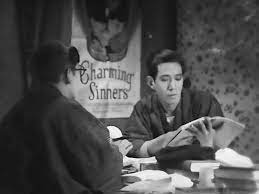 I Flunked But….. (Dir. Yasujirō Ozu, Jap, 1930) (Screening format – digital, 65mins) A college student attempts to cheat on his final exams by scribbling notes on his shirt; naturally his best-laid plans go awry. After this he is left to reassess his life and education and get back on track. Featuring legendary actors Chishu Ryu and Kinuyo Tanaka in significant early roles, I Flunked But… is an excellent example of Ozu’s student films, initially playful, even channelling the spirit of Harold Lloyd and Ernst Lubitsch in its knockabout comedy, before proceeding to acknowledge the weight of responsibility that comes with age. The sophistication hinted at here would become increasingly refined as Ozu’s career progressed. Find out more at a2pcinema.com/ozu-san Introduced by Professor Jinhee Choi, King’s College London. With recorded score. BFI Southbank, London Link
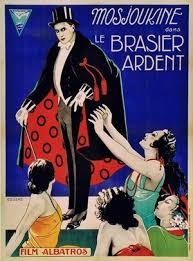 Le Brasier Ardent (Dir. Ivan Mosjoukine, Fr, 1923) (Screening format – digital). Russian-born stage and film actor Ivan Mozzhukhin left his native country following the 1917 revolution and, having initially taken refuge in Crimea, settled in Paris. He became a major star of French cinema, after adjusting the spelling of his surname to the more gallic `Mosjoukine’. He wrote most of his French films and directed two of them, L’Enfant du Carnaval and the present example, Le Brasier Ardent. This means literally `the burning brazier’ or `the burning crucible’, but is also known in English variously as The Blazing Inferno, The Burning Cauldron and Burning Embers. Following a brief, unsuccessful time in Hollywood, he returned to Europe and appeared in German films until the rise of the Nazi party prompted a move back to France. Le Brasier
 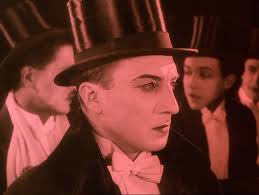 Ardent combines elements of comedy, mystery, romance and psychological drama, placed within often
  surreal contexts such as oversized sets designed to call into question concepts of reality. The plot – about a husband engaging a detective (Mosjoukine) to tail his much younger wife (Nathalie Lissenko, Mosjoukine’s real-life spouse at the time) – was essentially no more than a framework for these various devices, which in total have been described as constituting `a semi-comic Kafkaesque nightmare’. A surreal treasure. Find out more at moviessilently.com Presented by the Kennington Bioscope. With live piano accompaniment by Ashley Valentine. Cinema Museum, Lambeth Link
2 October
 Nosferatu (Dir. F W Murnau, 1922) (Screening format – not known, 96mins) A German Expressionist horror masterpiece starring Max Shreck as the vampire Count Orlok. The film was an unauthorised adaption of Bram Stoker’s ‘Dracula’ with names and other details changed because the studio could not obtain the rights to the novel. Stoker’s heirs sued over the adaption and a court ruling ordered that all copies of the film be destroyed. However, a few prints survived and the film came to be regarded as an inspirational master work of the cinema. In the film, Count Orlok travels across Europe leaving a trail of death in his wake. Brilliantly eerie, with imaginative touches which later adaptions never achieved. Find out more at wikipedia.org With recorded musical accompaniment adapted from Radiohead’s Kid A (2000) and Amnesiac (2001) albums. Eden Court, Inverness Link
Nosferatu (Dir. F W Murnau, 1922) (Screening format – not known, 96mins) A German Expressionist horror masterpiece starring Max Shreck as the vampire Count Orlok. The film was an unauthorised adaption of Bram Stoker’s ‘Dracula’ with names and other details changed because the studio could not obtain the rights to the novel. Stoker’s heirs sued over the adaption and a court ruling ordered that all copies of the film be destroyed. However, a few prints survived and the film came to be regarded as an inspirational master work of the cinema. In the film, Count Orlok travels across Europe leaving a trail of death in his wake. Brilliantly eerie, with imaginative touches which later adaptions never achieved. Find out more at wikipedia.org With recorded musical accompaniment adapted from Radiohead’s Kid A (2000) and Amnesiac (2001) albums. Depot, Lewis Link
Nosferatu (Dir. F W Murnau, 1922) (Screening format – not known, 96mins) A German Expressionist horror masterpiece starring Max Shreck as the vampire Count Orlok. The film was an unauthorised adaption of Bram Stoker’s ‘Dracula’ with names and other details changed because the studio could not obtain the rights to the novel. Stoker’s heirs sued over the adaption and a court ruling ordered that all copies of the film be destroyed. However, a few prints survived and the film came to be regarded as an inspirational master work of the cinema. In the film, Count Orlok travels across Europe leaving a trail of death in his wake. Brilliantly eerie, with imaginative touches which later adaptions never achieved. Find out more at wikipedia.org With recorded musical accompaniment adapted from Radiohead’s Kid A (2000) and Amnesiac (2001) albums. Cromarty Cinema, Cromarty Link
3 October
 Cabinet of Dr Caligari (Dir. Robert Wiene, 1920) (Screening format – not known, 77 mins) In the village of Holstenwall, fairground hypnotist Dr Caligari (Werner Krauss) puts on show a somnambulist called Cesare (Conrad Veidt) who has been asleep for twenty three years. At night, Cesare walks the streets murdering people on the doctor’s orders. A student (Friedrich Feher) suspects Caligari after a friend is found dead and it transpires that the doctor is the director of a lunatic asylum. Fueled by the pessimism and gloom of post-war Germany, the sets by Hermann Warm stand unequaled as a shining example of Expressionist design. Find out more at wikipedia.org. With live musical accompaniment by Hugo Max. Well Walk Theatre, London Link
 Phantom Of The Opera (Dir. Rupert Julian, 1925) (Screening format – not known, 103mins) A title that needs no introduction, The Phantom of the Opera has spawned many remakes, remasters and sequels. This original film version, produced with moments of early Technicolour, sees Lon Chaney, the ‘Man of a Thousand Faces’ perform one of his most iconic roles. His ghastly make-up and outrageous performance made this title a benchmark in the American silent film era. The film was a critical and commercial success upon release, and still stands as an important film in cinematic history to this day. Famed for the phantom’s shock unmasking, incredible set designs and the masked ball sequence, it still packs a punch. Find out more at wikipedia.org With live musical accompaniment by Minima. The Nutshell, Winchester Link
4 October
Nosferatu (Dir. F W Murnau, 1922) (Screening format – not known, 96mins) A German Expressionist horror masterpiece starring Max Shreck as the vampire Count Orlok. The film was an unauthorised adaption of Bram Stoker’s ‘Dracula’ with names and other details changed because the studio could not obtain the rights to the novel. Stoker’s heirs sued over the adaption and a court ruling ordered that all copies of the film be destroyed. However, a few prints survived and the film came to be regarded as an inspirational master work of the cinema. In the film, Count Orlok travels across Europe leaving a trail of death in his wake. Brilliantly eerie, with imaginative touches which later adaptions never achieved. Find out more at wikipedia.org With live musical accompaniment by Darius Battiwalla. Jesmond Parish Church, Newcastle Link
 Battleship Potemkin (Dir. Sergei Eisenstein, 1925) (Screening format – not known, 75mins) Considered one of the most important films in the history of silent pictures, as well as possibly Eisenstein’s greatest work, Battleship Potemkin brought Eisenstein’s theories of cinema art to the world in a powerful showcase; his emphasis on montage, his stress of intellectual contact, and his treatment of the mass instead of the individual as the protagonist. The film tells the story of the mutiny on the Russian ship Prince Potemkin during the 1905 uprising.Their mutiny was short-lived, however, as during their attempts to get the population of Odessa to join the uprising, soldiers arrived and laid waste to the insurgents. Battleship Potemkin is a work of extraordinary pictorial beauty and great elegance of form. Find out more at classicartfilms.com With live musical accompaniment from S!nk (Daniel Dumnov, Matt Wright, Tim Vincent-Smith) Hippodrome Cinema, Bo’ness Link
Nosferatu (Dir. F W Murnau, 1922) (Screening format – not known, 96mins) A German Expressionist horror masterpiece starring Max Shreck as the vampire Count Orlok. The film was an unauthorised adaption of Bram Stoker’s ‘Dracula’ with names and other details changed because the studio could not obtain the rights to the novel. Stoker’s heirs sued over the adaption and a court ruling ordered that all copies of the film be destroyed. However, a few prints survived and the film came to be regarded as an inspirational master work of the cinema. In the film, Count Orlok travels across Europe leaving a trail of death in his wake. Brilliantly eerie, with imaginative touches which later adaptions never achieved. Find out more at wikipedia.org With live musical accompaniment by Hugo Max. Well Walk Theatre, London Link
5 October
 Piccadilly (Dir E A Dupont, UK, 1929) (Screening format – not known, 92 mins) A film noir before the term was in use, uncredited German director E.A. Dupont’s Piccadilly is one of the true greats of British silent films, on a par with the best of Anthony Asquith or Alfred Hitchcock during this period. Valentine Wilmot (Jameson Thomas) owns a nightclub featuring dancers Mabel (Gilda Gray) and Vic (Cyril Ritchard). After a confrontation with Wilmot, Vic quits performing at the club. When the joint starts losing business, a
  desperate Wilmot hires former dishwasher Shosho (Anna May Wong) as a dancer. She is an instant hit and forms a rapport with Wilmot, which makes both Mabel and Shosho’s friend (King Ho Chang) jealous, leading to a mysterious murder. A stylish evocation of Jazz Age London, with dazzlingly fluid cinematography and scenes ranging from the opulent West End to the seediness of Limehouse. One of the pinnacles of British silent cinema, Piccadilly is a sumptuous show business melodrama seething with sexual and racial tension – with an original screenplay by Arnold Bennett. Find out more at screenonline.org.uk. With recorded Neil Brand score. BFI Southbank, London Link
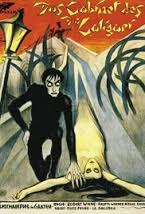 Cabinet of Dr Caligari (Dir. Robert Wiene, 1920) (Screening format – not known, 77 mins) In the village of Holstenwall, fairground hypnotist Dr Caligari (Werner Krauss) puts on show a somnambulist called Cesare (Conrad Veidt) who has been asleep for twenty three years. At night, Cesare walks the streets murdering people on the doctor’s orders. A student (Friedrich Feher) suspects Caligari after a friend is found dead and it transpires that the doctor is the director of a lunatic asylum. Fueled by the pessimism and gloom of post-war Germany, the sets by Hermann Warm stand unequaled as a shining example of Expressionist design. Find out more at wikipedia.org. With live musical accompaniment by Hugo Max. City Screen Picturehouse, York Link
6 October
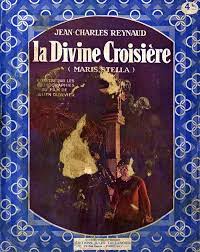 The Divine Voyage (Dir. Julien Duvivier, Fr, 1929) (Screening format – not known, 95mins) The bleak view of humanity that preoccupies Julien Duvivier’s later films, such as Pépé le Moko (1937), is also evident in his silent film work. Rapacious businessman Claude Ferjac sends his ship, La Cordillère, on a long trading voyage – knowing it has been poorly repaired and
 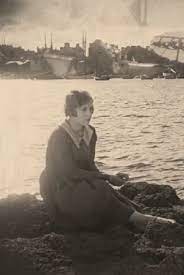 is likely to sink. An entire village of sailors, desperate to support their families, has no choice but to set sail. A gripping adventure and a tale of faith and hope, this little-known gem of French cinema takes unforeseen and magical turns as the sailors’ destiny unfolds. Admired by Ingmar Bergman and Orson Wells, director Julien Duvivier shot the film among the seafaring locals on the coasts of Brittany and Normandy. Lush photography and an exceedingly eventful plot combine to create an experience both entertaining and beautifully poetic. Find out more at moma.org. Presented by Northern Silents. With live improvised musical accompaniment by Frame Ensemble. , Link
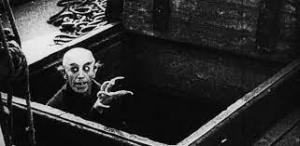 Nosferatu (Dir. F W Murnau, 1922) (Screening format – not known, 96mins) A German Expressionist horror masterpiece starring Max Shreck as the vampire Count Orlok. The film was an unauthorised adaption of Bram Stoker’s ‘Dracula’ with names and other details changed because the studio could not obtain the rights to the novel. Stoker’s heirs sued over the adaption and a court ruling ordered that all copies of the film be destroyed. However, a few prints survived and the film came to be regarded as an inspirational master work of the cinema. In the film, Count Orlok travels across Europe leaving a trail of death in his wake. Brilliantly eerie, with imaginative touches which later adaptions never achieved. Find out more at wikipedia.org With live musical accompaniment by Hugo Max. Prince Charles Theatre, London Link
7 October
I Flunked But….. (Dir. Yasujirō Ozu, Jap, 1930) (Screening format – digital, 65mins) A college student attempts to cheat on his final exams by scribbling notes on his shirt; naturally his best-laid plans go awry. After this he is left to reassess his life and education and get back on track. Featuring legendary actors Chishu Ryu and Kinuyo Tanaka in significant early roles, I Flunked But… is an excellent example of Ozu’s student films, initially playful, even channelling the spirit of Harold Lloyd and Ernst Lubitsch in its knockabout comedy, before proceeding to acknowledge the weight of responsibility that comes with age. The sophistication hinted at here would become increasingly refined as Ozu’s career progressed. Find out more at a2pcinema.com/ozu-san With recorded score. BFI Southbank, London Link
8 October
 Phantom Of The Opera (Dir. Rupert Julian, 1925) (Screening format – not known, 103mins) A title that needs no introduction, The Phantom of the Opera has spawned many remakes, remasters and sequels. This original film version, produced with moments of early Technicolour, sees Lon Chaney, the ‘Man of a Thousand Faces’ perform one of his most iconic roles. His ghastly make-up and outrageous performance made this title a benchmark in the American silent film era. The film was a critical and commercial success upon release, and still stands as an important film in cinematic history to this day. Famed for the phantom’s shock unmasking, incredible set designs and the masked ball sequence, it still packs a punch. Find out more at wikipedia.org With live musical accompaniment by Minima. Town Hall, Sutton Coldfield Link
9 October
 Cabinet of Dr Caligari (Dir. Robert Wiene, 1920) (Screening format – not known, 77 mins) In the village of Holstenwall, fairground hypnotist Dr Caligari (Werner Krauss) puts on show a somnambulist called Cesare (Conrad Veidt) who has been asleep for twenty three years. At night, Cesare walks the streets murdering people on the doctor’s orders. A student (Friedrich Feher) suspects Caligari after a friend is found dead and it transpires that the doctor is the director of a lunatic asylum. Fueled by the pessimism and gloom of post-war Germany, the sets by Hermann Warm stand unequaled as a shining example of Expressionist design. Find out more at wikipedia.org. With live musical accompaniment by Hugo Max. Little Theatre Picturehouse, Bath Link
 Phantom Of The Opera (Dir. Rupert Julian, 1925) (Screening format – not known, 103mins) A title that needs no introduction, The Phantom of the Opera has spawned many remakes, remasters and sequels. This original film version, produced with moments of early Technicolour, sees Lon Chaney, the ‘Man of a Thousand Faces’ perform one of his most iconic roles. His ghastly make-up and outrageous performance made this title a benchmark in the American silent film era. The film was a critical and commercial success upon release, and still stands as an important film in cinematic history to this day. Famed for the phantom’s shock unmasking, incredible set designs and the masked ball sequence, it still packs a punch. Find out more at wikipedia.org With live musical accompaniment by Minima. Foxlowe Arts Centre, Leek Link
11 October
 Passion of Joan of Arc (Dir. Carl Theodore Dreyer, 1928) (Screening format – not known, 82 mins) In 1926 Danish film director Dreyer was invited to make a film in France by the Societe Generale des Films and chose to direct a film about Joan of Arc, due to her renewed popularity in France (having been canonised as a saint of the Roman Catholic Church in 1920 and subsequently adopted as one of the patron saints of France). Apparently discarding a script provided by the Societe, Dreyer spent over a year researching Joan of Arc including study of the actual transcripts of her trial before producing a script of his own. In the title role Dreyer cast the little-known stage actress Renee Jeanne Falconnetti who had previously acted in just two previous, inconsequential films, both back in 1917. The film focuses upon the
  trial and eventual execution of Joan of Arc after she is captured by the English. Although not a popular success at the time, the film attracted immediate critical praise. The New York Times critic wrote “…as a film work of art, this takes precedence over anything so far produced. It makes worthy pictures of the past look like tinsel shams. It fills one with such intense admiration that other pictures appear but trivial in comparison.” Falconnetti’s performance has been widely lauded with critic Pauline Kael writing in 1982 that her portrayal “…may be the finest performance ever recorded on film.” The film was subsequently re-edited against Dreyer’s wishes and his original version was long thought lost. But in 1981 a near perfect copy was found in the attic of a psychiatric hospital in Oslo. The Passion of Joan of Arc now regularly appears in ‘Top Ten’ lists not just of silent films but best films of all time. Find out more at rogerebert.com . With live improvised accompaniment by duo TORU with Lyndon Owen on electronics/acoustics & Ashley John Long on double bass. Llanwarne Village Hall, Hereford Link
 Cabinet of Dr Caligari (Dir. Robert Wiene, 1920) (Screening format – not known, 77 mins) In the village of Holstenwall, fairground hypnotist Dr Caligari (Werner Krauss) puts on show a somnambulist called Cesare (Conrad Veidt) who has been asleep for twenty three years. At night, Cesare walks the streets murdering people on the doctor’s orders. A student (Friedrich Feher) suspects Caligari after a friend is found dead and it transpires that the doctor is the director of a lunatic asylum. Fueled by the pessimism and gloom of post-war Germany, the sets by Hermann Warm stand unequaled as a shining example of Expressionist design. Find out more at wikipedia.org. With live musical accompaniment by Hugo Max. Harbour Lights Picturehouse, Southampton Link
12 October
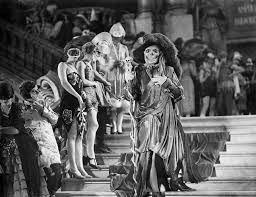 Phantom Of The Opera (Dir. Rupert Julian, 1925) (Screening format – not known, 103mins) A title that needs no introduction, The Phantom of the Opera has spawned many remakes, remasters and sequels. This original film version, produced with moments of early Technicolour, sees Lon Chaney, the ‘Man of a Thousand Faces’ perform one of his most iconic roles. His ghastly make-up and outrageous performance made this title a benchmark in the American silent film era. The film was a critical and commercial success upon release, and still stands as an important film in cinematic history to this day. Famed for the phantom’s shock unmasking, incredible set designs and the masked ball sequence, it still packs a punch. Find out more at wikipedia.org With live organ accompaniment byDonald Mackenzie. Paul Kirner’s Music Palace, Ynyshir Link
14 October
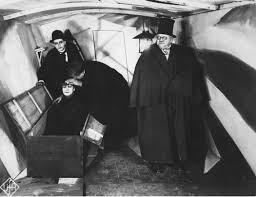 Cabinet of Dr Caligari (Dir. Robert Wiene, 1920) (Screening format – not known, 77 mins) In the village of Holstenwall, fairground hypnotist Dr Caligari (Werner Krauss) puts on show a somnambulist called Cesare (Conrad Veidt) who has been asleep for twenty three years. At night, Cesare walks the streets murdering people on the doctor’s orders. A student (Friedrich Feher) suspects Caligari after a friend is found dead and it transpires that the doctor is the director of a lunatic asylum. Fueled by the pessimism and gloom of post-war Germany, the sets by Hermann Warm stand unequaled as a shining example of Expressionist design. Find out more at wikipedia.org.. With live musical accompaniment by Hugo Max. Ultimate Picture Palace, Oxford Link
17 October
Cabinet of Dr Caligari (Dir. Robert Wiene, 1920) (Screening format – not known, 77 mins) In the village of Holstenwall, fairground hypnotist Dr Caligari (Werner Krauss) puts on show a somnambulist called Cesare (Conrad Veidt) who has been asleep for twenty three years. At night, Cesare walks the streets murdering people on the doctor’s orders. A student (Friedrich Feher) suspects Caligari after a friend is found dead and it transpires that the doctor is the director of a lunatic asylum. Fueled by the pessimism and gloom of post-war Germany, the sets by Hermann Warm stand unequaled as a shining example of Expressionist design. Find out more at wikipedia.org.. With live musical accompaniment by Hugo Max. Duke of York’s Picturehouse, Brighton Link
18 October
 For Heaven’s Sake (Dir. Sam Taylor, US, 1926) + Easy Street (Dir, Charles Chaplin, US, 1917) (Screening format – not known, 48/19 mins) In For Heaven’s Sake, Harold Lloyd plays a wealthy young spendthrift who is upset that his name is being used to bring parishioners into a storefront mission in the poorer part of town. He heads to the mission to have it out with the minister, only to fall in love with minister’s daughter (Jobyna Ralston). But when they start to talk of marriage, Harold’s wealthy friends are dismayed that he is marrying beneath himself and so take desperate action. The climactic chase is as hilarious and exciting a piece of celluloid as has ever been produced, but it is merely the capper to an uninterrupted stream of brilliant sight gags. Long underrated,this is one of the cleverest and most consistently entertaining of all of Harold Lloyd’s silent vehicles. Find out more at silentfilm.org With live organ accompaniment by Donald Mackenzie. The Priory, Bridlington Link
 Wings (Dir. William Wellman, USA, 1927) (Screening format – not known, 144mins) In 1917, in a small American town, Jack Powell (Charles Rogers) tinkers on a car, while daydreaming about airplanes. When the car is roadworthy, Jack names it “Shooting Star” and Mary Preston (Clara Bow), the girl next door who helped him, paints a star on the side of the vehicle. Oblivious to the infatuated Mary’s feelings for him, Jack
 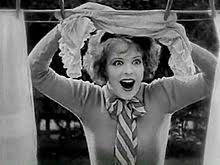 prefers the more sophisticated city girl, Sylvia Lewis, but she is in love with his friend David Armstrong (Richard Arlen). When the United States enters World War I, Jack and David enlist …. But will friendship and relationships survive the tragedy and drama of the war years. Made only nine years after the end of the First World War, the film was written by John Monk Saunders, a veteran pilot who who also wrote Howard Hawks’ classic The Dawn Patrol, filmed three years later. Saunders hadn’t actually served in France, a matter of bitter regret to him himself, but he was a flight instructor in the First World War and a member of the Lost Generation who eventually killed
  himself. Wellman himself did serve in France and was mentally and physically scarred for life – so they knew their stuff. On August 12, 1927, the curtain rose on the grand premiere of Wings, by now Wellman’s two-million-dollar epic. Boasting thrills and adventure, star power, and unparalleled aerial photography, the film was an immediate smash, running at New York’s Criterion Theater for sixty-three consecutive weeks and capturing the top honor for Outstanding Production at the inaugural Academy Awards ceremony. Find out more attheguardian.com. With live organ accompaniment by Dr Rebekah Okpoti. Bath Abbey, Bath Link
 Go West (Dir. Buster Keaton, US, 1925) (68 mins) In an unusual twist on the romantic comedy formula, Buster Keaton stars opposite an affectionate cow in this Western Comedy. Friendless Homer Holiday drifts west eventually finding employment on the Thompson ranch. He soon befriends Brown Eyes, a cow that he bonds with after she saves his life. When Brown Eyes is included in a shipment of cattle bound for the slaughterhouse, Homer goes along in hopes of rescuing her. But when the herd escapes from the cattle cars, causing chaos through downtown L.A.; it is then up to Friendless to round them up and save the day. Look closely during the hilarious stampede scene to see Roscoe “Fatty” Arbuckle playing a part in drag. Find out more at silentfilm.org With live piano accompaniment by Mike Nolan. Hippodrome Cinema, Bo’ness Link
Cabinet of Dr Caligari (Dir. Robert Wiene, 1920) (Screening format – not known, 77 mins) In the village of Holstenwall, fairground hypnotist Dr Caligari (Werner Krauss) puts on show a somnambulist called Cesare (Conrad Veidt) who has been asleep for twenty three years. At night, Cesare walks the streets murdering people on the doctor’s orders. A student (Friedrich Feher) suspects Caligari after a friend is found dead and it transpires that the doctor is the director of a lunatic asylum. Fueled by the pessimism and gloom of post-war Germany, the sets by Hermann Warm stand unequaled as a shining example of Expressionist design. Find out more at wikipedia.org.. With live musical accompaniment by Hugo Max. Tyneside Cinema, Newcastle Link
19 October
Phantom Of The Opera (Dir. Rupert Julian, 1925) (Screening format – not known, 103mins) A title that needs no introduction, The Phantom of the Opera has spawned many remakes, remasters and sequels. This original film version, produced with moments of early Technicolour, sees Lon Chaney, the ‘Man of a Thousand Faces’ perform one of his most iconic roles. His ghastly make-up and outrageous performance made this title a benchmark in the American silent film era. The film was a critical and commercial success upon release, and still stands as an important film in cinematic history to this day. Famed for the phantom’s shock unmasking, incredible set designs and the masked ball sequence, it still packs a punch. Find out more at wikipedia.org With live organ accompaniment byDonald Mackenzie. Paramount, Penistone Link
 The Blinking Buzzards The quarterly meeting of the UK Buster Keaton Society, dedicated to the appreciation of the silent comedian. The last meeting of the year is a request session, so expect to see beloved gems chosen by Society members. With recorded accompaniment. Cinema Museum, Lambeth Link
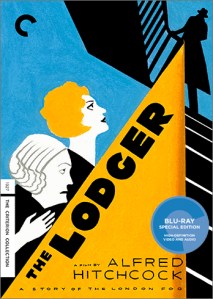 The Lodger: A Story of the London Fog (Dir. Alfred Hitchcock, UK, 1927) (Screening format – not known, 91 mins ) In The Lodger, a serial killer known as “The Avenger” is on the loose in London, murdering blonde women. A mysterious man (Ivor Novello) arrives at the house of Mr. and Mrs. Bunting looking for a room to rent. The Bunting’s daughter (June Tripp) is a blonde model and is seeing one of the detectives (Malcolm Keen) assigned to the case. The detective becomes jealous of the lodger and begins to suspect he may be the avenger. Based on a best-selling novel by Marie Belloc Lowndes, first published in 1913, loosely based on the Jack the Ripper murders, The Lodger was Hitchcock’s first thriller, and his first critical and commercial success. Made shortly after his return from Germany, the film betrays the influence of the German expressionist tradition established in such films as The Cabinet of Dr. Caligari (1919) and Nosferatu (1922). Find out more at silentfilm.org With live musical accompaniment by Minima. Curzon Community Cinema, Clevedon Link
20 October
 7th Heaven (Dir. Frank Borzage, 1927) (Screening format –digital, 110mins) Chico (Charles Farrell) is a poor Parisian sewer cleaner who aspires to work his way out of his dead-end job and into the middle class. When he meets Diane (Janet Gaynor), an abused prostitute, he
 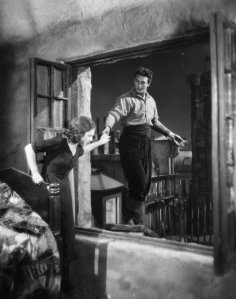 sympathizes with her plight and tells the police she’s his wife to prevent them from arresting her. To keep up the appearances of marriage, he invites Diane to live with him, and a real romance blossoms until Chico is drafted in the army at the start of World War I. Janet Gaynor won the Best Actress award at the very first Academy Awards for her role in this gorgeously romantic drama of star-crossed Parisian lovers. And with beautiful sets, plus stunning camerawork, 7th Heaven is silent-era Hollywood at its most powerful. Find out more at silentfilm.org With live musical accompaniment. BFI Southbank, London Link
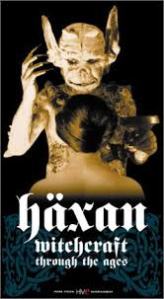 Haxan: Witchcraft Through the Ages (Dir. Benjamin Christensen, Swe., 1922) ( Screening format – not known, 105mins) A fictionalized documentary with dramatic reconstructions showing the evolution of witchcraft, from its pagan roots to its confusion with hysteria in modern (1922) Europe. Based partly on Christensen’s study of the Malleus Maleficarum, a 15th-century German guide for inquisitors, Häxan is a study of how superstition and the misunderstanding of diseases and mental illness could lead to the hysteria of the witch hunts. Although it won acclaim in Denmark and Sweden when first released, Haxan was heavily censored or banned outright in many countries. But it is now considered to be Christensen’s finest work, a witches’ brew of the scary, the grotesque, and the darkly humorous. Find out more at thedevilsmanor.blogspot.co.uk With live musical accompaniment by Hugo Max. Prince Charles Cinema, London Link
22 October
Nosferatu (Dir. F W Murnau, 1922) (Screening format – not known, 96mins) A German Expressionist horror masterpiece starring Max Shreck as the vampire Count Orlok. The film was an unauthorised adaption of Bram Stoker’s ‘Dracula’ with names and other details changed because the studio could not obtain the rights to the novel. Stoker’s heirs sued over the adaption and a court ruling ordered that all copies of the film be destroyed. However, a few prints survived and the film came to be regarded as an inspirational master work of the cinema. In the film, Count Orlok travels across Europe leaving a trail of death in his wake. Brilliantly eerie, with imaginative touches which later adaptions never achieved. Find out more at wikipedia.org With live organ accompaniment by Donald Mackenzie. Alexandra Palace, London Link
Cabinet of Dr Caligari (Dir. Robert Wiene, 1920) (Screening format – not known, 77 mins) In the village of Holstenwall, fairground hypnotist Dr Caligari (Werner Krauss) puts on show a somnambulist called Cesare (Conrad Veidt) who has been asleep for twenty three years. At night, Cesare walks the streets murdering people on the doctor’s orders. A student (Friedrich Feher) suspects Caligari after a friend is found dead and it transpires that the doctor is the director of a lunatic asylum. Fueled by the pessimism and gloom of post-war Germany, the sets by Hermann Warm stand unequaled as a shining example of Expressionist design. Find out more at wikipedia.org. With live musical accompaniment by Hugo Max. Well Walk Theatre, London Link
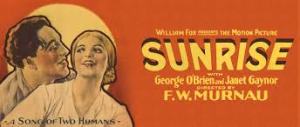 Sunrise; A Song of Two Humans (Dir. F W Murnau, US, 1927) (Screening format – not known, 94mins) F W Murnau’s debut American film, made at the technical zenith of the silent era but already heralding the arrival of the talkies being one of the first silents made with synchronized musical score and sound effects soundtrack. The simple story of a husband’s betrayal of his wife with a treacherous city girl, Sunrise moves from a fairytale-like depiction of rural life to a dynamic portrait of the bustling modern
  American city. Explored in elaborate tracking shots by Charles Rocher and Karl Struss’s pioneering camerawork, the city set was one of the most costly yet produced. The result was a commercial flop, though the achievement did not go unheralded: Sunrise was awarded a special Oscar for unique and artistic production at the first ever Academy Awards and Janet Gaynor won the first Academy Award for Best Actress for her performance. The film’s legacy has endured, and it is now widely considered a masterpiece with many calling it the greatest film of the silent era. NB This will be a rare screening of a beautifully restored silent version in full frame – meaning an increase of 10% to the picture area – derived mostly from prime quality material discovered in the Czech Republic. Find out more at theguardian.com Presented by the Kennington Bioscope. With live musical accompaniment. Cinema Museum, Lambeth Link
Phantom Of The Opera (Dir. Rupert Julian, 1925) (Screening format – not known, 103mins) A title that needs no introduction, The Phantom of the Opera has spawned many remakes, remasters and sequels. This original film version, produced with moments of early Technicolour, sees Lon Chaney, the ‘Man of a Thousand Faces’ perform one of his most iconic roles. His ghastly make-up and outrageous performance made this title a benchmark in the American silent film era. The film was a critical and commercial success upon release, and still stands as an important film in cinematic history to this day. Famed for the phantom’s shock unmasking, incredible set designs and the masked ball sequence, it still packs a punch. Find out more at wikipedia.org With live musical accompaniment by Minima. St Mary Radcliffe, Bristol Link
23 October
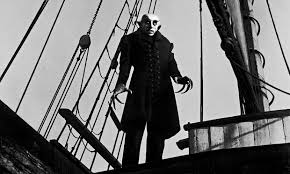 Nosferatu (Dir. F W Murnau, 1922) (Screening format – not known, 96mins) A German Expressionist horror masterpiece starring Max Shreck as the vampire Count Orlok. The film was an unauthorised adaption of Bram Stoker’s ‘Dracula’ with names and other details changed because the studio could not obtain the rights to the novel. Stoker’s heirs sued over the adaption and a court ruling ordered that all copies of the film be destroyed. However, a few prints survived and the film came to be regarded as an inspirational master work of the cinema. In the film, Count Orlok travels across Europe leaving a trail of death in his wake. Brilliantly eerie, with imaginative touches which later adaptions never achieved. Find out more at wikipedia.org With live musical accompaniment by Hugo Max. Well Walk Theatre, London Link
24 October
Nosferatu (Dir. F W Murnau, 1922) (Screening format – not known, 96mins) A German Expressionist horror masterpiece starring Max Shreck as the vampire Count Orlok. The film was an unauthorised adaption of Bram Stoker’s ‘Dracula’ with names and other details changed because the studio could not obtain the rights to the novel. Stoker’s heirs sued over the adaption and a court ruling ordered that all copies of the film be destroyed. However, a few prints survived and the film came to be regarded as an inspirational master work of the cinema. In the film, Count Orlok travels across Europe leaving a trail of death in his wake. Brilliantly eerie, with imaginative touches which later adaptions never achieved. Find out more at wikipedia.org With live musical accompaniment by Hugo Max. Prince Charles Cinema, London Link
25 October
Phantom Of The Opera (Dir. Rupert Julian, 1925) (Screening format – not known, 103mins) A title that needs no introduction, The Phantom of the Opera has spawned many remakes, remasters and sequels. This original film version, produced with moments of early Technicolour, sees Lon Chaney, the ‘Man of a Thousand Faces’ perform one of his most iconic roles. His ghastly make-up and outrageous performance made this title a benchmark in the American silent film era. The film was a critical and commercial success upon release, and still stands as an important film in cinematic history to this day. Famed for the phantom’s shock unmasking, incredible set designs and the masked ball sequence, it still packs a punch. Find out more at wikipedia.org With live musical accompaniment by Andrew Wasylyk and Tommy Perman performing a newly commissioned score. Filmhouse, Edinburgh Link
Cabinet of Dr Caligari (Dir. Robert Wiene, 1920) (Screening format – not known, 77 mins) In the village of Holstenwall, fairground hypnotist Dr Caligari (Werner Krauss) puts on show a somnambulist called Cesare (Conrad Veidt) who has been asleep for twenty three years. At night, Cesare walks the streets murdering people on the doctor’s orders. A student (Friedrich Feher) suspects Caligari after a friend is found dead and it transpires that the doctor is the director of a lunatic asylum. Fueled by the pessimism and gloom of post-war Germany, the sets by Hermann Warm stand unequaled as a shining example of Expressionist design. Find out more at wikipedia.org.. With live musical accompaniment by Hugo Max. Picturehouse@FACT, Liverpool Link
26 October
Phantom Of The Opera (Dir. Rupert Julian, 1925) (Screening format – not known, 103mins) A title that needs no introduction, The Phantom of the Opera has spawned many remakes, remasters and sequels. This original film version, produced with moments of early Technicolour, sees Lon Chaney, the ‘Man of a Thousand Faces’ perform one of his most iconic roles. His ghastly make-up and outrageous performance made this title a benchmark in the American silent film era. The film was a critical and commercial success upon release, and still stands as an important film in cinematic history to this day. Famed for the phantom’s shock unmasking, incredible set designs and the masked ball sequence, it still packs a punch. Find out more at wikipedia.org With live organ accompaniment byDonald Mackenzie. Musical Museum, Brentford Link
Cabinet of Dr Caligari (Dir. Robert Wiene, 1920) (Screening format – not known, 77 mins) In the village of Holstenwall, fairground hypnotist Dr Caligari (Werner Krauss) puts on show a somnambulist called Cesare (Conrad Veidt) who has been asleep for twenty three years. At night, Cesare walks the streets murdering people on the doctor’s orders. A student (Friedrich Feher) suspects Caligari after a friend is found dead and it transpires that the doctor is the director of a lunatic asylum. Fueled by the pessimism and gloom of post-war Germany, the sets by Hermann Warm stand unequaled as a shining example of Expressionist design. Find out more at wikipedia.org.. With live musical accompaniment featuring a new electronic score performed by Spanish electronica musician Caliza. Barbican, London Link
Phantom Of The Opera (Dir. Rupert Julian, 1925) (Screening format – not known, 103mins) A title that needs no introduction, The Phantom of the Opera has spawned many remakes, remasters and sequels. This original film version, produced with moments of early Technicolour, sees Lon Chaney, the ‘Man of a Thousand Faces’ perform one of his most iconic roles. His ghastly make-up and outrageous performance made this title a benchmark in the American silent film era. The film was a critical and commercial success upon release, and still stands as an important film in cinematic history to this day. Famed for the phantom’s shock unmasking, incredible set designs and the masked ball sequence, it still packs a punch. Find out more at wikipedia.org Presented by Northern Silents. With live piano accompaniment by Jonny Best. Link
Cabinet of Dr Caligari (Dir. Robert Wiene, 1920) (Screening format – not known, 77 mins) In the village of Holstenwall, fairground hypnotist Dr Caligari (Werner Krauss) puts on show a somnambulist called Cesare (Conrad Veidt) who has been asleep for twenty three years. At night, Cesare walks the streets murdering people on the doctor’s orders. A student (Friedrich Feher) suspects Caligari after a friend is found dead and it transpires that the doctor is the director of a lunatic asylum. Fueled by the pessimism and gloom of post-war Germany, the sets by Hermann Warm stand unequaled as a shining example of Expressionist design. Find out more at wikipedia.org.. With live musical accompaniment by Hugo Max. Prince Charles Cinema, London Link
27 October
Haxan: Witchcraft Through the Ages (Dir. Benjamin Christensen, Swe., 1922) ( Screening format – not known, 105mins) A fictionalized documentary with dramatic reconstructions showing the evolution of witchcraft, from its pagan roots to its confusion with hysteria in modern (1922) Europe. Based partly on Christensen’s study of the Malleus Maleficarum, a 15th-century German guide for inquisitors, Häxan is a study of how superstition and the misunderstanding of diseases and mental illness could lead to the hysteria of the witch hunts. Although it won acclaim in Denmark and Sweden when first released, Haxan was heavily censored or banned outright in many countries. But it is now considered to be Christensen’s finest work, a witches’ brew of the scary, the grotesque, and the darkly humorous. Find out more at thedevilsmanor.blogspot.co.uk With live musical accompaniment by Hugo Max. Magdalen College, Oxford Link
28 October
Nosferatu (Dir. F W Murnau, 1922) (Screening format – not known, 96mins) A German Expressionist horror masterpiece starring Max Shreck as the vampire Count Orlok. The film was an unauthorised adaption of Bram Stoker’s ‘Dracula’ with names and other details changed because the studio could not obtain the rights to the novel. Stoker’s heirs sued over the adaption and a court ruling ordered that all copies of the film be destroyed. However, a few prints survived and the film came to be regarded as an inspirational master work of the cinema. In the film, Count Orlok travels across Europe leaving a trail of death in his wake. Brilliantly eerie, with imaginative touches which later adaptions never achieved. Find out more at wikipedia.org With live musical accompaniment by Minima. Film Society, Cheltenham Link
29 October
Phantom Of The Opera (Dir. Rupert Julian, 1925) (Screening format – not known, 103mins) A title that needs no introduction, The Phantom of the Opera has spawned many remakes, remasters and sequels. This original film version, produced with moments of early Technicolour, sees Lon Chaney, the ‘Man of a Thousand Faces’ perform one of his most iconic roles. His ghastly make-up and outrageous performance made this title a benchmark in the American silent film era. The film was a critical and commercial success upon release, and still stands as an important film in cinematic history to this day. Famed for the phantom’s shock unmasking, incredible set designs and the masked ball sequence, it still packs a punch. Find out more at wikipedia.org With live musical accompaniment by Andrew Wasylyk and Tommy Perman performing a newly commissioned score. Film Theatre, Glasgow Link
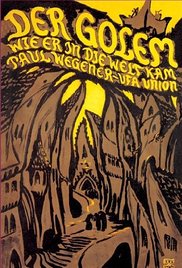 The Golem: How He Came into the World (Dir. Paul Wegener, Ger, 1920) (Screening format – not known, 60mins) This is the only surviving film of the Golem trilogy, made by German expressionist film director Wegener. Based on the old Jewish folk legend of a clay creature that is brought to life by black magic, Wegener wrote and directed the film and also starred as the Golem. The story is set in the ghetto of Medieval Prague where sorcerer and astrologer Rabbi Loew creates the Golem to save the Jewish community from persecution by the tyrannical Emperor Rudolph II. But the creature gets out of control and becomes a terrifying force of destruction, trailing fire and death in its wake. Find out more at albany.edu With live musical accompaniment by Hugo Max. Phoenix Cinema, London Link
30 October
Phantom Of The Opera (Dir. Rupert Julian, 1925) (Screening format – not known, 103mins) A title that needs no introduction, The Phantom of the Opera has spawned many remakes, remasters and sequels. This original film version, produced with moments of early Technicolour, sees Lon Chaney, the ‘Man of a Thousand Faces’ perform one of his most iconic roles. His ghastly make-up and outrageous performance made this title a benchmark in the American silent film era. The film was a critical and commercial success upon release, and still stands as an important film in cinematic history to this day. Famed for the phantom’s shock unmasking, incredible set designs and the masked ball sequence, it still packs a punch. Find out more at wikipedia.org With live musical accompaniment by Andrew Wasylyk and Tommy Perman. Hippodrome Cinema, Bo’ness Link
Nosferatu (Dir. F W Murnau, 1922) (Screening format – not known, 96mins) A German Expressionist horror masterpiece starring Max Shreck as the vampire Count Orlok. The film was an unauthorised adaption of Bram Stoker’s ‘Dracula’ with names and other details changed because the studio could not obtain the rights to the novel. Stoker’s heirs sued over the adaption and a court ruling ordered that all copies of the film be destroyed. However, a few prints survived and the film came to be regarded as an inspirational master work of the cinema. In the film, Count Orlok travels across Europe leaving a trail of death in his wake. Brilliantly eerie, with imaginative touches which later adaptions never achieved. Find out more at wikipedia.org With live musical accompaniment by Hugo Max. Prince Charles Cinema, London Link
 Phantom Of The Opera (Dir. Rupert Julian, 1925) (Screening format – not known, 103mins) A title that needs no introduction, The Phantom of the Opera has spawned many remakes, remasters and sequels. This original film version, produced with moments of early Technicolour, sees Lon Chaney, the ‘Man of a Thousand Faces’ perform one of his most iconic roles. His ghastly make-up and outrageous performance made this title a benchmark in the American silent film era. The film was a critical and commercial success upon release, and still stands as an important film in cinematic history to this day. Famed for the phantom’s shock unmasking, incredible set designs and the masked ball sequence, it still packs a punch. Find out more at wikipedia.org With live musical accompaniment by Minima. Blackfriars Arts Centre, Boston Link
31 October
Phantom Of The Opera (Dir. Rupert Julian, 1925) (Screening format – not known, 103mins) A title that needs no introduction, The Phantom of the Opera has spawned many remakes, remasters and sequels. This original film version, produced with moments of early Technicolour, sees Lon Chaney, the ‘Man of a Thousand Faces’ perform one of his most iconic roles. His ghastly make-up and outrageous performance made this title a benchmark in the American silent film era. The film was a critical and commercial success upon release, and still stands as an important film in cinematic history to this day. Famed for the phantom’s shock unmasking, incredible set designs and the masked ball sequence, it still packs a punch. Find out more at wikipedia.org With live organ accompaniment by Nick Miller. St John’s Church, Hyde Park, London (No Link)
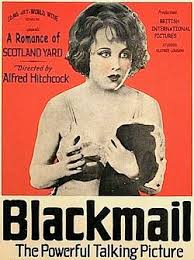 Blackmail (Dir. Alfred Hitchcock, 1929) (Screening format – not known, 84mins) Alice White is the daughter of a shopkeeper in 1920’s London. Her boyfriend, Frank Webber is a Scotland Yard detective who seems more interested in police work than in her. Frank takes Alice out one night, but she has secretly arranged to meet another man. Later that night Alice agrees to go back to his flat to see his studio. The man has other ideas and as he tries to rape Alice, she defends herself and kills him with a bread knife.
  When the body is discovered, Frank is assigned to the case, he quickly determines that Alice is the killer, but so has someone else and blackmail is threatened. Alfred Hitchcock’s sinister, suspenseful tale of crime and romance is one of the last British silent films to be made (a sound version, which involved some re-shooting and dubbing and is now famous for its ‘KNIFE!!!’ scene, was subsequently released). With his traditional cameo appearance in the first reel, to a spectacular moonlit chase through the British Museum in the final reel, Blackmail is a classic thriller from the Master of Suspense. Find out more at screenonline.org.uk With live musical accompaniment by Darius Battiwalla. Heptonstall Church, Hebden Bridge Link
Phantom Of The Opera (Dir. Rupert Julian, 1925) (Screening format – not known, 103mins) A title that needs no introduction, The Phantom of the Opera has spawned many remakes, remasters and sequels. This original film version, produced with moments of early Technicolour, sees Lon Chaney, the ‘Man of a Thousand Faces’ perform one of his most iconic roles. His ghastly make-up and outrageous performance made this title a benchmark in the American silent film era. The film was a critical and commercial success upon release, and still stands as an important film in cinematic history to this day. Famed for the phantom’s shock unmasking, incredible set designs and the masked ball sequence, it still packs a punch. Find out more at wikipedia.org With live musical accompaniment by Andrew Wasylyk and Tommy Perman performing a newly commissioned score. Dundee Contemporary Arts, Dundee Link
Nosferatu (Dir. F W Murnau, 1922) (Screening format – not known, 96mins) A German Expressionist horror masterpiece starring Max Shreck as the vampire Count Orlok. The film was an unauthorised adaption of Bram Stoker’s ‘Dracula’ with names and other details changed because the studio could not obtain the rights to the novel. Stoker’s heirs sued over the adaption and a court ruling ordered that all copies of the film be destroyed. However, a few prints survived and the film came to be regarded as an inspirational master work of the cinema. In the film, Count Orlok travels across Europe leaving a trail of death in his wake. Brilliantly eerie, with imaginative touches which later adaptions never achieved. Find out more at wikipedia.org Presented by Northern Silents. With live musical accompaniment featuring a newly commissioned score composed by Ben Gaunt and performed by him and the Frame Ensemble. Link
Nosferatu (Dir. F W Murnau, 1922) (Screening format – not known, 96mins) A German Expressionist horror masterpiece starring Max Shreck as the vampire Count Orlok. The film was an unauthorised adaption of Bram Stoker’s ‘Dracula’ with names and other details changed because the studio could not obtain the rights to the novel. Stoker’s heirs sued over the adaption and a court ruling ordered that all copies of the film be destroyed. However, a few prints survived and the film came to be regarded as an inspirational master work of the cinema. In the film, Count Orlok travels across Europe leaving a trail of death in his wake. Brilliantly eerie, with imaginative touches which later adaptions never achieved. Find out more at wikipedia.org With live musical accompaniment by Hugo Max. Prince Charles Cinema, London Link
 Nosferatu (Dir. F W Murnau, 1922) (Screening format – not known, 96mins) A German Expressionist horror masterpiece starring Max Shreck as the vampire Count Orlok. The film was an unauthorised adaption of Bram Stoker’s ‘Dracula’ with names and other details changed because the studio could not obtain the rights to the novel. Stoker’s heirs sued over the adaption and a court ruling ordered that all copies of the film be destroyed. However, a few prints survived and the film came to be regarded as an inspirational master work of the cinema. In the film, Count Orlok travels across Europe leaving a trail of death in his wake. Brilliantly eerie, with imaginative touches which later adaptions never achieved. Find out more at wikipedia.org With live musical accompaniment by Minima. Palace Theatre, Newark Link
 Silentfilmcalendar.org