


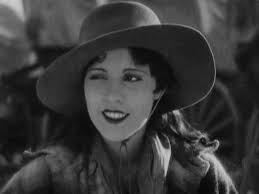
11 September
 Nosferatu (Dir. F W Murnau, 1922) (Screening format – not known, 96mins) A German Expressionist horror masterpiece starring Max Shreck as the vampire Count Orlok. The film was an unauthorised adaption of Bram Stoker’s ‘Dracula’ with names and other details changed because the studio could not obtain the rights to the novel. Stoker’s heirs sued over the adaption and a court ruling ordered that all copies of the film be destroyed. However, a few prints survived and the film came to be regarded as an inspirational master work of the cinema. In the film, Count Orlok travels across Europe leaving a trail of death in his wake. Brilliantly eerie, with imaginative touches which later adaptions never achieved. Find out more at wikipedia.org With live musical accompaniment by Hugo Max. Connaught Cinema, Worthing Link
13 September
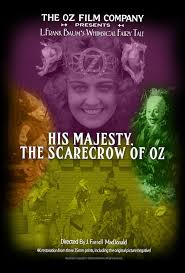 His Majesty, the Scarecrow of Oz ( Dir. J. Farrell MacDonald, US, 1914) Written and produced by L. Frank Baum (author of The Wonderful Wizard of Oz), His Majesty, the Scarecrow of Oz stars Violet MacMillan, Frank Moore, Vivian Reed, Todd Wright, Pierre Couderc, Raymond Russell, and Fred Woodward. The film originally opened on September 28, 1914, to little success, though it was received as well above average fare by critics of the time. Early in 1915, it was reissued under the title The New Wizard of Oz and was slightly more successful. The film is loosely based on Baum’s 1900 book The Wonderful Wizard of Oz, but in the screenplay, Baum introduced many new characters and a large new story that later became the basis for the 1915 book The Scarecrow of Oz. Similar to The Wonderful Wizard of Oz, the Scarecrow’s origin is revealed, although his life is now attributed to “the Spirit of the Corn”, who appears as a conventional Hollywood depiction of a Native American. Find out more at wikipedia.org Presented by South West Silents. With live musical accompaniment by Dominic Irving. Megascreen, Bristol Link
15 September
 Battleship Potemkin (Dir. Sergei Eisenstein, 1925) (Screening format – not known, 75mins) Considered one of the most important films in the history of silent pictures, as well as possibly Eisenstein’s greatest work, Battleship Potemkin brought Eisenstein’s theories of cinema art to the world in a powerful showcase; his emphasis on montage, his stress of intellectual contact, and his treatment of the mass instead of the individual as the protagonist. The film tells the story of the mutiny on the Russian ship Prince Potemkin during the 1905 uprising.Their mutiny was short-lived, however, as during their attempts to get the population of Odessa to join the uprising, soldiers arrived and laid waste to the insurgents. Battleship Potemkin is a work of extraordinary pictorial beauty and great elegance of form. Find out more at classicartfilms.com With recorded Pet Shop Boys score. Garden Cinema, London Link
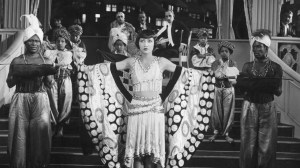 Song (Dir. Richard Eichberg, Ger, 1928) (Screening format – digital, 122mins) This superb melodrama, a British-German co-production, was designed to appeal to international markets. Set in a bustling Asian port, it centres on a vaudeville artist (Chinese-American star Anna May Wong) whose emotional attachment to a knife-thrower (Heinrich George) is complicated by the reappearance of his former mistress. A lavish treat, with scintillating dance numbers and mesmerising close-ups of Wong. Find out more at berlinale.de. With live piano accompaniment from Neil Brand. BFI Southbank, London Link
16 September
 Faces Of Children (aka Visages d’enfants aka Mother) (Dir. Jacques Feyder, Fr/Swiss, 1925) (Screening format – not known, 117mins) A psychological drama set within Switzerland’s mountainous Haut-Valais region, Faces of Children was directed by Jacques Feyder, assisted by his actress wife, Françoise Rosay. They wrote the screenplay with Dimitri De Zoubaloff, who co-produced the film with Arthur-Adrien Porchet. The Lausanne-based producers had commissioned Feyder to make a film and he offered them the story of
  Faces of Children, about the estrangement of a small boy from his father and sister after his mother dies, a situation that worsens when he finds himself with a new stepmother and stepsister. The film benefits greatly from the central performance of child actor Jean Forest, whom Feyder and Rosay had discovered in the streets of Montmartre and used in a previous film, Crainequebille. The same applies to the camera work – notably a torchlight search genuinely shot at night,
 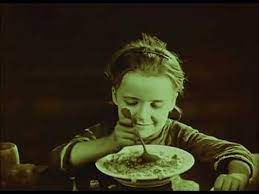 against the usual custom – by Abel Gance associate Léonce-Henri Burel. Many of the extras were the real-life villagers from the Haut-Valais location. Feyder shot interiors at Joinville while Rosay continued the location filming. Although production took place between May and October 1923, the release of Faces of Children was delayed until early 1925 owing to a dispute between Feyder and distributors Les Grands Films Indépendants. Although not a commercial success at the time, Faces of Children drew appreciation from critics and was eventually regarded as a landmark of realism in silent film. Find out more at ithankyouarthur.blogspot.com With recorded score. Sands Films, Rotherhithe Link
17 September
 Silent Sherlock: Three Classic Cases Before Benedict Cumberbatch, or even Basil Rathbone there was Eille Norwood, who still holds the record for playing Sherlock Holmes most times on film, back in the days of silent film. These films are showing for the first time since the world premiere at the BFI London Film Festival in 2024. The Adventures of Sherlock Holmes series (1921–1923), so popular it went to 45 episodes and two features, was sanctioned by Conan Doyle himself, who thoroughly approved of Norwood as Holmes. This programme, newly restored by the BFI National Archive, is a selection of three episodes, A Scandal in Bohemia, the one where Holmes falls for ‘the woman’, The Golden Pince-Nez , where we see Holmes’ deductive powers, and The Final Problem where he encounters the sinister Professor Moriarty. Introduced by Bryony Dixon, Curator of Silent Film at BFI National Archive. With live piano accompaniment by Neil Brand. National Science and Media Museum, Bradford Link
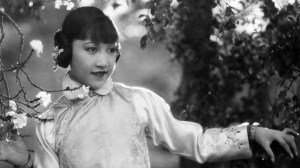 Drifting (Dir. Tod Browning, US, 1923) (Screening format – digital, 82mins) Tod Browning exploited the exotic setting of an imaginary China – constructed on the Universal backlot as a decadent land of vice and sin – for this crime melodrama. It features Priscilla Dean as an opium dealer caught between her business partner and an undercover government agent. Anna May Wong plays Rose Li, who saves the day in the film’s spectacular and fiery climax. Find out more at wikipedia.org. With live piano accompaniment by John Sweeney. BFI Southbank, London Link
18 September
 Newcastle Trams and the Tramways Committee Before 1914 In June 1913, members of Newcastle City Council met to celebrate the opening of the extension of the tram network across Benton Bank and into Heaton. Their meeting was filmed by local film-makers Henderson’s. This talk will draw on evidence from this film, as well as from records held in The Tyne and Wear Archives Service and The Common Room, to tell the story of the city’s tramways before 1914, and the city councillors who were responsible for them. Introduced by Lawrence Napper, senior lecturer in Film Studies at Kings College London. With live piano accompaniment by Neil Brand. The Common Room, Newcastle on Tyne Link
 Peter Pan (Dir. Herbert Brenon, US, 1924) (Screening format – 35mm, 105mins) J M Barrie’s famous story of Peter Pan, a magical boy who refuses to grow up, brings the Darling children (Wendy, John, and Michael) from London to Neverland where they have adventures that include a confrontation with the pirate Captain Hook and his crew. Betty
 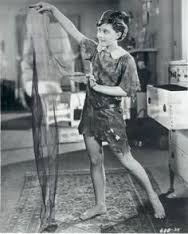 Bronson was personally selected by Barrie to play Peter Pan in this first film adaptation of the beloved fairy tale, a film that is an awful lot darker than the Disney version. . It closely follows J. M. Barrie’s 1904 play, even lifting dialogue from the stage script for the intertitles. Anna May Wong plays the Indian princess Tiger Lily. The film was photographed by Wong’s friend, future two-time Academy Award-winner, James Wong Howe, whose signature low-key lighting creates some of the most dramatic effects in an otherwise brightly lit and heavily diffused fantasy world. Find out more at imdb.com . With live piano accompaniment by John Sweeney. BFI Southbank, London Link
20 September
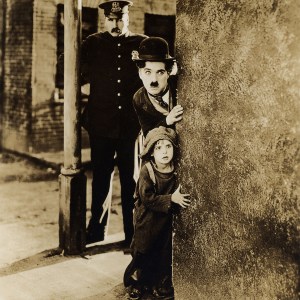 The Kid (Dir. Charles Chaplin, US, 1921) (Screening format – not known, 68mins) Chaplin’s first full-length feature is a silent masterpiece about a little tramp who discovers a little orphan and brings him up but is left desolate when the orphanage reclaims him. Beneath the comedy, there are definitely some more serious thematic elements at work and and the film is noted for its pathos. In that regard, the opening inter-title proves to be true: “A picture with a smile — and perhaps, a tear.”Chaplin directed, produced and starred in the film, as well as composed the score. Find out more at wikipedia.org . With recorded score (?) Hippodrome Cinema, Bo’ness Link
 Flesh And The Devil (Dir. Clarence Brown, 1926) (Screening format – not known, 113mins) Greta Garbo, John Gilbert and Swedish heartthrob Lars Hanson star in MGM’s lavish melodrama about boyhood friends who each fall in love with the
 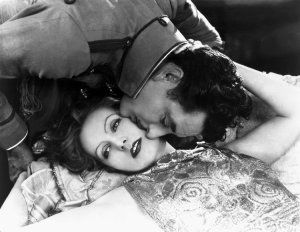 same woman. This is the film that made Garbo a star in the USA and it’s silent cinema at its most lush and intoxicating. The romantic chemistry between Garbo and Gilbert was a director’s dream because it was not faked. The two actors quickly became involved in their own romantic affair and before production of the film was completed had already moved in together. Flesh and the Devil marked the beginning of one of the more famous romances of Hollywood’s golden age. They would also continue making movies together into the Sound Era, though Gilbert’s career would collapse in the early 1930s while Garbo’s soared. Find out more at imdb.com With live piano accompaniment by Stephen Horne. Hippodrome Cinema, Bo’ness Link
 Piccadilly (Dir E A Dupont, UK, 1929) (Screening format – not known, 92 mins) A film noir before the term was in use, uncredited German director E.A. Dupont’s Piccadilly is one of the true greats of British silent films, on a par with the best of Anthony Asquith or Alfred Hitchcock during this period. Valentine Wilmot (Jameson Thomas) owns a nightclub featuring dancers Mabel (Gilda Gray) and Vic (Cyril Ritchard). After a confrontation with Wilmot, Vic quits performing at the club. When the joint starts losing business, a
  desperate Wilmot hires former dishwasher Shosho (Anna May Wong) as a dancer. She is an instant hit and forms a rapport with Wilmot, which makes both Mabel and Shosho’s friend (King Ho Chang) jealous, leading to a mysterious murder. A stylish evocation of Jazz Age London, with dazzlingly fluid cinematography and scenes ranging from the opulent West End to the seediness of Limehouse. One of the pinnacles of British silent cinema, Piccadilly is a sumptuous show business melodrama seething with sexual and racial tension – with an original screenplay by Arnold Bennett. Find out more at screenonline.org.uk. With recorded Neil Brand score. BFI Southbank, London Link
.
 Silent comedy with Charlie Chaplin, Laurel & Hardy, & Buster Keaton Classic silent movie comedy from Charlie Chaplin, Buster Keaton, and Laurel & Hardy – all with live music. In The Rink, Charlie Chaplin is a disastrous waiter in a posh restaurant who spends his
 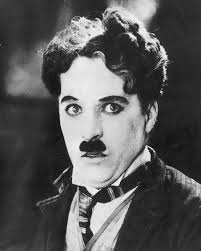 spare time at the roller skating rink. The film is based on two of Charlie’s most successful musical hall sketches, and his rollerskating skills have to be seen to be believed! In The Balloonatic, Buster Keaton takes a ride in a hot air balloon and finds himself stranded in the wild countryside and fighting off bears. This is one of Buster’s most charming films. In Angora Love, Laurel and Hardy are followed home by a goat, and chaos ensues… Presented by Northern Silents. With live musical accompaniment by violinist Susannah Simmons and pianist Jonny Best. Link
21 September
 Toll Of The Sea (Dir. Chester M Franklin, US, 1922) (Screening format – not known, 48mins) A popular melodrama based on Puccini’s “Madame Butterfly,“ The Toll of the Sea is not only the first-ever, two-strip Technicolor film, but also Anna May Wong’s first leading role. Interestingly the screenplay is by another leading woman of early 20th century cinema, Frances
  Marion. In this tragic tale of Western exploitation, an American man in China falls in love with and marries a young Asian woman named Lotus Flower (Anna May Wong). After he leaves her to return to the United States, Lotus Flower gives birth to a son, whom she dotingly raises on her own. When the man later returns to China with his new American wife Elsie,can anything other than tragedy unfold. Find out more at silentfilm.org With live musical accompaniment by Stephen Horne. Dundee Contemporary Arts, Dundee Link
The Kid (Dir. Charles Chaplin, US, 1921) (Screening format – not known, 68mins) Chaplin’s first full-length feature is a silent masterpiece about a little tramp who discovers a little orphan and brings him up but is left desolate when the orphanage reclaims him. Beneath the comedy, there are definitely some more serious thematic elements at work and and the film is noted for its pathos. In that regard, the opening inter-title proves to be true: “A picture with a smile — and perhaps, a tear.”Chaplin directed, produced and starred in the film, as well as composed the score. Find out more at wikipedia.org . With recorded score (?) Hippodrome Cinema, Bo’ness Link
 The Thief of Bagdad (Dir. Raoul Walsh , US, 1924) (Screening format – digital, 140mins) This swashbuckler, directed by Raoul Walsh and starring Douglas Fairbanks, tells the story of a thief who falls in love with the daughter of the Caliph. He originally means to steal from her, but when he sees this beauty before him, he becomes smitten. But when a group of princely suitors arrive at the palace for her to make her choice, the thief pretends to be a prince himself in order to win her hand. He gets found out and punished, but the princess, who falls for him too, arranges for him to be released. To buy more time, she gives the three suitors a task to bring her the rarest treasure they
 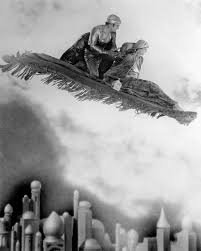 can find to help her make the important choice. The thief joins the hunt too, hoping to outdo them all to such a degree that he will be able to marry the princess regardless of his current status. Thus begins an epic adventure of magic and peril. The Thief of Bagdad is now widely considered one of the great silent films and Fairbanks’s greatest work. The film was a popular success, and Fairbanks made women swoon as one of the screen’s first superstars. Known for his dashing demeanour and incredible stunts, Fairbanks, who would also routinely contribute to the scripts of his films under the pseudonym Elton Thomas, actually created the story for this version of The Thief of Bagdad and included types of special effects and production design never previously seen by audiences. Impressed by her performance in The Toll of the Sea, Douglas Fairbanks cast Anna May Wong as a Mongolian slave. Making the most out of a minor role, Wong achieved international fame. But she subsequently found herself typecast in similar roles – often against white performers in yellowface – to add ‘authentic’ flavour and decorative ambience to ‘Oriental’ sets. Find out more at sensesofcinema.com. With live piano accompaniment by Neil Brand. BFI Southbank, London Link
Peter Pan (Dir. Herbert Brenon, US, 1924) (Screening format – 35mm, 105mins) J M Barrie’s famous story of Peter Pan, a magical boy who refuses to grow up, brings the Darling children (Wendy, John, and Michael) from London to Neverland where they have adventures that include a confrontation with the pirate Captain Hook and his crew. Betty Bronson was personally selected by Barrie to play Peter Pan in this first film adaptation of the beloved fairy tale, a film that is an awful lot darker than the Disney version. . It closely follows J. M. Barrie’s 1904 play, even lifting dialogue from the stage script for the intertitles. Anna May Wong plays the Indian princess Tiger Lily. The film was photographed by Wong’s friend, future two-time Academy Award-winner, James Wong Howe, whose signature low-key lighting creates some of the most dramatic effects in an otherwise brightly lit and heavily diffused fantasy world. Find out more at imdb.com . With live piano accompaniment by Costas Fotopoulos. BFI Southbank, London Link
23 September
 The Italian Straw Hat (Dir. Rene Clair, 1928) (Screening format – not known, 105mins) A man is on his way to his wedding when his horse eats the hat of a married woman who is having a secret tryst with a soldier, and the hapless groom must replace the chapeau or face the wrath of the lady’s lover. René Clair’s sublime, kinetic farce is set in 1895, at the dawn of the film era, and fondly recalls the techniques of the earliest silents. Pauline Kael called it “one of the funniest films ever made, and one of the most elegant as well.” Find out more at silentfilm.org. With recorded score. Sands Films, Rotherhithe Link
24 September
 Adventures of Prince Achmed (Dir. Lotte Reiniger , Ger, 1926) (Screening format – not known, 65mins) The first feature-length animation in film history, masterminded by
  Lotte Reiniger and hand-tinted frame by frame. Based on ‘The Arabian Nights’, the film tells the epic tale of Prince Achmed, who is tricked into mounting a magical flying horse by a wicked sorcerer. The horse carries Achmed off on a series of adventures, over the course of which he joins forces with young Aladdin, battles ogres and monsters and romances the beautiful Princess Peri Banu.Find out more at wikipedia.org With live musical accompaniment by Mike Hatchard. Kino-Teatr, St Leonards-on-Sea Link
26 September
 Stella Dallas. (Dir. Henry King. USA, 1925.) (Screening format – digital, 110mins) Stella Dallas, the working-class mother who makes the ultimate sacrifice for her socially ambitious daughter, became one of the most resonant figures in American culture from the moment Olive Higgins Prouty’s novel appeared in 1923. A stage adaptation soon followed, as did this film version in 1925 (the first of three). Produced by Samuel Goldwyn with a screenplay by Frances Marion and directed by Henry King, the
 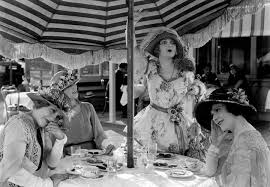 film is a powerful indictment of the rigid class barriers then emerging in the prosperous, postwar America of the 1920s, but the emotional center of the film is Stella (a brilliant portrayal by Belle Bennett, one of 73 actresses tested for the role), who marries “above her station” (to a temporarily embarrassed banker’s son) but is unable to adapt her dress and behavior to the bourgeois standards of her new husband. When her daughter becomes engaged to a fashionable country-clubber, Stella’s dilemma becomes painfully clear: Only by leaving her life can she ensure her daughter’s happiness. Find out more at Silentlondon.co.uk. Introduction by Stephen Horne. With pre-recorded score by Stephen Horne. BFI Southbank, London Link
27 September
Drifting (Dir. Tod Browning, US, 1923) (Screening format – digital, 82mins) Tod Browning exploited the exotic setting of an imaginary China – constructed on the Universal backlot as a decadent land of vice and sin – for this crime melodrama. It features Priscilla Dean as an opium dealer caught between her business partner and an undercover government agent. Anna May Wong plays Rose Li, who saves the day in the film’s spectacular and fiery climax. Find out more at wikipedia.org. With live piano accompaniment by Cyrus Gabrysch. BFI Southbank, London Link
28 September
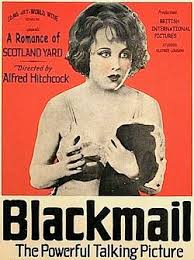 Blackmail (Dir. Alfred Hitchcock, 1929) (Screening format – not known, 84mins) Alice White is the daughter of a shopkeeper in 1920’s London. Her boyfriend, Frank Webber is a Scotland Yard detective who seems more interested in police work than in her. Frank takes Alice out one night, but she has secretly arranged to meet another man. Later that night Alice agrees to go back to his flat to see his studio. The man has other ideas and as he tries to rape Alice, she defends herself and kills him with a bread knife.
  When the body is discovered, Frank is assigned to the case, he quickly determines that Alice is the killer, but so has someone else and blackmail is threatened. Alfred Hitchcock’s sinister, suspenseful tale of crime and romance is one of the last British silent films to be made (a sound version, which involved some re-shooting and dubbing and is now famous for its ‘KNIFE!!!’ scene, was subsequently released). With his traditional cameo appearance in the first reel, to a spectacular moonlit chase through the British Museum in the final reel, Blackmail is a classic thriller from the Master of Suspense. Find out more at screenonline.org.uk With live musical accompaniment by Darius Battiwalla. Holy Trinity Church, Eccleshall Link
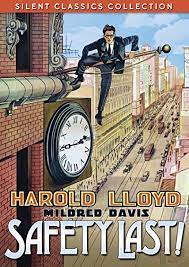 Safety Last (Dir. Fred C Newmeyer/Sam Taylor, US, 1923) (Screening format – not known, 73mins) A boy (Harold Lloyd) moves to New York City to make enough money to support his loving girlfriend (Mildred Davis), but soon discovers that making it in the big city is harder than it looks. When he hears that a store manager will pay $1,000 to anyone who can draw people to his store, he convinces his friend, the “human fly,” (Bill Strother) to climb the building and split the profit with him. But when his pal gets in trouble with the law, he must complete the crazy stunt on his own. The image of Harold Lloyd hanging desperately from the hands of a skyscraper clock during Safety Last! is one of the great icons of film history (although it was achieved with a certain amount of film trickery) and this remains one of the best and best loved comedies of the silent era. Find out more at rogerebert.com. With live piano accompaniment by Lillian Henley. Palace Cinema, Broadstairs Link
 Silentfilmcalendar.org