November
1 November
 The Fall of The House of Usher (Dir. Jean Epstein, Fr, 1928) (Screening format – not known, 63 mins) An unnamed man pays a visit to the decaying, aristocratic mansion of his childhood friend, Roderick Usher. He finds Usher to be demented… obsessed by death, consumed with fear that his beloved wife Madeline will die, and no less fearful that she will be buried alive. He spends his days painting an eerily lifelike portrait of Madeline, but with each brushstroke the life seems to drain from her. Director Jean Epstein and screenwriter Luis Buñuel studiously avoided cheap shocks and opted for a controlled, spookily subtle technique, in this tale of hereditary madness. Epstein’s version changes the relationship of Madeline and Roderick from brother and sister to husband and wife but matches the horror and menace of Poe’s story, with weird, surreal images and an insidious atmosphere conveyed by the glowering halls, fluttering curtains, and nightmarish suggestiveness of the veil and coffin. Look out for French director Abel Gance, fresh from directing Napoleon (1927) in a minor role while his then wife, Marguerite, stars as Madeline. Find out more at rogerebert.com. With live piano accompaniment by Neil Brand. The Dukes, Lancaster Link
 Phantom Of The Opera (Dir. Rupert Julian, 1925) (Screening format – not known, 103mins) A title that needs no introduction, The Phantom of the Opera has spawned many remakes, remasters and sequels. This original film version, produced with moments of early Technicolour, sees Lon Chaney, the ‘Man of a Thousand Faces’ perform one of his most iconic roles. His ghastly make-up and outrageous performance made this title a benchmark in the American silent film era. The film was a critical and commercial success upon release, and still stands as an important film in cinematic history to this day. Famed for the phantom’s shock unmasking, incredible set designs and the masked ball sequence, it still packs a punch. Find out more at wikipedia.org With live musical accompaniment by Andrew Wasylyk and Tommy Perman performing a newly commissioned score. Eden Court, Inverness Link
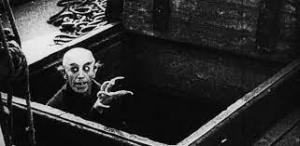 Nosferatu (Dir. F W Murnau, 1922) (Screening format – not known, 96mins) A German Expressionist horror masterpiece starring Max Shreck as the vampire Count Orlok. The film was an unauthorised adaption of Bram Stoker’s ‘Dracula’ with names and other details changed because the studio could not obtain the rights to the novel. Stoker’s heirs sued over the adaption and a court ruling ordered that all copies of the film be destroyed. However, a few prints survived and the film came to be regarded as an inspirational master work of the cinema. In the film, Count Orlok travels across Europe leaving a trail of death in his wake. Brilliantly eerie, with imaginative touches which later adaptions never achieved. Find out more at wikipedia.org Presented by Northern Silents. With live musical accompaniment featuring a newly commissioned score composed by Ben Gaunt and performed by him and the Frame Ensemble. Link
 Nosferatu (Dir. F W Murnau, 1922) (Screening format – not known, 96mins) A German Expressionist horror masterpiece starring Max Shreck as the vampire Count Orlok. The film was an unauthorised adaption of Bram Stoker’s ‘Dracula’ with names and other details changed because the studio could not obtain the rights to the novel. Stoker’s heirs sued over the adaption and a court ruling ordered that all copies of the film be destroyed. However, a few prints survived and the film came to be regarded as an inspirational master work of the cinema. In the film, Count Orlok travels across Europe leaving a trail of death in his wake. Brilliantly eerie, with imaginative touches which later adaptions never achieved. Find out more at wikipedia.org With live musical accompaniment by Hugo Max. Broadway Cinema, Letchworth Link
Nosferatu (Dir. F W Murnau, 1922) (Screening format – not known, 96mins) A German Expressionist horror masterpiece starring Max Shreck as the vampire Count Orlok. The film was an unauthorised adaption of Bram Stoker’s ‘Dracula’ with names and other details changed because the studio could not obtain the rights to the novel. Stoker’s heirs sued over the adaption and a court ruling ordered that all copies of the film be destroyed. However, a few prints survived and the film came to be regarded as an inspirational master work of the cinema. In the film, Count Orlok travels across Europe leaving a trail of death in his wake. Brilliantly eerie, with imaginative touches which later adaptions never achieved. Find out more at wikipedia.org With live musical accompaniment by Minima. St Leonard’s Mission Church, Chesterfield Link
2 November
 Stella Dallas. (Dir. Henry King. USA, 1925.) (Screening format – digital, 110mins) Stella Dallas, the working-class mother who makes the ultimate sacrifice for her socially ambitious daughter, became one of the most resonant figures in American culture from the moment Olive Higgins Prouty’s novel appeared in 1923. A stage adaptation soon followed, as did this film version in 1925 (the first of three). Produced by Samuel Goldwyn with a screenplay by Frances
 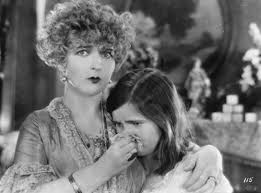 Marion and directed by Henry King, the film is a powerful indictment of the rigid class barriers then emerging in the prosperous, postwar America of the 1920s, but the emotional center of the film is Stella (a brilliant portrayal by Belle Bennett, one of 73 actresses tested for the role), who marries “above her station” (to a temporarily embarrassed banker’s son) but is unable to adapt her dress and behavior to the bourgeois
 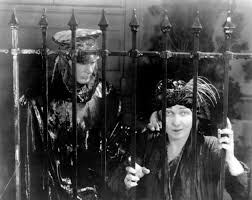 standards of her new husband. When her daughter becomes engaged to a fashionable country-clubber, Stella’s dilemma becomes painfully clear: Only by leaving her life can she ensure her daughter’s happiness. Find out more at Link. Introduced by composer and silent film musician Stephen Horne. With recorded orchestral score composed by Stephen Horne. BFI Southbank, London Link
 Forgotten Faces (Dir. Victor Schertzinger, US, 1928) (Screening format – digital, 83mins) Film noir didn’t come from nowhere, as this cynical silent thriller proves. Forgotten Faces follows gentleman thief ‘Heliotrope’ Harry Harlow, played by Clive Brook (fresh from his success in von Sternberg’s crime drama Underworld), as he tries to save his daughter from his vengeful wife and mother from hell, the latter played with evil brilliance by Russian actor Olga Baclanova. Sordid and shocking, the film also features William Powell in an unusual role as Heliotrope’s partner in crime, before he developed his suave Thin Man persona. Adapted from the short story “A Whiff of Heliotrope” by Richard Washburn Child, first published in Heart’s magazine in 1919, the film is notable for its somber performances and the eloquence of its late silent-film style. With its mobile camera, ingenious transitions, and expressionist lighting, Forgotten Faces demonstrates the influence of F.W. Murnau, who had arrived at Fox in 1926. Find out more at silentfilm.org. With live piano accompaniment by Neil Brand. Plaza Cinema, Weston Super Mare Link
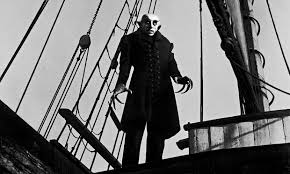 Nosferatu (Dir. F W Murnau, 1922) (Screening format – not known, 96mins) A German Expressionist horror masterpiece starring Max Shreck as the vampire Count Orlok. The film was an unauthorised adaption of Bram Stoker’s ‘Dracula’ with names and other details changed because the studio could not obtain the rights to the novel. Stoker’s heirs sued over the adaption and a court ruling ordered that all copies of the film be destroyed. However, a few prints survived and the film came to be regarded as an inspirational master work of the cinema. In the film, Count Orlok travels across Europe leaving a trail of death in his wake. Brilliantly eerie, with imaginative touches which later adaptions never achieved. Find out more at wikipedia.org With live musical accompaniment by Hugo Max. Tower Cinema, Eastborne Link
Phantom Of The Opera (Dir. Rupert Julian, 1925) (Screening format – not known, 103mins) A title that needs no introduction, The Phantom of the Opera has spawned many remakes, remasters and sequels. This original film version, produced with moments of early Technicolour, sees Lon Chaney, the ‘Man of a Thousand Faces’ perform one of his most iconic roles. His ghastly make-up and outrageous performance made this title a benchmark in the American silent film era. The film was a critical and commercial success upon release, and still stands as an important film in cinematic history to this day. Famed for the phantom’s shock unmasking, incredible set designs and the masked ball sequence, it still packs a punch. Find out more at wikipedia.org With live musical accompaniment by Minima. Town Hall, Fenton Link
3 November
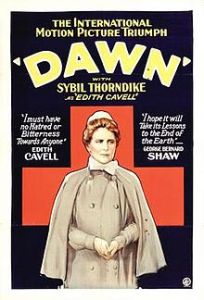 Dawn (Dir. Herbert Wilcox, GB, 1928) (Screening format – not known, 80 mins) One of the greatest British martyrs of World War I, Edith Cavell (1865-1915) was a distinguished nurse who moved to Brussels in 1907 to help establish an independent medical institution outside the control of the established churches. After war was declared in 1914 she became actively involved in helping to smuggle British fugitives out of Belgium, for which she was eventually caught, tried and sentenced to
  death. In the first of two adaptations of the Cavell story director Herbert Wilcox opted to stage the events primarily in the form of an atmospherically-shot suspense thriller, with Sybil Thorndike in the title role, one of her most memorable film appearances. Wilcox was keen to ensure realism and historical accuracy in his film, using original location footage, scrupulously researched set designs and one of Cavell’s collaborators -Ada Bodart – playing herself, but the film attracted considerable controversy. . Diplomatic efforts to minimise the film’s perceived potential for inflaming anti-German sentiment and disrupting international relations led to censor cuts for British audiences but in Belgium the film was released intact. Find out more at wikipedia.org With live musical accompaniment by Darius Battiwalla. Christ Church, Spitalfields Link
 Phantom Of The Opera (Dir. Rupert Julian, 1925) (Screening format – not known, 103mins) A title that needs no introduction, The Phantom of the Opera has spawned many remakes, remasters and sequels. This original film version, produced with moments of early Technicolour, sees Lon Chaney, the ‘Man of a Thousand Faces’ perform one of his most iconic roles. His ghastly make-up and outrageous performance made this title a benchmark in the American silent film era. The film was a critical and commercial success upon release, and still stands as an important film in cinematic history to this day. Famed for the phantom’s shock unmasking, incredible set designs and the masked ball sequence, it still packs a punch. Find out more at wikipedia.org With live musical accompaniment by Minima. Playhouse, Norwich Link
4 November
 The Lodger: A Story of the London Fog (Dir. Alfred Hitchcock, UK, 1927) (Screening format – not known, 91 mins ) In The Lodger, a serial killer known as “The Avenger” is on the loose in London, murdering blonde women. A mysterious man (Ivor Novello) arrives at the house of Mr. and Mrs. Bunting looking for a room to rent. The Bunting’s daughter (June Tripp) is a blonde model and is seeing one of the detectives (Malcolm Keen) assigned to the case. The detective becomes jealous of the lodger and begins to suspect he may be the avenger. Based on a best-selling novel by Marie Belloc Lowndes, first published in 1913, loosely based on the Jack the Ripper murders, The Lodger was Hitchcock’s first thriller, and his first critical and commercial success. Made shortly after his return from Germany, the film betrays the influence of the German expressionist tradition established in such films as The Cabinet of Dr. Caligari (1919) and Nosferatu (1922). Find out more at silentfilm.org With live musical accompaniment by Minima. Victoria Hall, Settle Link
5 November
 Phantom Of The Opera (Dir. Rupert Julian, 1925) (Screening format – not known, 103mins) A title that needs no introduction, The Phantom of the Opera has spawned many remakes, remasters and sequels. This original film version, produced with moments of early Technicolour, sees Lon Chaney, the ‘Man of a Thousand Faces’ perform one of his most iconic roles. His ghastly make-up and outrageous performance made this title a benchmark in the American silent film era. The film was a critical and commercial success upon release, and still stands as an important film in cinematic history to this day. Famed for the phantom’s shock unmasking, incredible set designs and the masked ball sequence, it still packs a punch. Find out more at wikipedia.org With live musical accompaniment by Minima. The Light, Stockport Link
6 November
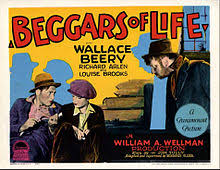 Beggars of Life (Dir. William Wellman, 1928) (Screening format – not known, 100 mins) Nancy (Louise Brooks), is a young woman on a farm who kills her foster father when he attempts to rape her. She is assisted in escaping from the farm by Jim (Richard Arlen), a young hobo who has stopped to ask for food. By dressing in rough men’s clothing, Nancy, with the assistance of Jim, eludes the police. They hop a freight train
 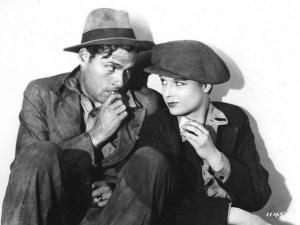 and, when thrown off by the brakeman, they wander into a hobo camp. The hobo camp is run by Oklahoma Red (Wallace Beery), a villain….or maybe not! Beggars of Life is based on the 1924 novelistic memoir of the same name by Jim Tully, a celebrated “hobo author”. Directed by William Wellman the year after he made Wings (the first film to win an Academy Award), the location shooting for Beggars of Life was awash with hair-raising stunts, hard-drinking nights and countless fights, apparently the norm for a William Wellman picture, and nicely detailed in Louise Brooks’ own words in her book ‘Lulu In Hollywood’. Find out more at silentfilm.org . With live musical accompaniment by The Dodge Brothers. Theatre Royal, York Link
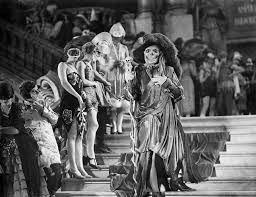 Phantom Of The Opera (Dir. Rupert Julian, 1925) (Screening format – not known, 103mins) A title that needs no introduction, The Phantom of the Opera has spawned many remakes, remasters and sequels. This original film version, produced with moments of early Technicolour, sees Lon Chaney, the ‘Man of a Thousand Faces’ perform one of his most iconic roles. His ghastly make-up and outrageous performance made this title a benchmark in the American silent film era. The film was a critical and commercial success upon release, and still stands as an important film in cinematic history to this day. Famed for the phantom’s shock unmasking, incredible set designs and the masked ball sequence, it still packs a punch. Find out more at wikipedia.org With live musical accompaniment by Minima. Parish Church, Melbourne Link
7 November
 Steamboat Bill Jr (Dir. Buster Keaton/Charles Reisner, US, 1928) (Screening format – not known, 71 mins) In Steamboat Bill Jr a crusty river boat captain hopes that his long departed son’s return will help him compete with a business rival. Unfortunately, William Canfield Jnr (Buster Keaton) is an effete college boy. Worse still, he has fallen for the business rival’s daughter (Marion Byron). Featuring some of Buster’s finest and most dangerous stunts, it’s a health and safety nightmare maybe but it’s entertainment that will live forever. The final storm sequence is still as breathtaking today as it was on first release. Not a commercial success at the time, this is now rightly regarded as a Keaton classic. Find out more at Wikipedia. With live piano accompaniment by Albert Lamb. Well Walk Theatre, London . Link
Phantom Of The Opera (Dir. Rupert Julian, 1925) (Screening format – not known, 103mins) A title that needs no introduction, The Phantom of the Opera has spawned many remakes, remasters and sequels. This original film version, produced with moments of early Technicolour, sees Lon Chaney, the ‘Man of a Thousand Faces’ perform one of his most iconic roles. His ghastly make-up and outrageous performance made this title a benchmark in the American silent film era. The film was a critical and commercial success upon release, and still stands as an important film in cinematic history to this day. Famed for the phantom’s shock unmasking, incredible set designs and the masked ball sequence, it still packs a punch. Find out more at wikipedia.org With live musical accompaniment by Minima. The Maltings, Farnham Link
8 November
Steamboat Bill Jr (Dir. Buster Keaton/Charles Reisner, US, 1928) (Screening format – not known, 71 mins) In Steamboat Bill Jr a crusty river boat captain hopes that his long departed son’s return will help him compete with a business rival. Unfortunately, William Canfield Jnr (Buster Keaton) is an effete college boy. Worse still, he has fallen for the business rival’s daughter (Marion Byron). Featuring some of Buster’s finest and most dangerous stunts, it’s a health and safety nightmare maybe but it’s entertainment that will live forever. The final storm sequence is still as breathtaking today as it was on first release. Not a commercial success at the time, this is now rightly regarded as a Keaton classic. Find out more at Wikipedia. With live piano accompaniment by Albert Lamb. Well Walk Theatre, London . Link
Phantom Of The Opera (Dir. Rupert Julian, 1925) (Screening format – not known, 103mins) A title that needs no introduction, The Phantom of the Opera has spawned many remakes, remasters and sequels. This original film version, produced with moments of early Technicolour, sees Lon Chaney, the ‘Man of a Thousand Faces’ perform one of his most iconic roles. His ghastly make-up and outrageous performance made this title a benchmark in the American silent film era. The film was a critical and commercial success upon release, and still stands as an important film in cinematic history to this day. Famed for the phantom’s shock unmasking, incredible set designs and the masked ball sequence, it still packs a punch. Find out more at wikipedia.org With live musical accompaniment by Minima. Ultimate Picture Palace, Oxford Link
9 November
Phantom Of The Opera (Dir. Rupert Julian, 1925) (Screening format – not known, 103mins) A title that needs no introduction, The Phantom of the Opera has spawned many remakes, remasters and sequels. This original film version, produced with moments of early Technicolour, sees Lon Chaney, the ‘Man of a Thousand Faces’ perform one of his most iconic roles. His ghastly make-up and outrageous performance made this title a benchmark in the American silent film era. The film was a critical and commercial success upon release, and still stands as an important film in cinematic history to this day. Famed for the phantom’s shock unmasking, incredible set designs and the masked ball sequence, it still packs a punch. Find out more at wikipedia.org With live musical accompaniment by Harmonieband. Depot, Lewis Link
12 November
 7th Heaven (Dir. Frank Borzage, 1927) (Screening format –digital, 110mins) Chico (Charles Farrell) is a poor Parisian sewer cleaner who aspires to work his way out of his dead-end job and into the middle class. When he meets Diane (Janet Gaynor), an abused prostitute, he
 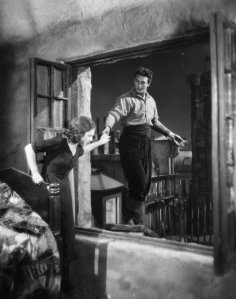 sympathizes with her plight and tells the police she’s his wife to prevent them from arresting her. To keep up the appearances of marriage, he invites Diane to live with him, and a real romance blossoms until Chico is drafted in the army at the start of World War I. Janet Gaynor won the Best Actress award at the very first Academy Awards for her role in this gorgeously romantic drama of star-crossed Parisian lovers. And with beautiful sets, plus stunning camerawork, 7th Heaven is silent-era Hollywood at its most powerful. Find out more at silentfilm.org With live musical accompaniment. BFI Southbank, London Link
14 November
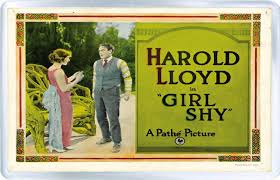 Girl Shy (Dir. Fred Newmeyer and Sam Taylor, US, 1924) (Screening format – not known, 89mins) He may be completely inept around girls in real life, but that doesn’t stop poor tailor’s apprentice Harold Meadows (Harold Lloyd) from publishing “The Secret of Making Love,” his guidebook on how to woo women. When romance finally does come along—in the form of a wealthy, already-engaged heiress (Jobyna Ralston)—can this bumbling boy put his own advice into practice? Lloyd’s first independent feature (following his association with Hal Roach) features an epic, two-reel chase climax that may be the comedian’s finest. Find out more at moviessilently.com. With live piano accompaniment by Albert Lamb. Well Walk Theatre, London . Link
 Cottage on Dartmoor (Dir. Anthony Asquith, 1929) (Screening format – 35mm, 84mins) Joe (Uno Henning) works as a barber in a shop in a Devon town, alongside a manicurist called Sally (Norah Baring). He becomes infatuated with her and asks her out but it is clear that Sally does not reciprocate Joe’s feelings. Joe’s infatuation with her develops into obsession. Meanwhile a young farmer Harry (Hans Schlettow), begins to woo Sally and the
 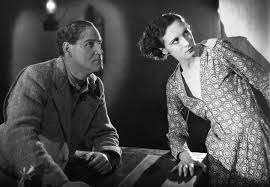 couple begin seeing each other which leaves Joe in despair. After a fight with Harry, Joe is jailed but swears revenge on Harry and Sally. A Cottage on Dartmoor is a tale of love and revenge set in the bleak landscape of Dartmoor and a thoughtful distillation of the best of European silent film techniques from a director steeped in the work of the Soviet avant-garde and German expressionism. One of the last films of the silent era and a virtuoso piece of film-making, A Cottage on Dartmoor was a final passionate cry in defence of an art form soon to be obsolete. Find out more at silentfilm.org. With live musical accompaniment. BFI Southbank, London Link
15 November
 The Navigator (Dir. Donald Crisp/Buster Keaton, US, 1924) (Screening format – not known, 59mins) When the wealthy and impulsive Rollo Treadway (Buster Keaton) decides to propose to his beautiful socialite neighbour, Betsy O’Brien (Kathryn McGuire), things
  don’t go as planned. Although Betsy turns Rollo down, he still opts go on the cruise that he intended as their honeymoon. When circumstances find both Rollo and Betsy on the wrong ship, with no one else on board, they end up with some hilarious high adventures on the high seas, which allows Keaton plenty of opportunities to display his trademark agility. Find out more at busterkeaton.com With live organ accompaniment by David Ivory. St Peter’s Church, Cradley Link
 Raskolnikow. (Dir. Robert Wiene, Ger, 1923) (Screening format – not known, 142mins) In this haunting adaptation of Fyodor Dostoyevsky’s masterwork, director Robert Wiene (The Cabinet of Dr. Caligari) melds German Expressionist aesthetics with the naturalistic performance style of exiled Russian actors from the Moscow Art Theater. Shot in Berlin during the tumultuous inflation of 1922, the film represents a unique cultural fusion—its jagged, anti-naturalistic sets providing an externalized landscape for
  Raskolnikov’s tortured psyche, while the Russian ensemble delivers performances of devastating psychological realism. Grigorij Chmara embodies the murderous student Raskolnikov with harrowing intensity, moving through Andrej Andrejew’s distorted architectural spaces like a man trapped in his own fevered conscience. Wiene’s revolutionary decision to cast actual Russian émigrés—part of Berlin’s burgeoning exile community—lends the production an authenticity that transcends its experimental visual style, creating what contemporary critics called “not acting, but: living!” Find out more at frenchfilms.org With live musical accompaniment by Hugo Max. Kino Teatr, St Leonards on Sea Link
Girl Shy (Dir. Fred Newmeyer and Sam Taylor, US, 1924) (Screening format – not known, 89mins) He may be completely inept around girls in real life, but that doesn’t stop poor tailor’s apprentice Harold Meadows (Harold Lloyd) from publishing “The Secret of Making Love,” his guidebook on how to woo women. When romance finally does come along—in the form of a wealthy, already-engaged heiress (Jobyna Ralston)—can this bumbling boy put his own advice into practice? Lloyd’s first independent feature (following his association with Hal Roach) features an epic, two-reel chase climax that may be the comedian’s finest. Find out more at moviessilently.com. With live piano accompaniment by Albert Lamb. Well Walk Theatre, London . Link
19 November
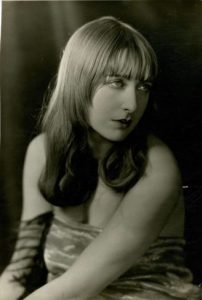 The Hangman (aka Der Henker and Der Staatsanwalt klagt an ) (Dir. Theodor Sparkuhl and Adolf Trotz, Ger, 1928) (Screening format – 35mm). Starring Andrée Lafayette (right) and Bernhard Goetzke and photography by Johannes Männling and Theodor Sparkuhl. Prosecutor Leander is known for his heavy-handed and unyielding pleadings, demanding draconian punishments, often even the death penalty, for every accused offender. One day, he will experience first-hand how complex some legal assessments can be. Love and passion, hatred and jealousy can drive even the most righteous people to actions they would never normally commit. Therefore, not everyone who commits a crime is necessarily a criminal. Stage and film actor Bernhard Goetzke is chiefly associated with Fritz Lang’s films Destiny (1921), Dr. Mabuse the Gambler (1922) and Die Nibelungen (1924). Co-director/photographer Theodor Sparkuhl was originally a projectionist and subsequently became a newsreel cameraman. He was later the chief photographer for director Ernst Lubitsch until the latter’s departure for America. During 1928-30 Sparkuhl worked at British International Pictures, where his credits include Bright Eyes, The Flying Scotsman and The Informer. He too moved to America in 1931 and is remembered for his work on such classics as Beau Geste (1939) and The Glass Key (1942). His colleague Adolf Trotz was born in an area of Silesia that is now within Poland and worked in German cinema until incurring the disapproval of the Nazi regime. He subsequently made films in Spain then moved to Italy, where he died at only 43 in 1939. Art director Victor Trivas was later in America, where he was nominated for an Academy Award for Best Story for the 1946 film The Stranger. Find out more at wikipedia.org Presented by the Kennington Bioscope. With live musical accompaniment. Cinema Museum, Lambeth. Link
21 November
 The General (Dir. Buster Keaton/Clyde Bruckman, 1926) (Screening format – not known, 75mins) Widely considered one of the greatest films ever made and one of the most revered comedies of the silent era, Buster Keaton’s effortless masterpiece sees hapless Southern railroad engineer Johnny Gray (Keaton) facing off against Union soldiers during the American Civil War. When Johnny’s fiancée, Annabelle Lee (Marion Mack), is accidentally taken away while on a train stolen by Northern forces, Gray pursues the soldiers, using various modes of transportation in comic action scenes that highlight Keaton’s boundless, innovative wit and joyful, lighthearted dexterity, to reclaim the train and thereby save the South. Find out more at busterkeaton.com. With live piano accompaniment by Albert Lamb. Well Walk Theatre, London . Link
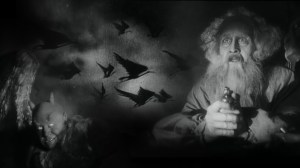 Faust (Dir. F W Murnau, Ger, 1926) (Screening format – not known, 107mins) Like Fritz Lang, F.W. Murnau is a towering figure of Weimar cinema, thanks to films such as Nosferatu (1922), The Last Laugh (1924), and, after moving to America, Sunrise: A Song of Two Humans (1927). Murnau’s approach to framing and his use of liberating camera movements suggested to subsequent filmmakers a new way of using the pictorial space. Faust, the director’s final German film, draws on sources including Marlowe and Goethe in service of the story of a man who makes a deal with the devil. Murnau’s Faust was the most technically elaborate and expensive production undertaken by Ufa until it was surpassed by Metropolis the following year. Filming took six months, at a cost of 2 million marks, only half of which was recovered at the box office. According to many film historians, Faust seriously influenced subsequent studio shooting and special effects techniques. Murnau used two cameras, each filming multiple shots; with many scenes requiring multiple takes. Faust was Murnau’s last German film, immediately prior to his move to the US. Find out more at rogerebert.com. With live musical accompaniment by Darius Battiwalla.RNCM, Manchester Link
22 November
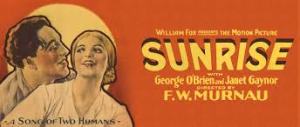 Sunrise; A Song of Two Humans (Dir. F W Murnau, US, 1927) (Screening format – not known, 94mins) F W Murnau’s debut American film, made at the technical zenith of the silent era but already heralding the arrival of the talkies being one of the first silents made with synchronized musical score and sound effects soundtrack. The
 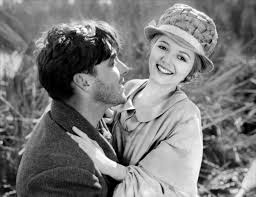 simple story of a husband’s betrayal of his wife with a treacherous city girl, Sunrise moves from a fairytale-like depiction of rural life to a dynamic portrait of the bustling modern American city. Explored in elaborate tracking shots by Charles Rocher and Karl Struss’s pioneering camerawork, the city set was one of the most costly yet produced. The result was a commercial flop, though the achievement did not go unheralded: Sunrise was awarded a special Oscar for unique and artistic production at the first ever Academy Awards and Janet Gaynor won the first Academy Award for Best Actress for her performance. The film’s legacy has endured, and it is now widely considered a masterpiece with many calling it the greatest film of the silent era. Find out more at theguardian.com Introduced by Dr Ian Roberts. With live musical accompaniment led by Chris Mapp, Annie Mahtani and guests. Art Centre, Warwick Link
The General (Dir. Buster Keaton/Clyde Bruckman, 1926) (Screening format – not known, 75mins) Widely considered one of the greatest films ever made and one of the most revered comedies of the silent era, Buster Keaton’s effortless masterpiece sees hapless Southern railroad engineer Johnny Gray (Keaton) facing off against Union soldiers during the American Civil War. When Johnny’s fiancée, Annabelle Lee (Marion Mack), is accidentally taken away while on a train stolen by Northern forces, Gray pursues the soldiers, using various modes of transportation in comic action scenes that highlight Keaton’s boundless, innovative wit and joyful, lighthearted dexterity, to reclaim the train and thereby save the South. Find out more at busterkeaton.com. With live piano accompaniment by Albert Lamb. Well Walk Theatre, London . Link
Cottage on Dartmoor (Dir. Anthony Asquith, 1929) (Screening format – 35mm, 84mins) Joe (Uno Henning) works as a barber in a shop in a Devon town, alongside a manicurist called Sally (Norah Baring). He becomes infatuated with her and asks her out but it is clear that Sally does not reciprocate Joe’s feelings. Joe’s infatuation with her develops into obsession. Meanwhile a young farmer Harry (Hans Schlettow), begins to woo Sally and the couple begin seeing each other which leaves Joe in despair. After a fight with Harry, Joe is jailed but swears revenge on Harry and Sally. A Cottage on Dartmoor is a tale of love and revenge set in the bleak landscape of Dartmoor and a thoughtful distillation of the best of European silent film techniques from a director steeped in the work of the Soviet avant-garde and German expressionism. One of the last films of the silent era and a virtuoso piece of film-making, A Cottage on Dartmoor was a final passionate cry in defence of an art form soon to be obsolete. Find out more at silentfilm.org. With live musical accompaniment. BFI Southbank, London Link
 Battle of the Somme (Dir.Geoffrey Malins, 1916) (Screening format – not known, 77mins) The Battle of the Somme gave its 1916 audience an unprecedented insight into the realities of trench warfare, controversially including the depiction of dead and wounded soldiers. It shows scenes of the build-up to the infantry offensive including the massive preliminary bombardment, coverage of the first day of the battle (the bloodiest single day in Britain’s military history) and depictions
 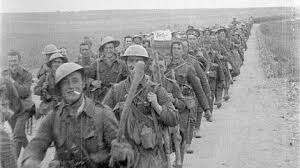 of the small gains and massive costs of the attack. The Battle of the Somme remains one of the most successful British films ever made. It is estimated over 20 million tickets were sold in Great Britain in the first two months of release, and the film was distributed world-wide to demonstrate to allies and neutrals Britain’s commitment to the First World War. It is the source of many of that conflict’s most iconic images. It was made by British official cinematographers Geoffrey Malins and John McDowell. Though it was not intended as a feature film, once the volume and quality of their footage had been seen in London, the British Topical Committee for War Films decided to compile a feature-length film. Find out more at wikipedia.org. Presented by South West Silents. With live musical accompaniment by Stephen Horne. Megascreen, Bristol Link
23 November
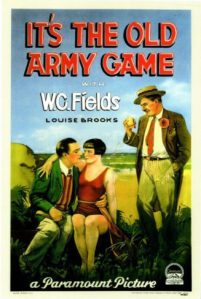 It’s the Old Army Game (Dir. Eddie Sutherland, US, 1926) (Screening format – not known, 77mins) Though posterity remembers him as a talking comedian, the great W.C. Fields – enemy of small dogs and children everywhere – made some wonderful silent comedies. This 1926 feature follows the trials and tribulations of small-town druggist Elmer Prettywillie (Fields) and boasts some terrific comic set pieces, from his encounters with difficult customers to a nightmare picnic. It later provided the blueprint for his 1934 classic It’s A Gift, and also features an unlikely co-star in silent screen icon Louise Brooks! Find out more at pandorasbox.com. Presented as part of the Kennington Bioscope‘s Silent Laughter Day. With live musical accompaniment by Colin Sell. Cinema Museum, Lambeth Link
 Rediscoveries & Restorations Almost a century after the silent era ended, some brilliant lost films keep resurfacing, while restoration efforts help others to live anew. Regular attendees will know that we always pull out some real goodies from the bag for this segment of Silent Laughter, and this year is no different. We’re still digging through the treasures on offer, and exact titles are TBC, but expect new restorations of long-lost (and hilarious) films starring Snub Pollard and Laurel & Hardy and we’ll also be showing the world premiere of a newly discovered and restored Pimple film (Fred Evans) – Pimple’s Lady Godiva (1917) Presented as part of the Kennington Bioscope‘s Silent Laughter Day. Introduced by the BFI’S Bryony Dixon. With live musical accompaniment by Cyrus Gabrysch Cinema Museum, Lambeth Link
 Female Fun Unfortunately, our view of silent comedy tends to be dominated by male performers. Although fewer studios provided opportunities for women to shine in comedy, there were still plenty of wonderful performers who managed to break through the slapstick patriarchy to achieve stardom in their own right. Here we shine a light on three of the best funny women: Wanda Wiley proves that women can do slapstick just as well as men in A Thrilling Romance, Marion Byron stars with Max Davidson in charming situation comedy The Boy Friend, and the wonderful Mabel Normand pokes fun at vanity in the rarely seen Anything Once. Presented as part of the Kennington Bioscope‘s Silent Laughter Day. With live musical accompaniment by Costas Fotopoulos Cinema Museum, Lambeth Link
 Why Be Good (Dir. William A Seiter, US, 1929) (Screening format – not known, 89mins) One of the defining ‘flappers’ of the 1920s, Colleen Moore sparkled in a series of deliciously frothy light comedies. Why Be Good? is a classic jazz-age tale set in a metropolitan world of department stores and night clubs: a real time capsule. Life-of-the-party Pert Kelly (Moore) falls for the boss of the department
 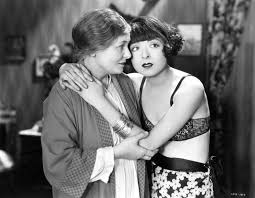 store where she works – but will her free-spirited ways be tolerated by high society? For a movie that’s nearly 100 years old, Why Be Good? remains remarkably fresh and modern with a great commentary on the double standards for women. Considered lost for many years, a copy of Why Be Good? was discovered in an Italian film archive and eventually restored in 2014, complete with its original ‘Vitaphone’ music and effects soundtrack. Find out more at silentfilm.org. Presented as part of the Kennington Bioscope‘s Silent Laughter Day. With original Vitaphone recorded soundtrack. Cinema Museum, Lambeth Link
 Focus On… Keystone In the early teens, Keystone Studios was a crucible for film comedy. From Charlie Chaplin to Roscoe Arbuckle, Mabel Normand and The Keystone Cops, many of the icons of silent comedy were forged here. Dave Glass and Glenn Mitchell take a deep dive into the studio’s modius operandi and its seismic influence on comedy, with classic and rare film clips galore! Presented as part of the Kennington Bioscope‘s Silent Laughter Day. With live musical accompaniment by Ashley Valentine . Cinema Museum, Lambeth Link
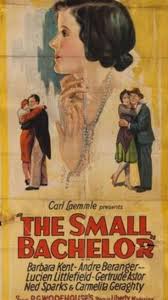 The Small Bachelor (Dir. William A Seiter, US, 1927) (Screening format – not known, 70mins) Lost for a century until unearthed by Christopher Bird, this is the world re-premiere of a rediscovered adaptation of a P. G. Wodehouse novel. Set in Greenwich Village, the plot focuses on aspiring artist Finch (George Beranger) and his romantic entanglements. The New York setting gave Wodehouse plenty of chance to gently lampoon American culture, especially through the Western-obsessed
 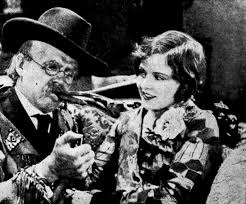 character Sigsbee Waddington. A cast of great comic character actors bring Wodehouse’s characters to life, including Lucien Littlefield, Tom Dugan, Gertrude Astor and George Davis. Directed by light comedy specialist William A Seiter, The Small Bachelor fizzes with gentle wit and farcical humour: a rediscovered treasure for fans of Wodehouse and silent comedy alike. Find out more at wikipedia.org Presented as part of the Kennington Bioscope‘s Silent Laughter Day. With live musical accompaniment by Neil Brand. Cinema Museum, Lambeth Link
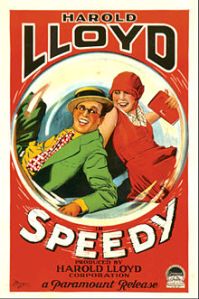 Speedy (Dir. Ted Wilde, US, 1928) (Screening format – not known, 86mins) Harold Lloyd’s final silent film sees him reprise his ‘glasses character’ as a baseball-obsessed New Yorker (the film features a cameo from the legendary Babe Ruth) who becomes determined to save the city’s last horse-drawn streetcar, motivated in no small part by its owner being the grandfather of his love interest. Filled with Lloyd’s trademark rapid-fire visual humour and elaborate set-ups, it’s a fine example of his innovative approach to comedy. Find out more at allmovie.com. With live organ accompaniment by Donald Mackenzie. Musical Museum, Brentford Link
27 November
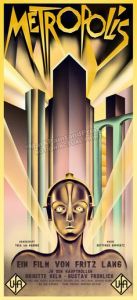 Metropolis (Dir. Fritz Lang, 1927) (Screening format –not known , 149 mins ) Made in Germany during the Weimar period, Metropolis is set in a futuristic urban dystopia and follows the attempts of Freder (Gustav Frohlich), the wealthy son of the city’s ruler, and Maria (Brigitte Helm), a poor worker, to overcome the vast gulf separating the classes of their city. Filming took place in 1925 at a cost of approximately five million Reichmarks, making it the most expensive film ever released up to that point. It is regarded as a pioneering work of science fiction and is among the most influential films of all time. Following its world premiere in 1927, half an hour was cut from Fritz Lang’s masterpiece and lost to the world. Eighty years later a spectacular discovery was made when the footage was found in a small, dusty museum in Buenos Aires. The film was then painstakingly reconstructed and digitally restored so that at last audiences could see the iconic futuristic fairy tale as Lang had envisioned it. Find out more at silentfilm.org With live musical accompaniment by the Fiona Winning Quartet performing a new score composed by Graham Stephen. Traverse Theatre, Edinburgh Link
Phantom Of The Opera (Dir. Rupert Julian, 1925) (Screening format – not known, 103mins) A title that needs no introduction, The Phantom of the Opera has spawned many remakes, remasters and sequels. This original film version, produced with moments of early Technicolour, sees Lon Chaney, the ‘Man of a Thousand Faces’ perform one of his most iconic roles. His ghastly make-up and outrageous performance made this title a benchmark in the American silent film era. The film was a critical and commercial success upon release, and still stands as an important film in cinematic history to this day. Famed for the phantom’s shock unmasking, incredible set designs and the masked ball sequence, it still packs a punch. Find out more at wikipedia.org With live musical accompaniment by Harmonieband. Arts Centre, Warwick Link
28 November
Phantom Of The Opera (Dir. Rupert Julian, 1925) (Screening format – not known, 103mins) A title that needs no introduction, The Phantom of the Opera has spawned many remakes, remasters and sequels. This original film version, produced with moments of early Technicolour, sees Lon Chaney, the ‘Man of a Thousand Faces’ perform one of his most iconic roles. His ghastly make-up and outrageous performance made this title a benchmark in the American silent film era. The film was a critical and commercial success upon release, and still stands as an important film in cinematic history to this day. Famed for the phantom’s shock unmasking, incredible set designs and the masked ball sequence, it still packs a punch. Find out more at wikipedia.org With live musical accompaniment by Harmonieband. Quad, Derby Link
 Chicago (Dir. Frank Urson & Cecil B.DeMille (uncredited), 1927) (Screening format – not known, 118mins ) Seventy-five years before Bob Fosse’s Oscar-winning musical version of Maurine Watkins’ successful stage play, Cecil B. DeMille’s production company made this saucy silent film version. Phyllis Haver is hugely entertaining as the brazen Roxie Hart “Chicago’s most beautiful murderess” – a woman so pathologically shallow she sees notoriety for a murder rap as an opportunity to secure her fortune. Egged on by her crooked lawyer (“they’ll be naming babies after you”) Roxie neglects her long-suffering loyal husband and sets about milking her celebrity status for all she’s worth. The sequence in the prison is an absolute delight – particularly the rivalry between Roxie and fellow-murderess Velma (played by Julia Faye, DeMille’s mistress), as are the climactic courtroom scenes. A cracking, satire on fame and the media, this fun-filled tale of adultery, murder and sin (so sinful that DeMille – known for his Biblical epics – was at pains to keep his name off the credits) is as fresh and relevant as ever. Find out more at wikipedia.org . Presented as part of the Wareham Silent Film Weekend. With recorded score. Rex Cinema, Wareham. Link
29 November
Phantom Of The Opera (Dir. Rupert Julian, 1925) (Screening format – not known, 103mins) A title that needs no introduction, The Phantom of the Opera has spawned many remakes, remasters and sequels. This original film version, produced with moments of early Technicolour, sees Lon Chaney, the ‘Man of a Thousand Faces’ perform one of his most iconic roles. His ghastly make-up and outrageous performance made this title a benchmark in the American silent film era. The film was a critical and commercial success upon release, and still stands as an important film in cinematic history to this day. Famed for the phantom’s shock unmasking, incredible set designs and the masked ball sequence, it still packs a punch. Find out more at wikipedia.org With live musical accompaniment by Harmonieband. MAC, Birmingham Link
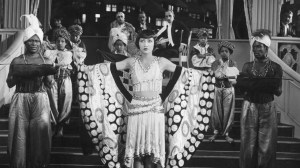 Song (Dir. Richard Eichberg, Ger, 1928) (Screening format – not known, 122mins) This superb melodrama, a British-German co-production, was designed to appeal to international markets. Set in a bustling Asian port, it centres on a vaudeville artist (Chinese-American star Anna May Wong) whose emotional attachment to a knife-thrower (Heinrich George) is complicated by the reappearance of his former mistress. A lavish treat, with scintillating dance numbers and mesmerising close-ups of Wong. Find out more at berlinale.de. Presented as part of the Wareham Silent Film Weekend. With live piano accompaniment by Dominic Irving. Rex Cinema, Wareham. Link
 Piccadilly (Dir E A Dupont, UK, 1929) (Screening format – not known, 92 mins) A film noir before the term was in use, uncredited German director E.A. Dupont’s Piccadilly is one of the true greats of British silent films, on a par with the best of Anthony Asquith or Alfred Hitchcock during this period. Valentine Wilmot (Jameson Thomas) owns a nightclub featuring dancers Mabel (Gilda Gray) and Vic (Cyril Ritchard). After a confrontation with Wilmot, Vic quits performing at the club. When the joint starts losing business, a desperate Wilmot hires former dishwasher Shosho (Anna May Wong) as a dancer. She is an instant hit and forms a rapport with Wilmot, which makes both Mabel and Shosho’s friend (King Ho Chang) jealous, leading to a mysterious murder. A stylish evocation of Jazz Age London, with dazzlingly fluid cinematography and scenes ranging from the opulent West End to the seediness of Limehouse. One of the pinnacles of British silent cinema, Piccadilly is a sumptuous show business melodrama seething with sexual and racial tension – with an original screenplay by Arnold Bennett. Find out more at screenonline.org.uk . Presented as part of the Wareham Silent Film Weekend. With recorded score. Rex Cinema, Wareham. Link
 Our Dancing Daughters (Dir. Harry Beaumont, US, 1928) (Screening format – not known, 83mins) In Our Dancing Daughters, Joan Crawford stripped to her teddy and tore into a Charleston powered by a zillion watts of sexual energy – and shocked the corsets and cravats off parents who’d heard disturbing rumblings of what their children were up to. But the younger generation couldn’t get enough: they’d found their icon of Flaming Youth. Crawford became a star in this milestone silent about a good girl who hides her heart behind a party-girl mask and loses the man she loves to a gold digger. The film’s portrait of a fascinating (and a bit frightening) breed of young women who match men drink for drink and vice for vice was so popular it bred two similarly themed movies: Our Modern Maidens and Our Blushing Brides. After the film’s release, box office grosses for Loew’s theaters soared, as did the volume of fan-mail for Joan (and as did her salary). According to legend (well, Wikipedia!!) Joan Crawford stripped naked in front of the producer in order to get the lead role in this film. When the decision maker told Joan that the director was in charge of casting, Joan went to his office, repeated her performance, and got the part. Find out more at ithankyouarthur.blogspot.com Presented as part of the Wareham Silent Film Weekend. With recorded score. Rex Cinema, Wareham. Link
30 November
Song (Dir. Richard Eichberg, Ger, 1928) (Screening format – not known, 122mins) This superb melodrama, a British-German co-production, was designed to appeal to international markets. Set in a bustling Asian port, it centres on a vaudeville artist (Chinese-American star Anna May Wong) whose emotional attachment to a knife-thrower (Heinrich George) is complicated by the reappearance of his former mistress. A lavish treat, with scintillating dance numbers and mesmerising close-ups of Wong. Find out more at berlinale.de. With live piano accompaniment by Lillian Henley. Palace Cinema, Broadstairs Link
Phantom Of The Opera (Dir. Rupert Julian, 1925) (Screening format – not known, 103mins) A title that needs no introduction, The Phantom of the Opera has spawned many remakes, remasters and sequels. This original film version, produced with moments of early Technicolour, sees Lon Chaney, the ‘Man of a Thousand Faces’ perform one of his most iconic roles. His ghastly make-up and outrageous performance made this title a benchmark in the American silent film era. The film was a critical and commercial success upon release, and still stands as an important film in cinematic history to this day. Famed for the phantom’s shock unmasking, incredible set designs and the masked ball sequence, it still packs a punch. Find out more at wikipedia.org With live musical accompaniment by Harmonieband. Showroom Cinema, Sheffield Link
 Shooting Stars (Dir. Anthony Asquith and A.V. Bramble, UK, 1928) (Screening format – not known, 80mins) At Zenith Studios, a starlet plots an escape to Hollywood with her lover and the murder of her superfluous husband. Shooting Stars is a must for any silent cinema fan. Offering a rare insight into the workings of a 1920s film studio, there are location scenes, comic stunts and an on-set jazz band which demonstrate just what life was like in the early days of cinema. Shooting Stars begins as a witty and affectionate look at the smoke-and-mirrors world of filmmaking, with many a wink to its audience, but as the paranoia associated with adultery takes its toll, the mood becomes somewhat darker. Find out more at screenonline.org.uk . Presented as part of the Wareham Silent Film Weekend. With recorded score. Rex Cinema, Wareham. Link
 Underground (Dir. Anthony Asquith, GB, 1928) (Screening format – not known, 84 mins) In 1920s London, during a normal hectic day on the Underground, mild mannered Northern Line porter Bill (Brian Aherne) falls for shop worker Nell (Elissa Landi). But their relationship is threatened by power station worker Burt (Cyril McLaglan) who also has eyes for Nell. Consumed by jealousy, Burt plots to discredit Bill with a plan that results in a daring chase through London’s underground and across rooftops of the city. Although Underground was only Asquith‘s second film he handles the melodramatic story with confidence and great sophistication. Underground is a rare study of 1920s working-class London, and offers a fascinating and historically interesting glimpse of its public transport system. Find out more at screenonline.org.uk Presented as part of the Wareham Silent Film Weekend. With recorded score. Rex Cinema, Wareham. Link
 Pandora’s Box (Dir. G W Pabst, Ger, 1929) (Screening format – not known, 135mins) Based on two plays by the German author Frank Wedekind, Erdgeist (Earth Spirit, 1895), which Pabst himself had directed for the stage, and Die Büchse der Pandora (Pandora’s Box, 1904), the silent drama follows the tumultuous life of the showgirl Lulu whose unselfconscious sexuality brings about the ruin of all those that fall for her and eventually her own. In a daring move, Pabst chose a little known American actress over the more experienced Marlene Dietrich for the part of Lulu, a decision that made the young Louise Brooks an international star. Her innocent looks paired with her natural erotic allure and sense of movement – Brooks was also a dancer – perfectly matched Pabst’s idea of his heroine as unwitting seductress. Subjected to cuts to eliminate some of its “scandalous” content and unfavourably reviewed by critics at the time, it is now considered one of the boldest and most modern films of the Weimar era highlighting Pabst’s command of camera language and montage. Find out more at silentlondon.co.uk . Presented as part of the Wareham Silent Film Weekend. With recorded score. Rex Cinema, Wareham. Link
December
2 December
 People on Sunday (Dir. Robert Siodmak/Edgar G Ulmer, Ger, 1929) (Screening format – digital, 74mins) Famously, Billy Wilder and Fred Zinnemann worked with Siodmak on this landmark of realist film making, a magical blend of documentary and fiction which takes us back to a glorious summer Sunday in late-1920s Berlin where five young
  workers take a day off to spend a flirtatious afternoon together at a lake on the edge of the city.. While they enjoy freedoms undreamt of by their parents, sexual rivalry soon lends an edge to their flirtations. The people portraying the characters were all amateurs belonging to a Berlin collective who, the opening credits inform us, had returned to their normal jobs by the time of the film’s release. They included a taxi driver, a record seller and a wine merchant. But together, the cast and crew produced a classic of silent film and one which still feels remarkably modern. Find out more at archive.org. With recorded score. BFI Southbank, London Link
5 December
 College (Dir. James W Horne/Buster Keaton, US, 1927) (Screening format – not known, 67mins) Keaton followed up his smash hit The General with a higher
  education comedy that seemed to take a cue from Harold Lloyd’s The Freshman (1925). Keaton stars as bookworm Ronald, whose high school girl Mary ditches him for someone with the athletic prowess that Ronald lacks. Determined to win her back, Ronald enters college with an eye on sports, but unfortunately with two left feet. Although James Thorne was given co-directing credit, Buster Keaton later
  claimed he was totally worthless as a director and that the majority of the directing work was done by Keaton himself. While College may not be as well known or as celebrated as other Keaton classics it certainly delivers impressive physical comedy and solid entertainment as only a brilliant Buster Keaton film can. Find out more at aurorasginjoint.com Presented as part of the Highgate International Chamber Music Festival. With musical accompaniment composed by Stephen Prutsman and performed live by piano quintet. St Anne’s Church, Highgate London Link And if you use promo code SILENTFILM30 you can get 30% off when booking a ticket.
6 December
 Man With a Movie Camera (Dir. Dziga Vertov, USSR, 1929) (Screening format – digital, 68mins) Part documentary and part cinematic art, this film follows a city in the 1920s Soviet Union throughout the day, from morning to night. Directed by Vertov, with a variety of complex and innovative camera shots (filmed by Vertov’s equally talented and innovative brother Mikhail Kaufman), the film depicts scenes of ordinary daily life in Russia. Vertov celebrates the modernity of the city, with its vast buildings, dense population and bustling industries. While there are no titles or narration, director and cameraman still naturally convey the marvels of the modern city. Find out more at rogerebert.com . With recorded score. BFI Southbank, London Link
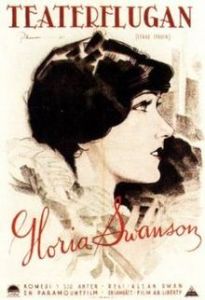 Stage Struck (Dir. Allan Dwan, US, 1925) (Screening format – not known, 87mins) One of the last lighthearted collaborations between Gloria Swanson and Allan Dwan, Stage Struck (1925) is a sweetly funny account of a small-town girl with dreams of fame. Swanson plays Jenny Hagen, a diner waitress who fantasizes about a life on stage. Her heart belongs to Orme Wilson (Lawrence Gray), an expert pancake flipper, who only has eyes for the women in movie magazines. So when a river showboat comes to town, he only has eyes for the star, Lillian Lyons (Gertrude Astor). Inflamed with jealousy, Jenny is determined to get on stage herself, by any means necessary.! One of Paramount’s first features to use Technicolor. Find out more at wikipedia.org Presented by South West Silents. With live musical accompaniment . Megascreen, Bristol Link
7 December
 Way Down East (Dir. D W Griffith, US, 1920) (Screening format – 35mm, 149mins) Subtitled: “A Simple Story of Plain People,” director Griffith intended Way Down East to be a sweeping, lyrical, but epic story, conveying an image of a vanished, unspoiled, pastoral America. Originally a hugely successful stage play, written by Lottie Blair Parker in 1897, Way Down East was an old-fashioned story that espoused nineteenth-century American and Victorian ideals. It had already been filmed twice but by the time Griffith brought the rights in 1920 it was considered outdated and overly melodramatic. As Lillian
 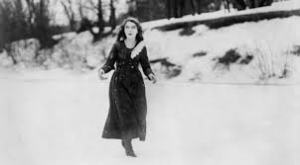 Gish would later recall, “Way Down East was a horse-and-buggy melodrama, familiar on the rural circuit for more than twenty years. As I read the play, I could hardly keep from laughing.” However, while it was Griffith’s most expensive film to date (costing him $175,000, more than the entire cost of his 1915 epic Birth Of A Nation), it was also one of his most commercially successful. The story follows impoverished New England country girl Anna Moore (Lillian Gish) to Boston in search of family aid. Instead she’s duped into a fake marriage by playboy Lennox Sanderson (Lowell Sherman). Pregnancy results in Sanderson abandoning her to care for
 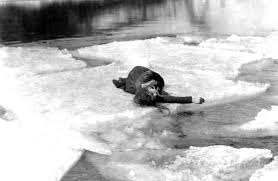 the child alone, which dies soon after birth. The disgrace sends her back into the countryside to work for Squire Bartlett, whose son David (Richard Barthelmess) begins to fall for her.
 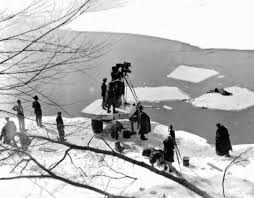 However, her dreadful secret threatens to be revealed. Way Down East is best known for the exciting climax featuring Gish trapped in the ice during a snowstorm. With no computer-generated effects, and no stunt woman taking Gish’s place, the actress recalls, in her autobiography, actually going out into this dangerous situation in subfreezing temperatures, “this kind of dedication probably seems foolish today, but it wasn’t unusual then. Those of us who worked with Mr. Griffith were completely committed to the picture we were making. No sacrifice was too great to get the film right….” Find out more at silentlondon.co.uk With recorded soundtrack. BFI Southbank, London Link
9 December
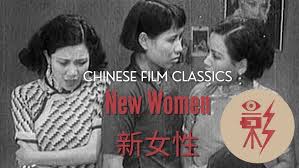 New Women (Dir. Cai Chusheng, Chi, 1935) (Screening format – digital, 106mins) New Women was iconic actress Ruan Lingyu’s swan song, released mere months before her suicide; its story, thinly adapted from the memoir of Ai Xia, an actresses hounded to death by the press several years earlier, eerily parallels Ruan’s own tragically short life. “Often seen [by critics] as a metaphor for China itself, suffering under semi-colonialism, semi-feudalism and Japanese invasion” (Chris Berry and
 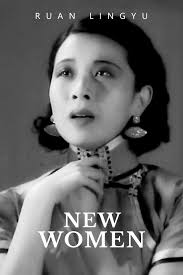 Mary Farquhar, “China On Screen”), Ruan here plays the very model of a “new woman,” an independent-minded music teacher who dreams of becoming a celebrated writer. Her struggles, intensified by lecherous and vengeful men out to manipulate her and the need to provide for her sick daughter in the countryside, are contrasted with those of her best friend, a patriotic female factory worker who is presented as a model figure for post-revolutionary women. Arrestingly modern in its indictment of patriarchy and radical class politics, silent icon Ruan Lingyu’s final film caused waves when the actress’ highly publicised life mirrored her on-screen tragedy. Find out more at silentsplease.wordpress.com Introduced by Cynthia Gu of Milk Tea Films. With live piano accompaniment. BFI Southbank, London Link
10 December
 Melies Presents Melies An evening of restored hand-coloured Georges Méliès films with live narration based on original texts. Méliès’ story films were originally presented using an onstage narrator to explain the action (this has rarely been done since their initial screenings) and in this capacity we are pleased to welcome as guest the Cinema Museum’s resident French film expert, Jon Davies, in the role of George Méliès himself. In addition, the programme will include the world premiere of a recently discovered `lost’ Méliès film dating from 1896, the year in which he first began to experiment with the infant medium of cinema. Presented by the Kennington Bioscope. With live musical accompaniment. Cinema Museum, Lambeth Link
12 December
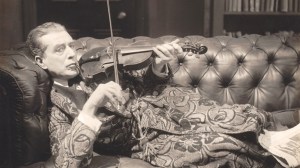 Silent Sherlock: Three Classic Cases. The Adventures of Sherlock Holmes series, which was so popular it ran for 45 episodes, was sanctioned by Arthur Conan Doyle, who thoroughly approved of Eille Norwood as Holmes. This programme features a selection of three episodes: ‘A Scandal in Bohemia’, wherein Holmes falls for ‘the woman’; ‘The Golden Pince-Nez’, which features Holmes’ deductive powers at work, and ‘The Final Problem’, featuring the sinister Professor Moriarty. With recorded scores composed by Joanna MacGregor, Neil Brand and Joseph Havlat. Cine Lumiere, London Link
13 December
Silent Sherlock: Three Classic Cases. The Adventures of Sherlock Holmes series, which was so popular it ran for 45 episodes, was sanctioned by Arthur Conan Doyle, who thoroughly approved of Eille Norwood as Holmes. This programme features a selection of three episodes: ‘A Scandal in Bohemia’, wherein Holmes falls for ‘the woman’; ‘The Golden Pince-Nez’, which features Holmes’ deductive powers at work, and ‘The Final Problem’, featuring the sinister Professor Moriarty. With recorded scores composed by Joanna MacGregor, Neil Brand and Joseph Havlat. Queen’s Film Theatre, Belfast Link
14 December
Silent Sherlock: Three Classic Cases. The Adventures of Sherlock Holmes series, which was so popular it ran for 45 episodes, was sanctioned by Arthur Conan Doyle, who thoroughly approved of Eille Norwood as Holmes. This programme features a selection of three episodes: ‘A Scandal in Bohemia’, wherein Holmes falls for ‘the woman’; ‘The Golden Pince-Nez’, which features Holmes’ deductive powers at work, and ‘The Final Problem’, featuring the sinister Professor Moriarty. With recorded scores composed by Joanna MacGregor, Neil Brand and Joseph Havlat. Cine Lumiere, London Link
 Silent Sherlock: Three Classic Cases. The Adventures of Sherlock Holmes series, which was so popular it ran for 45 episodes, was sanctioned by Arthur Conan Doyle, who thoroughly approved of Eille Norwood as Holmes. This programme features a selection of three episodes: ‘A Scandal in Bohemia’, wherein Holmes falls for ‘the woman’; ‘The Golden Pince-Nez’, which features Holmes’ deductive powers at work, and ‘The Final Problem’, featuring the sinister Professor Moriarty. With recorded scores composed by Joanna MacGregor, Neil Brand and Joseph Havlat. Lighthouse, Dublin Link
Silent Sherlock: Three Classic Cases. The Adventures of Sherlock Holmes series, which was so popular it ran for 45 episodes, was sanctioned by Arthur Conan Doyle, who thoroughly approved of Eille Norwood as Holmes. This programme features a selection of three episodes: ‘A Scandal in Bohemia’, wherein Holmes falls for ‘the woman’; ‘The Golden Pince-Nez’, which features Holmes’ deductive powers at work, and ‘The Final Problem’, featuring the sinister Professor Moriarty. With recorded score. BFI Southbank, London Link
15 December
Silent Sherlock: Three Classic Cases. The Adventures of Sherlock Holmes series, which was so popular it ran for 45 episodes, was sanctioned by Arthur Conan Doyle, who thoroughly approved of Eille Norwood as Holmes. This programme features a selection of three episodes: ‘A Scandal in Bohemia’, wherein Holmes falls for ‘the woman’; ‘The Golden Pince-Nez’, which features Holmes’ deductive powers at work, and ‘The Final Problem’, featuring the sinister Professor Moriarty. With recorded scores composed by Joanna MacGregor, Neil Brand and Joseph Havlat. Cine Lumiere, London Link
Man With a Movie Camera (Dir. Dziga Vertov, USSR, 1929) (Screening format – digital, 68mins) Part documentary and part cinematic art, this film follows a city in the 1920s Soviet Union throughout the day, from morning to night. Directed by Vertov, with a variety of complex and innovative camera shots (filmed by Vertov’s equally talented and innovative brother Mikhail Kaufman), the film depicts scenes of ordinary daily life in Russia. Vertov celebrates the modernity of the city, with its vast buildings, dense population and bustling industries. While there are no titles or narration, director and cameraman still naturally convey the marvels of the modern city. Find out more at rogerebert.com . With recorded score. BFI Southbank, London Link
16 December
 It (Dir. Clarence Badger, US, 1927) (Screening format – digital, 72 mins) Starring Clara Bow and Antonio Moreno, It is based on stories from the sensationalist novelist Elinor Glyn, of Three Weeks fame. She had coined the term `it’ to describe what makes a personality attractive in her 1914 novel The Man and the Moment; the novella It and its screen version – to which Glyn contributes a cameo, as herself – both appeared in 1927. Glyn’s onscreen explanation of what defines `it’ makes this an early example of the `concept film’ as well as of product placement, given that her story is seen being read in Cosmopolitan, the magazine in which it had been serialised the previous year. Stage actress Dorothy Tree had her first film role in a small, uncredited part. Similarly, a young Gary Cooper was cast in a minor role as a newspaper reporter. The film was a box office hit, consolidating Clara Bow’s burgeoning status as one of the most popular actresses of the era and acquiring for her the soubriquet `the IT Girl’. A year later she starred in a film version of Glyn’s 1905 novel Red Hair, of which only some brief Technicolor footage of Bow is known to survive. Find out more at moviessilently.com. With score and sound effects by Ben Burtt. BFI Southbank, London Link
Way Down East (Dir. D W Griffith, US, 1920) (Screening format – 35mm, 149mins) Subtitled: “A Simple Story of Plain People,” director Griffith intended Way Down East to be a sweeping, lyrical, but epic story, conveying an image of a vanished, unspoiled, pastoral America. Originally a hugely successful stage play, written by Lottie Blair Parker in 1897, Way Down East was an old-fashioned story that espoused nineteenth-century American and Victorian ideals. It had already been filmed twice but by the time Griffith brought the rights in 1920 it was considered outdated and overly melodramatic. As Lillian Gish would later recall, “Way Down East was a horse-and-buggy melodrama, familiar on the rural circuit for more than twenty years. As I read the play, I could hardly keep from laughing.” However, while it was Griffith’s most expensive film to date (costing him $175,000, more than the entire cost of his 1915 epic Birth Of A Nation), it was also one of his most commercially successful. The story follows impoverished New England country girl Anna Moore (Lillian Gish) to Boston in search of family aid. Instead she’s duped into a fake marriage by playboy Lennox Sanderson (Lowell Sherman). Pregnancy results in Sanderson abandoning her to care for the child alone, which dies soon after birth. The disgrace sends her back into the countryside to work for Squire Bartlett, whose son David (Richard Barthelmess) begins to fall for her. However, her dreadful secret threatens to be revealed. Way Down East is best known for the exciting climax featuring Gish trapped in the ice during a snowstorm. With no computer-generated effects, and no stunt woman taking Gish’s place, the actress recalls, in her autobiography, actually going out into this dangerous situation in subfreezing temperatures, “this kind of dedication probably seems foolish today, but it wasn’t unusual then. Those of us who worked with Mr. Griffith were completely committed to the picture we were making. No sacrifice was too great to get the film right….” Find out more at silentlondon.co.uk Introduced by film critic and historian Pamela Hutchinson. With recorded soundtrack. BFI Southbank, London Link
20 December
New Women (Dir. Cai Chusheng, Chi, 1935) (Screening format – digital, 106mins) New Women was iconic actress Ruan Lingyu’s swan song, released mere months before her suicide; its story, thinly adapted from the memoir of Ai Xia, an actresses hounded to death by the press several years earlier, eerily parallels Ruan’s own tragically short life. “Often seen [by critics] as a metaphor for China itself, suffering under semi-colonialism, semi-feudalism and Japanese invasion” (Chris Berry and Mary Farquhar, “China On Screen”), Ruan here plays the very model of a “new woman,” an independent-minded music teacher who dreams of becoming a celebrated writer. Her struggles, intensified by lecherous and vengeful men out to manipulate her and the need to provide for her sick daughter in the countryside, are contrasted with those of her best friend, a patriotic female factory worker who is presented as a model figure for post-revolutionary women. Arrestingly modern in its indictment of patriarchy and radical class politics, silent icon Ruan Lingyu’s final film caused waves when the actress’ highly publicised life mirrored her on-screen tragedy. Find out more at silentsplease.wordpress.com With live piano accompaniment. BFI Southbank, London Link
21 December
Silent Sherlock: Three Classic Cases. The Adventures of Sherlock Holmes series, which was so popular it ran for 45 episodes, was sanctioned by Arthur Conan Doyle, who thoroughly approved of Eille Norwood as Holmes. This programme features a selection of three episodes: ‘A Scandal in Bohemia’, wherein Holmes falls for ‘the woman’; ‘The Golden Pince-Nez’, which features Holmes’ deductive powers at work, and ‘The Final Problem’, featuring the sinister Professor Moriarty. With recorded scores composed by Joanna MacGregor, Neil Brand and Joseph Havlat. Electric Palace, Hastings Link
People on Sunday (Dir. Robert Siodmak/Edgar G Ulmer, Ger, 1929) (Screening format – digital, 74mins) Famously, Billy Wilder and Fred Zinnemann worked with Siodmak on this landmark of realist film making, a magical blend of documentary and fiction which takes us back to a glorious summer Sunday in late-1920s Berlin where five young workers take a day off to spend a flirtatious afternoon together at a lake on the edge of the city.. While they enjoy freedoms undreamt of by their parents, sexual rivalry soon lends an edge to their flirtations. The people portraying the characters were all amateurs belonging to a Berlin collective who, the opening credits inform us, had returned to their normal jobs by the time of the film’s release. They included a taxi driver, a record seller and a wine merchant. But together, the cast and crew produced a classic of silent film and one which still feels remarkably modern. Find out more at archive.org. With recorded score. BFI Southbank, London Link
28 December
It (Dir. Clarence Badger, US, 1927) (Screening format – digital, 72 mins) Starring Clara Bow and Antonio Moreno, It is based on stories from the sensationalist novelist Elinor Glyn, of Three Weeks fame. She had coined the term `it’ to describe what makes a personality attractive in her 1914 novel The Man and the Moment; the novella It and its screen version – to which Glyn contributes a cameo, as herself – both appeared in 1927. Glyn’s onscreen explanation of what defines `it’ makes this an early example of the `concept film’ as well as of product placement, given that her story is seen being read in Cosmopolitan, the magazine in which it had been serialised the previous year. Stage actress Dorothy Tree had her first film role in a small, uncredited part. Similarly, a young Gary Cooper was cast in a minor role as a newspaper reporter. The film was a box office hit, consolidating Clara Bow’s burgeoning status as one of the most popular actresses of the era and acquiring for her the soubriquet `the IT Girl’. A year later she starred in a film version of Glyn’s 1905 novel Red Hair, of which only some brief Technicolor footage of Bow is known to survive. Find out more at moviessilently.com. With score and sound effects by Ben Burtt. BFI Southbank, London Link
 Silentfilmcalendar.org