


2 May
 Another Fine Mess: The Madcap World of Laurel and Hardy Laurel and Hardy are the eternal optimists of slapstick — two well‑meaning souls whose every attempt to do the right thing somehow ends in disaster. In Soup to Nuts, they bungle as waiters at an upper‑class party. In Two Tars, a minor fender‑bender spirals into a full‑blown street war. And in Angora Love, a stray goat follows them home, leading to a chaotic water fight as they try to keep it hidden from their landlord. Presented by Northern Silents. With live musical accompaniment by pianist Jonny Best and percussionist Trevor Bartlett. Link
 Steamboat Bill Jr (Dir. Buster Keaton/Charles Reisner, US, 1928) (Screening format – not known, 71 mins) In Steamboat Bill Jr a crusty river boat captain hopes that his long departed son’s return will help him compete with a business rival. Unfortunately, William Canfield Jnr (Buster
 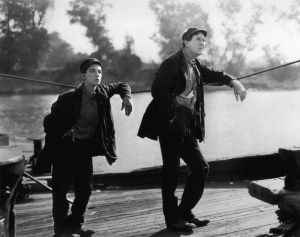 Keaton) is an effete college boy. Worse still, he has fallen for the business rival’s daughter (Marion Byron). Featuring some of Buster’s finest and most dangerous stunts, it’s a health and safety nightmare maybe but it’s entertainment that will live forever. The final storm sequence is still as breathtaking today as it was on first release. Not a commercial success at the time, this is now rightly regarded as a Keaton classic. Find out more at Wikipedia Presented by Northern Silents. With live musical accompaniment by pianist Jonny Best and percussionist Trevor Bartlett. Link
6 May
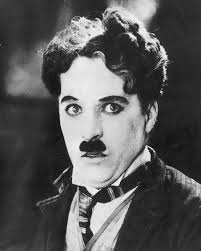 An Evening With Charlie Chaplin Including three of his most famous shorts, The Immigrant, The Cure and Easy Street all written and directed by Chaplin in 1917. With live musical accompaniment by Meg Morley. Plus a discussion with Jacqueline Riding, a specialist in British history and art, on how Chaplin’s work and outlook were always shaped by the world he came from. Cidermill Theatre, Chipping Campden. Link
9 May
 An Evening of Shorts Including Chess Fever (aka Shakhmatnaya Goryachka) (Dir. Vsevolod Pudovkin and Nikolai Shpikovsky, USSR,1925) In 1925 Soviet citizens were transfixed by the International Chess Tournament being held at Moscow’s Hotel Metropol in November 1925. Hundreds of spectators followed the games in the Metropol, whilst tens of thousands watched demonstration boards across the city, and the then up-and-coming director Pudovkin was asked to make a topical comedy about the ‘chess fever’ sweeping the nation.
  Chess competitor at the tournament Capablanca plays himself in this fast-paced comedy about a young couple whose love affair reaches stalemate because of the hero’s obsession with the game. Find out more at moviessilently.com and The Cameraman’s Revenge (Dir. Ladislav Starewicz, Rus, 1912), a wonderfully whimsical movie about insect infidelity that includes, among other delights, a dancing frog, an amorous dragonfly and a grasshopper cameraman. With live musical accompaniment by Wurlitza. St Germans Priory, St Germans, Cornwall Link
 Jone or The Last Days of Pompeii. (Dir. Giovanni Enrico Vidali , It, 1913) (Screening format – not known, 95mins) Based upon the 1834 Edward Bulwer-Lytton novel The Last Days of Pompeii, this is one of two film versions of his story, both made in 1913 by competing Italian film production companies. The Ambrosio Company had already made a version of the story in 1908 but in 1913 decided to remake it in a more expensive and extravagant production, to be directed by Mario Caserini and Eleuterio Rodolfi. When their rivals, the Pasquali Company announced that they were making an equally ambitious version of the book it ended up in a
  legal battle. Although Ambrosio couldn’t prevent the release of the Pasquali version they did manage to amend its title to Jone or The Last Days of Pompeii, which was released four days after the Ambrosio version. Set in Pompeii in AD79, both films focus on the couple Jone and Glauco, the blind slave girl Nidia who secretly loves Glauco and the evil priest Arbax who wishes to do away with Glauco so he can marry Jone. The film culminates in a spectacular eruption of Versuvius (which conveniently erupted in 1913 allowing actual footage to be incorporated into the film). Find out more at museocinema.itWith live musical accompaniment by John Sweeney (piano) and Jeffrey Davenport (percussion). Bloomsbury Theatre, London Link
11 May
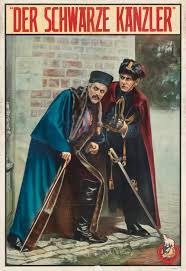 The Black Chancellor (Die. August Blom, Den, 1912) (Screening format – not known, 48mins) The Black Chancellor was one of the many films made during the first golden age of Danish cinema, when its cinematic output was cutting edge, far ahead of almost anything
 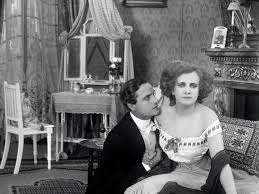 from the rest of Europe or America and August Blom was one of the country’s finest directors. In the film, Chancellor von Rallenstein is terrorizing the country. He even forces Princess Irene to marry Prince Deima, even though she is already engaged to her true love, Pawlow. When Rallenstein finds out about their secret wedding, he furiously sets out to sabotage the marriage. Find out more at dbcult.com. Presented as part of the Flatpack Film Festival. With live musical accompaniment by bassist and multi-instrumentalist Russ Sergeant. Nook Gallery, King’s Heath, Birmingham Link
12 May
The Black Chancellor (Die. August Blom, Den, 1912) (Screening format – not known, 48mins) The Black Chancellor was one of the many films made during the first golden age of Danish cinema, when its cinematic output was cutting edge, far ahead of almost anything from the rest of Europe or America and August Blom was one of the country’s finest directors. In the film, Chancellor von Rallenstein is terrorizing the country. He even forces Princess Irene to marry Prince Deima, even though she is already engaged to her true love, Pawlow. When Rallenstein finds out about their secret wedding, he furiously sets out to sabotage the marriage. Find out more at dbcult.com. Presented as part of the Flatpack Film Festival. With live musical accompaniment by bassist and multi-instrumentalist Russ Sergeant. Nook Gallery, King’s Heath, Birmingham Link
14 May
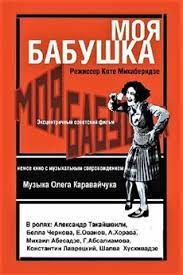 My Grandmother (Dir. Kote Mikaberidze, USSR, 1929) (Screening format – not known, 80mins) This gem of early avant-garde Soviet Union filmmaking was banned for almost 50 years because of its less than subtle political criticism. But what stands out more is the sophisticated blending by director Kote Mikaberidze
 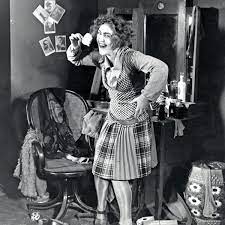 of real action, animated sequences,modern editing techniques, bold satire and absurdist set designs as he unfolds the story of a notoriously lazy bureaucrat who is fired from his comfortable job. On the advice of his ex-colleague, the unemployed pen-pusher sets out to find himself a “grandmother” – an influential bureaucratic patron who will provide him with a letter of recommendation in order to get his job back. But life never goes that smoothly! Find out more at obskura.co.uk. Presented as part of the Flatpack Film Festival. With live musical accompaniment by Stephen Horne and Meg Morley. Botanical Gardens, Birmingham Link
15 May
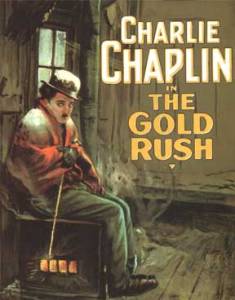 The Goldrush (Dir. Charles Chaplin, US, 1925) (Screening format – digital, 95mins) In this classic silent comedy, the Little Tramp (Charles Chaplin) heads north to join in the Klondike gold rush. Trapped in a small cabin by a blizzard, the Tramp is forced to share close quarters with a successful prospector (Mack Swain) and a fugitive (Tom Murray). Eventually able to leave the cabin, he falls for a lovely barmaid (Georgia Hale), trying valiantly to win her affections. When the prospector needs help locating his claim, it appears the Tramp’s fortunes may change. It is today one of Chaplin’s most celebrated works, and he himself declared several times that it was the film for which he most wanted to be remembered. The film contains some of Chaplin’s most iconic sequences, such as the eating of a boot and the dance of the bread rolls. Find out more at moviessilently.com . Introduced by comedian, writer, and film enthusiast Paul Merton together with Chaplin’s grandson Spencer Chaplin. With recorded Chaplin score. Regent Street Cinema, London Link
16 May
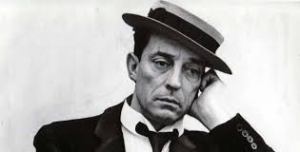 Slapstick Saturday With some of the funniest slapstick shorts from the silent era, including Buster Keaton pulling off gravity-defying stunts that would make a modern CGI artist sweat, while Laurel & Hardy turn the simplest tasks into total, glorious disasters. Presented as part of the Flatpack Film Festival. With live musical accompaniment by Meg Morley. MAC, Birmingham Link
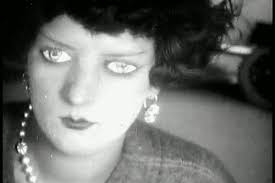 1926 Mix Tape Looking back exactly one hundred years to 1926 – a vintage year for avant-garde subversion and fledgling animation – this collection of seminal shorts range from the hypnotic, rotating visual puns of Marcel Duchamp’s Anémic Cinéma to the surrealist cine-poem of Man Ray’s Emak-Bakia. Plus a rare look at a pre-Mickey marvel: Alice’s Mysterious Mystery, directed by a then-budding animator named Walt Disney. Presented as part of the Flatpack Film Festival. With live musical accompaniment composed and performed by students at the Royal Birmingham Conservatoire. The Edge, Birmingham Link
 The General (Dir. Buster Keaton/Clyde Bruckman, 1926) (Screening format – not known, 75mins) Widely considered one of the greatest films ever made and one of the most revered comedies of the silent era, Buster Keaton’s effortless masterpiece sees hapless Southern railroad engineer Johnny
 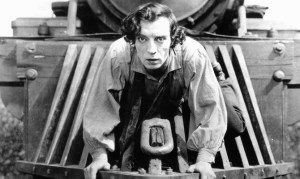 Gray (Keaton) facing off against Union soldiers during the American Civil War. When Johnny’s fiancée, Annabelle Lee (Marion Mack), is accidentally taken away while on a train stolen by Northern forces, Gray pursues the soldiers, using various modes of transportation in comic action scenes that highlight Keaton’s boundless, innovative wit and joyful, lighthearted dexterity, to reclaim the train and thereby save the South. Find out more at busterkeaton.com . Presented as part of the Flatpack Film Festival. With live musical accompaniment composed and performed by Stephen Horne. MAC, Birmingham Link
17 May
The Goldrush (Dir. Charles Chaplin, US, 1925) (Screening format – digital, 95mins) In this classic silent comedy, the Little Tramp (Charles Chaplin) heads north to join in the Klondike gold rush. Trapped in a small cabin by a blizzard, the Tramp is forced to share close quarters with a successful prospector (Mack Swain) and a fugitive (Tom Murray). Eventually able to leave the cabin, he falls for a lovely barmaid (Georgia Hale), trying valiantly to win her affections. When the prospector needs help locating his claim, it appears the Tramp’s fortunes may change. It is today one of Chaplin’s most celebrated works, and he himself declared several times that it was the film for which he most wanted to be remembered. The film contains some of Chaplin’s most iconic sequences, such as the eating of a boot and the dance of the bread rolls. Find out more at moviessilently.com . With recorded Chaplincomposed score. BFI Southbank, London Link
19 May
 George Méliès and Buster Keaton in Concert Two pioneers of visual fantasy meet in a specially created cine‑concert. To set the stage, we celebrate Georges Méliès, whose imagination and technical ingenuity carried cinema beyond the simple recording of
 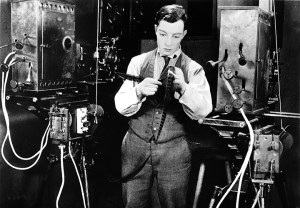 everyday life and opening up its magical possibilities for the first time. Followed by Buster Keaton in Sherlock Jnr (Dir. Buster Keaton, 1924) in which, a kindly movie projectionist (Buster Keaton) longs to be a detective. When his fiancée (Kathryn McGuire) is robbed by a local thief (Ward Crane), the poor projectionist is framed for the crime, forcing him to use his amateur detective skills. Although not a popular success on its initial release, the film has come to be recognised as a Keaton classic. Find out more at silentfilm.org. Presented by Northern Silents. With live musical accompaniment by Frame Ensemble. , Link
20 May
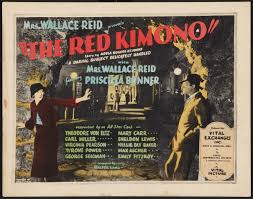 The Red Kimono (Dir. Walter Lang, US, 1925) (Screening format – not known, 77mins) The Red Kimono was the directorial debut of Walter Lang, whose greatest fame was from the 1930s to the 1950s, notably for Fox musicals. Written by famed journalist Adela Rogers St. Johns and adapted by future director Dorothy Arzner, The Red Kimono tells the story of a woman on trial for the murder of a man who had tricked her into prostitution. It was one of a series of social-conscience films produced by
 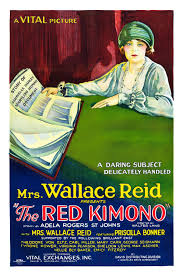 former actress Dorothy Davenport under her married name, Mrs. Wallace Reid. The first of these, Human Wreckage, was intended to draw attention to the issue of drug addiction that had caused her husband’s early death (Wallace Reid, a famous screen actor, became addicted to
 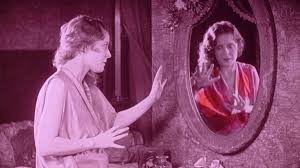 morphine after being given it repeatedly following an injury during filming). She introduces the film personally, in a scene set in a newspaper archive, informing us that it is a true story. She was sued by the woman in the real-life case on which it was based – thus establishing a landmark privacy law – because her real name had been used. Both The Red Kimono and Human Wreckage were banned by the British Board of Film Censors. While no copy of Human Wreckage is known to exist, The Red Kimono has at least survived. Find out more at moviessilently.com Presented by the Kennongton Bioscope. With live musical accompaniment. Cinema Museum, Lambeth Link
22 May
 Silent Movie Night – Big Business (Dir. James W Horne/Leo McCarey, US, 1928) + Liberty (Dir. Leo McCarey, US, 1929) (Screening format – not known, 19/20 mins) Big Business sees Ollie and Stanley as two Christmas tree salesmen (in February!) who get into one of their usual mutual destruction fights with a homeowner. Find out more at wikipedia.org Liberty sees Laurel and Hardy making a successful prison break but mixed up trousers and an escaped crab somehow leads them to the top a partially completed skyscraper! Find out more at laurel-and-hardy.com Presented as part of the Herne Hill Film Festival. With live piano accompaniment by Neil Brand. Herne Hill Station, London Link
23 May
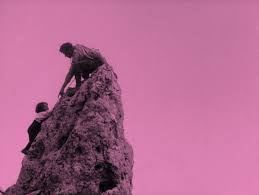 Mountain of Destiny (Dir. Arnold Fanck, Ger, 1924) (Screening format – not known, 86mins) A landmark of early mountain cinema, celebrated for its breathtaking alpine scenery and exhilarating realism, where physical endurance and cinematic ambition collide. Director Arnold Fanck coined the term ‘Natur-Spielfilm’ to describe this genre-defying natural-world drama, set amidst the vertiginous rock faces of the High Alps and photographed with enthralling clarity and scale. The story follows a young man who has vowed to his mother that he will never attempt to reach the summit of the formidable
 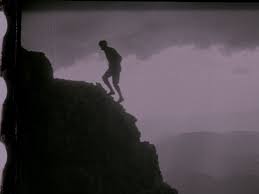 Guglia del Diavolo, the mountain on which his father died years earlier. His resolve is tested when his childhood friend Hella decides that she can conquer the mountain. When she gets into difficulty, the young man must decide between honouring his promise and risking everything to save her. Central to the film’s success are the performers, notably Olympic ski champion Hannes Schneider (the father) and professional mountaineer Luis Trenker (his adult son) who perform climbs and descents that are genuinely awe-inspiring, even today. Find out more at wikipedia.org Presented by Northern Silents. With live musical accompaniment by Jonny Best. Link
 Chicago (Dir. Frank Urson & Cecil B.DeMille (uncredited), 1927) (Screening format – not known, 118mins ) Seventy-five years before Bob Fosse’s Oscar-winning musical version of Maurine Watkins’ successful stage play, Cecil B. DeMille’s production company made this saucy silent film version. Phyllis Haver is hugely entertaining as the brazen Roxie Hart “Chicago’s most beautiful murderess” – a woman so pathologically shallow she sees notoriety for a murder rap as an opportunity to secure her fortune. Egged on by her crooked lawyer (“they’ll be naming babies after you”) Roxie neglects her long-suffering loyal husband and sets about milking her celebrity
 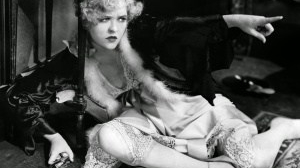 status for all she’s worth. The sequence in the prison is an absolute delight – particularly the rivalry between Roxie and fellow-murderess Velma (played by Julia Faye, DeMille’s mistress), as are the climactic courtroom scenes. A cracking, satire on fame and the media, this fun-filled tale of adultery, murder and sin (so sinful that DeMille – known for his Biblical epics – was at pains to keep his name off the credits) is as fresh and relevant as ever. Find out more at wikipedia.org . Presented by Northern Silents. With live musical accompaniment by pianist Jonny Best, violinist Susannah Simmons and percussionist Jeff Davenport. Link
26 May
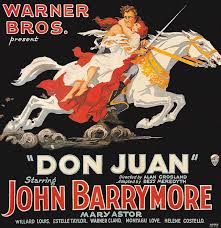 Don Juan (Dir. Alan Crosland, US, 1926) (Screening format – not known, 113mins) Cursed with witnessing his mother’s adultery and his father’s legacy of hatred for all women, Don Juan (Philippe De Lacy) grows up the playboy of Rome. Advised by his bitter father never to give his love to a woman, the grown Don Juan (John Barrymore) keeps a banquet of women at the ready, filling his calendar with amorous meetings. Intrigued by Don Juan’s reputation, a member of the infamous, villainous Spanish Borgia dynasty, Lucretia (Estelle Taylor) invites the handsome rogue to a party. It is at that fateful ball that Don Juan meets
 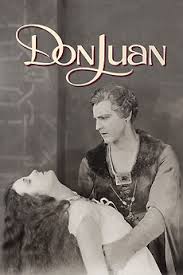 the woman who will forever alter his romantic ways, Adriana Della Varnese (Mary Astor), a woman whose innocence and piousness change his perception of female duplicity and malevolence. But Adriana’s father Duke Della Varnese is an enemy of the Borgias. Jealous of Don Juan’s obvious affection for Adriana, Lucretia hatches a plan to have Adriana marry the repugnant Count Donati (Montagu Love) in exchange for sparing Duke Della Varnese’s life. The charismatic Barrymore did all of his own stunts in this lavish, captivating swashbuckler, including the climactic duel between Don Juan and Donati over Adriana’s hand. Find out more at silverscreenclassicsblog.wordpress.com. With live musical accompaniment by Meg Morley. Pound Arts, Corsham Link

