


2 April
 The Lodger: A Story of the London Fog (Dir. Alfred Hitchcock, UK, 1927) (Screening format – not known, 91 mins ) In The Lodger, a serial killer known as “The Avenger” is on the loose in London, murdering blonde women. A mysterious man (Ivor Novello) arrives at the house of Mr. and Mrs. Bunting looking for a room to rent. The Bunting’s daughter (June Tripp) is a blonde model and is seeing one of the detectives (Malcolm Keen)
  assigned to the case. The detective becomes jealous of the lodger and begins to suspect he may be the avenger. Based on a best-selling novel by Marie Belloc Lowndes, first published in 1913, loosely based on the Jack the Ripper murders, The Lodger was Hitchcock’s first thriller, and his first critical and commercial success. Made shortly after his return from Germany, the film betrays the influence of the German expressionist tradition established in such films as The Cabinet of Dr. Caligari (1919) and Nosferatu (1922). Find out more at silentfilm.org With live musical accompaniment by Hugo Max. Kino Teatr, Hastings Link
5 April
The Lodger: A Story of the London Fog (Dir. Alfred Hitchcock, UK, 1927) (Screening format – not known, 91 mins ) In The Lodger, a serial killer known as “The Avenger” is on the loose in London, murdering blonde women. A mysterious man (Ivor Novello) arrives at the house of Mr. and Mrs. Bunting looking for a room to rent. The Bunting’s daughter (June Tripp) is a blonde model and is seeing one of the detectives (Malcolm Keen) assigned to the case. The detective becomes jealous of the lodger and begins to suspect he may be the avenger. Based on a best-selling novel by Marie Belloc Lowndes, first published in 1913, loosely based on the Jack the Ripper murders, The Lodger was Hitchcock’s first thriller, and his first critical and commercial success. Made shortly after his return from Germany, the film betrays the influence of the German expressionist tradition established in such films as The Cabinet of Dr. Caligari (1919) and Nosferatu (1922). Find out more at silentfilm.org With live musical accompaniment by Hugo Max. Little Theatre Picturehouse, Bath Link
8 April
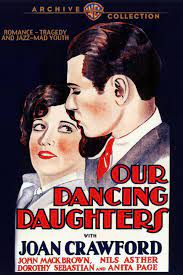 Our Dancing Daughters (Dir. Harry Beaumont, US, 1928) (Screening format – not known, 83mins) In Our Dancing Daughters, Joan Crawford stripped to her teddy and tore into a Charleston powered by a zillion watts of sexual energy – and shocked the corsets and cravats off parents who’d heard disturbing rumblings of what their children were up to. But the younger generation couldn’t get enough: they’d found their icon of Flaming Youth. Crawford became a star in this milestone silent about a good girl who hides her heart behind a party-girl mask and loses the man she loves to a gold digger. The film’s portrait of a fascinating (and a bit frightening)
  breed of young women who match men drink for drink and vice for vice was so popular it bred two similarly themed movies: Our Modern Maidens and Our Blushing Brides. After the film’s release, box office grosses for Loew’s theaters soared, as did the volume of fan-mail for Joan (and as did her salary). According to legend (well, Wikipedia!!) Joan Crawford stripped naked in front of the producer in order to get the lead role in this film. When the decision maker told Joan that the director was in charge of casting, Joan went to his office, repeated her performance, and got the part. Find out more at ithankyouarthur.blogspot.com Presented by the Kennington Bioscope. With live musical accompaniment. Cinema Museum, Lambeth. Link
9 April
The Lodger: A Story of the London Fog (Dir. Alfred Hitchcock, UK, 1927) (Screening format – not known, 91 mins ) In The Lodger, a serial killer known as “The Avenger” is on the loose in London, murdering blonde women. A mysterious man (Ivor Novello) arrives at the house of Mr. and Mrs. Bunting looking for a room to rent. The Bunting’s daughter (June Tripp) is a blonde model and is seeing one of the detectives (Malcolm Keen) assigned to the case. The detective becomes jealous of the lodger and begins to suspect he may be the avenger. Based on a best-selling novel by Marie Belloc Lowndes, first published in 1913, loosely based on the Jack the Ripper murders, The Lodger was Hitchcock’s first thriller, and his first critical and commercial success. Made shortly after his return from Germany, the film betrays the influence of the German expressionist tradition established in such films as The Cabinet of Dr. Caligari (1919) and Nosferatu (1922). Find out more at silentfilm.org With live musical accompaniment by Hugo Max. Picturehouse, Epsom Link
10 April
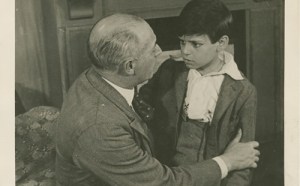 Peace on the Western Front (Dir. Fred Swann & Hans Nieter, UK/Ger, 1931) (Screening format – not known, ?? mins) Towards the end of 1930, two veterans of the First World War, one German and the other British, came together to shoot a film pilgrimage of the Western Front battlefields to impress upon younger generations that war, “is not a childish game, a glorious adventure”, but “a hideous ugly thing”. Released in 1931 the film gained a following among the burgeoning peace movement and became an unofficial film for the League of Nations Union. The soundtrack was recorded on discs, now sadly lost, so a script has been created from the synopsis in the original press brochure and accounts of the battlefields and war-ravaged towns written at the time. Find out more at iwm.org.uk Presented as part of the British Silent Film Festival Symposium, 2026. With live musical accompaniment by Stephen Horne. Cinema Museum, Lambeth Link
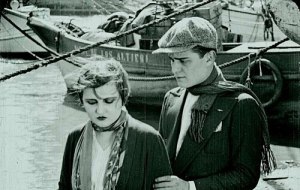 Perdón, Viejita (Excuse Me, Old Lady) (Dir. Jose A Ferreyra, Arg, 1927) (Screening format – not known, 33mins) Perdón, viejita tells the story of Carlos (Ermete Meliante) and Nora (played by María Turgenova, director Ferreyra’s then wife between),two wayward young adults who decide to bury their criminal past and begin a new life together with Doña Camila (Floricel Vidal), Carlos’s mother, and Elena (Stella Maris), his younger sister. Everything seems to be going well until Elena is seduced by a pimp named El Gavilán, and whose gift of a stolen ring serves first as bait for the impressionable Elena, then as incriminatory evidence against Nora….. Director José Agustín Ferreyra (1889–1943) was the most consistently productive director of the silent period in Latin America, and one of only a handful who succeeded in making the transition to sound after 1930. Having grown up in a tough working-class suburb of Buenos Aires, he frequently brought a gritty sense of reality to his films. Find out more at wikipedia.org With live musical accompaniment by Meg Morley. Community Centre, Cromer Link
11 April
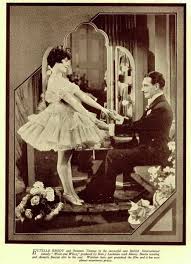 Weekend Wives (Dir. Harry Lachman, UK, 1929) (Screening format – not known, 86mins??) Battling husband and wife Henri and Helene Monard both embark on secret assignations, she with man-about-town Max Ammon and he with Follies star Madame le Grand.
 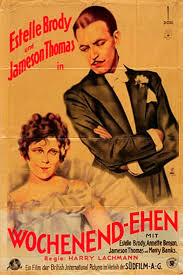 Unfortunately both couples decide to head off to the same seaside destination for an illicit weekend! What could possibly go wrong. Max Ammon is played by actor, director and producer Monty Banks and Madame le Grand by Estelle Brody (the fabulous Lancashire lass in Hindle Wakes (1927) ). Both Banks and Brody were American born but both achieved considerable fame in Britain. Unusually for a British film of this era, much of it was shot on location in Paris and Nice. Find out more at wikipedia.org Presented as part of the Kennington Bioscope Silent Film Weekend. Introduced by Monty Banks biographer Lisa Stein Haven. With live musical accompaniment. Cinema Museum, Lambeth Link
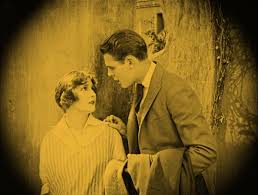 The White Heather (Dir. Maurice Tourneur, USA, 1919) (Screening format – not known, 70mins) Painter-turned-film-director Maurice Tourneur applies his pioneering talent for expressive lighting and composition to this sensational melodrama about class, morality and social ambition. The story begins at ‘Shetland castle… nestled amongst the heather-covered hills of Scotland, where the ancient customs of that region are still scrupulously observed’. Here, Lord Angus Cameron is facing financial ruin and desperate to annul his secret marriage to lowly housekeeper Marion. The only proof of their union is a marriage certificate locked in a trunk aboard a sunken yacht: The White Heather. The hunt is on as Marion, with the help of lovelorn Alec McClintock and the gamekeeper Dick (played by a young John Gilbert, just before he found fame as cinema’s hottest heart-throb besides Valentino!) fights to save her reputation and secure a future for her son. The film’s dramatic climax features groundbreaking underwater sequences that enraptured contemporary reviewers and still thrill today. Find out more at silentfilm.org Presented as part of the Kennington Bioscope Silent Film Weekend. With live musical accompaniment. Cinema Museum, Lambeth Link
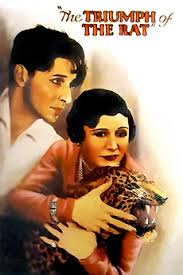 The Triumph of the Rat (Dir. Graham Cutts, UK, 1926) (Screening format – not known, 74mins) After achieving considerable success as Parisian low-life criminal The Rat (1925), Ivor Novello went on to make two sequels. This second film sees Pierre Boucheron, alias ‘The Rat’ and a former underworld notoriety, now living the high life as
 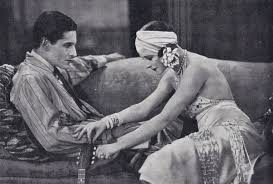 the kept man of Zelie de Chaumet. But when she learns he is planning to marry another woman, her vengeance pursues him into the murkiest depths of Paris… Novello would play Pierre Boucheron for a third and final time in The Return Of The Rat (1929). Find out more at wikipedia.org Presented as part of the Kennington Bioscope Silent Film Weekend. With live musical accompaniment. Cinema Museum, Lambeth Link
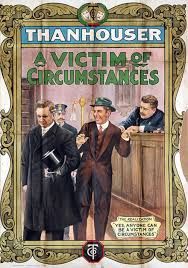 Redicoveries and restorations I To include A Victim of Circumstances (1913), a lost film from the Thanhouser studio, and Sprechende Hande (1925), a German documentary about a care home and school for the deafblind. Presented as part of the Kennington Bioscope Silent Film Weekend. With live musical accompaniment. Cinema Museum, Lambeth Link
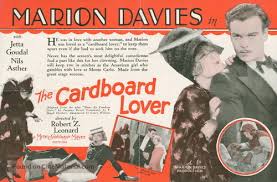 The Cardboard Lover (Dir. Robert Z Leonard, US, 1928) (Screening format – not known, 75mins) A ditzy American girl (Marion Davies at her comedic best, and another film which showcases her wicked gifts at mimicry )
 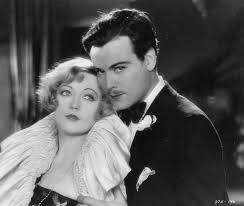 visiting Monte Carlo is hired by a tennis champ to be his “cardboard lover”–to pretend to be in love with him so he can teach his two-timing fiancé a lesson and win her back. What he doesn’t realize is that the girl isn’t pretending–she actually is in love with him, and she sets out to win him for herself. Find out more at backlots.net Presented as part of the Kennington Bioscope Silent Film Weekend. Introduced (via video) by Ben Model. With live musical accompaniment. Cinema Museum, Lambeth Link
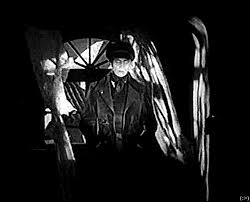 The Student of Prague (Dir. Henrik Galeen, Ger, 1926) (Screening format – not known, 134mins) This darkly romantic tale, with echoes of the Faust legend and Poe’s William Wilson, is a superbly crafted remake of Stellan Rye’s supernatural chiller of 1913. An impoverished student (Veidt) sells his mirror reflection to a moneylender and is subsequently stalked by a Doppelgänger over whom he has no control. Veidt is perfectly cast as the obsessed student, his virtuosic portrayal of a split personality plumbs terrifying depths and his deterioration is reflected in an extraordinary alteration of his face, which seems to grow thinner and more furrowed in the course of the film. The haunting cinematography and art direction are by Guenther Krampf and Hermann Warm (art director of The Cabinet of Dr. Caligari).Find out more at 1000misspenthours.com Presented as part of the Kennington Bioscope Silent Film Weekend. With live musical accompaniment. Cinema Museum, Lambeth Link
The Lodger: A Story of the London Fog (Dir. Alfred Hitchcock, UK, 1927) (Screening format – not known, 91 mins ) In The Lodger, a serial killer known as “The Avenger” is on the loose in London, murdering blonde women. A mysterious man (Ivor Novello) arrives at the house of Mr. and Mrs. Bunting looking for a room to rent. The Bunting’s daughter (June Tripp) is a blonde model and is seeing one of the detectives (Malcolm Keen) assigned to the case. The detective becomes jealous of the lodger and begins to suspect he may be the avenger. Based on a best-selling novel by Marie Belloc Lowndes, first published in 1913, loosely based on the Jack the Ripper murders, The Lodger was Hitchcock’s first thriller, and his first critical and commercial success. Made shortly after his return from Germany, the film betrays the influence of the German expressionist tradition established in such films as The Cabinet of Dr. Caligari (1919) and Nosferatu (1922). Find out more at silentfilm.org With live musical accompaniment by Hugo Max. Aldeburgh Cinema, Aldeburgh Link
12 April
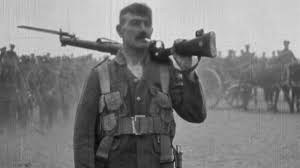 Ypres (Dir. Walter Summers, UK, 1925) (Screening format – not known, 69mins) In 1925, with the cooperation of the War Office, British Instructional Films set out to make a dramatic, feature-length reconstruction of the five Ypres battles in which 1.7 million soldiers lost their lives. Directed by William Summers, the result is a silent classic. Unlike the famous
 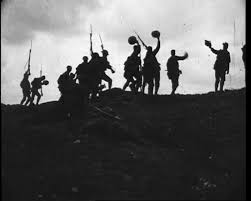 1916 documentary The Battle of the Somme, the Ypres footage is entirely ”faked” and the film shares some of Somme‘s propagandist approach. Regardless, the film is no less fascinating as an artistic endeavour of its time and it features some stunning images. A degree of authenticity is provided by real soldiers taking part and by the filming having taken place in the actual Ypres trenches.Find out more at therealmofsilence.com Presented as part of the Kennington Bioscope Silent Film Weekend. With live musical accompaniment. Cinema Museum, Lambeth Link
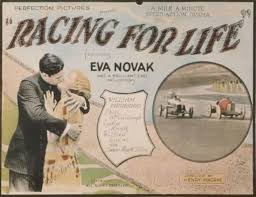 Redicoveries and restorations II To include The Cattle Rustler’s End (1911), starring J. Warren Kerrigan, and Racing for Life (1924), directed by Henry MacRae and starring Eva Novak and William Fairbanks. Presented as part of the Kennington Bioscope Silent Film Weekend. With live musical accompaniment. Cinema Museum, Lambeth Link
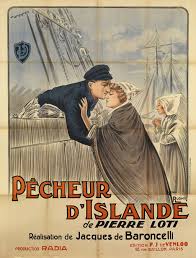 Pêcheur d’Islande (aka Island Fishermen). (Dir. Jacques de Baroncelli, Fr, 1924) (Screening format – not known, 93mins) Pierre Loti’s 1886 novel was filmed several times, but never as hauntingly as this 1924 French silent feature directed by Jacques de Baroncelli. The Island fishermen are the flinty Bretons who depart every
 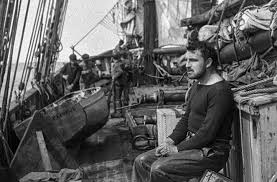 summer for months of cod fishing in the subarctic waters of the North Atlantic; a supernatural encounter leaves one of their number, Yann (Carles Vanel), so deeply affected that he can no longer accept the conventional domestic life proposed by his sweetheart (Sandra Milovanoff): he has fallen in love with death. Baronicelli’s direction blends ethnographic realism with a misty abstraction in the best tradition of French poetic realism. Find out more at silentfilm.org. Presented as part of the Kennington Bioscope Silent Film Weekend. With live musical accompaniment. Cinema Museum, Lambeth Link
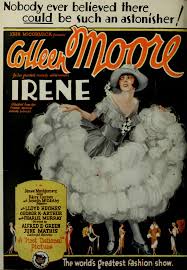 Irene (Dir. Alfred E Green, US, 1926 ) (Screening format – not known, 90 mins) This romantic comedy starring Colleen Moore, and partially shot in Technicolor was produced by Moore’s husband John McCormick, and based on the musical Irene written by James Montgomery with music and lyrics
 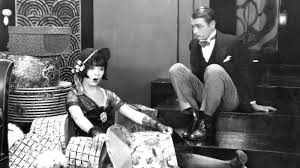 by Harry Tierney and Joseph McCarthy. Moore plays Irene, a feisty Irish girl in Philadelphia, who clashes with her family and walks out, heading to New York City to seek fame and fortune. She gets a job as a dressmaker’s model and becomes involved with Donald, the scion of a wealthy family. Donald’s mother doesn’t approve of Irene and sets out to discredit her in Donald’s eyes. Find out more at wikipedia.org. Presented as part of the Kennington Bioscope Silent Film Weekend. With live musical accompaniment. Cinema Museum, Lambeth Link
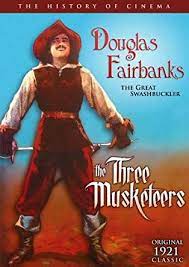 The Three Musketeers (Dir.Fred Niblo, US, 1921) (Screening format – not known, 120mins) There have been many screen adaptations of the story of Alexandre Dumas’ musketeer D’Artagnan, going all the way back to 1903 but it is Douglas Fairbanks’ 1921 production that set the bar both for future film versions of The Three Musketeers as well as for the swashbuckler genre itself. In no other role is Douglas Fairbank’s boyish vigour as irresistibly engaging than as D’Artagnan. “When
 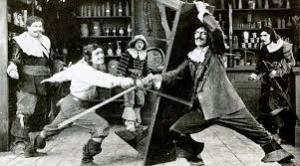 Alexandra Dumas sat down at his desk,” wrote LIFE magazine critic Robert E. Sherwood, “he doubtless had but one object in view; to provide a suitable story for Douglas Fairbanks to act in the movies”. D’Artagnan is a naïve and ambitious farm boy who yearns to join the Musketeers, the elite regiment of guards under King Louis XIII (Adolphe Menjou). After his arrival in Pairs, he
 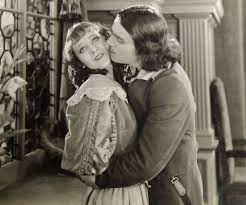 meets three members of the regiment, Athos (Leon Barry), Porthos (George Siegmann) and Aramis (Eugene Pallette) and joins their struggle to defend Queen Anne (Mary MacLaren) against the devious Cardinal Richelieu. More than a thrilling adventure picture, The Three Musketeers is a handsomely-produced, emotionally sensitive telling of Duma’s classic novel, buoyed by Fairbank’s electrifying presence. Find out more at sensesofcinema.com Presented as part of the Kennington Bioscope Silent Film Weekend. With live musical accompaniment. Cinema Museum, Lambeth Link
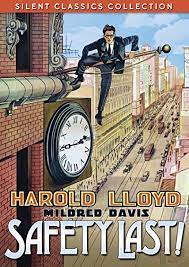 Safety Last (Dir. Fred C Newmeyer/Sam Taylor, US, 1923) (Screening format – not known, 73mins) A boy (Harold Lloyd) moves to New York City to make enough money to support his loving girlfriend (Mildred Davis), but soon discovers that making it in the big city is harder than it looks. When he hears that a store manager will pay $1,000 to anyone who can draw people to his store, he convinces his friend, the “human fly,” (Bill Strother) to climb the building and split the profit with him. But when his pal gets in trouble with the law, he must complete the crazy stunt on his own. The image of Harold Lloyd hanging desperately from the hands of a skyscraper clock during Safety Last! is one of the great icons of film history (although it was achieved with a certain amount of film trickery) and this remains one of the best and best loved comedies of the silent era. Find out more at rogerebert.com. With live piano accompaniment by Forrester Pyke. Macrobert Arts Centre, Stirling Link
The Lodger: A Story of the London Fog (Dir. Alfred Hitchcock, UK, 1927) (Screening format – not known, 91 mins ) In The Lodger, a serial killer known as “The Avenger” is on the loose in London, murdering blonde women. A mysterious man (Ivor Novello) arrives at the house of Mr. and Mrs. Bunting looking for a room to rent. The Bunting’s daughter (June Tripp) is a blonde model and is seeing one of the detectives (Malcolm Keen) assigned to the case. The detective becomes jealous of the lodger and begins to suspect he may be the avenger. Based on a best-selling novel by Marie Belloc Lowndes, first published in 1913, loosely based on the Jack the Ripper murders, The Lodger was Hitchcock’s first thriller, and his first critical and commercial success. Made shortly after his return from Germany, the film betrays the influence of the German expressionist tradition established in such films as The Cabinet of Dr. Caligari (1919) and Nosferatu (1922). Find out more at silentfilm.org With live musical accompaniment by Hugo Max. Cinema City Picturehouse, Norwich Link
17 April
 The Crowd (Dir. King Vidor, US, 1928) (Screening format – not known, 98 mins) One of the last great masterpieces of the silent era, The Crowd combines awe-inspiring camera–work with a thrilling, often tender realism that would influence the great postwar directors, King Vidor’s pioneering film follows John and his wife Mary as they struggle against the de-humanising effects of ordinary life in the city, and strive to set themselves apart from the crowd. More akin to the neo–realism of European films, The Crowd offers a rare morbid view of society far removed from the upbeat,
  lively fare reflected in most American silent films of the era. Vidor won universal acclaim for his innovative methods of illustrating the harsh, impersonal aspects of urban existence. The cinematography by Henry Sharp (much of it shot on location in New York City with hidden cameras) earned enthusiastic praise for his innovative style and amazing camera angles. Under pressure from MGM, Vidor reluctantly filmed an upbeat alternate ending, where John inherits a fortune and ends living in the lap of luxury, but this was thankfully rejected by preview audiences and his more ambivalent finale prevailed. Find out more at afi.com. With live musical accompaniment by Ashley Valentine. With an introduction by event curator Ellen Cleary. Finch Community Cinema, London Link
 Kinaesthesia (Dir. Gerald Fox, UK, 2025) (Screening format – digital, 97mins) A new documentary exploring the evolution and depiction of dreams in silent cinema. An exploration of the relationship between film and dreams, Kinaesthesia (the sensation of movement) is a lyrical documentary inspired by the film historian Vlada Petrić, which draws on an extensive archive to offer a journey through the history of dreams in early cinema. Encompassing French Impressionism, German Expressionism, Soviet Montage, the American Avant-garde and popular silent comedy, this is an illuminating and enjoyable cornucopia of delights that also acts as a love letter to cinema as a true art form. With recorded score. Plus Q&A session with director Gerald Fox. BFI Southbank, London Link
18 April
 The Fall of The House of Usher (Dir. Jean Epstein, Fr, 1928) + shorts including The Fall of the House of Usher (Dir. James Sibley Watson Jr. USA 1928) (Screening format – digital, 63/16 mins) An unnamed man pays a visit to the decaying, aristocratic mansion of his childhood friend, Roderick Usher. He finds Usher to be demented… obsessed by death, consumed with fear that his beloved wife Madeline will die, and no less fearful that she will be buried alive. He spends
  his days painting an eerily lifelike portrait of Madeline, but with each brushstroke the life seems to drain from her. Director Jean Epstein and screenwriter Luis Buñuel studiously avoided cheap shocks and opted for a controlled, spookily subtle technique, in this tale of hereditary madness. Epstein’s version changes the relationship of Madeline and Roderick from brother and sister to husband and wife but matches the horror and menace of Poe’s story, with weird, surreal images and an insidious atmosphere conveyed by the glowering halls, fluttering curtains, and nightmarish suggestiveness of the veil and coffin. Look out for French director Abel Gance, fresh from directing Napoleon (1927) in a minor role while his then wife, Marguerite, stars as Madeline. Find out more at rogerebert.com. With live musical accompaniment. BFI Southbank, London Link
 A Page of Madness (aka Kurutta Ippēji) (Dir.Teinosuke Kinugasa, Jap, 1926) + shorts. (Screening format – digital, 73mins) A man (Masao Inoue) takes a job as a caretaker at a mental asylum in order to be near his wife (Yoshie Nakagawa). Although his wife suffers genuine mental anguish, the man believes he can rescue her , but all is not quite as it seems….Considered lost for some 45 years, Kinugasa thankfully found the print in his garden shed in the early 1970s. A Page of Madness is a visually stunning, and technically dazzling
  work of surrealism. Teinosuke utilizes flashbacks, rhythmic intercutting, and impressionistic symbolism in this independently produced, experimental, avant-garde work with its cinematic technique equal to if not superior to that of contemporary European cinema and very much reminiscent of Robert Weine’s The Cabinet of Dr. Caligari (1920). The film contained no intertitles as it was intended to be exhibited with live narration delivered by a benshi who would stand to the side of the screen and introduce and relate the story to the audience. Find out more at midnighteye.com . With live musical accompaniment. BFI Southbank, London Link
19 April
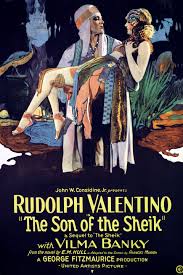 Son Of The Sheik (Dir. George Fitzmaurice, US, 1926 ) (Screening format – not known, 68 mins) In this visually intoxicating 1926 classic, Rudolph Valentino, the silent screen’s greatest lover portrays a cultured yet untamed young Sheik who is lured into a thieves’ trap by a beautiful dancer, Yasmin (Vilma Banky). After escaping, he kidnaps the damsel and holds her captive in his desert lair, dressing her in Arabian finery and threatening to unleash his violent passion upon her. Exotic romance
 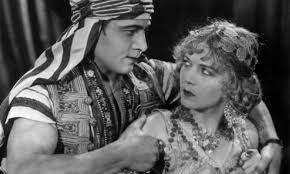 saturates every frame of this Orientalist epic with lavish set designs by William Cameron Menzies (The Thief of Baghdad). One of the most popular films from the silent era, The Son of the Sheik’s star Rudolph Valentino gave perhaps the finest performance of his career. Unfortunately, it would also be his last as he died suddenly at the age of 31, just days before the film’s release. Find out more at moviessilently.com. Presented by Northern Silents. With live musical accompaniment by violinist Susannah Simmons and pianist Jonny Best. Link
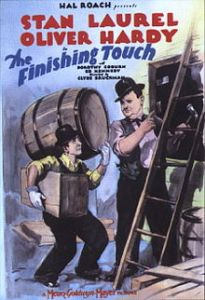 Another Fine Mess – Laurel & Hardy and friends Laurel and Hardy are the eternal optimists of slapstick comedy — two well‑meaning souls whose every attempt to do the right thing somehow ends in disaster. In The Finishing Touch, they are hired to build a house. The result is – of course, complete
 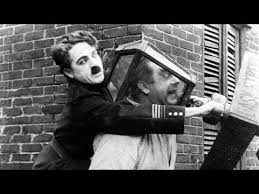 mayhem. Followed by Charlie Chaplin, in his 1917 short comedy, Easy Street. Charlie plays his ‘Little Tramp’ character, who enrols with the local police force. The show is rounded off with a cartoon featuring the biggest animated star of the 1920s, Felix the Cat. Presented by Northern Silents. With live musical accompaniment by violinist Susannah Simmons and pianist Jonny Best. Link
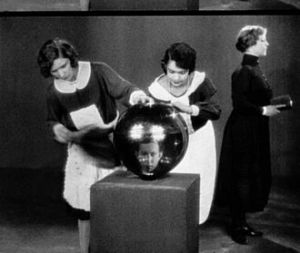 Silent Dreams Shorts Programme The Seashell and the Clergyman‘ ( aka La Coquille et le clergyman) (Dir. Germaine Dulac, Fr, 1928) + shorts including Ballet mécanique (Dir. Fernand Léger, Dudley Murphy, Fr, 1924), Autumn Mists (aka Mists of Autumn) (Dir. Dimitri Kirsanoff, Fr, 1928) and Polizeibericht Überfall (Accident) (Dir. Ernö Metzner, Ger, 1928) (Screening format – digital/35mm, 101 mins) Adapted from a story by Antonin Artaud, The Seashell and the Clergyman is now generally regarded by most critics as the first true Surrealist film, although its fame has largely been eclipsed by the later works of Man Ray ( L’Etoile de Mer, 1928) and Luis Buñuel and Salvador Dalí (Un Chien Andalou, 1929). The film tells of a young clergyman and his repressed sexual desire for a beautiful but unattainable aristocratic woman.
 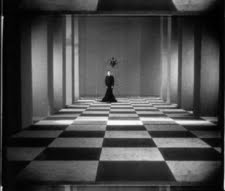 and represented a critique of patriarchy – state and church – and of male sexuality. The film was a crucial influence on future Surrealist films with the styles that Dulac employed in the film – superimpositions, montage, displacement shots, hallucinatory, spectral imagery – being reused in later, better-known Surrealist films. Upon coming before the British Board of Film Censors, they famously reported that the film was “so cryptic as to be almost meaningless. If there is a meaning, it is doubtless objectionable” and promptly banned it. Find out more at anothergaze.com With live musical accompaniment. Introduced by filmmaker Gerald Fox. BFI Southbank, London Link
 Metropolis (Dir. Fritz Lang, 1927) (Screening format –digital , 149 mins ) Made in Germany during the Weimar period, Metropolis is set in a futuristic urban dystopia and follows the attempts of Freder (Gustav Frohlich), the wealthy son of the city’s ruler, and Maria (Brigitte Helm), a poor worker, to overcome the vast gulf separating the classes of their city. Filming took place in 1925 at a cost of approximately five million Reichmarks,
 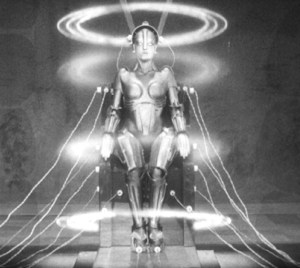 making it the most expensive film ever released up to that point. It is regarded as a pioneering work of science fiction and is among the most influential films of all time. Following its world premiere in 1927, half an hour was cut from Fritz Lang’s masterpiece and lost to the world. Eighty years later a spectacular discovery was made when the footage was found in a small, dusty museum in Buenos Aires. The film was then painstakingly reconstructed and digitally restored so that at last audiences could see the iconic futuristic fairy tale as Lang had envisioned it. Find out more at silentfilm.org With recorded score. Introduced by film-maker Gerald Fox. BFI Southbank, London Link
Kinaesthesia (Dir. Gerald Fox, UK, 2025) (Screening format – digital, 97mins) A new documentary exploring the evolution and depiction of dreams in silent cinema. An exploration of the relationship between film and dreams, Kinaesthesia (the sensation of movement) is a lyrical documentary inspired by the film historian Vlada Petrić, which draws on an extensive archive to offer a journey through the history of dreams in early cinema. Encompassing French Impressionism, German Expressionism, Soviet Montage, the American Avant-garde and popular silent comedy, this is an illuminating and enjoyable cornucopia of delights that also acts as a love letter to cinema as a true art form. With recorded score. BFI Southbank, London Link
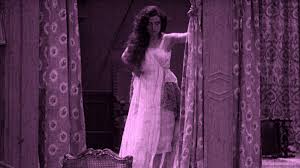 Voglio a Tte! (aka I Want You, aka The Maiden From Amalfi, aka Consuelita) (Dir. Roberto Roberti, It, 1922) (Screening format – not known, 60mins) Made in 1922 and shot on the Amalfi coast, the film was held up for 3 years by Italian censors who probably objected to the portrayl of Southern Italy as impoverished. Eventually re-edited it was re-titled Consuelita and was now supposedly set in Spain. The film was the last major role of Francesca Bertini, one of the great Italian divas of the silent screen who made over 145 films. She plays Consuelita, a young girl who desires to escape her small Spanish fishing village. The director, Roberto Roberti, was the father of director Sergio Leone. Find out more at silentfilm.org With recorded score (?) Megascreen, Bristol Link
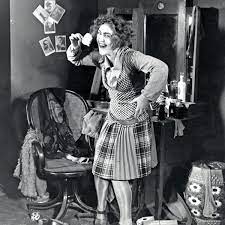 My Grandmother (Dir. Kote Mikaberidze, USSR, 1929) (Screening format – not known, 80mins) This gem of early avant-garde Soviet Union filmmaking was banned for almost 50 years because of its less than subtle political criticism. But what stands out more is the sophisticated blending by director Kote Mikaberidze of real action, animated
 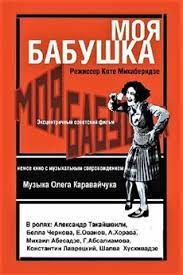 sequences,modern editing techniques, bold satire and absurdist set designs as he unfolds the story of a notoriously lazy bureaucrat who is fired from his comfortable job. On the advice of his ex-colleague, the unemployed pen-pusher sets out to find himself a “grandmother” – an influential bureaucratic patron who will provide him with a letter of recommendation in order to get his job back. But life never goes that smoothly! Find out more at obskura.co.uk. With live musical accompaniment from Stephen Horne and Meg Morley. Barbican, London Link
21 April
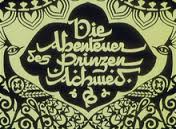 The Adventures of Prince Achmed (Dir. Lotte Reiniger , Ger, 1926) + Cinderella (Dir. Lotte Reiniger , Ger, 1922) (Screening format – not known, 65/10 mins) The first feature-length animation in film history, The Adventures of Prince Achmed was masterminded by Lotte Reiniger and hand-tinted frame by frame. Based on ‘The Arabian Nights’, the film tells the epic tale of Prince Achmed, who is tricked into mounting a magical flying horse by a wicked sorcerer. The horse carries Achmed off on a series of adventures, over the course of which he joins forces with young Aladdin, battles ogres and monsters and romances the beautiful Princess Peri Banu. Find out more at wikipedia.org With live musical accompaniment by experimental noise conjuror mutterichbindoom from The SECT Silent Club. Garden Cinema, London Link
24 April
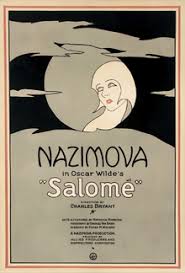 Salome (Dir. Charles Bryant, US, 1923) (Screening format – not known, 74mins) This is a film adaptation of the Oscar Wilde play of the same name and is a loose retelling of the biblical story of King Herod and his execution of John the Baptist at the request of Herod’s stepdaughter, Salome, whom he lusts after. The film stars Alla Nazimova who, though largely forgotten today, was an international sensation in the early 20th century. Born in Yalta in 1879, she studied acting at Constantin Stanislavski’s Moscow Arts Theatre in
 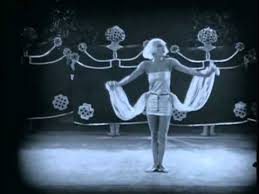 the 1890s. In 1907, she found acclaim on Broadway, where her groundbreaking performances in European Modernist plays by Anton Chekov, August Strindberg and Henrik Ibsen generated millions of dollars. Six years later, Metro put Nazimova under contract at $13,000 per week, making her the highest-salaried actress in the industry. The highly stylized costumes, exaggerated acting, minimal sets, and absence of all but the most necessary props in Salome make for a screen image much more focused on atmosphere and on conveying a sense of the characters’ individual heightened desires than on conventional plot development and as such it has been labelled by some as one of the first ‘art films’ to be made in the US. But for all its style, the film was a popular failure and a financial disaster for Nazimova who had bankrolled its production and from which she never really recovered. But in the years since, its weirdly beautiful atmosphere and aesthetic – combining Art Nouveau, modernism and the glamour of Hollywood’s Golden Age – have led to its growing recognition as an exotic gem, and a cornerstone of camp. To find out more see www.loc.gov. Introduced by film curator Erik Anderson Scott. With recorded soundtrack (?). Finch Community Cinema, London Link
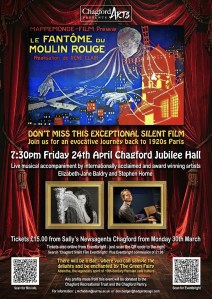
Phantom of the Moulin Rouge (aka Le fantôme du Moulin Rouge)(Dir Rene Clair, Fr, 1925) (Screening format – not known, 90 mins) After two short films, Entr’acte and Paris qui Dort (both 1924) Rene Clair went on to direct this, his first feature length film. The Phantom of the Moulin Rouge continues with the same mischievously surreal themes of his first two short films with the story of a man, frustrated in his romantic ambitions, who becomes the victim for a scientific experiment in which a strange doctor separates the soul of the man from his body. Disembodied and invisible, the man whiles away his time playing practical jokes but eventually seeks to return to his own body. However, that body has now been discovered by the police and the doctor charged with murder. Will soul and body ever be reunited. Perhaps not in the same class as later Clair silents such as The Italian Straw Hat or Les Deux Timides (both 1928) this is nevertheless, a highly amusing tale. Find out more atimdb.com. With live musical accompaniment by Elizabeth-Jane Baldry and Stephen Horne. Jubilee Hall, Chagford Link
25 April
 The Lodger: A Story of the London Fog (Dir. Alfred Hitchcock, UK, 1927) (Screening format – not known, 91 mins ) In The Lodger, a serial killer known as “The Avenger” is on the loose in London, murdering blonde women. A mysterious man (Ivor Novello) arrives at the house of Mr. and Mrs. Bunting looking for a room to rent. The Bunting’s daughter (June Tripp) is a blonde model and is seeing one of the detectives (Malcolm Keen) assigned to the case. The detective becomes jealous of the lodger and begins to suspect he may be the avenger. Based on a best-selling novel by Marie Belloc Lowndes, first published in 1913, loosely based on the Jack the Ripper murders, The Lodger was Hitchcock’s first thriller, and his first critical and commercial success. Made shortly after his return from Germany, the film betrays the influence of the German expressionist tradition established in such films as The Cabinet of Dr. Caligari (1919) and Nosferatu (1922). Find out more at silentfilm.org With live musical accompaniment by Hugo Max. Prince Charles Cinema, London Link
29 April
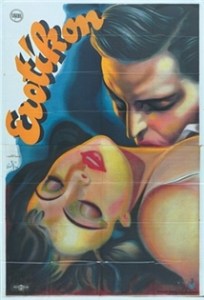 Erotikon (Dir. Gustav Machatý, Cz, 1929) (Screening format – not known, 85 mins) Before his infamous erotic film Ecstasy (1932) starring Hedy Kiesler (later to become Hedy Lamarr), Gustav Machatý directed this exploration of the moral consequences of a night of passion between a Prague playboy and a stationmaster’s daughter. Erotikon tells the story of Andrea (Ita Rina) the beautiful but unsophisticated
 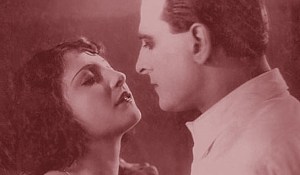 daughter of a rural railway worker. When rich, sophisticated womaniser George Sydney (Olaf Fjord) misses his train connection one stormy night he persuades the railway worker to let him stay at their house. When the railway worker is called away George seduces his daughter. Leaving the next morning, George has soon forgotten Andrea and embarked upon a new relationship with the married Gilda (Charlotte Susa). Andrea remains
  infatuated with George but, on discovering she is pregnant, leaves her village to avoid the shame.Now regarded as a landmark Czech silent film, shooting started in November 1928 with exterior scenes shot in Prague and Karlovy Vary. Machatý and his Czech cinematographer Václav Vích used modern American lenses making the image very soft. Vích worked on
  over a hundred films in different countries during his career. In the 1930s, he was one of the top technicians in the Italian film industry and often worked with the director Max Neufeld. The production designers on Erotikon were Julius von Borsody and Alexangr Hackenschmied.The masterly direction and camerawork transform a simple story into a work of compelling power, full of symbolism. It set a benchmark in the portrayal of female sexuality, as personified by the exquisite Ita Rina. Find out more at silentfilmcalendar.org. Presented by the Kennington Bioscope. With live musical accompaniment. Cinema Museum, Lambeth. Link
30 April
The Lodger: A Story of the London Fog (Dir. Alfred Hitchcock, UK, 1927) (Screening format – not known, 91 mins ) In The Lodger, a serial killer known as “The Avenger” is on the loose in London, murdering blonde women. A mysterious man (Ivor Novello) arrives at the house of Mr. and Mrs. Bunting looking for a room to rent. The Bunting’s daughter (June Tripp) is a blonde model and is seeing one of the detectives (Malcolm Keen) assigned to the case. The detective becomes jealous of the lodger and begins to suspect he may be the avenger. Based on a best-selling novel by Marie Belloc Lowndes, first published in 1913, loosely based on the Jack the Ripper murders, The Lodger was Hitchcock’s first thriller, and his first critical and commercial success. Made shortly after his return from Germany, the film betrays the influence of the German expressionist tradition established in such films as The Cabinet of Dr. Caligari (1919) and Nosferatu (1922). Find out more at silentfilm.org With live musical accompaniment by Hugo Max. Phoenix Cinema, London Link
 Silent Sherlock: Three Classic Cases. The Adventures of Sherlock Holmes series, which was so popular it ran for 45 episodes, was sanctioned by Arthur Conan Doyle, who thoroughly approved of Eille Norwood as Holmes. This programme features a selection of three episodes: ‘A Scandal in Bohemia’, wherein Holmes falls for ‘the woman’; ‘The Golden Pince-Nez’, which features Holmes’ deductive powers at work, and ‘The Final Problem’, featuring the sinister Professor Moriarty. With live musical accompaniment by Meg Morley. Pound Arts Centre, Corsham Link

