


1 July
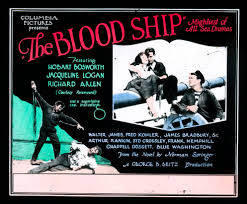 The Blood Ship (Dir. George B. Seitz, US, 1927) (Screening format – Digital, 70mins) Adapted by Fred Myton from the novel by Norman Springer, The Blood Ship stars Hobart Bosworth, Jacqueline Logan and Richard Arlen and was a big hit at the 2025 Pordenone film festival. As the title suggests, The Blood Ship is a rousing seagoing tale, set aboard a cargo vessel whose captain’s notoriety means that the majority of the crew are only there owing to having been shanghaied. One exception is a former, disgraced sea captain who signs on and discovers
 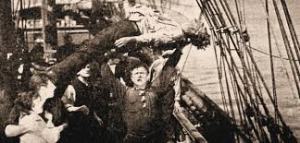 the tyrannical skipper to be the man who had framed him for murder and kidnapped his wife and daughter. Mutiny is sure to follow. Former stage actor Hobart Bosworth had been a prolific screenwriter and director alongside his acting career but had to limit his activities owing to a decades-long struggle with tuberculosis. Despite this, he maintained an image of considerable physical strength in his on-screen roles as `hard man’. Director Seitz remade the story as a talkie in 1931 under the title Shanghaied Love. The earlier silent version was for many years unseen because its last reel was believed to be lost. Fortunately it was found and the full film restored in 2007. Find out more atmoviessilently.com Presented by the Kennington Bioscope. With live musical accompaniment. Cinema Museum, Lambeth Link
19 July
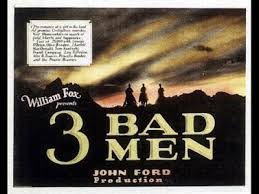 Three Bad Men (Dir. John Ford, US, 1926) (Screening format – digital 4k, 92mins) The year is 1877. Following the discovery of gold on Sioux territory, the U.S. government has decided to give the land over to settlers. One of these settlers is Miss Lee Carleton, who is orphaned when her father is murdered. She’s rescued by the three eponymous outlaws, who
 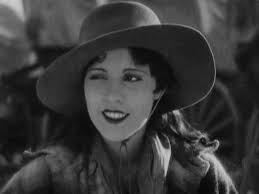 become her protectors. Thinking that Lee needs a husband, they set her up with young Irish immigrant Dan O’Malley. However, they must all contend with the corrupt Sheriff Layne Hunter and his ruthless posse. John Ford’s first epic Western, the 1925 The Iron Horse,
 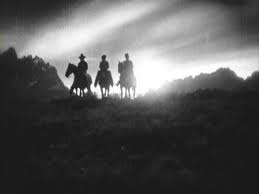 helped to establish Fox as a major studio and Ford as a major director. If anything, his 1926 return to the genre, 3 Bad Men, is richer and more personal; it would prove to be Ford’s farewell to the genre in which he had served his apprenticeship, until his return with Stagecoach in 1939. The classic Fordian theme—the sacrifice of the individual for the good of the group—is here played out by three eccentric
 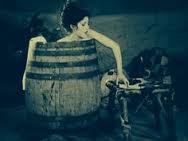 outlaws (Tom Santschi, J. Farrell MacDonald, Frank Campeau) who resolve to protect a young homesteader (Olive Borden) and her fiancé (George O’Brien) from the violence surrounding a great Western land rush. This restoration (funded by Twentieth Century Fox) represents a major upgrade that has dramatically improved image quality and original colour tinting. Find out more at itpworld.online With live musical accompaniment by Ashley Valentine. BFI Southbank, London Link
25 July
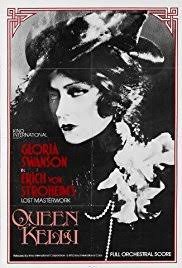 Queen Kelly (Dir. Erich von Stroheim, US, 1929) (Screening format – not known, 101mins) A young convent girl is seduced by a European nobleman, arousing the ire of his bride-to-be Queen Kelly and eventually finding herself exiled to a brothel in East Africa. This film solidified Stroheim’s reputation for extravagance and insistence on complete artistic freedom regardless of economic
 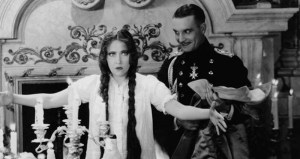 considerations. It would cost him his Hollywood career. Visually striking and perverse, this film was Erich von Stroheim’s last silent film and final directorial project. The production of the costly film was shut down after complaints by the star, Gloria Swanson, about the direction the film was taking. In later interviews, Swanson had claimed that she had been misled by the script which referred to her character arriving in, and taking over, a dance hall; looking at the rushes, it was obvious the ‘dance hall’ was actually a brothel. Stroheim was fired from the film and much of the story-line scrapped. Swanson and producer Joseph P Kennedy (with whom Swanson was having an affair) still
 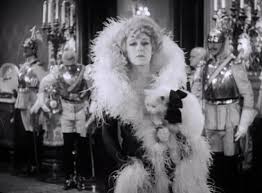 wanted to salvage what was left, as it had been so costly and time-consuming, and had potential market value. An alternate ending
 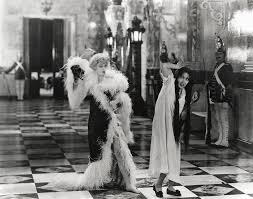 was shot and the film was released in Europe and South America (but never in the US). This is the UK premier of a newly restored version of the film. Basing his reconstruction on von Stroheim’s original scripts, Milestone Films’ Dennis Doros and Amy Heller employed multiple techniques to recreate the film’s lurid dénouement. This vital new digital reconstruction brings von Stroheim’s original script to life, and the result is Queen Kelly in its most complete and spectacular form to date. Find out more at sensesofcinema.com. Presented as part of the Cinema Rediscovered Festival. With live musical accompaniment (?). Watershed, Bristol Link
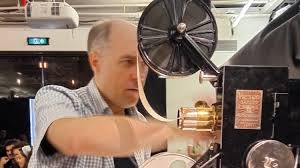 Big Films on Small Gauges 28mm In 1911, Pathé launched 28mm, one of the first non-theatrical film gauges. Used largely for educational and community screenings, the gauge was most popular in the USA, and offered a range of film subjects, not just from Pathe’s own back catalogue, but films by other companies. Despite the formats early demise, both films and equipment have survived in private hands, kept alive in small corners of the film community and a number of silent films are now known only to survive on 28mm format. BFI National Archive Curator Rosie Taylor and filmmaker and historian Christopher Bird here present the history of the format and project original 100 year old film prints on a 28mm Victor projector. Presented as part of the Cinema Rediscovered Festival. With live musical accompaniment (?). Watershed, Bristol Link
Three Bad Men (Dir. John Ford, US, 1926) (Screening format – not known, 92mins) The year is 1877. Following the discovery of gold on Sioux territory, the U.S. government has decided to give the land over to settlers. One of these settlers is Miss Lee Carleton, who is orphaned when her father is murdered. She’s rescued by the three eponymous outlaws, who become her protectors. Thinking that Lee needs a husband, they set her up with young Irish immigrant Dan O’Malley. However, they must all contend with the corrupt Sheriff Layne Hunter and his ruthless posse. John Ford’s first epic Western, the 1925 The Iron Horse, helped to establish Fox as a major studio and Ford as a major director. If anything, his 1926 return to the genre, 3 Bad Men, is richer and more personal; it would prove to be Ford’s farewell to the genre in which he had served his apprenticeship, until his return with Stagecoach in 1939. The classic Fordian theme—the sacrifice of the individual for the good of the group—is here played out by three eccentric outlaws (Tom Santschi, J. Farrell MacDonald, Frank Campeau) who resolve to protect a young homesteader (Olive Borden) and her fiancé (George O’Brien) from the violence surrounding a great Western land rush. Find out more at itpworld.online With live musical accompaniment by Meg Morley. Pound Arts, Corsham Link
26 July
Queen Kelly (Dir. Erich von Stroheim, US, 1929) (Screening format – not known, 101mins) A young convent girl is seduced by a European nobleman, arousing the ire of his bride-to-be Queen Kelly and eventually finding herself exiled to a brothel in East Africa. This film solidified Stroheim’s reputation for extravagance and insistence on complete artistic freedom regardless of economic considerations. It would cost him his Hollywood career. Visually striking and perverse, this film was Erich von Stroheim’s last silent film and final directorial project. The production of the costly film was shut down after complaints by the star, Gloria Swanson, about the direction the film was taking. In later interviews, Swanson had claimed that she had been misled by the script which referred to her character arriving in, and taking over, a dance hall; looking at the rushes, it was obvious the ‘dance hall’ was actually a brothel. Stroheim was fired from the film and much of the story-line scrapped. Swanson and producer Joseph P Kennedy (with whom Swanson was having an affair) still wanted to salvage what was left, as it had been so costly and time-consuming, and had potential market value. An alternate ending was shot and the film was released in Europe and South America (but never in the US). This is the UK premier of a newly restored version of the film. Basing his reconstruction on von Stroheim’s original scripts, Milestone Films’ Dennis Doros and Amy Heller employed multiple techniques to recreate the film’s lurid dénouement. This vital new digital reconstruction brings von Stroheim’s original script to life, and the result is Queen Kelly in its most complete and spectacular form to date. Find out more at sensesofcinema.com. Presented as part of the Cinema Rediscovered Festival. With live musical accompaniment (?). Curzon, Clevedon Link
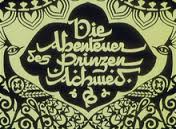 The Adventures of Prince Achmed (Dir. Lotte Reiniger , Ger, 1926) (Screening format – not known, 65mins) The first feature-length animation in film history, masterminded by Lotte Reiniger and hand-tinted frame by frame. Based on ‘The Arabian Nights’, the film tells the epic tale of Prince Achmed, who is tricked into mounting a magical flying horse by a wicked sorcerer. The horse carries Achmed off on a series of adventures, over the course of which he joins forces with young Aladdin, battles ogres and monsters and romances the beautiful Princess Peri Banu.Find out more at wikipedia.org . Presented as part of the Cinema Rediscovered Festival. With live musical accompaniment (?). Watershed, Bristol Link
28 July
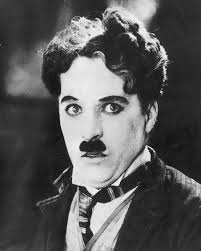 Silent Comedy Pick ‘N’ Mix – An irresistible celebration of laughter with a whirlwind selection of silent-era comic gems,
 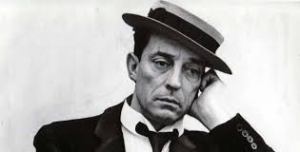 bursting with playful chaos, big-hearted humour, and dazzling slapstick invention. Perfect for all ages, this joyous event showcases the timeless magic of cinema’s earliest fun-makers at their most inventive and charming. Films TBC. Presented by the Lucky Dog Picturehouse. With live musical accompaniment by Tom Marlow. Wilton’s Music Hall, London Link
29 July
 Nosferatu (Dir. F W Murnau, 1922) (Screening format – not known, 96mins) A German Expressionist horror masterpiece starring Max Shreck as the vampire Count Orlok. The film was an unauthorised adaption of Bram Stoker’s ‘Dracula’ with names and other details changed because the studio could not obtain the rights to the novel. Stoker’s heirs sued over the adaption and a court ruling ordered that all copies of the film be destroyed. However, a few prints survived and the film came to be regarded as an inspirational master work of the cinema. In the film, Count Orlok travels across Europe leaving a trail of death in his wake. Brilliantly eerie, with imaginative touches which later adaptions never achieved. Find out more at wikipedia.org Presented by the Lucky Dog Picturehouse. With live musical accompaniment by Sam Watts. Wilton’s Music Hall, London Link
30 July
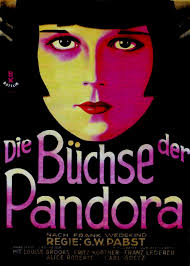 Pandora’s Box (Dir. G W Pabst, Ger, 1929) (Screening format – not known, 135mins) Based on two plays by the German author Frank Wedekind, Erdgeist (Earth Spirit, 1895), which Pabst himself had directed for the stage, and Die Büchse der Pandora (Pandora’s Box, 1904), the silent drama follows Pthe tumultuous life of the showgirl Lulu whose unselfconscious sexuality brings about the ruin of all those that fall for her and eventually her own. In a daring move, Pabst chose a little known American actress over the more
 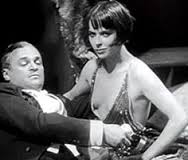 experienced Marlene Dietrich for the part of Lulu, a decision that made the young Louise Brooks an international star. Her innocent looks paired with her natural erotic allure and sense of movement – Brooks was also a dancer – perfectly matched Pabst’s idea of his heroine as unwitting seductress. Subjected to cuts to eliminate some of its “scandalous” content and unfavourably reviewed by critics at the time, it is now considered one of the boldest and most modern films of the Weimar era highlighting Pabst’s command of camera language and montage. Find out more at silentlondon.co.uk . Presented by the Lucky Dog Picturehouse. With live musical accompaniment by Christopher Eldred. Wiltons Musical Hall, London Link
31 July
 The General (Dir. Buster Keaton/Clyde Bruckman, 1926) (Screening format – not known, 75mins) Widely considered one of the greatest films ever made and one of the most revered comedies of the silent era, Buster Keaton’s effortless masterpiece sees hapless Southern railroad engineer Johnny Gray (Keaton) facing off against Union soldiers during the American Civil War. When Johnny’s fiancée, Annabelle Lee (Marion Mack), is accidentally taken away while on a train stolen by Northern forces, Gray pursues the soldiers, using various modes of transportation in comic action scenes that highlight Keaton’s boundless, innovative wit and joyful, lighthearted dexterity, to reclaim the train and thereby save the South. Find out more at busterkeaton.com . Presented by the Lucky Dog Picturehouse. With live musical accompaniment by Christopher Eldred. Wiltons Musical Hall, London Link

