



1 June
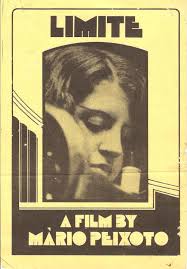 Limit (aka Limite) (Dir. Mário Peixoto, Bra, 1931) (Screening format – digital, 113mins) Límite, the only film completed by its creator Mario Peixoto, is considered one of the most important works in the history of Brazilian cinema. It descends directly from Soviet cinema, German expressionist cinema and Griffith’s classic American cinema. It adds artistic value to filmmaking. The film brings enormous innovations in terms of language, with its slow
 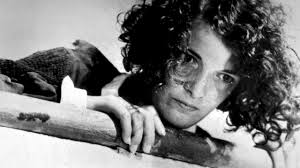 pace, images of Brazilian landscapes and revolutionary camera work that combines static framing with dizzying movements, underpinned by an erudite soundtrack. The film deals with the essential limitation of the human condition, and fundamental futility of human action. Adrift in a small boat, three figures recall fractured pasts through a cascade of memories and sensations. Peixoto abandons linear storytelling for pure visual rhythm, creating Brazil’s most mythologised silent film. Long unavailable but now restored, it remains a landmark of global avant-garde cinema. Find out more at moviessilently.com With recorded score. BFI Southbank, London Link
4 June
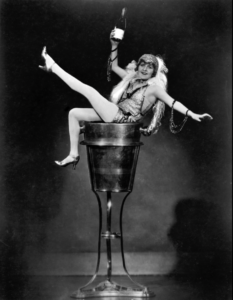
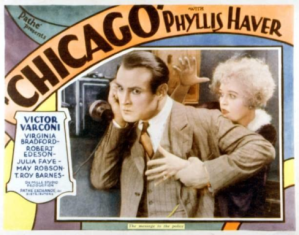 Chicago (Dir. Frank Urson & Cecil B.DeMille (uncredited), 1927) (Screening format – not known, 118mins ) Seventy-five years before Bob Fosse’s Oscar-winning musical version of Maurine Watkins’ successful stage play, Cecil B. DeMille’s production company made this saucy silent film version. Phyllis Haver is hugely entertaining as the brazen Roxie Hart “Chicago’s most beautiful murderess” – a woman so pathologically shallow
  she sees notoriety for a murder rap as an opportunity to secure her fortune. Egged on by her crooked lawyer (“they’ll be naming babies after you”) Roxie neglects her long-suffering loyal husband and sets about milking her celebrity status for all she’s worth. The sequence in the prison is an absolute delight – particularly the rivalry between Roxie and fellow-murderess Velma (played by Julia Faye, DeMille’s mistress), as are the climactic courtroom scenes. A cracking, satire on fame and the media, this fun-filled tale of adultery, murder and sin (so sinful that DeMille – known for his Biblical epics – was at pains to keep his name off the credits) is as fresh and relevant as ever. Find out more at wikipedia.org . Presented by Northern Silents. With live musical accompaniment by pianist Jonny Best. , Link
6 – 14 June
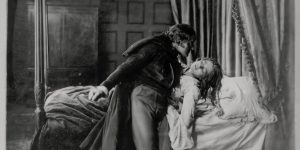 Wuthering Heights Rediscovered Celebrating the lost 1920 film adaptation of Emily Brontë’s iconic novel using the only know surviving copy of the script, as well as photographs previously unseen by the public, this touring exhibition, in association with Leeds Lit Fest, will help to recreate and reimagine a film whose original prints have been lost to time. Curated by Professor Rob Shail and Irfan Shah, the exhibition and accompanying free, downloadable booklet, will be a collaboration between the Early Cinema Research Group, Leeds Beckett University and the Brontë Parsonage Museum, Haworth. Wuthering Heights Rediscovered will appeal to cinephiles, Brontë devotees and lovers of the Yorkshire countryside. Warley Phone Box Museum, Warley Link
7 June
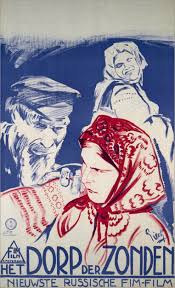 Film Society 38 – In 1930, the Film Society, a pioneering organisation of cinephiles, championed the work of women filmmakers in their 38th edition. It consisted solely of films produced or directed by women. Not all of these survive – we have lost films by Dorothy Arzner and Dinah Shurey – but the BFI have enough to present, for the first time since 1930, this celebration of the women who featured in that groundbreaking programme. The programme includes The Peasant Women of Ryazan (aka Baby Ryazanskie) (Dir. Olga Preobrazhenskaya, USSR, 1927)
 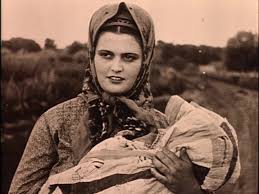 (Screening format – digital, 88mins). This tells the story of Anna and Wassilissa, sisters-in-law living in the village of Ryazan. The story starts in 1914 just before the outbreak of WWI and focuses on the relationship of Anna with Ivan and Wassilissa with Nikolai. However, once both men are drafted for war, the women’s social positions change dramatically; Anna becomes very
 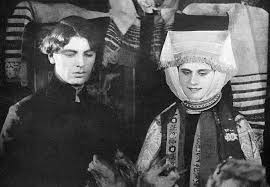 vulnerable, while Wassilissa becomes more assertive and refuses to be a victim of circumstances. Preobrazhenskaya’s film builds up psychological tension through a sober and realistic visual narration. This results in beautiful documentary scenes, shot on location. Find out more at moviessilently.com The programme also includes Secrets of Nature: Plants of the Underworld UK 1930. Director Mary Field. 11min. Digital Cinderella Germany 1922. Director Lotte Reinger. 16min. 35mm and Seashell and the Clergyman France 1928. Director Germaine Dulac. 31min. 35mm. With live musical accompaniment. BFI Southbank, London Link
10 June
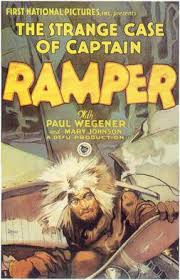 The Strange Case of Captain Ramper (aka Ramper, der Tiermensch (Dir. Max Reichmann, Ger, 1927) (Screening format – 35mm, ??mins) The film follows the story of an aviator who survives a plane crash in northern Greenland, descending into feral isolation before being rediscovered and eintegrated into society through scientific intervention. Produced by Deutsche Film Union and distributed internationally by First National Pictures, it explores themes of human survival, degeneration, and the clash between civilization and wilderness. The plot centres on Captain Ramper (Wegner), a daring German pilot, and his mechanic Charles Ipling (Kossuth), who crash-land during a flight to the North Pole. Ipling dies from the harsh conditions, leaving Ramper to survive alone in the frozen wilds, where he regresses into a beast-like existence among polar bears. The screenplay was adapted by Curt J. Braun from the play Ramper by Max Mohr, with additional contributions from lead actor Paul Wegener. This adaptation preserved the core themes of isolation and psychological transformation from the source material, translating the stage narrative into a visual format suited for silent cinema. Time magazine called it an “original, entertaining” tale of a lost explorer who regresses to an animal-like state during 15 years in the Arctic, only to reject civilization upon his return; the publication commended Wegener’s proficient portrayal. Find out more at wikipedia.org Presented by the Kennington Bioscope. With live musical accompaniment. Cinema Museum, Lambeth Link
12 June
 Filibus (Dir. Mario Roncoroni, It, 1915) (Screening format – not known, 76mins) Filibus (the first of thirty films directed by Roncoroni) featured as a protagonist a roguish female lead character, the Baroness Troixmonde, who is a respectable member of society by day, but by night in the guise of “Filibus” she terrorises Sicily from her zeppelin,
 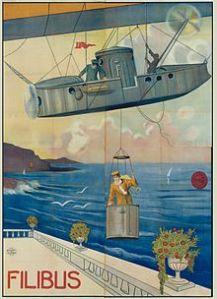 which is full of technologically-advanced equipment and weaponry. The zeppelin is manned by a staff of mask-wearing, black-skin-suit-clad male assistants who obey the Baroness’ commands instantly. The airship is her headquarters and her home, and she descends to land only to rob or to hobnob with the socialites and dance with women as the tuxedo-wearing dandy Count de la Brieve ( a full 15 years before Dietrich’s famous cross-dressing scene in Morocco). But has Filibus met her match with the renowned Detective Hardy on her trail….. Find out more at silentsplease.wordpress.com . Introduction by curator Erik Anderson Scott. With live musical accompaniment by composer Su Kim. Finch Community Cinema, London Link
Limit (aka Limite) (Dir. Mário Peixoto, Bra, 1931) (Screening format – digital, 113mins) Límite, the only film completed by its creator Mario Peixoto, is considered one of the most important works in the history of Brazilian cinema. It descends directly from Soviet cinema, German expressionist cinema and Griffith’s classic American cinema. It adds artistic value to filmmaking. The film brings enormous innovations in terms of language, with its slow pace, images of Brazilian landscapes and revolutionary camera work that combines static framing with dizzying movements, underpinned by an erudite soundtrack. The film deals with the essential limitation of the human condition, and fundamental futility of human action. Adrift in a small boat, three figures recall fractured pasts through a cascade of memories and sensations. Peixoto abandons linear storytelling for pure visual rhythm, creating Brazil’s most mythologised silent film. Long unavailable but now restored, it remains a landmark of global avant-garde cinema. Find out more at moviessilently.com With recorded score. With pre-recorded intro by film critic Rafa Sales Ross. BFI Southbank, London Link
14 June
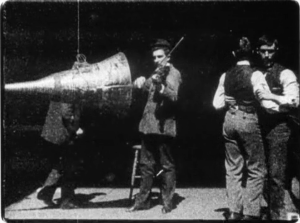 “You Ain’t Heard Nothin’ Yet!” – Film, Sound, Music and Entertainment 1894 – 1929 See and hear drama, music and entertainment! A day-long event exploring the many attempts to combine sound with film, from the mid 1890’s to the advent of the feature-length musical. Highlights include; Dave
 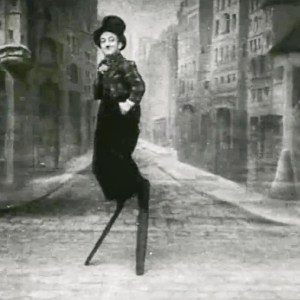 Peabody presenting some of the earliest and most fascinating examples of sound being used with film such as The Dickson Experimental Sound Film of 1894; Tony Fletcher presenting a selection of incredible rarities on 35mm from the BFI, demonstrating the British attempts at marrying sound with film; Malcolm Billingsley and Dave Peabody demonstrating the pioneering sound-on-disc system developed by Western Electric and Bell Telephone Laboratories in the US; and John Sweeney, Anna Gillespie, and Frank Bockius providing live
  musical accompaniment to the first publicly exhibited films that combined projected images with sound-on-cylinder. Made by Gaumont in France and shown at the Paris Exposition of 1900, these short, often hand-tinted films feature famous stage actors, dancers and comedians,
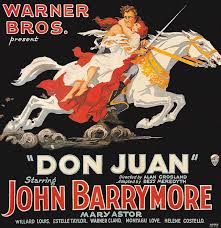
 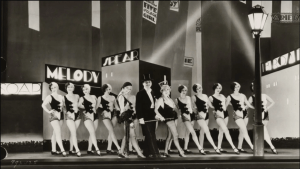 including Sarah Bernhardt and English music hall star Little Tich. Other films being screened include British melodrama Dark Red Roses (1929), swashbuckler Don Juan (1926) with John Barrymore and The Broadway Melody (1929), Hollywood’s first all-talking musical. Presented by the Kennington Bioscope. With live and recorded accompanyment. Cinema Museum, Lambeth Link
 The General (Dir. Buster Keaton/Clyde Bruckman, 1926) (Screening format – not known, 75mins) Widely considered one of the greatest films ever made and one of the most revered comedies of the silent era, Buster Keaton’s effortless masterpiece sees hapless Southern railroad engineer Johnny Gray (Keaton) facing off against Union soldiers during the American Civil War. When Johnny’s fiancée, Annabelle Lee (Marion Mack), is accidentally taken away while on a train stolen by Northern forces, Gray pursues the soldiers, using various modes of transportation in comic action scenes that highlight Keaton’s boundless, innovative wit and joyful, lighthearted dexterity, to reclaim the train and thereby save the South. Find out more at busterkeaton.com . With live musical accompaniment by composer and musician Mike Hatchard. Electric Palace, Hastings Link
20 June
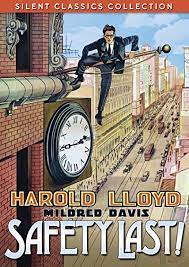 Safety Last (Dir. Fred C Newmeyer/Sam Taylor, US, 1923) (Screening format – not known, 73mins) A boy (Harold Lloyd) moves to New York City to make enough money to support his loving girlfriend (Mildred Davis), but soon discovers that making it in the big city is harder than it looks. When he hears that a store manager will pay $1,000 to anyone who can draw people to his store, he convinces his friend, the “human fly,” (Bill Strother) to climb the building and split the profit with him. But when his pal gets in trouble with the law, he must complete the crazy stunt on his own. The image of Harold Lloyd hanging desperately from the hands of a skyscraper clock during Safety Last! is one of the great icons of film history (although it was achieved with a certain amount of film trickery) and this remains one of the best and best loved comedies of the silent era. Find out more atrogerebert.com. With live piano accompaniment by John Sweeney. Barbican, London Link
21 June
 A Hoot and a Half With Laurel & Hardy. Their individual skills as on-screen comedians and their double act was developed in the years before sound. Many of their silent classics were produced by Hal Roach and directed by Leo McCarey, the two who had first noticed the chemistry between Stan and Ollie and paired them up together for the first time in 1927 for Do Detectives Think?. Today we’ll meet the fellas as they try to make a go of it as musicians, try to get away with a reckless night out, and try to raise funds by throwing Stan in the ring as a boxer. All this and much more, including a lack of trousers, several raised eyebrows and many, many custard pies. With live piano accompaniment by Lillian Henley. Palace Cinema, Broadstairs Link

