


1 September
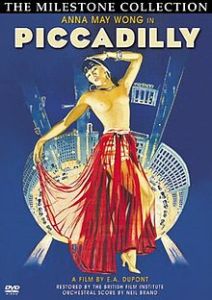 Piccadilly (Dir E A Dupont, UK, 1929) (Screening format – digital, 92 mins) A film noir before the term was in use, uncredited German director E.A. Dupont’s Piccadilly is one of the true greats of British silent films, on a par with the best of Anthony Asquith or Alfred Hitchcock during this period. Valentine Wilmot (Jameson Thomas) owns a nightclub featuring dancers Mabel (Gilda Gray) and Vic (Cyril Ritchard). After a confrontation with Wilmot, Vic quits performing at the club.
  When the joint starts losing business, a desperate Wilmot hires former dishwasher Shosho (Anna May Wong) as a dancer. She is an instant hit and forms a rapport with Wilmot, which makes both Mabel and Shosho’s friend (King Ho Chang) jealous, leading to a mysterious murder. A stylish evocation of Jazz Age London, with dazzlingly fluid cinematography and scenes ranging from the opulent West End to the seediness of Limehouse. One of the pinnacles of British silent cinema, Piccadilly is a sumptuous show business melodrama seething with sexual and racial tension – with an original screenplay by Arnold Bennett. Find out more at screenonline.org.uk . With recorded Neil Brand score. BFI Southbank, London Link
3 September
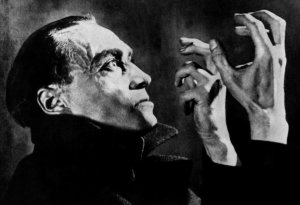 The Hands of Orlac (Dir. Robert Weine, 1924) (Screening format – not known, 92mins) A gruesome psychological horror about a talented concert pianist (Conrad Veidt), whose precious hands are amputated after a calamitous accident. Replacements are grafted on but soon after his operation Orlac learns the horrible truth – his new hands were from the cadaver of a recently executed killer. Plagued by nightmarish visions, Orlac fears his hands are possessed by evil and that he has become a murderer himself. Made five years after his landmark film The Cabinet of Dr Caligari director Robert Weine strikes a more sombre and restrained look for this creepy drama but wrings every terrible shudder out of the theme of an alien body with a mind of its own. Find out more at slantmagazine.com . With live piano accompaniment by Jonny Best. Stratford Methodist Church, Stratford upon Avon Link
9 September
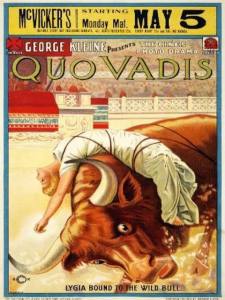 Quo Vadis (Dir. Enrico Guazzoni, It, 1913) + shorts (Screening format – 35mm, 120mins) Released in 1913, Quo Vadis? demonstrated radical advances in the powers of the motion picture. It offered a detailed adaption to screen of a popular Polish novel in which a romance between a Roman soldier and a Christian girl is played out in the dangerous conditions of Rome where Nero burns the city down and persecutes the Christians, while Saint Peter flees but returns to protect his suffering flock. The film’s title comes from the question the apostle is supposed to have asked when he sees a vision of Christ walking along the Via
  Appia: ‘Where are you going Lord? ‘ (in Latin: quo vadis, domine?). The film began a whole international cycle of spectacular epics set in the ancient world that continue to this day. It was greatly admired for the rich detail of its sets, the choreography of its vast crowds, its suggestive use of location shooting, the spectacular quality of its arena scenes, the emotional draw of its private love story and the uplift of its religious dimensions. A coloured version of Quo Vadis? is being loaned for the occasion from the Eye Filmmuseum in the Netherlands. Find out more at trettleman.medium.com. Presented by the Kennington Bioscope. Introduced by Professor Maria Wyke from the Department of Greek and Latin, UCL, London. With live musical accompaniment. Cinema Museum, Lambeth Link
12 September
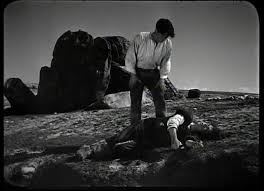 Finis Terrae (Dir. Jean Epstein, Fr, 1929) (Screening format – DCP, 80 Mins) On a tiny island off Brittany two young men eke out a living by harvesting seaweed to burn for prized soda. When one of them cuts his thumb and an infection sets in, it challenges the boundaries of their relationship and galvanises the neighbouring community. Jean Epstein’s timeless
  narrative about survival in extremis is underpinned by avant-garde techniques and deeply resonant images, such as the recurrent lighthouse or the sight of women sheltering by rocks like giant black birds. Even without sound you can almost hear the ocean. This is a film about the possibilities of cinema and anyone thinking of picking up a camera should watch and be inspired. Find out more at worldscinema.org. With live musical accompaniment by Dan Abrahams and Philippe Boudot. Montrose Playhouse, Montrose Link
 The Live Ghost Tent – quarterly meeting of The Laurel and Hardy Society. The day’s programme includes; Mother’s Joy (1923) a silent short directed by Ralph Ceder and Isn’t Life Terrible? (1925) a silent short directed by Leo McCarey. With recorded score. Cinema Museum, Lambeth Link
Piccadilly (Dir E A Dupont, UK, 1929) (Screening format – digital, 92 mins) A film noir before the term was in use, uncredited German director E.A. Dupont’s Piccadilly is one of the true greats of British silent films, on a par with the best of Anthony Asquith or Alfred Hitchcock during this period. Valentine Wilmot (Jameson Thomas) owns a nightclub featuring dancers Mabel (Gilda Gray) and Vic (Cyril Ritchard). After a confrontation with Wilmot, Vic quits performing at the club. When the joint starts losing business, a desperate Wilmot hires former dishwasher Shosho (Anna May Wong) as a dancer. She is an instant hit and forms a rapport with Wilmot, which makes both Mabel and Shosho’s friend (King Ho Chang) jealous, leading to a mysterious murder. A stylish evocation of Jazz Age London, with dazzlingly fluid cinematography and scenes ranging from the opulent West End to the seediness of Limehouse. One of the pinnacles of British silent cinema, Piccadilly is a sumptuous show business melodrama seething with sexual and racial tension – with an original screenplay by Arnold Bennett. Find out more at screenonline.org.uk . With recorded Neil Brand score. BFI Southbank, London Link
13 September
 Cops (Dir. Edward F Cline/Buster Keaton, US, 1922)(Screening format – not known, 18 mins ) Cops sees Buster Keaton ending up with a load of furniture in the middle of parade of policemen. An anarchist’s bomb lands in his carriage. After lighting his cigarette with it, he tosses it into the ranks of police. When it explodes the police chase him all over town by the entire Los Angeles Police Department. Find out more at wikipedia.org . Presented by South West Silents. Recorded score. Megascreen, Bristol Link
Finis Terrae (Dir. Jean Epstein, Fr, 1929) (Screening format – DCP, 80 Mins) On a tiny island off Brittany two young men eke out a living by harvesting seaweed to burn for prized soda. When one of them cuts his thumb and an infection sets in, it challenges the boundaries of their relationship and galvanises the neighbouring community. Jean Epstein’s timeless narrative about survival in extremis is underpinned by avant-garde techniques and deeply resonant images, such as the recurrent lighthouse or the sight of women sheltering by rocks like giant black birds. Even without sound you can almost hear the ocean. This is a film about the possibilities of cinema and anyone thinking of picking up a camera should watch and be inspired. Find out more at worldscinema.org. With live musical accompaniment by Dan Abrahams and Philippe Boudot. Birnam Arts, Dunkeld Link
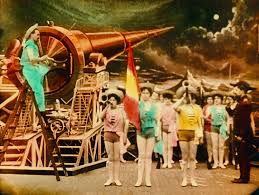 Marvellous Méliès: The Magician of Cinema Amusical cornucopia of fantastical adventures, mind-teasing illusions, and shimmering visions from the very beginnings of cinema. In December 1895, a young Paris magician attended the first demonstration of moving pictures – a year later, Georges Méliès had built his own camera and started to experiment. But rather than record ordinary life as so many early film makers were content to do, Méliès unleashed his imagination, creating bizarre and beautiful cinematic visions of angels and aliens, shooting stars and spaceships. Northern Silents partners with the National Science and Media Museum to present a selection of Méliès’s shorts, some painstakingly hand‑coloured, including his most famous work, A Trip to the Moon, which gave cinema its first truly iconic image—the rocket in the moon’s eye. Presented by Northern Silents. With live musical accompaniment by Jonny Best. Link
14 September
Finis Terrae (Dir. Jean Epstein, Fr, 1929) (Screening format – DCP, 80 Mins) On a tiny island off Brittany two young men eke out a living by harvesting seaweed to burn for prized soda. When one of them cuts his thumb and an infection sets in, it challenges the boundaries of their relationship and galvanises the neighbouring community. Jean Epstein’s timeless narrative about survival in extremis is underpinned by avant-garde techniques and deeply resonant images, such as the recurrent lighthouse or the sight of women sheltering by rocks like giant black birds. Even without sound you can almost hear the ocean. This is a film about the possibilities of cinema and anyone thinking of picking up a camera should watch and be inspired. Find out more at worldscinema.org. With live musical accompaniment by Dan Abrahams and Philippe Boudot. Eden Court, Inverness Link
15 September
Finis Terrae (Dir. Jean Epstein, Fr, 1929) (Screening format – DCP, 80 Mins) On a tiny island off Brittany two young men eke out a living by harvesting seaweed to burn for prized soda. When one of them cuts his thumb and an infection sets in, it challenges the boundaries of their relationship and galvanises the neighbouring community. Jean Epstein’s timeless narrative about survival in extremis is underpinned by avant-garde techniques and deeply resonant images, such as the recurrent lighthouse or the sight of women sheltering by rocks like giant black birds. Even without sound you can almost hear the ocean. This is a film about the possibilities of cinema and anyone thinking of picking up a camera should watch and be inspired. Find out more at worldscinema.org. With live musical accompaniment by Dan Abrahams and Philippe Boudot. DCA, Dundee Link
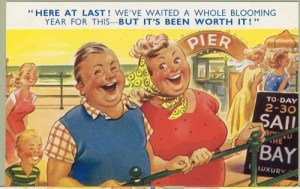 The Bamforth Story: How Holmfirth Entertained The Nation Founded by James Bamforth in 1870, the company played a leading role in three creative industries: lantern slides, early cinema, and picture postcards. As well as looking at the company’s history the event includes a selection of Bamforth’s lantern slides and short films, tracing their significance in the story of early twentieth century entertainment and the emergence of cinema. Presented by Northern Silents. Introduced by Katina Bill, Senior Curator at Kirklees Museums and Galleries and by Northern Silents’ artistic director Jonny Best who will also provide live musical accompaniment. Link
19 September
 Phantom Of The Opera (Dir. Rupert Julian, 1925) (Screening format – not known, 103mins) A title that needs no introduction, The Phantom of the Opera has spawned many remakes, remasters and sequels. This original film version, produced with moments of early Technicolour, sees Lon Chaney, the ‘Man of a Thousand Faces’ perform one of his most iconic roles. His ghastly make-up and outrageous performance made this title a benchmark in the American silent film era. The film was a critical and commercial success upon release, and still stands as an important film in cinematic history to this day, with press quotes from the time labelling the film an ‘ultra-fantastic melodrama’ (New York Times), ‘produced on a stupendous scale’ (Moving Picture World) and ‘probably the greatest inducement to nightmare that has yet been screened’ (Variety). The mysterious phantom (Lon Chaney) is a vengeful composer living in the catacombs under the Paris Opera House, determined to promote the career of the singer he loves (Mary Philbin). Famed for the phantom’s shock unmasking, incredible set designs and the masked ball sequence, it still packs a punch. Find out more at wikipedia.org With live organ accompaniment by Darius Battiwalla. St Matthew Church, Northampton Link
20 September
 The Flying Scotsman (Dir. Castleton Knight, UK, 1929) (Screening format – not known, 50mins) Made in silent and talkie versions, this British thriller is set largely on the Flying Scotsman express between London and Edinburgh. A disgruntled railwayman (Alex Hurley) attempts to wreck the train after he is sacked after being caught
  drinking by the train’s driver Bob White (Moore Marriot), who is working his last day before retirement. White’s daughter Joan (Pauline Johnson) is also on the train, having fallen for White’s new fireman, Jim (Ray Milland). As well as being Milland’s first starring role, the film is also notable for all the stars doing their own stunts, including Pauline Johnson who was doubly challenged by wearing high heels while hanging off the side of the train. Find out more at heyuguys.com . With live organ accompaniment by Donald MacKenzie. The Musical Museum, Brentford Link
 Strike (Dir. Sergei Eisenstein, USSR, 1925) (Screening format – not known, 82mins) Eisenstein’s landmark first film tells the story of a workers’ revolt in a factory in Czarist Russia. Featuring historic experiments in the art of montage, Eisenstein used editing to juxtapose complementary images to create rapid and dynamic shifts in rhythm. Exploring themes of collectivism versus individualism, with an explicit revolutionary agenda and laden with visual metaphors; indeed, the emotive sequence towards the end in which the violent suppression of the strike is cross-cut with footage of cattle being slaughtered, has been compulsory viewing for film students ever since. An exemplary film of Russian revolutionary cinema. Find out more at classicartfilms.com. Presented by Northern Silents. With live musical accompaniment by Jonny Best. Link
 Metropolis (Dir. Fritz Lang, 1927) (Screening format –not known , 149 mins ) Made in Germany during the Weimar period, Metropolis is set in a futuristic urban dystopia and follows the attempts of Freder (Gustav Frohlich), the wealthy son of the city’s ruler, and Maria (Brigitte Helm), a poor worker, to overcome the vast gulf separating the classes of their city. Filming took place in 1925 at a cost of approximately five million Reichmarks, making it the most expensive film ever released up to
 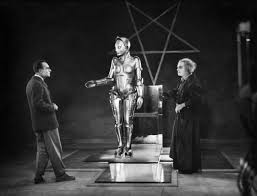 that point. It is regarded as a pioneering work of science fiction and is among the most influential films of all time. Following its world premiere in 1927, half an hour was cut from Fritz Lang’s masterpiece and lost to the world. Eighty years later a spectacular discovery was made when the footage was found in a small, dusty museum in Buenos Aires. The film was then painstakingly reconstructed and digitally restored so that at last audiences could see the iconic futuristic fairy tale as Lang had envisioned it. Find out more at silentfilm.org With live musical accompaniment by Mike Hatchard. Electric Palace, Hastings Link
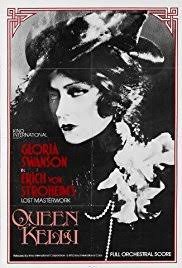 Queen Kelly (Dir. Erich von Stroheim, US, 1929) (Screening format – digital, 101mins) A young convent girl is seduced by a European nobleman, arousing the ire of his bride-to-be Queen Kelly and eventually finding herself exiled to a brothel in East Africa. This film solidified Stroheim’s reputation for extravagance and insistence on complete artistic freedom regardless of economic
 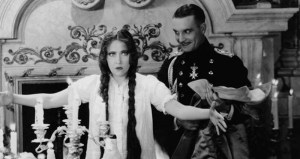 considerations. It would cost him his Hollywood career. Visually striking and perverse, this film was Erich von Stroheim’s last silent film and final directorial project. The production of the costly film was shut down after complaints by the star, Gloria Swanson, about the direction the film was taking. In later interviews, Swanson had claimed that she had been misled by the script which referred to her character arriving in, and taking over, a dance hall; looking at the rushes, it was obvious the ‘dance hall’ was actually a brothel. Stroheim was fired from the film and much of the story-line scrapped. Swanson and producer Joseph P Kennedy (with whom Swanson was having an affair) still
 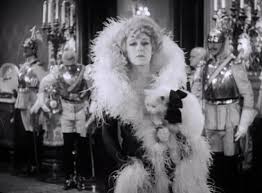 wanted to salvage what was left, as it had been so costly and time-consuming, and had potential market value. An alternate ending
 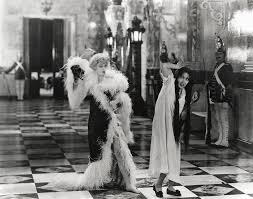 was shot and the film was released in Europe and South America (but never in the US). This is the UK premier of a newly restored version of the film. Basing his reconstruction on von Stroheim’s original scripts, Milestone Films’ Dennis Doros and Amy Heller employed multiple techniques to recreate the film’s lurid dénouement. This vital new digital reconstruction brings von Stroheim’s original script to life, and the result is Queen Kelly in its most complete and spectacular form to date. Find out more at sensesofcinema.com. Introduced by film writer Pamela Hutchinson. With live musical accompaniment . BFI Southbank, London Link
26 September
Queen Kelly (Dir. Erich von Stroheim, US, 1929) (Screening format – not known, 101mins) A young convent girl is seduced by a European nobleman, arousing the ire of his bride-to-be Queen Kelly and eventually finding herself exiled to a brothel in East Africa. This film solidified Stroheim’s reputation for extravagance and insistence on complete artistic freedom regardless of economic considerations. It would cost him his Hollywood career. Visually striking and perverse, this film was Erich von Stroheim’s last silent film and final directorial project. The production of the costly film was shut down after complaints by the star, Gloria Swanson, about the direction the film was taking. In later interviews, Swanson had claimed that she had been misled by the script which referred to her character arriving in, and taking over, a dance hall; looking at the rushes, it was obvious the ‘dance hall’ was actually a brothel. Stroheim was fired from the film and much of the story-line scrapped. Swanson and producer Joseph P Kennedy (with whom Swanson was having an affair) still wanted to salvage what was left, as it had been so costly and time-consuming, and had potential market value. An alternate ending was shot and the film was released in Europe and South America (but never in the US). This is the UK premier of a newly restored version of the film. Basing his reconstruction on von Stroheim’s original scripts, Milestone Films’ Dennis Doros and Amy Heller employed multiple techniques to recreate the film’s lurid dénouement. This vital new digital reconstruction brings von Stroheim’s original script to life, and the result is Queen Kelly in its most complete and spectacular form to date. Find out more at sensesofcinema.com. With live musical accompaniment by Neil Brand. Hippodrome Cinema, Bo’ness Link
27 September
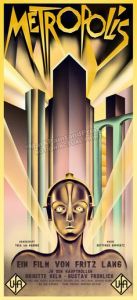 Metropolis (Dir. Fritz Lang, 1927) (Screening format –not known , 149 mins ) Made in Germany during the Weimar period, Metropolis is set in a futuristic urban dystopia and follows the attempts of Freder (Gustav Frohlich), the wealthy son of the city’s ruler, and Maria (Brigitte Helm), a poor worker, to overcome the vast gulf separating the classes of their city. Filming took place in 1925 at a cost of approximately five million Reichmarks, making it the most expensive film ever released up to that point. It is regarded as a pioneering work of science fiction and is among the most influential films of all time. Following its world premiere in 1927, half an hour was cut from Fritz Lang’s masterpiece and lost to the world. Eighty years later a spectacular discovery was made when the footage was found in a small, dusty museum in Buenos Aires. The film was then painstakingly reconstructed and digitally restored so that at last audiences could see the iconic futuristic fairy tale as Lang had envisioned it. Find out more at silentfilm.org With recorded score. Palace Cinema, Broadstairs Link
 South (Dir. Frank Hurley, UK/Aus, 1919) (Screening format – not known, 88mins). Australian filmmaker Frank Hurley’s record of Shackleton’s 1914-17 Antarctic expedition is also a document of life – human and otherwise – striving to survive in the most adverse climatic conditions imaginable. More than a mere chronicle of an epic undertaking, the film is visually magnificent, its images of
  the vast frozen wilderness composed with a meticulous attention to framing and light. Restored with its original tinting and toning by the BFI National Archive and EYE Filmmuseum, this incredible film of true-life heroism and survival in the most formidable conditions is over a century old. It lives on as an enthralling testimony to the delicate balance between humanity and the natural world.Find out more at moviessilently.com Presented by Northern Silents. With live musical accompaniment by Jonny Best. Link
30 September
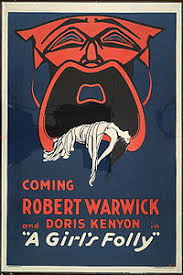 An Extravaganza of Silent Films About Filmmaking A special Kennington Bioscope Gala Show, with all proceeds going towards their host venue the Cinema Museum to help it raise the funds to buy its building. The main feature is A Girl’s Folly (1917), directed by Maurice Tourneur, and edited by future director Clarence Brown. The film shows filmmaking at
  Fort Lee, New Jersey, including the lab, editing room, and film sets. Variety noted ‘The public should be greatly interested in seeing how moving pictures are made – it is all here.’ Maurice Tourneur appears in front of the camera, as do an uncredited Leatrice Joy and Josef von Sternberg. Find out more at moviessilently.com. Plus a full programme of rare supporting shorts,
  including unseen footage of a British studio at work in 1921, a tinted 35mm print of Hello Hollywood (1927), Chaplin’s Kid Auto Races at Venice (1914) in which we see the birth of the Tramp character, a short film taking us behind the scenes of French productions of 1929, Feuillade’s Erreur Tragique (1913), infidelity caught on film in the background of shooting an Onésime short and the world premiere of Dave Glass’s brand new restoration of the rare Snub Pollard film In the Movies (1922) Presented by the Kennington Bioscope. With live musical accompaniment. Cinema Museum, Lambeth Link

