


2 August
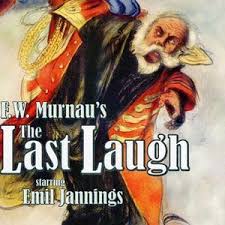 The Last Laugh (Dir. F W Murnau, Ger, 1924) (Screening format – digital, 90mins) A landmark work of the silent era, F.W. Murnau’s masterpiece Der Letzte Mann (The Last Laugh) is one of the most notable films made during the Weimar Republic. Emil Jannings, probably the greatest actor of his time, stars as an ageing doorman whose happiness crumbles when he is relieved of the duties and uniform which had, for years, been the foundation of his pride and which compensates for him living in a slum. The Last Laugh is not just the plight of a single doorman, but a mournful dramatisation of the frustration and anguish of the universal working class, a clash of the old and the new, and how one individual is lost in the modern cityscape of the early twentieth century. However, the plot of The Last Laugh is just half the story. Dispensing with the customary inter-titles and filming while moving the camera in extraordinarily inventive ways, Murnau and his cinematographer, Karl Freund, transformed the language of film. In shooting the opening sequence, the camera descended in the hotel’s glass elevator and was then carried on a bicycle through the lobby. In addition, The Last Laugh succeeds in combining expressionist elements—such as extreme camera angles, distorted dream imagery, and disturbing light and shadow effects—with a complex psychological study of the main character in his fall from privilege. Find out more at rogerebert.com . With live musical accompaniment by Stephen Horne. BFI Southbank, London Link
10 August
The Last Laugh (Dir. F W Murnau, Ger, 1924) (Screening format – digital, 90mins) A landmark work of the silent era, F.W. Murnau’s masterpiece Der Letzte Mann (The Last Laugh) is one of the most notable films made during the Weimar Republic. Emil Jannings, probably the greatest actor of his time, stars as an ageing doorman whose happiness crumbles when he is relieved of the duties and uniform which had, for years, been the foundation of his pride and which compensates for him living in a slum. The Last Laugh is not just the plight of a single doorman, but a mournful dramatisation of the frustration and anguish of the universal working class, a clash of the old and the new, and how one individual is lost in the modern cityscape of the early twentieth century. However, the plot of The Last Laugh is just half the story. Dispensing with the customary inter-titles and filming while moving the camera in extraordinarily inventive ways, Murnau and his cinematographer, Karl Freund, transformed the language of film. In shooting the opening sequence, the camera descended in the hotel’s glass elevator and was then carried on a bicycle through the lobby. In addition, The Last Laugh succeeds in combining expressionist elements—such as extreme camera angles, distorted dream imagery, and disturbing light and shadow effects—with a complex psychological study of the main character in his fall from privilege. Find out more at rogerebert.com . With recorded score composed by Berklee Silent Film Orchestra. Introduced by film programmer Margaret Deriaz. BFI Southbank, London Link
23 August
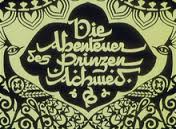 The Adventures of Prince Achmed (Dir. Lotte Reiniger , Ger, 1926) (Screening format – digital, 65mins) The first feature-length animation in film history, masterminded by Lotte Reiniger and hand-tinted frame by frame. Based on ‘The Arabian Nights’, the film tells the epic tale of Prince Achmed, who is tricked into mounting a magical flying horse by a wicked sorcerer. The horse carries Achmed off on a series of adventures, over the course of which he joins forces with young Aladdin, battles ogres and monsters and romances the beautiful Princess Peri Banu.Find out more at wikipedia.org . With live musical accompaniment by Hugo Max. Followed by panel discussion with Hugo Max and Lotte Reiniger scholar Tashi Petter. BFI Southbank, London Link
29 August
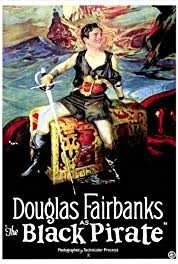 The Black Pirate (Dir. Albert Parker, US, 1926) (Screening format – not known, 97mins) Actor and producer Douglas Fairbanks, having swashed his buckle as every other action hero – Zorro, Musketeer, Robin Hood – here turned pirate. It’s the perfect vehicle for his athleticism and sensational stunt work, as well as his not insignificant on-screen charisma. Importantly, he
 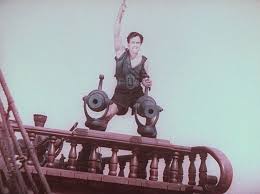 chose to film it in two-strip Technicolor, in a subtle ‘Old Master’ palette, which set a high bar for colour features to come. The story involves a young nobleman (Fairbanks) whose father is killed by pirates. He vows to avenge his dad’s death by becoming a buccaneer himself and routing out the villains. Along the way, he rescues damsel-in-distress Billie Dove (likewise of noble birth) and engages in a few bloody duels with the swarthy likes of Sam De Grasse and Anders Randolph. Charlie Stevens, a grandson of American Indian chief Geronimo — and whom Fairbanks regarded as a lucky charm — appears in several tiny roles. Find out more atsilentfilm.org With live musical accompaniment by Meg Morley. Pound Arts, Corsham Link

