


October
1 October
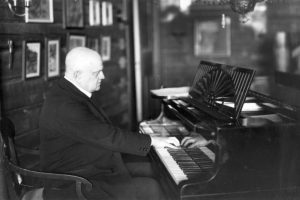 Away Up North – An Evening Of Movie Mavericks From Finland. A diverse programme but with several silents, including; Jean Sibelius at Home (Bir. Aho & Soldan, 1927, 6mins) – Late autumn, 1927, at the home of maestro Jean Sibelius in Ainola, Finland. A charming, little, free-form documentary about Sibelius and his family celebrating an autumn day. Heidi and Margareta Sibelius play four-hand piano, Aino is busy in the garden, the morning papers and a cigar start the master’s day. A classic from Finnish documentary pioneers Heikki Aho and Björn Soldan; Once Upon Time There Was Winter – and Snow (Unknown,1934, 6 min)The Finnish realm of snow and ice. In this unknown gem from almost a century ago, the progress of an icebreaker ship feels like a symbol of the modernisation and urbanisation of the world: slow but inevitable. The relationship with nature is
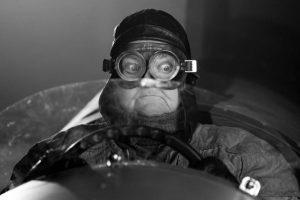 still carefree. Joys of winter are taken for granted, and the urban core of Finland produces images that may seem like a fairytale to an outsider. Greetings from a time of innocence; and, Distant Planet (Juha Kuosmanen, 2023, 16 min) Using handmade trickery, silent cinema is reawakened with a modern twist. From the Cannes-winning director Juho Kuosmanen , the final instalment of the celebrated silent trilogy tells a story of lighthouse-keeper Marlanda and her little brother Maximilian. It’s a bedtime story about the end of everything and the extraordinary attempts to survive it. But it’s not bedtime, it’s just the interval. With live musical accompaniment by Lau Nau and Henri Utan K. Cinema Museum, Lambeth Link
2 October
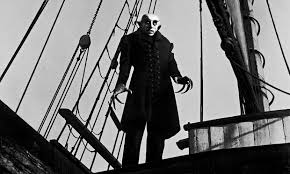 Nosferatu (Dir. F W Murnau, 1922) (Screening format – not known, 96mins) A German Expressionist horror masterpiece starring Max Shreck as the vampire Count Orlok. The film was an unauthorised adaption of Bram Stoker’s ‘Dracula’ with names and other details changed because the studio could not obtain the rights to the novel. Stoker’s heirs sued over the adaption and a court ruling ordered that all copies of the film be destroyed. However, a few prints survived and the film came to be regarded as an inspirational master work of the cinema. In the film, Count Orlok travels across Europe leaving a trail of death in his wake. Brilliantly eerie, with imaginative touches which later adaptions never achieved. Find out more at wikipedia.org With live musical accompaniment by Hugo Max. Prince Charles Cinema, London Link
3 October
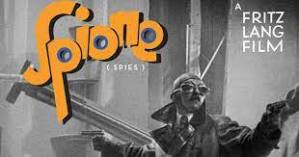 Spione (aka Spies) (Dir. Fritz Lang, Ger, 1928) (Screening format – not known, 150 mins) Spione is an espionage thriller, directed by master filmmaker Fritz Lang and co-written with his then-wife, Thea von Harbou. Like many of Lang’s most famous films, the sophisticated multi-plot narrative presents a master criminal aiming for world domination. In fact, the film weaves
 together recurrent Lang themes of fate, fear, power and paranoia into a dynamic conspiracy thriller that taps into the underlying tensions of Weimar Germany and presents the modern city as at once liberating and frightening. On screen, the mastermind Haghi (Rudolph Klein-Rogge), behind a ubiquitous spy operation learns of a dangerous romance between a Russian lady in his employ, Sonya Baranikowa (Gerda Maurus), and dashing agent 326 (Willy Fritsch), from the government’s secret service. Find out more at sensesofcinema.com With recorded Neil Brand score. Goethe Institute, London Link
 Adventures of Prince Achmed (Dir. Lotte Reiniger , Ger, 1926) (Screening format – not known, 65mins) The first feature-length animation in film history, masterminded by Lotte Reiniger and hand-tinted frame by frame. Based on ‘The Arabian Nights’, the film tells the epic tale of Prince Achmed, who is tricked into mounting a magical flying horse by a wicked sorcerer. The horse carries Achmed off on a series of adventures, over the course of which he joins forces with young Aladdin, battles ogres and monsters and romances the beautiful Princess Peri Banu.Find out more at wikipedia.org . With recorded musical accompaniment by Wolfgang Zeller. Goethe Institute, London Link
4 October
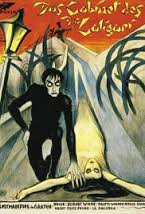 The Cabinet of Dr Caligari (Dir. Robert Wiene, 1920) (Screening format – not known, 77 mins) In the village of Holstenwall, fairground hypnotist Dr Caligari (Werner Krauss) puts on show a somnambulist called Cesare (Conrad Veidt) who has been asleep for twenty three years. At night, Cesare walks the streets murdering people on the doctor’s orders. A student (Friedrich Feher) suspects Caligari after a friend is found dead and it transpires that the doctor is the director of a lunatic asylum. Fueled by the pessimism and gloom of post-war Germany, the sets by Hermann Warm stand unequaled as a shining example of Expressionist design. Find out more at wikipedia.org. With live musical accompaniment by Hugo Max. Prince Charles Cinema, London Link
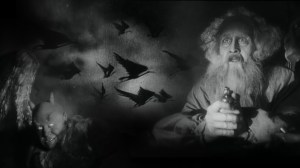 Faust (Dir. F W Murnau, Ger, 1926) (Screening format – not known, 107mins) Like Fritz Lang, F.W. Murnau is a towering figure of Weimar cinema, thanks to films such as Nosferatu (1922), The Last Laugh (1924), and, after moving to America, Sunrise: A Song of Two Humans (1927). Murnau’s approach to framing and his use of liberating camera movements suggested to subsequent filmmakers a new way of using the pictorial space. Faust, the director’s final German film, draws on sources including Marlowe and Goethe in service of the story of a man who makes a deal with the devil. Murnau’s Faust was the most technically elaborate and expensive production undertaken by Ufa until it was surpassed by Metropolis the following year. Filming took six months, at a cost of 2 million marks, only half of which was recovered at the box office. According to many film historians, Faust seriously influenced subsequent studio shooting and special effects techniques. Murnau used two cameras, each filming multiple shots; with many scenes requiring multiple takes. Faust was Murnau’s last German film, immediately prior to his move to the US. Find out more at rogerebert.com. With live organ accompaniment by Darius Battiwalla. Holy Trinity Church, Eccleshall Link
7 October
 A Page of Madness (aka Kurutta Ippēji) (Dir.Teinosuke Kinugasa, Jap, 1926) (Screening format – not known, 73mins) A man (Masao Inoue) takes a job as a caretaker at a mental asylum in order to be near his wife (Yoshie Nakagawa). Although his wife suffers genuine mental anguish, the man believes he can rescue her , but all is not quite as it seems….Considered lost for some 45 years, Kinugasa thankfully found the print in his garden shed in the early 1970s. A Page of Madness is a visually stunning, and technically dazzling work of surrealism. Teinosuke utilizes flashbacks, rhythmic intercutting, and impressionistic symbolism in this independently produced, experimental, avant-garde work with its cinematic technique equal to if not superior to that of contemporary European cinema and very much reminiscent of Robert Weine’s The Cabinet of Dr. Caligari (1920). The film contained no intertitles as it was intended to be exhibited with live narration delivered by a benshi who would stand to the side of the screen and introduce and relate the story to the audience. Find out more at midnighteye.com . With live musical accompaniment by Hugo Max. Ultimate Picture Palace, Oxford Link
9 October
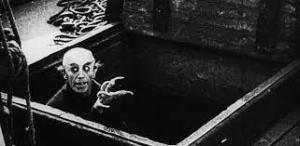 Nosferatu (Dir. F W Murnau, 1922) (Screening format – not known, 96mins) A German Expressionist horror masterpiece starring Max Shreck as the vampire Count Orlok. The film was an unauthorised adaption of Bram Stoker’s ‘Dracula’ with names and other details changed because the studio could not obtain the rights to the novel. Stoker’s heirs sued over the adaption and a court ruling ordered that all copies of the film be destroyed. However, a few prints survived and the film came to be regarded as an inspirational master work of the cinema. In the film, Count Orlok travels across Europe leaving a trail of death in his wake. Brilliantly eerie, with imaginative touches which later adaptions never achieved. Find out more at wikipedia.org With live musical accompaniment by Hugo Max. Saffron Walden Town Hall Link
10 October
The Adventures of Prince Achmed (Dir. Lotte Reiniger , Ger, 1926) (Screening format – not known, 65mins) The first feature-length animation in film history, masterminded by Lotte Reiniger and hand-tinted frame by frame. Based on ‘The Arabian Nights’, the film tells the epic tale of Prince Achmed, who is tricked into mounting a magical flying horse by a wicked sorcerer. The horse carries Achmed off on a series of adventures, over the course of which he joins forces with young Aladdin, battles ogres and monsters and romances the beautiful Princess Peri Banu.Find out more at wikipedia.org . With live musical accompaniment by Hugo Max. The Magic Lantern Cinema, Tywyn Link
11 October
 The Lodger: A Story of the London Fog (Dir. Alfred Hitchcock, UK, 1927) (Screening format – not known, 91 mins ) In The Lodger, a serial killer known as “The Avenger” is on the loose in London, murdering blonde women. A mysterious man (Ivor Novello) arrives at the house of Mr. and Mrs. Bunting looking for a room to rent. The Bunting’s daughter (June Tripp) is a blonde model and is seeing one of the detectives (Malcolm Keen) assigned to the case. The detective becomes jealous of the lodger and begins to suspect he may be the avenger. Based on a best-selling novel by Marie Belloc Lowndes, first published in 1913, loosely based on the Jack the Ripper murders, The Lodger was Hitchcock’s first thriller, and his first critical and commercial success. Made shortly after his return from Germany, the film betrays the influence of the German expressionist tradition established in such films as The Cabinet of Dr. Caligari (1919) and Nosferatu (1922). Find out more at silentfilm.org . With live musical accompaniment by Hugo Max. Chiswick Cinema, London Link
17 October
 The General (Dir. Buster Keaton/Clyde Bruckman, 1926) (Screening format – not known, 75mins) Widely considered one of the greatest films ever made and one of the most revered comedies of the silent era, Buster Keaton’s effortless masterpiece sees hapless Southern railroad engineer Johnny Gray (Keaton) facing off against Union soldiers during the American Civil War. When Johnny’s fiancée, Annabelle Lee (Marion Mack), is accidentally taken away while on a train stolen by Northern forces, Gray pursues the soldiers, using various modes of transportation in comic action scenes that highlight Keaton’s boundless, innovative wit and joyful, light-hearted dexterity, to reclaim the train and thereby save the South. Find out more at busterkeaton.com . With live organ accompaniment by Donald Mackenzie. Bridlington Priory, Bridlington Link
A Page of Madness (aka Kurutta Ippēji) (Dir.Teinosuke Kinugasa, Jap, 1926) (Screening format – not known, 73mins) A man (Masao Inoue) takes a job as a caretaker at a mental asylum in order to be near his wife (Yoshie Nakagawa). Although his wife suffers genuine mental anguish, the man believes he can rescue her , but all is not quite as it seems….Considered lost for some 45 years, Kinugasa thankfully found the print in his garden shed in the early 1970s. A Page of Madness is a visually stunning, and technically dazzling work of surrealism. Teinosuke utilizes flashbacks, rhythmic intercutting, and impressionistic symbolism in this  independently produced, experimental, avant-garde work with its cinematic technique equal to if not superior to that of contemporary European cinema and very much reminiscent of Robert Weine’s The Cabinet of Dr. Caligari (1920). The film contained no intertitles as it was intended to be exhibited with live narration delivered by a benshi who would stand to the side of the screen and introduce and relate the story to the audience. Find out more at midnighteye.com . With live musical accompaniment by Hugo Max. Tyneside Cinema, Newcastle Link
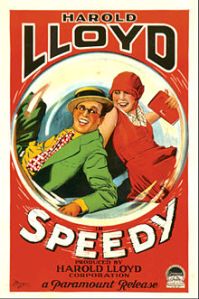 Speedy (Dir. Ted Wilde, US, 1928) (Screening format – not known, 86mins) Harold Lloyd’s final silent film sees him reprise his ‘glasses character’ as a baseball-obsessed New Yorker (the film features a cameo from the legendary Babe Ruth) who becomes determined to save the city’s last horse-drawn streetcar, motivated in no small part by its owner being the grandfather of his love interest. Filled with Lloyd’s trademark rapid-fire visual humour and elaborate set-ups, it’s a fine example of his innovative approach to comedy. Find out more at allmovie.com. With live musical accompaniment by Mike Nolan (piano). Hippodrome Cinema, Bo’ness Link
 The Blinking Buzzards Quarterly meeting of The UK Buster Keaton Society, dedicated to the appreciation of the silent comedian. The last meeting of the year is a request session, so expect to see beloved gems chosen by Society members. With recorded score. The Cinema Museum, Lambeth Link
18 October
 Phantom Of The Opera (Dir. Rupert Julian, 1925) (Screening format – not known, 103mins) A title that needs no introduction, The Phantom of the Opera has spawned many remakes, remasters and sequels. This original film version, produced with moments of early Technicolour, sees Lon Chaney, the ‘Man of a Thousand Faces’ perform one of his most iconic roles. His ghastly make-up and outrageous performance made this title a benchmark in the American silent film era. The film was a critical and commercial success upon release, and still stands as an important film in cinematic history to this day. Famed for the phantom’s shock unmasking, incredible set designs and the masked ball sequence, it still packs a punch. Find out more at wikipedia.org With live musical accompaniment by Andrew Wasylyk and Tommy Perman performing their new live score. Arts Centre, Paisley Link
Nosferatu (Dir. F W Murnau, 1922) (Screening format – not known, 96mins) A German Expressionist horror masterpiece starring Max Shreck as the vampire Count Orlok. The film was an unauthorised adaption of Bram Stoker’s ‘Dracula’ with names and other details changed because the studio could not obtain the rights to the novel. Stoker’s heirs sued over the adaption and a court ruling ordered that all copies of the film be destroyed. However, a few prints survived and the film came to be regarded as an inspirational master work of the cinema. In the film, Count Orlok travels across Europe leaving a trail of death in his wake. Brilliantly eerie, with imaginative touches which later adaptions never achieved. Find out more at wikipedia.org With live organ accompaniment by Donald Mackenzie. Paramount, Penistone. Link
21 October
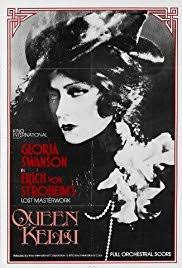 Queen Kelly (Dir. Erich von Stroheim, US, 1929) (Screening format – digital, 101mins) A young convent girl is seduced by a European nobleman, arousing the ire of his bride-to-be Queen Kelly and eventually finding herself exiled to a brothel in East Africa. This film solidified Stroheim’s reputation for extravagance and insistence on complete artistic freedom regardless of economic considerations. It would cost him his Hollywood career. Visually striking and perverse, this film was Erich von Stroheim’s last silent film and final directorial project. The production of the costly film was shut down after complaints by the star, Gloria Swanson, about the direction the film was taking. In later interviews, Swanson had claimed that she had been misled by the script which referred to her character arriving in, and taking over, a dance hall; looking at the rushes, it was obvious the ‘dance hall’ was actually a brothel. Stroheim was fired from the film and much of the story-line scrapped. Swanson and producer Joseph P Kennedy (with whom
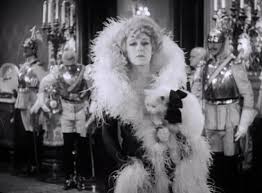 Swanson was having an affair) still wanted to salvage what was left, as it had been so costly and time-consuming, and had potential market value. An alternate ending was shot and the film was released in Europe and South America (but never in the US). This is the UK premier of a newly restored version of the film. Basing his reconstruction on von Stroheim’s original scripts, Milestone Films’ Dennis Doros and Amy Heller employed multiple techniques to recreate the film’s lurid dénouement. This vital new digital reconstruction brings von Stroheim’s original script to life, and the result is Queen Kelly in its most complete and spectacular form to date. Find out more at sensesofcinema.com. Introduced by critic and film historian Pamela Hutchinson. With recorded score. Queen’s Film Theatre, Belfast Link
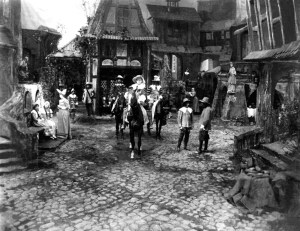 The Arrival From Darkness (aka Prichozi z temnot) (Dir. Jan S. Kolár, Czech, 1921) (Screening format – digital, 62 mins) A 1921 supernatural fantasy from Czechoslovakia which follows a collector who revives his 16th-century ancestor using an ancient manuscript and the Elixir of Life, unleashing a gothic tale involving alchemy, plague-era mysticism, ruined castles, and occult rituals. Shot at Czech castles and historic locations, the film also showcases the work of cinematographers Otto Heller and Otto
 Hoffmann. Heller would later become a major figure in British cinema, photographing films including The Ladykillers and Peeping Tom. Director Jan S. Kolár, born in Prague in 1896, was among the defining figures of the Czech silent era, working as a director, screenwriter, actor, and producer during the industry’s formative years in that country. The cast includes Theodor Pistek, Josef Svab and Anny Ondra. Find out more at www.filmovyprehled.cz Presented by the Kennington Bioscope. With live musical accompaniment. Cinema Museum, Lambeth. Link
22 October
Queen Kelly (Dir. Erich von Stroheim, US, 1929) (Screening format – digital, 101mins) A young convent girl is seduced by a European nobleman, arousing the ire of his bride-to-be Queen Kelly and eventually finding herself exiled to a brothel in East Africa. This film solidified Stroheim’s reputation for extravagance and insistence on complete artistic freedom regardless of economic considerations. It would cost him his Hollywood career. Visually striking and perverse, this film was Erich von Stroheim’s last silent film and final directorial project. The production of the costly film was shut down after complaints by the star, Gloria Swanson, about the direction the film was taking. In later interviews, Swanson had claimed that she had been misled by the script which referred to her character arriving in, and taking over, a dance hall; looking at the rushes, it was obvious the ‘dance hall’ was actually a brothel. Stroheim was fired from the film and much of the story-line scrapped. Swanson and producer Joseph P Kennedy (with whom Swanson was having an affair) still wanted to salvage what was left, as it had been so costly and time-consuming, and had potential market value. An alternate ending was shot and the film was released in Europe and South America (but never in the US). This is the UK premier of a newly restored version of the film. Basing his reconstruction on von Stroheim’s original scripts, Milestone Films’ Dennis Doros and Amy Heller employed multiple techniques to recreate the film’s lurid dénouement. This vital new digital reconstruction brings von Stroheim’s original script to life, and the result is Queen Kelly in its most complete and spectacular form to date. Find out more at sensesofcinema.com. With recorded score. Everyman Cinema, Bath Link
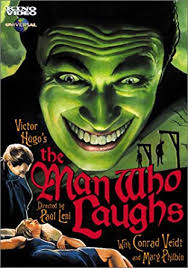 The Man Who Laughs (Dir. Paul Leni, USA, 1928) (Screening format – not known, 110mins) In an effort to top the critical and financial success of The Hunchback of Notre Dame and The Phantom of the Opera, studio head Carl Laemmle recruited two influential artists of the German Expressionist school: actor Conrad Veidt (The Cabinet of Dr. Caligari) and director Paul Leni (Waxworks). The shadowy exteriors, the carnival setting, the demonically misshapen “hero” made The Man Who Laughs something entirely new to American cinema-the foundation upon which the classic Universal horror films would be built. Veidt stars as Gwynplaine, a nobleman’s son who is kidnapped by a political enemy, and then is mutilated by a gypsy “surgeon” who carves a monstrous smile
 upon his face. Finding shelter in a traveling freakshow, he falls in love with a blind girl (The Phantom Of the Opera‘s Mary Philbin), the one person who cannot be repulsed by his appearance. As years pass, the hand of fate draws Gwynplaine back into the world of political intrigue. He becomes the plaything of a jaded duchess (Freaks‘ Olga Baclanova), and his enemies renew their efforts to control him. The distinctive ‘look’ of Gwynplaine is cited as a major influence for the American comic book
 writer, animator and artist, Bob Kane, when he created the visual aesthetics of Batman’s grinning nemesis: the Joker. Veidt’s extraordinary performance, and the film overall however, deserve to be celebrated for far more than this. The gripping story is propelled by director Paul Leni’s masterful visual style, rewarding us with excitement, pathos plus a triumphant star-turn by Zimbo the dog!Find out more at rogerebert.com. Presented by Northern Silents. With live musical accompaniment by pianist Jonny Best and cellist Liz Hanks. Link
 Haxan: Witchcraft Through the Ages (Dir. Benjamin Christensen, Swe., 1922) ( Screening format – not known, 105mins) A fictionalized documentary with dramatic reconstructions showing the evolution of witchcraft, from its pagan roots to its confusion with hysteria in modern (1922) Europe. Based partly on Christensen’s study of the Malleus Maleficarum, a 15th-century German guide for inquisitors, Häxan is a study of how superstition and the misunderstanding of diseases and mental illness could lead to the hysteria of the witch hunts. Although it won acclaim in Denmark and Sweden when first released, Haxan was heavily censored or banned outright in many countries. But it is now considered to be Christensen’s finest work, a witches’ brew of the scary, the grotesque, and the darkly humorous. Find out more at thedevilsmanor.blogspot.co.uk . With live musical accompaniment by Hugo Max. Prince Charles Cinema, London Link
23 October
Phantom Of The Opera (Dir. Rupert Julian, 1925) (Screening format – not known, 103mins) A title that needs no introduction, The Phantom of the Opera has spawned many remakes, remasters and sequels. This original film version, produced with moments of early Technicolour, sees Lon Chaney, the ‘Man of a Thousand Faces’ perform one of his most iconic roles. His ghastly make-up and outrageous performance made this title a benchmark in the American silent film era. The film was a critical and commercial success upon release, and still stands as an important film in cinematic history to this day. Famed for the phantom’s shock unmasking, incredible set designs and the masked ball sequence, it still packs a punch. Find out more at wikipedia.org With live organ accompaniment by Donald Mackenzie. Caird Hall, Dundee. Link
 People on Sunday (Dir. Robert Siodmak/Edgar G Ulmer, Ger, 1929) (Screening format – digital, 74mins) Famously, Billy Wilder and Fred Zinnemann worked with Siodmak on this landmark of realist film making, a magical blend of documentary and fiction which takes us back to a glorious summer Sunday in late-1920s Berlin where five young workers take a day off to spend a flirtatious afternoon
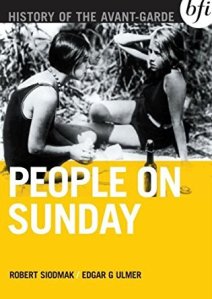 together at a lake on the edge of the city.. While they enjoy freedoms un-dreamt of by their parents, sexual rivalry soon lends an edge to their flirtations. The people portraying the characters were all amateurs belonging to a Berlin collective who, the opening credits inform us, had returned to their normal jobs by the time of the film’s release. They included a taxi driver, a record seller and a wine merchant. But together, the cast and crew produced a classic of silent film and one which still feels remarkably modern. Find out more at archive.org With recorded score. BFI Southbank, London Link
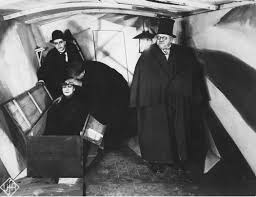 The Cabinet of Dr Caligari (Dir. Robert Wiene, 1920) (Screening format – not known, 77 mins) In the village of Holstenwall, fairground hypnotist Dr Caligari (Werner Krauss) puts on show a somnambulist called Cesare (Conrad Veidt) who has been asleep for twenty three years. At night, Cesare walks the streets murdering people on the doctor’s orders. A student (Friedrich Feher) suspects Caligari after a friend is found dead and it transpires that the doctor is the director of a lunatic asylum. Fueled by the pessimism and gloom of post-war Germany, the sets by Hermann Warm stand unequaled as a shining example of Expressionist design. Find out more at wikipedia.org. With live musical accompaniment by Hugo Max. Prince Charles Cinema, London Link
24 October
Phantom Of The Opera (Dir. Rupert Julian, 1925) (Screening format – not known, 103mins) A title that needs no introduction, The Phantom of the Opera has spawned many remakes, remasters and sequels. This original film version, produced with moments of early Technicolour, sees Lon Chaney, the ‘Man of a Thousand Faces’ perform one of his most iconic roles. His ghastly make-up and outrageous performance made this title a benchmark in the American silent film era. The film was a critical and commercial success upon release, and still stands as an important film in cinematic history to this day. Famed for the phantom’s shock unmasking, incredible set designs and the masked ball sequence, it still packs a punch. Find out more at wikipedia.org With live musical accompaniment by Andrew Wasylyk and Tommy Perman performing their new live score. Lighthouse Cinema, Dublin Link
Faust (Dir. F W Murnau, Ger, 1926) (Screening format – not known, 107mins) Like Fritz Lang, F.W. Murnau is a towering figure of Weimar cinema, thanks to films such as Nosferatu (1922), The Last Laugh (1924), and, after moving to America, Sunrise: A Song of Two Humans (1927). Murnau’s approach to framing and his use of liberating camera movements suggested to subsequent filmmakers a new way of using the pictorial space. Faust, the director’s final German film, draws on sources including Marlowe and Goethe in service of the story of a man who makes a deal with the devil. Murnau’s Faust was the most technically elaborate and expensive production undertaken by Ufa until it was surpassed by Metropolis the following year. Filming took six months, at a cost of 2 million marks, only half of which was recovered at the box office. According to many film historians, Faust seriously influenced subsequent studio shooting and special effects techniques. Murnau used two cameras, each filming multiple shots; with many scenes requiring multiple takes. Faust was Murnau’s last German film, immediately prior to his move to the US. Find out more at rogerebert.com. With live musical accompaniment by Jane Gardner (piano) and Hazel Morrison (percussion). Hippodrome Cinema, Bo’ness Link
25 October
Phantom Of The Opera (Dir. Rupert Julian, 1925) (Screening format – not known, 103mins) A title that needs no introduction, The Phantom of the Opera has spawned many remakes, remasters and sequels. This original film version, produced with moments of early Technicolour, sees Lon Chaney, the ‘Man of a Thousand Faces’ perform one of his most iconic roles. His ghastly make-up and outrageous performance made this title a benchmark in the American silent film era. The film was a critical and commercial success upon release, and still stands as an important film in cinematic history to this day. Famed for the phantom’s shock unmasking, incredible set designs and the masked ball sequence, it still packs a punch. Find out more at wikipedia.org With live musical accompaniment by Andrew Wasylyk and Tommy Perman performing their new live score. Black Box, Belfast Link
The Cabinet of Dr Caligari (Dir. Robert Wiene, 1920) (Screening format – not known, 77 mins) In the village of Holstenwall, fairground hypnotist Dr Caligari (Werner Krauss) puts on show a somnambulist called Cesare (Conrad Veidt) who has been asleep for twenty three years. At night, Cesare walks the streets murdering people on the doctor’s orders. A student (Friedrich Feher) suspects Caligari after a friend is found dead and it transpires that the doctor is the director of a lunatic asylum. Fueled by the pessimism and gloom of post-war Germany, the sets by Hermann Warm stand unequaled as a shining example of Expressionist design. Find out more at wikipedia.org. With recorded score. Palace Cinema, Broadstairs Link
 Wings (Dir. William Wellman, USA, 1927) (Screening format – not known, 144mins) In 1917, in a small American town, Jack Powell (Charles Rogers) tinkers on a car, while daydreaming about airplanes. When the car is roadworthy, Jack names it “Shooting Star” and Mary Preston (Clara Bow), the girl next door who helped him, paints a star on the side of the vehicle. Oblivious to the infatuated Mary’s feelings for him, Jack invites a more sophisticated city girl, Sylvia Lewis, to accompany him on the first drive. Sylvia rides with Jack, but she is in love with David Armstrong (Richard Arlen), the son of the town’s wealthiest family. Later, when the United States enters World War I, Jack and David enlist and apply to aviation school. Before they leave, Sylvia signs a picture of herself and puts it in a locket for David, but when Jack sees it and thinks it is meant for him, she does not have the heart to contradict him. David, who returns Sylvia’s
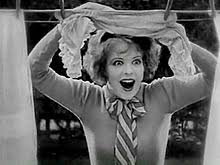 affection, is hurt, but she takes him aside and explains that, although Jack has her picture, David has her heart…. But will friendship and relationships survive the tragedy and drama of the war years. Made only nine years after the end of the First World War, the film was written by John Monk Saunders, a veteran pilot who who also wrote Howard Hawks’ classic The Dawn Patrol, filmed three years later. Saunders hadn’t actually served in France, a matter of bitter regret to him himself, but he was a flight instructor in the First World War and a member of the Lost Generation who eventually killed himself. Wellman himself did serve in
 France and was mentally and physically scarred for life – so they knew their stuff. For example, Wellman insisted on waiting a month for the “right cloud formations”, much to the fury of the bosses at Paramount – but the power of the flight sequences, with all the piles of cloud glimpsed from and around the planes, shows he was right. On August 12, 1927, the curtain rose on the grand premiere of Wings, by now Wellman’s two-million-dollar epic. Boasting thrills and adventure, star power, and unparalleled aerial photography, the film was an immediate smash, running at New York’s Criterion Theater for sixty-three consecutive weeks and capturing the top honor for Outstanding Production at the inaugural Academy Awards ceremony. Find out more at theguardian.com. With live organ accompaniment by Donald Mackenzie. Paul Kirner’s Music Palace, Ynyshir, Rhondda. Link
Nosferatu (Dir. F W Murnau, 1922) (Screening format – not known, 96mins) A German Expressionist horror masterpiece starring Max Shreck as the vampire Count Orlok. The film was an unauthorised adaption of Bram Stoker’s ‘Dracula’ with names and other details changed because the studio could not obtain the rights to the novel. Stoker’s heirs sued over the adaption and a court ruling ordered that all copies of the film be destroyed. However, a few prints survived and the film came to be regarded as an inspirational master work of the cinema. In the film, Count Orlok travels across Europe leaving a trail of death in his wake. Brilliantly eerie, with imaginative touches which later adaptions never achieved. Find out more at wikipedia.org With live musical accompaniment by Hugo Max. Prince Charles Cinema, London Link
27 October
The Man Who Laughs (Dir. Paul Leni, USA, 1928) (Screening format – not known, 110mins) In an effort to top the critical and financial success of The Hunchback of Notre Dame and The Phantom of the Opera, studio head Carl Laemmle recruited two influential artists of the German Expressionist school: actor Conrad Veidt (The Cabinet of Dr. Caligari) and director Paul Leni (Waxworks). The shadowy exteriors, the carnival setting, the demonically misshapen “hero” made The Man Who Laughs something entirely new to American cinema-the foundation upon which the classic Universal horror films would be built. Veidt stars as Gwynplaine, a nobleman’s son who is kidnapped by a political enemy, and then is mutilated by a gypsy “surgeon” who carves a monstrous smile upon his face. Finding shelter in a traveling freakshow, he falls in love with a blind girl (The Phantom Of the Opera‘s Mary Philbin), the one person who cannot be repulsed by his appearance. As years pass, the hand of fate draws Gwynplaine back into the world of political intrigue. He becomes the plaything of a jaded duchess (Freaks‘ Olga Baclanova), and his enemies renew their efforts to control him. The distinctive ‘look’ of Gwynplaine is cited as a major influence for the American comic book writer, animator and artist, Bob Kane, when he created the visual aesthetics of Batman’s grinning nemesis: the Joker. Veidt’s extraordinary performance, and the film overall however, deserve to be celebrated for far more than this. The gripping story is propelled by director Paul Leni’s masterful visual style, rewarding us with excitement, pathos plus a triumphant star-turn by Zimbo the dog!Find out more at rogerebert.com. With live musical accompaniment by Meg Morley. Pound Arts, Corsham Link
28 October
Phantom Of The Opera (Dir. Rupert Julian, 1925) (Screening format – not known, 103mins) A title that needs no introduction, The Phantom of the Opera has spawned many remakes, remasters and sequels. This original film version, produced with moments of early Technicolour, sees Lon Chaney, the ‘Man of a Thousand Faces’ perform one of his most iconic roles. His ghastly make-up and outrageous performance made this title a benchmark in the American silent film era. The film was a critical and commercial success upon release, and still stands as an important film in cinematic history to this day. Famed for the phantom’s shock unmasking, incredible set designs and the masked ball sequence, it still packs a punch. Find out more at wikipedia.org With live musical accompaniment by Andrew Wasylyk and Tommy Perman performing their new live score. Mareel, Lerwick Link
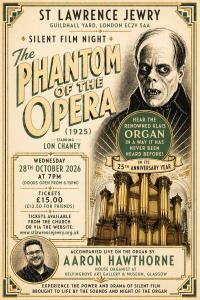 Phantom Of The Opera (Dir. Rupert Julian, 1925) (Screening format – not known, 103mins) A title that needs no introduction, The Phantom of the Opera has spawned many remakes, remasters and sequels. This original film version, produced with moments of early Technicolour, sees Lon Chaney, the ‘Man of a Thousand Faces’ perform one of his most iconic roles. His ghastly make-up and outrageous performance made this title a benchmark in the American silent film era. The film was a critical and commercial success upon release, and still stands as an important film in cinematic history to this day. Famed for the phantom’s shock unmasking, incredible set designs and the masked ball sequence, it still packs a punch. Find out more at wikipedia.org With live organ accompaniment by Aaron Hawthorne. Guild Church of St Lawrence Jewry, London Link
 The Woman That Men Yearn For (aka Die Frau, nach der man sich sehnt) (Dir, Curtis Bernhard, Ger, 1929) (Screening format – not known, 78mins) The dreamy Charles Leblanc (Oskar Sima), about to marry into a wealthy steel-making family, glimpses Stascha (Marlene Dietrich) and her companion Karoff (Fritz Kortner) as they pause for a drink at a bar in his small southern
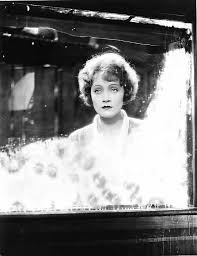 France town. They meet again on the train taking him and his wife on their honeymoon. Overwhelmed by Stascha’s sexuality, and ignoring his distraught new wife, Leblanc agrees to help her escape from the domineering Karoff, setting in motion a chain of obsessive, destructive events. Long before von Sternberg brought us Dietrich as Lola Lola in The Blue Angel, the actress had already created her femme fatale persona with this, her first starring role. Although made on something of a shoestring budget and wholly studio
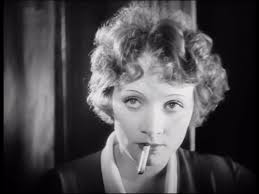 shot, the film benefits from excellent direction from Bernhardt, Dietrich smoulders superbly and the rest of the cast are excellent. Unfortunately the film was released just as audiences were clamouring for sound films and as a result it was not particularly successful. But this is a welcome opportunity to see this rarely screened classic which marked an important milestone in Dietrich’s career development Find out more at silentfilm.org . Presented by Northern Silents. With live musical accompaniment by pianist Jonny Best. Link
29 October
Phantom Of The Opera (Dir. Rupert Julian, 1925) (Screening format – not known, 103mins) A title that needs no introduction, The Phantom of the Opera has spawned many remakes, remasters and sequels. This original film version, produced with moments of early Technicolour, sees Lon Chaney, the ‘Man of a Thousand Faces’ perform one of his most iconic roles. His ghastly make-up and outrageous performance made this title a benchmark in the American silent film era. The film was a critical and commercial success upon release, and still stands as an important film in cinematic history to this day. Famed for the phantom’s shock unmasking, incredible set designs and the masked ball sequence, it still packs a punch. Find out more at wikipedia.org With live organ accompaniment by Donald Mackenzie. Regent Street Cinema, London Link
 Nosferatu (Dir. F W Murnau, 1922) (Screening format – not known, 96mins) A German Expressionist horror masterpiece starring Max Shreck as the vampire Count Orlok. The film was an unauthorised adaption of Bram Stoker’s ‘Dracula’ with names and other details changed because the studio could not obtain the rights to the novel. Stoker’s heirs sued over the adaption and a court ruling ordered that all copies of the film be destroyed. However, a few prints survived and the film came to be regarded as an inspirational master work of the cinema. In the film, Count Orlok travels across Europe leaving a trail of death in his wake. Brilliantly eerie, with imaginative touches which later adaptions never achieved. Find out more at wikipedia.org With live musical accompaniment by Hugo Max. Prince Charles Cinema, London Link
30 October
Phantom Of The Opera (Dir. Rupert Julian, 1925) (Screening format – not known, 103mins) A title that needs no introduction, The Phantom of the Opera has spawned many remakes, remasters and sequels. This original film version, produced with moments of early Technicolour, sees Lon Chaney, the ‘Man of a Thousand Faces’ perform one of his most iconic roles. His ghastly make-up and outrageous performance made this title a benchmark in the American silent film era. The film was a critical and commercial success upon release, and still stands as an important film in cinematic history to this day. Famed for the phantom’s shock unmasking, incredible set designs and the masked ball sequence, it still packs a punch. Find out more at wikipedia.org With live musical accompaniment by Andrew Wasylyk and Tommy Perman performing their new live score. Birks Cinema, Aberfeldy Link
 Metropolis (Dir. Fritz Lang, 1927) (Screening format –not known , 149 mins ) Made in Germany during the Weimar period, Metropolis is set in a futuristic urban dystopia and follows the attempts of Freder (Gustav Frohlich), the wealthy son of the city’s ruler, and Maria (Brigitte Helm), a poor worker, to overcome the vast gulf separating the classes of their city. Filming took place in 1925 at a cost of approximately five million Reichmarks, making it the most expensive film ever released up to that point. It is regarded as a pioneering work of science fiction and is among the most influential films of all time. Following its world premiere in 1927, half an hour was cut from Fritz Lang’s masterpiece and lost to the world. Eighty years later a spectacular discovery was made when the footage was found in a small, dusty museum in Buenos Aires. The film was then painstakingly reconstructed and digitally restored so that at last audiences could see the iconic futuristic fairy tale as Lang had envisioned it. Find out more at silentfilm.org With live organ accompaniment by Donald Mackenzie. Regent Street Cinema, London Link
 Nosferatu (Dir. F W Murnau, 1922) (Screening format – not known, 96mins) A German Expressionist horror masterpiece starring Max Shreck as the vampire Count Orlok. The film was an unauthorised adaption of Bram Stoker’s ‘Dracula’ with names and other details changed because the studio could not obtain the rights to the novel. Stoker’s heirs sued over the adaption and a court ruling ordered that all copies of the film be destroyed. However, a few prints survived and the film came to be regarded as an inspirational master work of the cinema. In the film, Count Orlok travels across Europe leaving a trail of death in his wake. Brilliantly eerie, with imaginative touches which later adaptions never achieved. Find out more at wikipedia.org With live musical accompaniment by Hugo Max. Augustine Hall, Canterbury Link
31 October
Haxan: Witchcraft Through the Ages (Dir. Benjamin Christensen, Swe., 1922) ( Screening format – not known, 105mins) A fictionalized documentary with dramatic reconstructions showing the evolution of witchcraft, from its pagan roots to its confusion with hysteria in modern (1922) Europe. Based partly on Christensen’s study of the Malleus Maleficarum, a 15th-century German guide for inquisitors, Häxan is a study of how superstition and the misunderstanding of diseases and mental illness could lead to the hysteria of the witch hunts. Although it won acclaim in Denmark and Sweden when first released, Haxan was heavily censored or banned outright in many countries. But it is now considered to be Christensen’s finest work, a witches’ brew of the scary, the grotesque, and the darkly humorous. Find out more at thedevilsmanor.blogspot.co.uk . With live musical accompaniment by Jane Gardner and Hazel Morrison. Introduction by guest curator Callahan Fedullo. Institut Francais Ecosse, Edinburgh Link
Phantom Of The Opera (Dir. Rupert Julian, 1925) (Screening format – not known, 103mins) A title that needs no introduction, The Phantom of the Opera has spawned many remakes, remasters and sequels. This original film version, produced with moments of early Technicolour, sees Lon Chaney, the ‘Man of a Thousand Faces’ perform one of his most iconic roles. His ghastly make-up and outrageous performance made this title a benchmark in the American silent film era. The film was a critical and commercial success upon release, and still stands as an important film in cinematic history to this day. Famed for the phantom’s shock unmasking, incredible set designs and the masked ball sequence, it still packs a punch. Find out more at wikipedia.org With live musical accompaniment by Andrew Wasylyk and Tommy Perman performing their new live score. An Lanntair, Stornaway Link
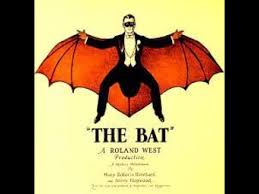 The Bat (Dir. Roland West, US, 1926) (Screening format – not known, 90 mins) The Bat, a master criminal terrorizing the city wearing a fearsome bat costume, sets his sinister sights on the eerie Fleming mansion. Within the walls of this spooky house, a bank robber has stashed $20,000 in stolen loot. Leasing the mansion is the wealthy Cornelia Van Gorder, along with her niece Dale. Dale’s fiance, Brooks Bailey, a cashier at the bank, becomes the prime suspect in the robbery investigation. But after the bank president is found dead, we’re in old dark house territory and everybody is a suspect. Based on the famous play by Mary Roberts Rinehart and Avery Hopwood, The Bat is
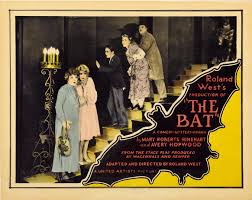 renowned for its expert use of miniatures and striking set designs by William Cameron Menzies. In 1930, Roland West skill-fully remade the film as a talkie, The Bat Whispers. Vincent Price starred in yet another version of The Bat in 1959. West, an innovator of movie-making techniques in the silent era, also made The Monster in 1925 with legendary silent star Lon Chaney. Along with the 1927 classic, The Cat And The Canary, The Bat is highly regarded as a prototype for the haunted house film genre that flourished in the ’30s and ’40s. Find out more at silentology.wordpress.com With live organ accompaniment by Donald Mackenzie. Musical Museum, Brentford Link
Nosferatu (Dir. F W Murnau, 1922) (Screening format – not known, 96mins) A German Expressionist horror masterpiece starring Max Shreck as the vampire Count Orlok. The film was an unauthorised adaption of Bram Stoker’s ‘Dracula’ with names and other details changed because the studio could not obtain the rights to the novel. Stoker’s heirs sued over the adaption and a court ruling ordered that all copies of the film be destroyed. However, a few prints survived and the film came to be regarded as an inspirational master work of the cinema. In the film, Count Orlok travels across Europe leaving a trail of death in his wake. Brilliantly eerie, with imaginative touches which later adaptions never achieved. Find out more at wikipedia.org With live musical accompaniment by Hugo Max. Prince Charles Cinema, London Link
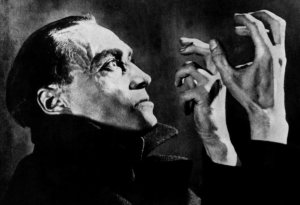 Hands of Orlac (Dir. Robert Weine, 1924) (Screening format – not known, 92mins ) A gruesome psychological horror about a talented concert pianist (Conrad Veidt, ‘Casablanca’), whose precious hands are amputated after a calamitous accident. Replacements are grafted on but soon after his operation Orlac learns the horrible truth – his new hands were from the cadaver of a recently executed killer. Plagued by nightmarish visions, Orlac fears his hands are possessed by evil and that he has become a murderer himself. Made five years after his landmark ‘Cabinet of Dr Caligari’ director Robert Weine strikes a more sombre and restrained look for this creepy drama but wrings every terrible shudder out of the theme of an alien body with a mind of its own. Find out more at slantmagazine.com . Presented by Northern Silents. With live musical accompaniment by Frame Ensemble (Jonny Best piano, Susannah Simmons violin, Liz Hanks cello and Trevor Bartlett percussion). Link

